
Thinking about the future can feel overwhelming, but creating a plan to protect your family is one of the most profound expressions of love. You have spent a lifetime building a legacy you are proud of; finding the right “estate planning lawyer near me” is the crucial step in ensuring your loved ones are cared for, no matter what comes next. This guide is designed to provide clear, calm direction for your search here in Texas.
The First Step in Protecting Your Family’s Legacy
We understand that this process can feel intimidating. Our goal is to walk you through what estate planning means under Texas law and why it is an essential conversation for every family. We will skip the confusing legal jargon and provide the straightforward, practical guidance you need to move forward with confidence, knowing your family’s future is secure.
More and more families are recognizing how critical this is. On a global scale, the estate administration market is expected to jump from $15.77 billion to $23.79 billion by 2029. This isn’t just a random statistic; it shows a massive shift in awareness as people prioritize proactive planning for their futures. You can read more about these market trends to see how families are taking control of their legacies.
Understanding Your Complete Financial Picture
As you begin this journey, it’s vital to get a clear view of your entire financial world. This isn’t just about the house or your savings account; it includes retirement funds, investments, and other benefits. For many, this also means understanding Federal Employee Group Life Insurance (FEGLI) options, which can be a significant piece of the puzzle.
A solid estate plan doesn’t just list out your assets—it weaves every part of your financial life into a single, cohesive strategy. This detailed approach ensures nothing is overlooked and that your final wishes are clearly spelled out and legally binding.
An estate plan isn’t just for the wealthy. It’s for anyone who wants to protect their loved ones and have a say in how their life’s work is handled. It’s your voice, your wishes, and your legacy—legally preserved for the future.
What Texas Estate Planning Really Means
When most people hear “estate planning,” they immediately think of a will. But a will is just one tool in a comprehensive legal toolbox designed to protect you, your family, and everything you’ve worked for. A proper Texas estate plan, governed by the Texas Estates Code, is a complete strategy that ensures your wishes are honored and your loved ones are supported, no matter what happens.
Think of it as building a fortress around your family’s future. Each legal document serves a specific purpose—a wall, a gate, a watchtower—all working together to handle different life scenarios. It’s about so much more than deciding who gets your house; it’s about creating peace of mind in a world full of uncertainties.
The journey from your hard work to your family’s security is a direct one, but it requires deliberate action.
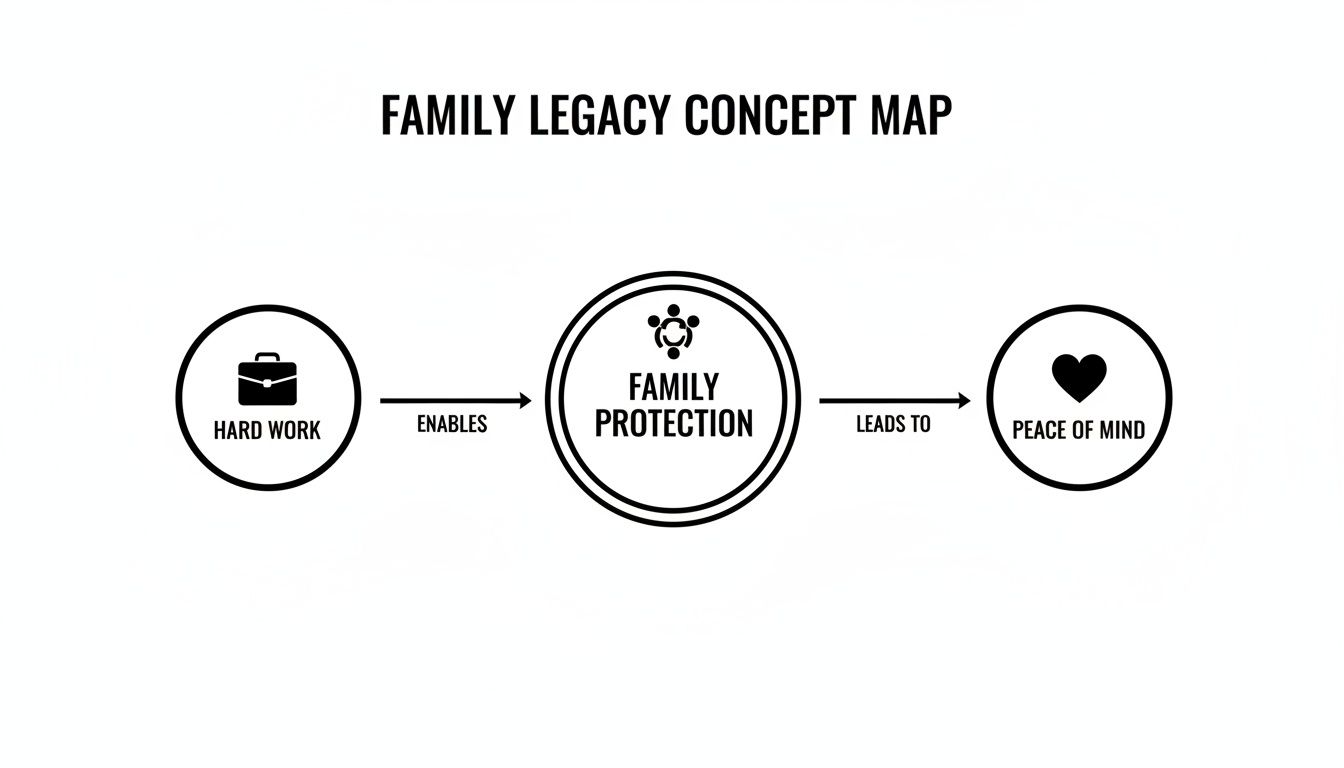
This simple flow shows that while your effort is the foundation, the act of putting a plan in place is what truly delivers lasting security and calm.
The Core Components of Your Texas Plan
To truly understand estate planning, it’s important to know the key documents that make it work. Each one has a unique—and critical—job to do. A well-structured plan is a coordinated set of legal instruments designed to work together, protecting you during your life and providing for your loved ones after you’re gone.
Here is a step-by-step look at the essential documents under Texas law:
| Document | Primary Purpose | When It’s Used |
|---|---|---|
| Last Will and Testament | Names an executor and directs who inherits your property after your death. It is also the only document where you can legally name a guardian for minor children. | After you pass away, during the probate process. |
| Trust | Holds and manages assets for beneficiaries, often avoiding the public probate process and allowing for more control over asset distribution. | Can be used during your lifetime (living trust) and after your death. |
| Durable Power of Attorney | Appoints an agent you trust to make financial decisions on your behalf if you become incapacitated. | During your lifetime, if you’re unable to manage your finances yourself. |
| Medical Power of Attorney | Appoints an agent to make healthcare decisions for you if you are unable to communicate your wishes. | During your lifetime, if you can’t make or communicate your medical wishes. |
| Advance Directive (Living Will) | Outlines your specific wishes for end-of-life medical care, such as the use of life support. | During your lifetime, if you are in a terminal or irreversible condition. |
These are the foundational pieces that every Texan should consider when building their plan.
How These Tools Work in Real Life: A Scenario
Let’s make this practical. Imagine a young couple in Houston with two small children. Their biggest fear is what would happen to the kids if something happened to them. Their estate plan would be laser-focused on a will to legally name a guardian, as outlined in the Texas Estates Code § 1104.053. This is the only way to ensure their chosen caregivers would raise their children. Their plan would also include powers of attorney to manage finances and healthcare if they were ever incapacitated.
Now, picture a business owner in Dallas approaching retirement. Their concerns are different. They need a plan to ensure a smooth business handover, minimize estate taxes, and distribute assets fairly to their adult children. For them, a Revocable Living Trust is likely the star of the show, providing the control and privacy needed to protect their life’s work.
Everyone’s search for an “estate planning lawyer near me” starts with their own unique story. A compassionate attorney doesn’t just hand you a template. They listen to your goals, understand your worries, and build a plan that truly protects what matters most to you.
Key Life Moments That Call for an Estate Plan
Thinking about an estate plan often feels like something you can put off until “later.” But life has a way of showing you that “later” has arrived. Certain milestones don’t just change your day-to-day life; they completely rewrite your financial and legal responsibilities. Suddenly, having a formal plan isn’t a future task—it’s an immediate need.
It’s a shocking fact for many, but if you pass away without a will, the Texas Estates Code dictates who gets your property through a process called “intestate succession.” A judge who has never met your family will follow a rigid legal formula to divide everything you own. This statutory plan rarely aligns with what you would have wanted.
Marriage, Divorce, and Blended Families
Getting married instantly creates new inheritance rights for your spouse under Texas law. Conversely, divorce can be just as impactful. While a divorce may invalidate parts of your will that mention an ex-spouse, it won’t automatically update critical beneficiary designations on your 401(k) or life insurance policy.
For blended families, the complexity increases significantly. A standard will often isn’t enough. How do you ensure your new spouse is cared for while also protecting the inheritance for your children from a previous marriage? An experienced estate planning attorney can help you navigate this with tools like trusts, ensuring everyone is protected exactly as you intend.
“Your life doesn’t stand still, and neither should your estate plan. It’s a living set of documents that should evolve with you, reflecting new relationships, new responsibilities, and new dreams for your family.”
Major Life and Financial Changes
Beyond your relationships, other major life events are clear signals that it’s time to seek professional guidance. These moments often mean you have new assets to protect or, more importantly, new people who are counting on you. Here is some practical guidance:
- Welcoming a Child: This is arguably the most critical moment. An estate plan is the only way to legally name a guardian for your minor children. Without it, a court will make that decision for you.
- Buying a Home: For most families, their home is their largest asset. Proper planning ensures this cornerstone of your legacy passes smoothly to your loved ones, avoiding family disputes or a forced sale.
- Starting a Business: A business needs a succession plan. Without one, the company you poured your heart into could face chaos or even liquidation, putting your family’s financial security at risk.
- Receiving an Inheritance: Coming into a significant inheritance can change your financial picture overnight. Smart planning helps you manage these new assets and protect them from creditors, lawsuits, or future divorces.
The U.S. estate lawyers and attorneys industry is a massive $18.2 billion market, with over 204,000 firms across the country. This means when you search for an “estate planning lawyer near me,” you have a deep pool of local, specialized experts ready to help you navigate your specific situation. Discover more insights about the estate planning industry.
How to Choose the Right Estate Planning Lawyer for Your Family
Typing “estate planning lawyer near me” into a search engine will give you a long list of names, but finding the right one for your family goes beyond proximity. This is about finding a trusted advisor who will sit down, listen to your story, understand your goals, and guide you with both legal expertise and genuine care. This decision is far too important to leave to chance.
Your search should start with some initial research. Look at a law firm’s website. Do they focus on Texas estate planning, or is it just one service among many? Look for client testimonials and helpful articles that demonstrate a deep, practical understanding of the Texas Estates Code. This simple first step helps you filter out generalists and focus on true specialists.

Key Questions for Your Consultation
The initial consultation is your opportunity to interview them. You are hiring someone for one of the most crucial roles in protecting your family’s future. A good lawyer will expect your questions and provide clear, straightforward answers.
Walk into that meeting ready with these key questions:
- How much of your practice is dedicated to estate planning? An attorney who spends 90% of their time in this field will have a much deeper well of knowledge than someone who only dabbles in it.
- Can you walk me through your process from our first meeting to the final documents? A clear, step-by-step explanation shows they have an organized, client-focused system.
- What is your fee structure? Don’t be shy about asking if they offer flat-fee packages for common documents or if they bill by the hour. A firm that is upfront about costs is one you can trust.
- Who will I be working with directly? Will you be communicating with the lead attorney, or will you be handed off to a paralegal? Knowing your point of contact is essential for building a strong working relationship.
Why a Specialist Matters More Than a Generalist
It may seem convenient to use a lawyer you know from a previous house closing or business matter, but estate planning is a highly specialized field. The laws governing wills, trusts, and probate in Texas are complex and constantly evolving. A general practice attorney simply won’t have the focused, day-in-day-out experience needed to spot potential issues and protect your family from them.
A specialist in the Texas Estates Code does more than just fill out forms; they anticipate challenges you haven’t even thought of. They know how to structure your plan to minimize tax burdens, shield assets from creditors, and head off family disputes before they even have a chance to start.
It’s like this: you wouldn’t go to your family doctor for heart surgery. In the same way, you need a legal specialist to protect everything you’ve worked for. Taking the time to choose the right estate planning lawyer is a direct investment in your family’s security and your own peace of mind.
Understanding the Costs of Creating Your Estate Plan
Let’s talk about something that’s on everyone’s mind but can be uncomfortable to bring up: legal fees. At The Law Office of Bryan Fagan, we believe in being upfront and transparent about this, because understanding the investment is the first step toward true peace of mind. The cost of setting up an estate plan should never be a barrier to protecting your family.
When you search for an “estate planning lawyer near me” in Texas, you’ll find that attorneys generally structure their fees in two common ways.
For most foundational estate plans—which include core documents like a will, powers of attorney, and medical directives—many firms, including ours, offer flat-fee packages. This approach is refreshingly simple. You know the total cost right from the start, with no hidden fees or surprise invoices. It allows you to focus on what truly matters: your family’s goals, not watching the clock.
Flat Fees vs. Hourly Billing
While flat fees are perfect for creating the initial plan, some legal needs are more complex. This is where hourly billing typically comes into play, such as administering a large estate after a loved one has passed or managing a trust over several years. With hourly billing, you only pay for the precise time and expertise needed to handle intricate legal work.
Here’s a quick way to think about it:
- Flat-Fee Packages: Ideal for building a new, comprehensive estate plan from the ground up. This covers drafting wills, trusts, and powers of attorney for individuals and couples.
- Hourly Billing: Generally used for legal needs that arise after your plan is in place. This might involve probate court proceedings, ongoing trust administration, or significant plan modifications.
Understanding when a probate lawyer might be necessary can highlight the long-term value of a solid initial plan. You can learn more about when a probate lawyer is necessary in our detailed guide.
The Estate Planning Journey Step by Step
Creating your estate plan is not a mysterious process. It’s a clear, collaborative journey we take together. Knowing what to expect demystifies everything and puts you firmly in control.
- Discovery Meeting: It all starts with a conversation. In our free initial consultation, we simply listen. We want to hear your story, understand your family’s unique dynamics, and get a clear picture of your goals.
- Design Session: Next, we will meet to map out a strategy built just for you. We’ll discuss specific tools—like a will versus a trust—and decide which ones will best accomplish your objectives.
- Draft Review: We will send you drafts of all your legal documents to review from the comfort of your own home. We encourage you to read them, ask questions, and provide feedback. This is your plan, after all.
- Formal Signing: The final step is making it all official. We will hold a formal signing ceremony where we properly witness and notarize your documents, making them legally binding under the Texas Estates Code.
This structured approach guarantees your plan is not only legally sound but is also a genuine reflection of your wishes.
If you need help navigating divorce, custody, or estate planning in Texas, contact The Law Office of Bryan Fagan today for a free consultation.
How to Prepare for Your First Consultation
Walking into your first meeting prepared will make the entire process smoother and far more effective. It turns what might feel like an intimidating task into an empowering experience. This isn’t about bringing a mountain of paperwork; it’s about organizing your thoughts and key information ahead of time.

When you come in with this groundwork laid, it allows an attorney to provide specific, insightful advice from day one. To ensure your lawyer has the right information, it helps to have a basic grasp of asset valuation, including understanding fair market value.
Your Personal Checklist for Success
To get the most out of our time together, try to compile a simple list of these key details. You don’t need exact figures down to the penny—solid estimates are incredibly helpful.
- Your Assets: Make a quick list of what you own. Think real estate, bank accounts, retirement funds like a 401(k) or IRA, investments, and significant personal items.
- Your Liabilities: On the other side, jot down any major debts, such as a mortgage, car loans, or student loans. This helps us see the full financial picture.
- Key People: Write down the full names and contact information for anyone you are considering for a role in your documents. This includes beneficiaries (who will inherit your assets), potential guardians for your children, and the person you trust to be the executor of your will.
Thinking About Your Goals
Beyond the numbers, the most important thing you can bring to the meeting is a sense of what you want to accomplish. Your goals are the “why” behind this entire process.
Your estate plan is a reflection of your values and your hopes for the people you love. Clarifying your objectives upfront ensures that every legal document we create is perfectly aligned with your unique vision for the future.
Is your top priority to minimize potential estate taxes? Or is the main goal to protect a child with special needs? Perhaps you need to figure out the smoothest way to pass on a family business. Knowing your priorities helps us build the right strategy from the very beginning. For a deeper dive into how this first meeting usually goes, feel free to check out our guide on what to expect during your initial consultation.
Common Questions About Texas Estate Planning
Stepping into the world of estate planning can feel like learning a new language. It is completely normal to have questions, and we believe clear answers are the foundation of confidence. Let’s address some of the most common questions we hear from Texas families.
What Happens If I Die Without a Will in Texas?
If you pass away without a will, Texas law considers you to have died “intestate.” This means the Texas Estates Code dictates how your property is divided among your closest relatives according to a rigid statutory formula. The court-supervised process for this, known as probate, can be slow, public, and expensive. More importantly, the government’s plan might be the exact opposite of what you would have chosen. A will ensures you are the one in control.
Is a Will Enough or Do I Need a Trust?
This is an excellent question, and the answer depends on your specific circumstances. A will is the foundational document everyone should have, but a trust is a more powerful tool for specific situations. Think of a will as the essential family sedan, while a trust is a specialized vehicle built for certain terrain.
For example, a Revocable Living Trust is excellent for helping your estate avoid the public and often costly probate process.
A trust gives you much finer control over how and when your heirs get their inheritance. This is incredibly useful if you have young children, want to protect assets from creditors, or need to provide for a loved one with special needs. An experienced attorney can sit down with you, understand your goals, and figure out if a trust makes sense for your family.
How Often Should I Update My Estate Plan?
Life doesn’t stand still, and neither should your estate plan. As a best practice, you should review it every three to five years. You should also revisit it immediately after any major life event, such as:
- Getting married or divorced
- The birth or adoption of a child
- A significant change in your financial situation (like selling a business or receiving an inheritance)
- The death of someone named as a beneficiary or executor
Keeping your plan current ensures it accurately reflects your life and the latest laws, not who you were five or ten years ago.
If you need help navigating divorce, custody, or estate planning in Texas, contact The Law Office of Bryan Fagan, PLLC today for a free consultation at https://www.bryanfagan.com.