
Losing a loved one is an incredibly difficult experience, and the legal steps that follow can feel overwhelming. In Texas, the process of officially validating a will and carrying out its instructions is called "probate." While it might sound daunting, understanding how to probate a will in Texas can bring clarity and a sense of control during a challenging time. This guide is designed to walk you through the process with compassion and clear, practical advice.

The probate process is the court-supervised journey that brings legal closure to a person’s financial life. It confirms that their will is legitimate, officially appoints an executor to manage their affairs, and oversees the settlement of their estate.
In simple terms, this is how your loved one's assets are inventoried, their final debts and bills are paid, and everything remaining is passed on to the people named in the will. We understand this is a sensitive process, and our goal is to help you navigate it with confidence.
Key Timelines and Considerations
In Texas, time is a critical factor. Under the Texas Estates Code, you generally have a strict four-year deadline from the date of your loved one's death to file their will for probate. This is a firm rule that cannot be overlooked.
If you miss this four-year window, the will is typically considered invalid. The estate would then be divided according to Texas's default inheritance laws (known as intestate succession), which may completely disregard the wishes your loved one carefully laid out in their will.
The probate process is designed to bring order and legal finality to a person’s financial affairs after they pass away. It provides a structured framework for executors to follow, ensuring transparency and fairness for both heirs and creditors.
Once probate is complete and assets are distributed, beneficiaries often face new decisions, especially concerning real estate. You might find helpful insights by reviewing your options after inheriting a property. The situation becomes more complex when there is no will at all. For guidance on that scenario, please see our article on https://www.bryanfagan.com/2024/11/how-to-proceed-when-a-family-member-dies-without/.
Choosing the Right Type of Probate in Texas
When you're faced with settling an estate, the legal path can feel overwhelming. The good news is that Texas law offers several options, and choosing the right one can save significant time, money, and stress for your family.
Think of it this way: you wouldn't use a bulldozer for a small garden. Similarly, the size and complexity of the estate should determine the type of probate you pursue. Let's walk through the most common methods in Texas so you can understand what makes the most sense for your situation.
Independent Administration: The Go-To for Most Texas Families
If there is one probate method to know in Texas, it is independent administration. This is, by far, the most common and efficient way to settle an estate. At our firm, this is the path we aim for whenever possible because it best serves our clients.
The key benefit of independent administration is minimal court supervision. Once the court appoints an executor, that person is empowered to manage most of the estate’s business without seeking the judge’s approval for every action.
This includes essential tasks like:
- Paying final bills and any outstanding debts.
- Selling property, if necessary, to cover expenses.
- Distributing the remaining assets to the beneficiaries named in the will.
This freedom is what makes Texas probate relatively straightforward compared to other states. In fact, independent administration is used in approximately 80% of Texas probate cases. To qualify, the will must specifically request it, or all beneficiaries must agree to it in writing. You can gain a deeper understanding of the legal specifics by reviewing Texas probate laws and their practical application.
Dependent Administration: When the Court Needs to Keep a Close Watch
On the other side of the spectrum is dependent administration. This is the most formal, hands-on, and court-supervised process available. It is the path you want to avoid unless absolutely necessary due to its length and cost.
A dependent administration is typically required when:
- The will does not provide for independent administration and the beneficiaries are in conflict.
- There is no will, and the heirs cannot agree on an administrator.
- The estate has complex debt issues.
- There is a high likelihood of a will contest or litigation against the estate.
In this process, the administrator must get a judge's permission before taking almost any action—from paying a credit card bill to selling a house. While this provides a layer of protection, it significantly extends the timeline and increases legal fees.
Muniment of Title: The Express Lane for Simple Estates
What if the estate is simple, with a clear will and no debts other than a mortgage? For these straightforward cases, Texas offers a highly efficient shortcut called probate as a muniment of title.
A muniment of title is a court order that validates a will and serves as a legal document to transfer ownership of assets directly to beneficiaries. No executor is appointed, and no formal administration is required.
This is the ideal tool when the primary goal is to transfer a house, car, or bank account from the deceased's name to a beneficiary. It is fast, efficient, and cost-effective. To qualify, the estate must not have any unsecured debts.
Comparing Texas Probate Options at a Glance
To make this clearer, let's compare the main options side-by-side. This table breaks down the key differences to help you quickly identify which path might be most appropriate.
| Probate Type | Best For | Court Supervision | Typical Timeline |
|---|---|---|---|
| Independent Administration | Most estates with a valid will and cooperative beneficiaries. | Minimal after the executor is appointed. | 6-12 months |
| Dependent Administration | Estates with disputes, complex debts, or no provision for independence. | High and continuous; court approval is needed for most actions. | 1-2 years or more |
| Muniment of Title | Simple estates with a will and no unsecured debts. | Very low; one court hearing to validate the will. | A few months |
Choosing the right path from the start sets the tone for the entire process. A clear understanding of these options will help you have a productive conversation with an attorney and select the method that best honors your loved one’s legacy without creating an unnecessary burden.
A Step-by-Step Guide to the Formal Probate Process in Texas
Navigating probate can feel overwhelming, but it is a series of logical steps. Let's walk through what the formal probate process looks like in Texas, from start to finish. While every family's situation is unique, the legal roadmap is consistent, and knowing the path forward can make all the difference.
Kicking Off the Probate Case
The first step is filing an Application for Probate with the court in the county where your loved one officially resided. Along with the application, you must submit the original will and a certified copy of the death certificate. These documents formally initiate the case.
Filing in the correct county is crucial. The Texas Estates Code is very specific on this point. Filing in the wrong jurisdiction will result in the case being dismissed, forcing you to start over and costing valuable time and money.
Once filed, the county clerk posts a public notice at the courthouse. This serves as a formal announcement, giving anyone with an interest in the estate an opportunity to come forward. This waiting period is typically about two weeks, after which your hearing can be scheduled.
The First Court Hearing
This initial hearing is where the will is legally validated. The person named as executor in the will, typically accompanied by their attorney, must attend.
You will be placed under oath and asked a few key questions to confirm:
- That the person who created the will has passed away.
- That the will presented is indeed their final one.
- That you are qualified and suitable to serve as executor.
If the judge is satisfied, they will sign an order admitting the will to probate. This court order gives the will legal effect and officially appoints you as the executor, granting you the authority to act on behalf of the estate.
After this hearing, you will receive a crucial document called Letters Testamentary. This is the official court-issued certificate proving you have the authority to manage the estate’s assets, such as accessing bank accounts, selling property, and dealing with financial institutions.
Notifying Heirs and Creditors
Once you are appointed executor, several important deadlines begin. Texas law is strict about keeping all relevant parties informed.
First, you have 60 days from the date of the court order to send formal notice to every beneficiary named in the will via certified mail. This provides proof of receipt. Within 90 days, you must file a sworn affidavit with the court, confirming that all notices were sent.
Simultaneously, you must notify potential creditors. This is typically done by publishing a notice in a local newspaper within one month of your appointment. This notice informs anyone to whom the decedent owed money that they have a limited time to file a claim against the estate. This is a vital step to prevent old debts from surfacing later.
This visual shows how different probate options in Texas compare, highlighting how much court supervision is involved in each.
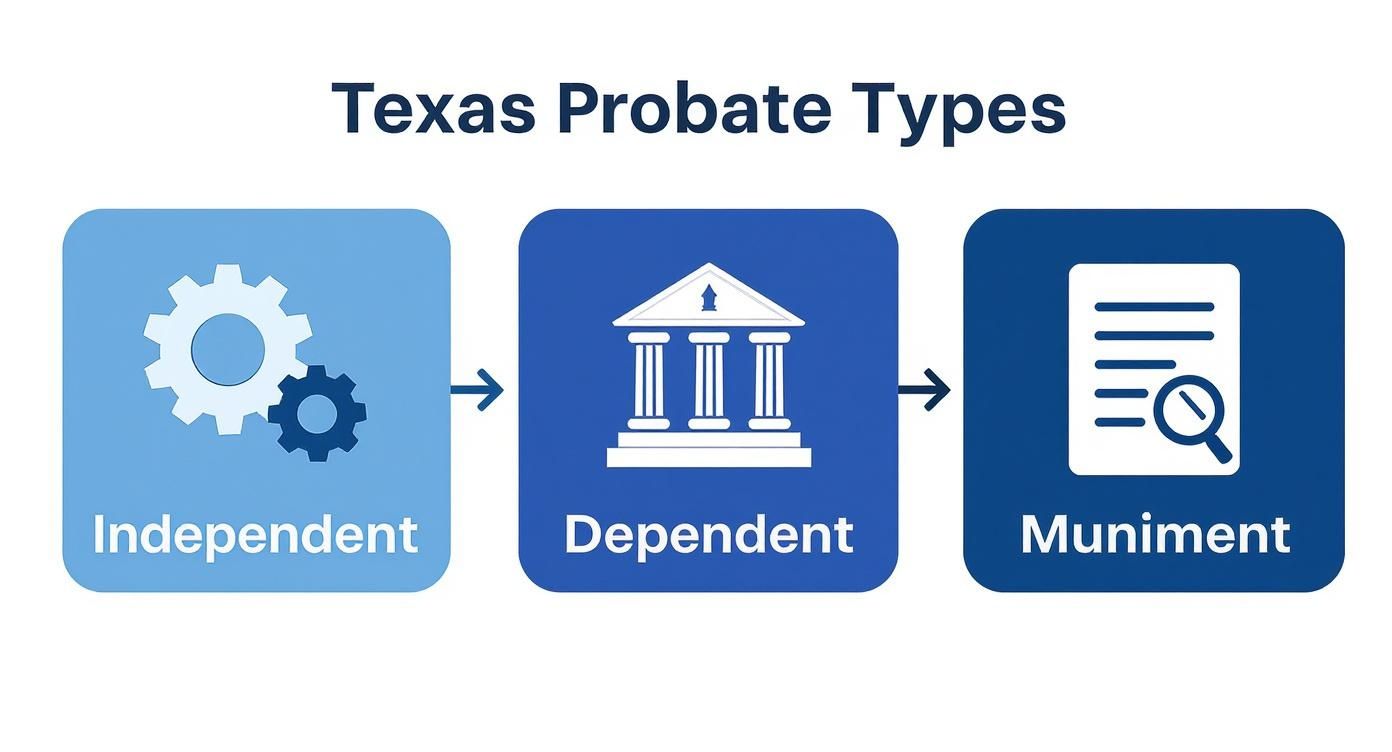
As you can see, the less the court has to be involved, the faster and cheaper the process tends to be. That's why so many Texas wills are set up for Independent Administration.
Gathering and Managing Estate Assets
With your Letters Testamentary, your next major duty is to gather all the estate's assets. This requires careful organization and detective work. You must identify and take control of everything the decedent owned—bank accounts, real estate, vehicles, stocks, and valuable personal property.
Within 90 days of your appointment, you are required to file a detailed report with the court called an Inventory, Appraisement, and List of Claims. This is a sworn list of all estate property and its value on the date of death. It is a foundational document that ensures complete transparency for the court and beneficiaries.
For example, if the estate includes a house, you will need to secure the property, maintain insurance, and obtain an appraisal. This value must be listed on the inventory. This process must be completed for every single asset.
Settling Debts and Distributing the Estate
Before any assets can be distributed to heirs, you must pay the estate's valid debts and liabilities. This includes final medical bills, credit card balances, mortgages, and funeral expenses. You will review each creditor claim to ensure its legitimacy before paying it from the estate's funds.
You are also responsible for filing the decedent’s final income tax return and, if the estate is large enough, a federal estate tax return.
Only after all debts, taxes, and administration costs (like legal fees) are paid can you distribute the remaining assets to the beneficiaries according to the will's instructions. Once everyone has received their inheritance, you may file a final accounting to officially close the estate and complete your duties.
Understanding the Executor's Key Responsibilities

Being named the executor of a will is a profound sign of trust. It is an honor, but it is also a serious legal role with significant responsibilities. At the heart of this role is what the law calls a fiduciary duty. This means you must act with absolute loyalty and good faith, always putting the interests of the estate and its beneficiaries above your own.
You are the temporary steward of your loved one's financial legacy, and the court holds you to a very high standard. Every action you take must be to protect and preserve the estate until it can be distributed.
Safeguarding the Estate's Assets
Your first and most immediate job is to secure all the estate's property. This cannot be delayed. As soon as the court appoints you, you must take practical steps to prevent assets from being lost, damaged, or stolen.
For example, imagine your aunt passed away, leaving a home, a car, and valuable jewelry. Your immediate to-do list would include:
- Changing the locks on her house.
- Confirming her homeowner's insurance is current and active.
- Securing the car in a locked garage or moving it to a safe location.
- Cataloging the jewelry and other valuables and placing them in a safe deposit box.
Failing to take these basic protective measures could make you personally liable for any resulting losses, such as from a break-in or property damage.
An executor must treat the estate's property with even greater care than their own. Every decision, from paying a utility bill to selling a stock, must be made to benefit the estate, not the executor or any single beneficiary.
Keeping Meticulous Financial Records
This is an area where executors can easily run into trouble. It is absolutely essential to maintain pristine financial records. Your first step should be opening a new bank account solely for the estate. All incoming funds, like a final paycheck or tax refund, must be deposited into this account, and every expense, from funeral costs to legal fees, must be paid from it.
Document every single transaction, no matter how small. Keep the receipt for the $5 copy of the death certificate. Get an invoice for the $50 paid to a locksmith. This is not just about being organized; it is your legal shield, providing total transparency to beneficiaries and the court.
Maintaining Open Communication with Heirs
Losing a family member can be an emotional time, and probate can sometimes strain relationships. One of the most effective ways to maintain harmony is through clear and consistent communication. While you may not need everyone's permission for every action (especially in an "independent administration"), keeping heirs informed is a key part of your fiduciary duty.
Send simple, periodic updates. Let them know when the inventory has been filed, when a major asset like a home has been sold, or when you anticipate distributing funds. A little transparency goes a long way in managing expectations and building trust during a difficult time.
To get a complete picture of what's expected, you can dive deeper into the specific duties of an executor of a will in Texas. It is a role that demands integrity and attention to detail to properly honor your loved one's final wishes.
Avoiding Common Probate Pitfalls in Texas
When you are grieving, the last thing you want is for the probate process to become a source of conflict and stress. Even with the best intentions, it is easy to make a misstep that can cause serious delays, increase costs, and damage family relationships. With a bit of foresight, you can avoid these common traps.
The goal is to honor your loved one’s final wishes efficiently and respectfully. Knowing what not to do is just as important as knowing what to do.
Dropping the Ball on Deadlines
This is one of the most critical issues. In Texas, you have a strict four-year window from the date of death to file a will for probate. If you miss that deadline, the court will likely refuse to probate the will.
When that happens, the will is essentially nullified. The estate is then treated as if the person died without a will, and their property will be divided according to the state's rigid intestacy laws—not their personal wishes. There are very few exceptions to this rule, so prompt action is essential.
Mixing Your Money with Estate Funds
Once you are named executor, your first financial move should be to open a separate bank account exclusively for the estate. A serious mistake is commingling funds—mixing your personal money with the estate's money. It might seem harmless to pay a small personal bill from the estate account with the intention of paying it back, but this is a serious breach of your legal duty.
Never use the estate's bank account for your personal expenses or deposit estate checks into your own account. Doing so can lead to your removal as executor and even make you personally liable for any financial discrepancies.
Even with pure intentions, it creates an accounting nightmare and gives beneficiaries a reason to question your actions. Keep the finances completely separate. No exceptions.
Paying Heirs Before Creditors
It is natural to want to provide financial relief to grieving family members as quickly as possible. However, Texas law is clear: creditors and debts must be paid first. Before any money is distributed to a beneficiary, you must settle all of the estate's legitimate debts.
This includes:
- Funeral expenses
- Outstanding medical bills
- Credit card balances
- Mortgage and auto loans
- Probate and attorney fees
If you distribute assets to an heir prematurely and later discover an unpaid creditor, you could be held personally responsible for that debt. Always handle the estate's financial obligations before distributing inheritances.
Letting Family Squabbles Fester
The loss of a loved one can bring complex family dynamics to the surface, and disagreements among beneficiaries are not uncommon. Ignoring them is the worst thing you can do. A minor dispute over a sentimental item can quickly escalate into a full-blown will contest, which halts the entire probate process.
Will contests are incredibly expensive, drain estate resources, and can cause permanent damage to family relationships. As the executor, your role is to be a transparent and consistent communicator. Keep everyone informed with regular updates. If you sense a serious conflict brewing, it is far better to address it head-on with the help of an attorney than to hope it resolves itself.
Using a Small Estate Affidavit to Skip Formal Probate
https://www.youtube.com/embed/Q-pMHWW30-g
For many families, navigating the legal system after a loved one's death feels like an insurmountable task. The idea of a formal, drawn-out probate process can be overwhelming. Fortunately, Texas law provides a simpler path for smaller estates.
If the situation is straightforward, you may be able to use a Small Estate Affidavit (SEA). This legal tool allows heirs to collect assets without a formal court hearing or the appointment of an executor. It can be a tremendous relief, saving significant time, stress, and legal fees.
Is a Small Estate Affidavit the Right Choice?
While the SEA is an excellent shortcut, it is not available for every situation. The Texas Estates Code sets forth very specific eligibility requirements.
The primary factor is the estate's value. The total value of the decedent's probate assets (excluding the homestead and other exempt property) must be $75,000 or less. This financial threshold is the first test you must pass.
Beyond the value, several other conditions must be met:
- No Debts: The estate’s debts cannot exceed the value of its assets, with the exception of a mortgage on the homestead.
- No Real Estate Beyond the Homestead: The only real property the decedent could have owned is their primary residence (homestead). If they owned a rental property or vacation home, the SEA cannot be used.
- All Heirs Agree: All heirs must agree and sign the affidavit.
The Small Estate Affidavit is designed to provide an efficient solution for straightforward situations. It bypasses the need for court hearings and lengthy administration, allowing families to settle affairs and receive their inheritance much more quickly.
If your loved one’s estate meets all these criteria, the SEA could be the perfect solution. The process involves completing a specific legal form, having it signed by all heirs and two disinterested witnesses, and filing it with the court.
Even though it is a simpler process, it requires meticulous accuracy. It's crucial to understand exactly what assets in a will go to probate in Texas to calculate the estate's value correctly. A mistake on the affidavit can create legal headaches, so it is important to get it right.
Answering Your Top Texas Probate Questions
Even with a step-by-step guide, practical questions about timelines and costs often cause the most anxiety. When you're coping with loss, you need clear, straightforward answers. Let's address some of the most common questions we hear from families navigating this process for the first time.
How Long Does Probate Usually Take?
This is often the first question people ask, and the honest answer is: it depends. The timeline is determined by the type of probate required and the complexity of the estate.
For a straightforward case using independent administration with a valid will and no family disputes, the process can often be completed in about six to twelve months. However, if the estate requires a dependent administration (with heavy court supervision) or if conflicts arise, the process can easily extend for a year or much longer. The best way to keep things moving is to be organized, proactive, and address any potential issues early.
What Are the Costs Involved?
The cost of probate can range from relatively modest to substantial. For a simple process like a Muniment of Title used only to transfer real estate, the costs might only be a few thousand dollars.
On the other hand, a complex or contested dependent administration will be significantly more expensive. In these cases, costs are driven up by higher attorney's fees, court costs, and fees for professional services like appraisals and accounting.
While you can legally attempt to probate a will on your own in Texas (known as "pro se"), it is almost never recommended. Probate courts operate under strict rules and deadlines. A single mistake can derail the entire process, cause significant delays, or even leave you personally liable for financial errors.
Hiring an experienced probate attorney is not just a matter of convenience; it is a critical step to protect the estate's assets and your own peace of mind. A knowledgeable lawyer ensures that every notice is sent correctly, every deadline is met, and every asset is managed according to Texas law, making a challenging process more secure and manageable.
If you need help navigating divorce, custody, or estate planning in Texas, contact The Law Office of Bryan Fagan today for a free consultation.