
Navigating the end of a marriage can be one of life’s most difficult transitions, but understanding your rights and options under Texas law can make the path forward feel less overwhelming. Many people believe a “legal separation” is the first step, but you might be surprised to learn that Texas doesn’t officially recognize this status.
This common point of confusion can be stressful for couples who need space but aren’t ready for the finality of divorce. The good news is, while formal legal separation isn’t an option, Texas law provides powerful and practical alternatives. Understanding what you can do is the first step toward regaining clarity and peace of mind.
What Separation Means When You Are Married in Texas
When a marriage is breaking down, the emotional and financial strain can feel immense. It’s natural to look for a middle ground—a way to live apart and sort out your lives without filing for divorce. However, under the Texas Family Code, you are either married or you are divorced. There is no official in-between status.
This means that until a judge signs a final divorce decree, you and your spouse remain legally married in the eyes of the law, no matter how long you live in separate homes. This distinction is critical for several key reasons:
- Community Property Still Accumulates: Any income you earn, assets you purchase, or debt you incur while separated is generally considered community property. This shared financial estate continues to grow until the date of divorce, not the date you moved out.
- No Automatic Custody Orders: Without a court order, both parents have equal rights to their children. This can create instability and conflict if you and your spouse disagree on where the children should live or how parenting decisions will be made.
- Shared Legal and Financial Ties: You remain legally connected for matters like inheritance rights, certain medical decisions, and other financial responsibilities until your marriage is officially dissolved.
Understanding Your True Legal Options
Just because Texas lacks a formal legal separation doesn’t mean you are without recourse. Instead of a “pause button,” Texas law provides effective tools to create structure and certainty while you live apart. These alternatives, such as temporary court orders, contractual separation agreements, and suits filed specifically for child-related issues, are designed to protect you. Familiarizing yourself with these solutions can help you build the stability you need for your finances and your children. For a deeper look, you can explore our guide on how to separate from your spouse in Texas.
The journey to separation and potential divorce is shaped by many factors. Historically, Texas divorce rates peaked in the early 1980s before beginning a gradual decline. Today, the statewide divorce rate is estimated at around 1.3 to 1.5 per 1,000 residents, with economic stability often playing a role in marital longevity. Regardless of the circumstances that brought you here, these legal tools are designed to help you navigate this transition with a clear, predictable plan.
Your Practical Alternatives to Formal Separation
Living apart from your spouse without the finality of a divorce can feel like you’re in legal limbo. Since Texas law doesn’t offer a formal “legal separation,” you need enforceable tools to bring order and predictability back into your life. Fortunately, the Texas Family Code provides several powerful alternatives to define your rights and responsibilities, protecting both you and your children during this uncertain time.
The goal is to move from an informal, handshake agreement to a legally binding arrangement. An unwritten understanding with your spouse is completely unenforceable, leaving you vulnerable if they have a change of heart or if conflict escalates. Let’s walk through the three most effective legal pathways you can take to create the structure and stability you need right now.
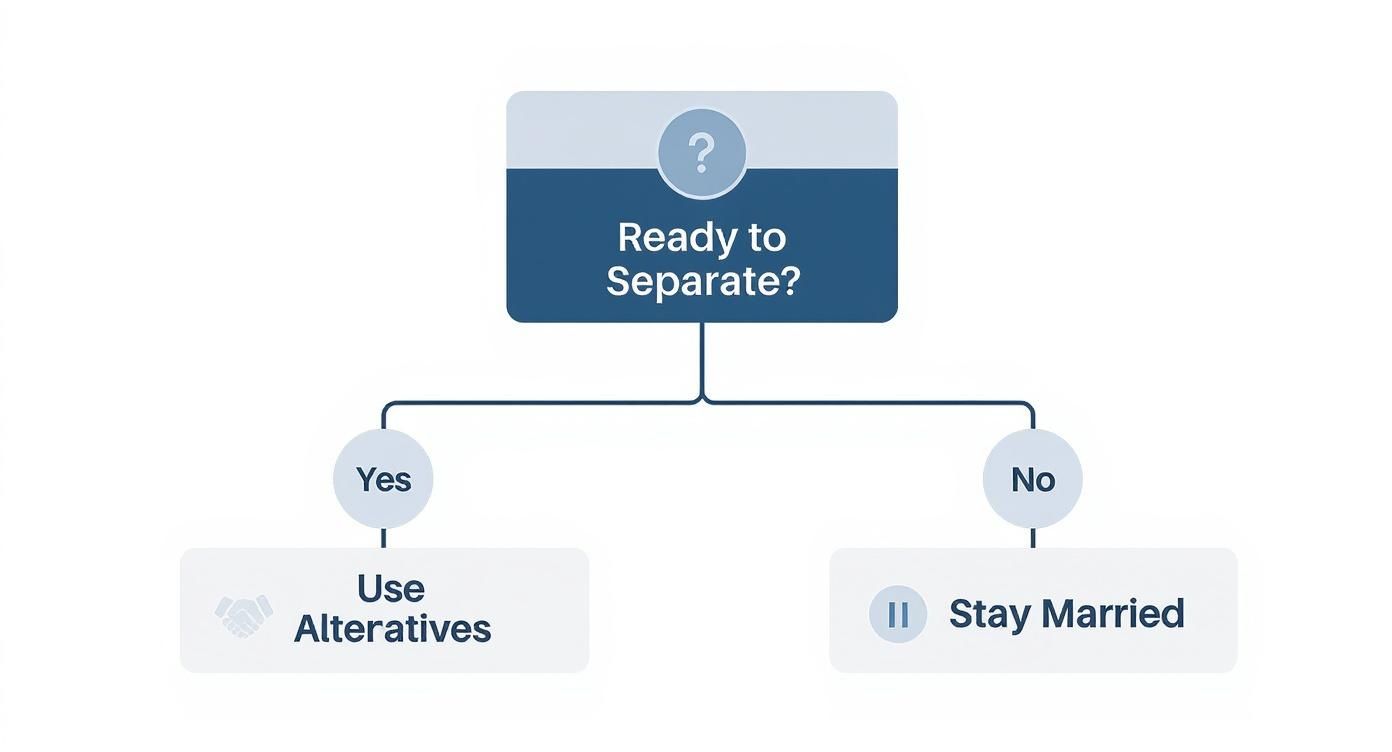
As the infographic illustrates, once you decide to live apart, the next crucial step is choosing the right legal tool available in Texas to protect your interests.
Temporary Orders Within a Divorce Filing
One of the most powerful and common tools is filing for divorce and immediately requesting Temporary Orders from the court. Think of these as the official “rules of engagement” that will govern everything while the divorce is pending. As soon as you file an Original Petition for Divorce, you can ask a judge to issue orders that manage your lives until the divorce is final.
These orders are comprehensive and, most importantly, legally binding. They can tackle a wide range of critical issues, bringing immediate stability to your family.
- Exclusive Use of the Marital Home: The court can decide which spouse gets to live in the family house while the case is ongoing.
- Custody and Visitation: A temporary possession and access schedule for the children will be put in place, creating consistency and routine.
- Financial Support: A judge can order temporary child support and, in some cases, temporary spousal support to be paid.
- Bill Payments: The orders will specify who is responsible for paying the mortgage, car notes, credit cards, and other community debts.
A Temporary Order provides a crucial legal framework that prevents one spouse from acting impulsively or unfairly. It can stop them from draining a bank account, selling assets, or moving the children out of their school without the court’s permission. For many of our clients, this provides immense peace of mind. These orders are fully enforceable; if your spouse violates them, they can be held in contempt of court, which carries serious penalties.
Contractual Separation Agreements
What if you and your spouse are on relatively amicable terms and want to avoid heading straight to the courthouse? In that case, a Contractual Separation Agreement is an excellent option. In Texas, this is most often accomplished through a Partition and Exchange Agreement. This is a private contract, signed by both of you, that can legally divide some or all of your community property.
The primary purpose of this agreement is to stop the accumulation of community property. Once signed, any income you earn or assets you acquire are considered your separate property. This allows you to achieve a financial separation even while you remain legally married. It’s an especially useful tool for couples who need a longer period of separation before deciding whether to file for divorce.
Suits Affecting the Parent-Child Relationship (SAPCR)
If you aren’t ready to file for divorce but need immediate, enforceable orders for your children, you can file a Suit Affecting the Parent-Child Relationship (SAPCR). A SAPCR allows you to go to court and get a judge to make binding decisions on:
- Conservatorship: Who has the right to make key decisions for the children (e.g., medical, educational).
- Possession and Access: A detailed visitation schedule.
- Child Support: The amount of financial support one parent will pay to the other.
- Geographic Restrictions: Rules about where the children can live.
Filing a SAPCR creates legally binding custody and support orders without initiating a divorce. It is the perfect solution for parents who need to establish clear rules for their children’s well-being while they take time to figure out the future of their marriage. If you later decide to divorce, these SAPCR orders can be incorporated into the final divorce decree.
Comparing Your Separation Options in Texas
This table breaks down the key features of the three main alternatives to a formal legal separation in Texas, helping you understand which path may be right for your situation.
| Legal Tool | What It Does | When to Use It | Requires Court Filing? |
|---|---|---|---|
| Temporary Orders (in a Divorce) | Sets court-ordered rules for property, finances, and custody that last until the divorce is final. Covers the widest range of issues. | When you’re ready to start the divorce process but need immediate stability and enforceable rules. | Yes |
| Contractual Separation Agreement | A private contract that divides property and stops the accumulation of community debt. It creates financial separation without a divorce. | When you and your spouse are amicable and need to separate your finances but aren’t ready to file for divorce. | No |
| Suit Affecting the Parent-Child Relationship (SAPCR) | Creates legally enforceable orders specifically for custody, visitation, and child support without filing for divorce. | When you’re not ready for divorce but need to establish clear, binding rules for the children’s well-being. | Yes |
Choosing the right path depends on your unique circumstances—your relationship with your spouse, your financial situation, and, most importantly, your children’s needs. Each option offers a different level of court involvement and addresses different concerns, making it a decision worth careful consideration.
If you need help navigating divorce, custody, or estate planning in Texas, contact The Law Office of Bryan Fagan today for a free consultation.
How Living Apart Affects Your Community Property
One of the biggest financial traps during a separation is failing to realize your shared marital estate is still growing. It’s a common and costly misconception. In Texas, the law is clear: any assets or debts acquired during the marriage belong to both of you. This community estate does not stop accumulating just because you’ve moved into separate residences; it continues to expand right up until a judge finalizes your divorce.
Think of your marriage as a business partnership. Even if the partners have a falling out and start working from different offices, the business itself remains active. Any new income, new equipment purchased, or new loans taken out are still tied to the business. That’s exactly how Texas community property law views your finances during a physical separation.

This can lead to unwelcome surprises down the road. Any paycheck, bonus, or retirement contribution earned by your spouse while you’re separated is considered community property. On the other hand, any new debt they take on—a car loan, a mountain of credit card debt—is also likely a community debt. You could find yourself responsible for half of it when it’s time to divide everything in the divorce.
The Community Estate Keeps Growing
Unlike some states, Texas law doesn’t recognize a “date of separation” that freezes the division of marital property. The community property clock doesn’t stop ticking until the moment a judge signs your Final Decree of Divorce.
For example, imagine Mark and Sarah separate in January. Mark gets an apartment while Sarah stays in the house. In March, Mark receives a $50,000 performance bonus from his job. Even though they’ve been living apart for two months and managing their own bank accounts, that bonus is still legally community property. Sarah has a claim to a just and right share of it.
This same principle applies to all sorts of financial moves made during the separation:
- New Investments: If Sarah uses her savings to buy stock that skyrockets in value, that profit is part of the community estate.
- Acquired Debt: If Mark takes out a $20,000 personal loan to furnish his new apartment, that debt is likely a community obligation.
- Retirement Contributions: Any money either of them contributes to a 401(k) or IRA during the separation period is also community property.
Things can become even more complex when separate funds get mixed with community funds. To learn more about how property is classified, you can read our detailed guide on the dual classification of property in Texas.
The Best Solution: A Partition and Exchange Agreement
So, how can you protect yourself and draw a financial line in the sand while separated? Your most powerful tool is a Partition and Exchange Agreement. This is a formal legal contract that allows you and your spouse to officially sever the community estate, even while you’re still legally married.
This agreement acts as a legal “stop date” for creating more community property. From the moment it’s signed, any income you earn, assets you buy, or debts you take on are yours alone. A Partition and Exchange Agreement delivers the financial clarity and security that simply living apart cannot provide. It allows you to:
- Divide Existing Property: Formally sort out who gets what from your current community assets and debts.
- Establish Separate Property: Ensure your future earnings and purchases belong solely to you.
- Gain Peace of Mind: Eliminate the risk of being held responsible for your spouse’s future financial decisions.
This agreement offers the surest path to achieving true financial independence and moving forward with your life, even before a divorce is final.
Establishing Custody and Support During Separation
When you and your spouse decide to live apart, your first question is almost always, “What about the kids?” The uncertainty of this new chapter can be incredibly stressful for them, and your top priority is creating a sense of stability. It’s a dangerous misconception that you can “work out” custody informally. Without a court order, both parents have equal legal rights to the children, which can quickly lead to chaos and conflict.
What happens if one parent decides to move away with the children? Or withholds visitation out of anger? Without a court order, these damaging actions aren’t technically illegal. That is why obtaining a legally enforceable order is essential to protect both your children and your parental rights. It sets clear, predictable rules that provide the consistency children desperately need during a difficult time.
The Power of a Court Order
The Texas Family Code provides clear options for establishing rules for your children, even if you are not ready to file for divorce. The two primary tools are Temporary Orders (as part of a divorce case) or a standalone Suit Affecting the Parent-Child Relationship (SAPCR). Both paths lead to a court-issued order defining each parent’s rights and duties.
These orders are not mere suggestions; they are legally binding commands from a judge, designed to bring clarity and predictability to an uncertain situation. A court order for your children will cover three core areas:
- Conservatorship: This spells out who gets to make major decisions for your child, such as where they go to school and what medical care they receive.
- Possession and Access: This is the detailed visitation schedule, covering regular weekends, holidays, birthdays, and summer breaks.
- Child Support: This establishes one parent’s financial duty to help provide for the child’s needs, including medical and dental support.
The Best Interest of the Child Standard
Every decision a Texas judge makes about children is guided by one principle: the best interest of the child. This legal standard, established in the Texas Family Code, means the judge’s primary focus is the child’s physical and emotional well-being.
A judge will consider factors like each parent’s ability to provide a stable home, the emotional ties between the parent and child, and any history of family violence. The goal is to create an environment that allows the child to thrive despite the family’s transition. For instance, if one parent has always been the primary caregiver and the child is excelling in their current school, a judge will likely issue orders that maintain that stability. This is why having a solid legal strategy is so important—you need to demonstrate how your requests align with your child’s best interests. To learn more, you can read our detailed guide on what to expect in a Temporary Orders hearing.
How Child Support is Calculated
In Texas, child support is not an arbitrary number. The Texas Family Code provides specific guidelines for its calculation. The formula is primarily based on the net monthly income of the parent paying support (the “obligor”) and the number of children involved.
Here is a brief overview of the standard guidelines:
- 1 Child: 20% of the obligor’s net resources
- 2 Children: 25% of the obligor’s net resources
- 3 Children: 30% of the obligor’s net resources
- 4 Children: 35% of the obligor’s net resources
- 5 or more Children: 40% of the obligor’s net resources
These percentages can be adjusted if the paying parent has a legal obligation to support other children. While these guidelines are the starting point, a judge has the authority to deviate from them if it is proven to be in the child’s best interest. Securing these orders provides critical financial stability and helps prevent disagreements over money from harming the children.
Proactive Steps to Protect Yourself While Separated

Even if you haven’t filed any legal paperwork yet, you can—and should—take practical steps to protect yourself. This isn’t about being aggressive; it’s about being prepared. Taking these smart, defensive measures now will put you in a stronger position and give you a much-needed sense of control as you determine your next steps.
Think of this as your information-gathering phase. The more organized you are from the beginning, the smoother and more efficient any future legal process will be. You’re building a solid foundation for the road ahead.
Secure Your Financial Footing
One of the first things to do is establish your own financial independence. This creates a clear boundary and helps shield you from your spouse’s spending habits or from being suddenly cut off from marital funds. It’s about creating stability for yourself during an unstable time.
A great place to start is by opening a new bank account in your name only and directing your paychecks there. While this doesn’t change the community property nature of that income, it guarantees you have access to money for your living expenses. It’s also a good idea to get a credit card in your name to start building your own credit history.
Create a Comprehensive Inventory
Knowledge is power, especially when untangling a marital estate. Your next move should be to create a detailed inventory of everything you and your spouse own and owe. This exercise is invaluable and will save you a significant amount of time, money, and stress down the line.
Start gathering essential financial documents:
- Bank Statements: At least two years of statements for all checking, savings, and investment accounts.
- Tax Returns: Copies of your joint tax returns for the past three to five years.
- Loan Documents: Information on your mortgage, car loans, and any other major debts.
- Retirement Accounts: Statements for any 401(k)s, IRAs, or pension plans for both you and your spouse.
- Insurance Policies: Details on life, health, and property insurance.
Once you have the paperwork, create a simple spreadsheet. List all community assets (the house, cars, bank accounts) and all community debts (the mortgage, credit card balances, loans). Be as thorough as possible. This inventory will become the bedrock of your property division negotiations.
Document Everything Meticulously
From a legal perspective, clear documentation can make or break your case. It’s crucial to keep a record of important dates, events, and conversations. This isn’t about keeping score; it’s about building an accurate timeline that you can refer to if things become complicated.
The date you and your spouse physically separate is one of the most important dates to document. Make a note of it in a calendar or a private journal. While it doesn’t stop the accumulation of community property, it can be a relevant fact in court when discussing the breakdown of the marriage. Keep a log of major financial transactions and any significant conversations you have with your spouse about assets, debts, or the children. If you communicate via text or email, save those threads. This detailed record-keeping brings clarity and helps prevent “he said, she said” arguments.
The legal landscape of divorce has certainly evolved. Historical data from Texas divorce records between 1968 and 2010 shows how legal shifts, like the introduction of no-fault divorce, initially led to a spike in filings. Over time, rates stabilized, reflecting changing social norms. This history is a reminder that while laws provide a framework, your own proactive planning is the best tool you have to protect your interests.
Update Your Estate Plan
Finally, even though you are still legally married, it’s a smart move to review and potentially update your estate planning documents. Your spouse is likely still listed as your primary beneficiary or agent on key legal forms.
Consider making changes to your:
- Will: To ensure your assets go to your intended beneficiaries.
- Power of Attorney: To name someone other than your spouse to handle your finances if you become incapacitated.
- Medical Directive: To appoint a healthcare agent you trust to make medical decisions on your behalf.
Taking these proactive steps provides a vital layer of protection, allowing you to face an uncertain future not with fear, but with the confidence that comes from being prepared.
Common Questions About Separating in Texas
When you’re facing a separation, your mind is likely racing with questions. It’s a difficult position where every decision feels like it carries immense legal and emotional weight. To help provide clarity, we’ve answered some of the questions we hear most often from clients in your situation.
Our goal is to give you straightforward, legally accurate information you can use. Understanding these real-world issues is the first step toward regaining control of your life.
If you need help navigating divorce, custody, or estate planning in Texas, contact The Law Office of Bryan Fagan today for a free consultation.