
A CPS investigator at your door can make your whole body go cold. You may be standing in your kitchen, trying to remember what was said on the phone, while someone asks questions about your child, your home, and your choices as a parent. In that moment, the immediate need isn't for theory. They're asking one urgent question: Do I have to sign this?
If you're dealing with a CPS safety plan in Texas, the answer starts with understanding what the paper is, what it does, and what it does not do. You also need to know where your rights begin, where CPS authority ends unless a judge gets involved, and what practical steps can help you protect your family today.
Answering the Door to a CPS Caseworker
A mother opens the door after dinner. A caseworker introduces herself, says there has been a report, and asks to come in. The parent's first instinct is often panic. She wonders whether refusing to answer a question will look guilty, whether cooperating will make things worse, and whether her child could be taken tonight.
That fear is real. CPS handles situations where risk can be serious, and the system operates in a high-stakes environment. TexProtects reported in 2021 that Texas loses approximately four children every week to abuse and neglect. That fact helps explain why investigators may act with urgency. It does not mean every report is true, and it does not erase your rights.
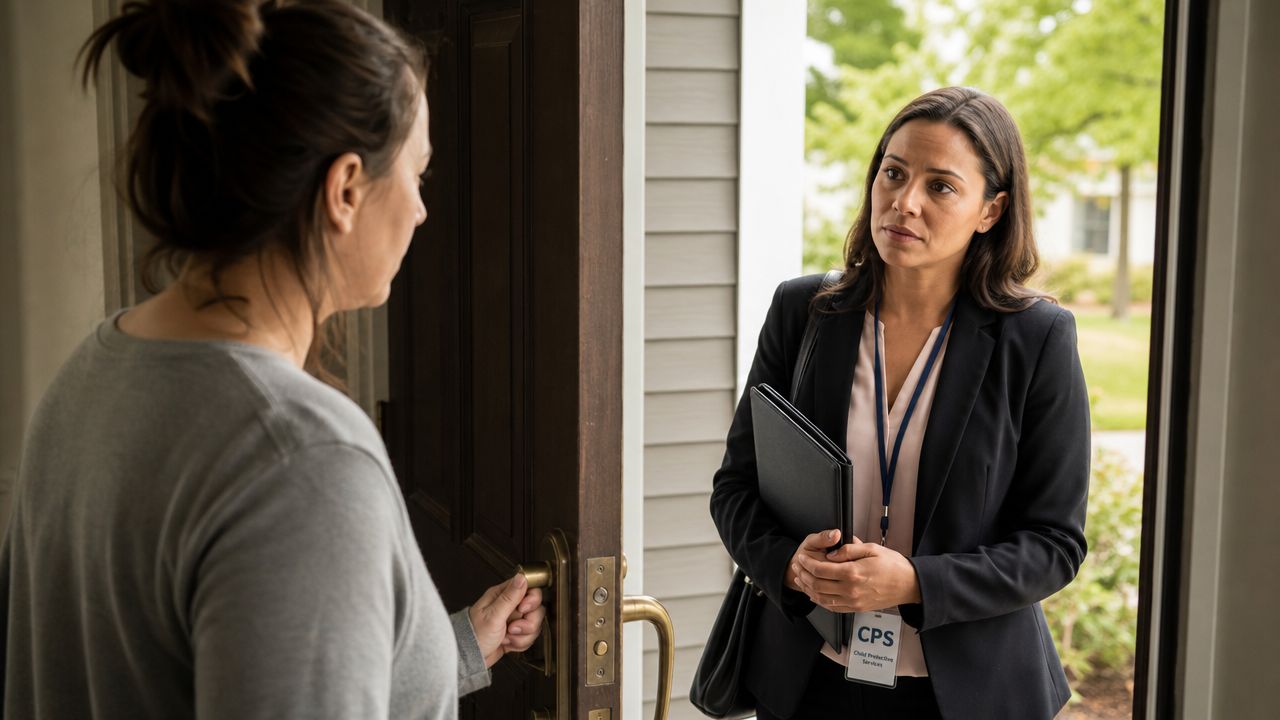
What the first contact often feels like
A CPS visit can feel informal because it happens at home. Don't let that fool you. The conversation matters. What you say, what you agree to, and what documents you sign can shape the rest of the case.
Parents usually feel pulled in two directions:
- Cooperate quickly: You want to show you care about your child and have nothing to hide.
- Protect yourself: You don't want to agree to something you don't understand.
- Keep the peace: You may think signing fast will make the case go away.
- Avoid escalation: You may fear that any hesitation will trigger removal.
Practical rule: Slow the moment down. You can be respectful without agreeing on the spot.
What you should focus on right away
Start with the basics. Ask the caseworker for her name, agency information, and the general nature of the allegations. Listen carefully. Take notes if you can.
Then remember this: a CPS investigation and a court order are not the same thing. If you're trying to understand how immediate removals work, this discussion of when CPS can remove a child without a court order in Texas gives helpful context for what powers CPS may or may not have in an emergency.
You do not regain control by arguing loudly. You regain control by understanding the process, keeping calm, and making deliberate choices.
What Exactly Is a CPS Safety Plan in Texas
A CPS safety plan in Texas is a written agency tool used when CPS believes there is a specific immediate or foreseeable threat to a child. It is created during the child-protection process to manage that danger without immediately moving into a court-ordered removal. Under Texas guidance, the worker completes the initial safety assessment during the first face-to-face contact with the household, and the plan must be created with the family in practical, action-oriented language.
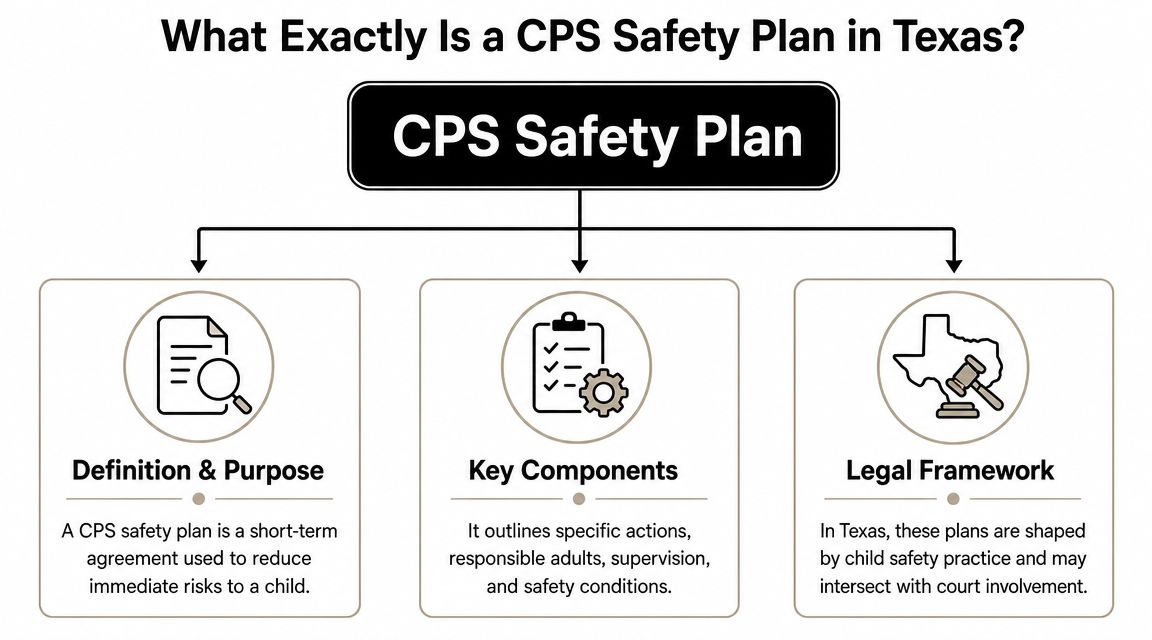
What the plan must include
Texas guidance requires a safety plan to identify the unsafe situation and spell out what will happen next. In plain language, the document should say:
| Part of the plan | What it should answer |
|---|---|
| Unsafe situation | What specific danger CPS says exists |
| Actions | What steps will reduce that danger now |
| Responsible person | Who will carry out each step |
| Timeframe | When each action must happen |
The plan must also include at least one additional person besides the alleged perpetrator. That often means a relative, family friend, or other approved adult who can help monitor safety.
Safety plan versus PCSP
Parents often hear two terms that sound similar but are not identical.
- Standard safety plan: DFPS says this uses Form 2604.
- Parental Child Safety Placement or PCSP: DFPS says an approved family-initiated PCSP uses Form 2207.
That distinction comes from the DFPS Safety Plan Resource Guide describing Form 2604 and Form 2207. A standard safety plan usually sets conditions inside the current family arrangement. A PCSP usually refers to a family-initiated arrangement where the child stays with another caregiver.
What a safety plan is not
A safety plan is not the same as a judge's signed order. It is also not automatically an admission that you abused or neglected your child.
Still, it would be a mistake to treat it like a casual piece of paper. In real life, a signed plan can affect where your child stays, who may supervise contact, and how your home is managed during the investigation. That's why it helps to look at examples of structured safety planning templates so you can see how practical, action-based plans are usually organized. The format may differ from CPS paperwork, but the idea is similar. Specific concern, specific action, specific person, specific timeframe.
A safety plan should be concrete enough that everyone can tell whether it's being followed.
If the language is vague, broad, or unrealistic, that matters. Vague plans create confusion, and confusion creates risk for parents.
Understanding Voluntary Agreements vs Court Orders
This is the part many parents never get clearly explained. A proposed safety plan may feel mandatory because of the pressure surrounding it. But pressure and legal compulsion are not the same thing.
A voluntary agreement is something CPS asks you to sign. A court order is something a judge requires. Those are different legal categories, with different consequences.
Side-by-side difference
| Question | Voluntary safety plan | Court order |
|---|---|---|
| Who creates it | CPS with the family | Judge through court process |
| Is your signature involved | Usually yes | Not required for it to bind you |
| Judicial oversight | Not built in at the start | Yes |
| Can it affect daily life | Yes | Yes |
| Does it carry court-enforceable authority by itself | Not in the same way as a judge's order | Yes |
The confusion happens because a voluntary plan can still be highly restrictive in practice. A parent may agree to leave the home, avoid unsupervised contact, or let a child stay with a relative. Those restrictions can feel as serious as a court order even though a judge has not reviewed them.
Why parents sign quickly
Most parents don't sign because they've carefully weighed every legal consequence. They sign because they're scared. They think refusing will automatically prove guilt. They think they must choose between signing now or losing their child tonight.
Sometimes cooperation is wise. Sometimes it is not. The key is understanding that your choice should be informed, not panic-driven.
Independent Texas policy analysis has argued that safety plans can operate as “shadow removals,” while avoiding the usual court review that accompanies formal removal. If you want to understand the broader authority issue, this discussion of CPS authority and child protective intervention is a useful companion.
The question parents are really asking
Parents usually aren't asking for a dictionary definition. They're asking:
- Must I sign today
- Can CPS force me without going to court
- If I refuse, what might happen next
- If I sign, what rights am I giving up in practice
Those questions deserve careful legal advice because the answer depends on the allegations, the immediate safety claim, and how strong CPS believes its case would be in court.
If CPS wants restrictions on your home, your contact, or your child's placement, you need to understand whether you are agreeing voluntarily or complying with a judge's order. That difference matters.
Texas Family Code Chapter 262 is often where court-ordered removal issues arise. If CPS hasn't gone to court, you should be very clear about what is requested versus what is legally compelled.
How CPS Creates and Enforces a Safety Plan
CPS does not create a safety plan in the abstract. The process starts with an assessment of the child's immediate safety. Texas guidance says the initial safety assessment is completed during the first face-to-face contact with the household, and a safety plan is used only when there is a specific immediate or foreseeable threat to the child.
How the plan is built
Official guidance says the plan must be developed during initial contact if an immediate threat is identified. It must be written with the family, identify the unsafe situation, state the actions to resolve it, name the responsible person, set a timeframe, and be reviewed at least every 30 days. That framework appears in the Texas safety and risk assessment guidance summarized by Child Welfare Information Gateway.
A practical example helps. If CPS believes a parent's untreated substance use creates a present danger, the plan should not merely say “be safe.” It should identify who will supervise the child, what contact rules apply, what immediate action will occur, and who is responsible for each step.
Who can serve as the extra adult
In more complex households, the details matter. DFPS guidance goes beyond saying “find a trusted relative.” The proposed monitor or caregiver must not be involved in the alleged abuse or neglect, and CPS assesses whether that person has the protective capacity to keep the child safe.
That evaluation can include operational questions such as:
- Availability: Can this person supervise when needed?
- Home access: Will CPS be allowed access to evaluate the arrangement?
- Household environment: Who else comes and goes from that home?
- Child needs: Can the adult handle medical, educational, childcare, or special-needs demands?
A common point of confusion is geography. A child cannot be placed outside Texas with a safety plan monitor or PCSP caregiver under this process. That can come as a surprise to families who immediately think of an out-of-state grandparent.
Why fragile plans fail
Some plans look workable on paper but break down in daily life. A grandmother may be willing to help but unable to stay overnight. A family friend may pass initial review but work night shifts. A sibling with disabilities may need care that the proposed monitor cannot provide.
That is why parents should test the plan against real life before signing:
- Read each condition precisely. Don't assume flexibility that isn't written.
- Ask who is responsible. If the plan says “supervision,” name the person.
- Check the schedule. School pickup, work hours, medical appointments, and weekends all matter.
- Address edge cases early. Split households, military service, special-needs children, and rotating caregivers need explicit treatment.
If CPS later claims you failed the plan, details will matter. This overview of what Texas CPS must prove at a hearing and how burden of proof works can help you understand how facts become evidence when a case moves into court.
Protecting Your Rights with a CPS Safety Plan
A caseworker slides a form across the table and says the plan is needed to keep your child safe. The question racing through most parents' minds is simple: Do I have to sign this?
In many cases, that question matters more than anything else on the page. A Texas CPS safety plan can look like a temporary agreement, but it can also limit where you live, who cares for your child, and how often you see your child, all without a judge signing an order. That is why you need to separate two very different things. One is a voluntary agreement. The other is a court order.
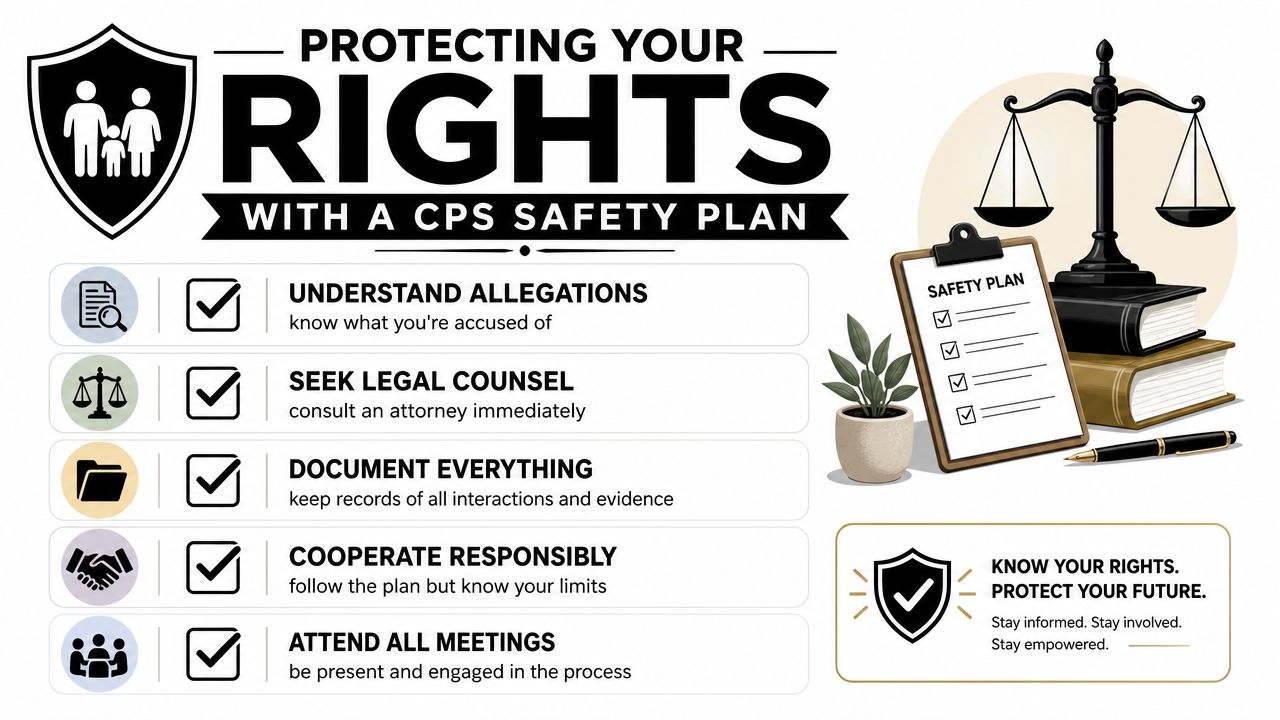
Protect your rights before you sign anything
Treat the document like a contract that could later be used to judge your choices. Read every line slowly. If a sentence is vague, ask the caseworker to explain what it means in plain English and ask for that explanation to be reflected in writing.
You are allowed to ask direct questions. You are allowed to ask for time to speak with a lawyer. You are also allowed to ask whether CPS is requesting your agreement or claiming legal authority to require it.
Start with these practical steps:
- Ask what danger CPS says exists. You need the specific safety concern, not a broad label.
- Identify every restriction. Who can stay in the home, who must leave, who supervises, and who transports the child.
- Get details in writing. Words like "appropriate supervision" or "temporary placement" can create serious disputes later.
- Write down what happens at the meeting. Record names, dates, times, and the exact requests made.
- Ask whether a judge has signed anything. If the answer is no, keep that distinction clear in your mind.
A safety plan works a lot like guardrails put up before a court ever reviews the road. Sometimes families agree because they feel they have no real choice. That pressure is exactly why parents should pause and ask whether they are consenting voluntarily or responding to a valid court order.
Why legal review matters
Some safety plans are reasonable short-term responses to a real concern. Others operate like shadow removals. A parent may be told to leave the home, a child may be placed with a relative, or contact may be sharply limited, yet no judge has heard evidence or entered formal orders.
That concern is discussed in this analysis of shadow removals and safety plans in Texas.
The practical risk is straightforward. If you sign first and sort it out later, CPS may treat the plan as proof that you accepted both the stated danger and the restrictions chosen to address it. If the terms are unrealistic, your later inability to follow them can be framed as noncompliance.
Here is the difference in plain terms:
| If you sign immediately | If you get legal advice first |
|---|---|
| Unclear terms stay unclear | You can ask for exact language |
| Unrealistic conditions go untested | You can point out problems before agreeing |
| CPS may later cite violations | You can reduce avoidable disputes |
| Daily caregiving may shift fast | You can assess whether CPS has legal grounds |
Questions to ask out loud
Parents often worry that asking questions will make them look uncooperative. Usually, the opposite is true. Clear questions show that you are taking the situation seriously.
Ask:
- What exactly is the alleged safety threat?
- Is this voluntary, or is there a court order?
- If it is voluntary, what happens if I do not sign?
- Who decided my child cannot remain with me?
- How long will these restrictions stay in place?
- What do I need to do for the plan to end?
- How do I request a change if the plan does not work in real life?
- What specific proof do you want from me?
One sentence often cuts through the confusion: "Am I agreeing to this voluntarily, or are you showing me a judge's order?"
Ask it plainly.
Be careful with service requirements
Some plans include counseling, drug testing, evaluations, or treatment. If substance use is part of the allegation, focus on what you can realistically start, afford, and complete. For parents trying to understand treatment options, information on qualifying for state funded care may help if rehabilitation services become part of the discussion.
Use the same approach here. Ask whether each service is a recommendation, a condition of the safety plan, or part of a court order. Those are not the same thing.
This is also a good time to understand CPS procedure and family rights more broadly:
If the proposed plan requires you to leave your home, hand over daily care, accept supervised contact, or sign something you do not fully understand, get legal advice quickly. A Texas family law firm that handles CPS-related family matters, such as Law Office of Bryan Fagan, PLLC, can review the proposed terms, explain the likely consequences, and help you decide how to respond.
Once a safety plan is in place, many parents expect things to calm down quickly. Usually, the opposite happens. The paperwork may be signed, but now CPS will watch whether the plan works in daily life.
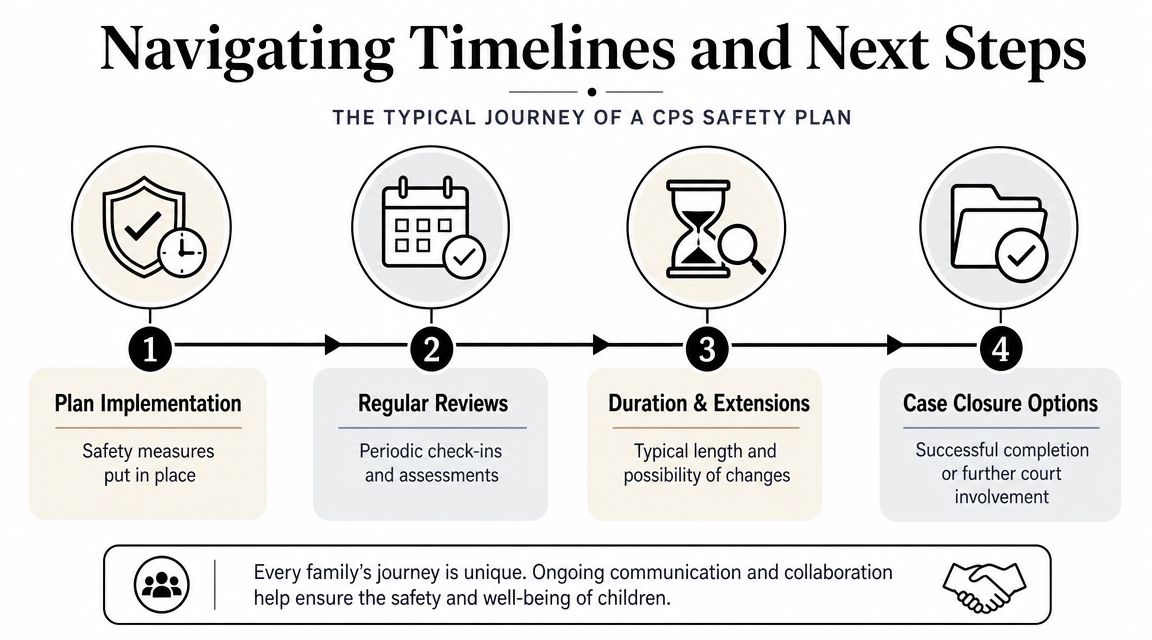
Review periods and what CPS looks for
Texas guidance says a safety plan should be reviewed at least every 30 days or as needed. That review is not just a formality. CPS will look at whether the identified danger still exists and whether the agreed protective steps are happening.
A caseworker will often focus on practical questions such as:
- Consistency: Are the same safety measures being followed every day?
- Reliability: Is the approved monitor or caregiver doing what the plan requires?
- Responsiveness: Have parents addressed the original concern?
- Documentation: Can the family show attendance, communication, and compliance?
If your plan requires classes, evaluations, counseling, or supervised arrangements, keep records in one place. Save texts, appointment paperwork, calendars, and written confirmations.
How a plan can end
A safety plan does not last forever. According to the DFPS Safety Plan Resource Guide, ending a safety plan requires supervisor approval, and it may end when the danger is resolved or when the stage closes with no further DFPS involvement. That means the caseworker alone does not decide informally that the plan is over.
Possible outcomes usually include:
Successful completion
CPS determines the immediate danger has been addressed and closes that stage.Modification or extension
The original plan no longer fits, or CPS believes more time is needed.Escalation to court
CPS decides voluntary measures are not enough and seeks judicial involvement.
What can trigger escalation
Escalation usually happens when CPS believes the danger remains unresolved or the plan is not being followed. Sometimes that is because a parent rejects the plan. Sometimes it is because the plan was unrealistic from the beginning and then breaks down.
A few examples:
- A required supervisor stops participating.
- One parent follows the plan but the other does not.
- The child's needs exceed what the temporary caregiver can manage.
- CPS believes new facts show more serious risk than first understood.
Keep asking one question as the case progresses: “What specific condition must be satisfied for this plan to end?”
That question pushes the process toward measurable goals instead of open-ended supervision.
If court becomes more likely, ask for documentation, review every allegation carefully, and speak with counsel before making major decisions about placement, residence, or contact.
When You Need to Call a Texas Family Law Attorney
Some CPS situations can wait a day for careful planning. Others cannot. If CPS asks you to sign a safety plan that changes where your child lives, who can see your child, or whether you can stay in your own home, get legal advice immediately.
Red flags that should prompt a call
You should contact a Texas family law attorney right away if any of these are happening:
- You're being told to leave the home
- CPS is limiting or blocking contact with your child
- A relative placement is being pushed without clear terms
- You disagree with the allegations
- The plan is vague, one-sided, or impossible to follow
- You're being asked to sign immediately
- You suspect the “voluntary” plan is replacing a court process
Texas Family Code issues involving child protection can move fast. So can the practical consequences. A parent who signs the wrong document under pressure may spend months trying to undo it.
What a lawyer can do
A lawyer can review the proposed terms, explain whether the restriction is voluntary, communicate with CPS, and help you preserve evidence. If court becomes involved, counsel can also help you prepare for hearings under the Texas Family Code and frame the facts clearly.
You do not need to have every answer before you call. You only need to recognize that this is one of those moments where caution protects families better than speed.
If you need help navigating a CPS investigation, safety plan, or any family law matter in Texas, contact The Law Office of Bryan Fagan today for a free consultation.
If you're facing a CPS safety plan in Texas and need clear advice about your rights, your options, and what to do before signing anything, contact Law Office of Bryan Fagan, PLLC for a free consultation. Calm, informed action now can make a major difference for your family.