

There’s something oddly powerful about standing in front of the mirror and asking yourself, “Do I still want this name?” If you’re going through a divorce and that question keeps popping into your head, you’re not alone. Here’s your answer in one punchy sentence: Legal Name Change During a Texas Divorce is absolutely possible—and doing it right the first time will save you time, money, and future headaches.
Whether you’re reclaiming your maiden name or choosing something entirely new, your name change can be part of the divorce process—if you know how to make it official in the eyes of Texas law. Miss your chance in the paperwork? You could be in for extra court dates, filing fees, and a bureaucratic roller coaster you never asked to ride.
This article breaks it all down: how to request your name change in your divorce petition, what happens if you forget, how it affects kids, bank accounts, professional licenses, and even your digital identity. We’ve got real-life stories, practical tips, and a bit of emotional wisdom to help guide you through what might be one of the most satisfying boxes you’ll check during this whole process.
Ready to own your name and your next chapter? Keep reading. It’s time to turn the page—on your terms.
Key Takeaways
- Initiating a name change request early in a Texas divorce simplifies the legal process and helps avoid additional costs and paperwork.
- The final divorce decree must explicitly state the name change to serve as the legal foundation for updating identification documents.
- Working with a family law attorney can ensure a smooth name change process, providing legal guidance and support throughout the transition.

Your Family’s Future Starts Here
Don’t navigate your legal journey alone. Schedule a consultation now and get the clarity and support you deserve.
Understanding Legal Name Change During a Texas Divorce
Legally pursuing a legal name change during a Texas divorce may feel like just another box to check, but for many, it’s a deeply personal step toward reclaiming identity and starting over. Under Texas Family Code Section 6.706, a spouse can request to return to a previously used name—such as a maiden name—directly within the divorce proceedings. Including this request in your Original Petition for Divorce or Answer ensures the court can grant the change in your Final Decree of Divorce, saving you the hassle and expense of a separate court process later.
If you miss the opportunity to include your name change in the divorce, you’ll need to file a separate Petition for Change of Name of an Adult, which involves additional steps like fingerprinting, a background check, and court filing fees that can range from $150 to $300 or more depending on your county. Including the name change in the original case streamlines the process and avoids unnecessary delays—especially important when you’re trying to move forward.
At the Law Office of Bryan Fagan, PLLC, we help make the process smooth and stress-free so you can focus on what’s ahead. Whether you’re restoring your maiden name or choosing a name that better reflects who you are now, we’ll guide you every step of the way. For a detailed walkthrough, check out our blog: Changing Your Name After a Texas Divorce.

Initiating a Name Change Request in Your Divorce Petition
Requesting a name change early in the divorce process simplifies legal proceedings and saves additional steps. You can include this in the Original Petition for Divorce or in your response if your spouse filed first.
Clearly state your intention to change your name in the required forms when submitting your divorce documents. Specify whether you wish to revert to your maiden name, a previously used name, or a new name. Failing to make this request properly can result in additional legal steps and costs later.
Getting this right from the start is crucial. Omitting the name change request can necessitate additional paperwork and extra filing fees, prolonging the legal process and adding stress during an already difficult time.
Requirements for a Name Change in the Final Decree of Divorce
When a Texas family court judge approves your request for a legal name change during a Texas divorce, the order is included in your Final Decree of Divorce, making it the official document needed to update your name across government agencies, financial institutions, and personal records. According to Texas Family Code Section 6.706, the court may restore a party’s name to a previously used name as part of the divorce proceedings without the need for a separate legal filing. This approach saves time, money, and paperwork by avoiding a separate name change petition after the divorce is finalized.
The decree must clearly state the new name being adopted. This language acts as the legal foundation for changing your name on your Social Security card, driver’s license, bank accounts, and more. However, if you want to adopt a name that was not previously used—such as an entirely new last name or a brand-new identity—you will need to file a separate petition under Texas Family Code Chapter 45, which governs adult name changes. This process involves additional requirements, including a background check and a hearing to demonstrate the name change is not being requested for fraudulent or criminal purposes.
To ensure your name change is legally recognized without delays or rejections from institutions, make sure your final decree includes the full legal name you’re returning to and that it is clearly stated as part of the court’s order. At the Law Office of Bryan Fagan, PLLC, we guide clients through this process and help them obtain certified copies of their divorce decree for official use. For step-by-step instructions on how to get your certified decree, visit: How to Get a Certified Copy of Your Divorce in Texas.

Amending Filings If Name Change Was Not Initially Requested
If you overlooked the name change request in your initial divorce petition, it is possible to amend your filings before the trial date. However, make these requests at least 30 days prior to the scheduled trial date to ensure timely processing.
Adopting a name you have never used before requires a specific court hearing to evaluate the request. The hearing will assess whether the name change serves your best interests and poses no public harm. If approved, the judge will issue a separate court order for the name change.
Knowing how to amend your divorce filings to include a name change can save additional legal steps and ensure your new name is legally recognized without delays and costs.
Obtaining Certified Copies of the Final Decree
After the judge approves your name change and it is included in the final divorce decree, obtaining certified copies is crucial. These serve as legal proof of your name change and are necessary for updating identification documents.
Obtain certified copies from the district clerk’s office where your divorce was granted. Requests can be made online via Texas.gov, by mail, or in person. Processing times vary, with some requests completed the same day and others taking up to 24 hours.
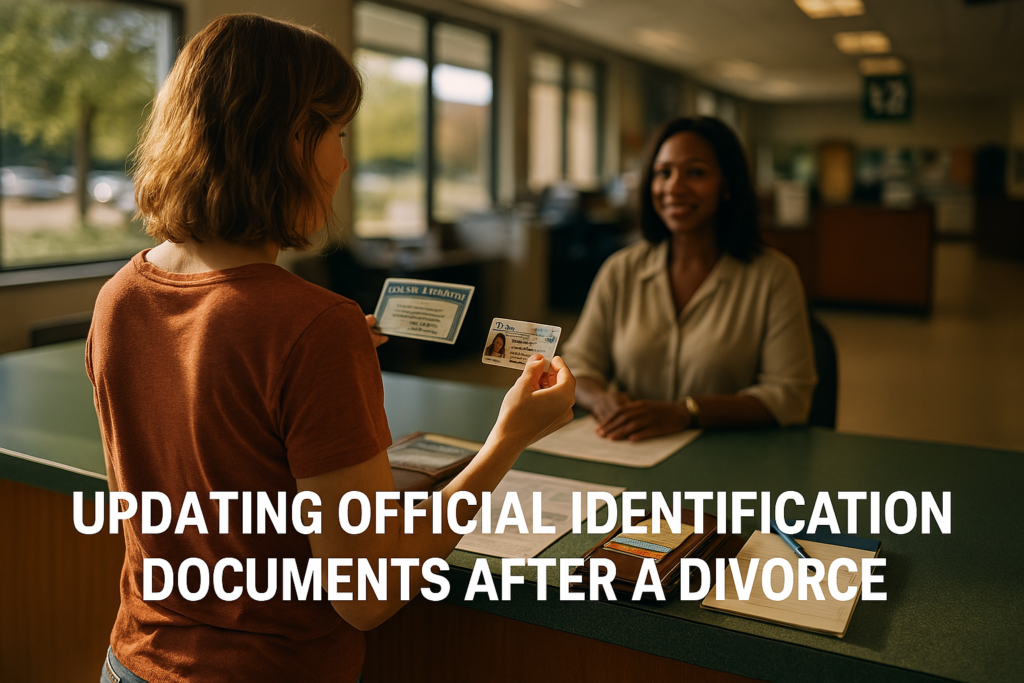
Updating Official Identification Documents Post-Divorce
Updating your official identification documents after a legal name change during a Texas divorce is a critical step in maintaining your legal identity and ensuring consistency across all records. Once your name change is included in the Final Decree of Divorce—as authorized under Texas Family Code Section 6.706—you’ll need to obtain a certified copy of that decree to begin the update process. The first agency you should notify is the Social Security Administration, as your Social Security record impacts employment, taxes, and government benefits. Be sure to bring a certified copy of the decree when submitting your name change request.
Next, update your Texas driver’s license or ID card through the Department of Motor Vehicles. Texas law requires that you do this within 30 days of your name change. You’ll need to bring your certified decree along with any required forms or identification. It’s also essential to update your passport, birth certificate (if applicable), voter registration, and other government-issued documents to avoid discrepancies. Financial institutions, insurance providers, schools, and utility companies may each have different requirements for processing a name change, so gather those in advance and keep extra copies of your decree on hand.
Having multiple certified copies of your divorce decree will help you navigate these updates more efficiently, as many institutions will request to see the original court order. At the Law Office of Bryan Fagan, PLLC, we help clients through every stage of the name change process—including obtaining certified decrees and ensuring compliance with Texas law. For help with obtaining your court documents, visit our blog: How to Obtain a Copy of Your Final Custody Order in Texas.
Practical Tips for a Smooth Name Change Process
At the Law Office of Bryan Fagan, PLLC, we understand that preparation is everything when it comes to managing a legal name change during a Texas divorce. To ensure a smooth transition, we recommend creating a thorough checklist of all the institutions you’ll need to notify. This includes federal and state agencies, financial institutions, insurance providers, utility companies, and any other organizations where your legal name appears. A well-organized plan helps you update all necessary records promptly and avoid disruptions in services, access, or benefits.
According to Texas Family Code Section 6.706, the court may grant a name change as part of your Final Decree of Divorce if requested. Once granted, it’s essential that your name matches consistently across all documentation, especially with the Social Security Administration, financial accounts, tax records, and identification cards. Having multiple certified copies of your divorce decree on hand will allow you to update multiple agencies simultaneously, saving time and reducing the risk of clerical errors or mismatches in your records.
Accuracy and consistency are key when changing your name after divorce. Even a small discrepancy between legal documents can lead to frustrating delays or denials when applying for benefits, traveling, or completing financial transactions. With the right planning, you can avoid those setbacks and step confidently into your next chapter. For more information on whether your last name will automatically change after divorce and what steps to take, read our guide here: I Was Recently Divorced—Will My Last Name Change?.

Real-Life Examples and Testimonials
Real-life examples and testimonials provide valuable insights into the name change process during a Texas divorce. For instance, Jane Doe shared how changing her name back to her maiden name helped her move forward with a fresh start, leaving behind the emotional baggage of her previous marriage.
John Smith highlighted the supportive role of his family law attorney in guiding him through the separate legal process and ensuring all his legal documents were updated correctly.
These testimonials illustrate how a legal name change can be pivotal in starting a new life and how individuals can legally change their identities.
Working with a Family Law Attorney
Working with an experienced family law attorney is one of the best ways to ensure that your legal name change during a Texas divorce is handled efficiently and accurately. At the Law Office of Bryan Fagan, PLLC, we walk clients through each legal step—from requesting the name change in the divorce petition to making sure it’s correctly included in the Final Decree of Divorce. Under Texas Family Code Section 6.706, a judge can restore a party’s former name as part of the divorce, but the process must be followed precisely to avoid future complications.
An attorney doesn’t just make the paperwork easier—they also help you understand the broader legal implications of a name change. Whether it’s coordinating updates to your Social Security record, driver’s license, passport, or financial accounts, a knowledgeable lawyer ensures that your new name is recognized consistently across all documents. This prevents costly delays, rejections, and mismatches that could otherwise derail your transition.
Clients who work with skilled legal counsel often report greater peace of mind during what can be an emotionally challenging time. Your attorney becomes your advocate, making sure the name change is completed correctly and your rights are fully protected. If your name change wasn’t addressed in your divorce decree and you’re now pursuing it separately, the process falls under Texas Family Code Chapter 45, which applies to adult name changes. For more on that process, visit our blog: What Is the Procedure for an Adult to Change Their Name in Texas?.

Conclusion:
Let’s be honest—there’s something poetic about ending a marriage and reclaiming your name all in one swoop. It’s like editing the credits of your life and finally getting the starring role and the right name on the marquee.
Maybe you’re returning to your maiden name because it feels like home. Maybe you’ve always dreamed of a fresh identity, one that doesn’t carry your ex’s baggage along for the ride. Or maybe you’re just tired of spelling that ridiculously long last name every time you order tacos. (We see you, Ms. Van Der Something.)
Whatever your reason, one thing’s clear: a legal name change during a Texas divorce gives you control over how your next chapter begins. It’s practical, yes—but it’s also powerful. And if you’ve ever signed a check, filled out a form, or introduced yourself at a party and thought, “This name just doesn’t fit anymore,” then you already know how big of a deal it really is.
So don’t let this moment pass you by. Include the name change in your divorce. Skip the extra fees and post-divorce paperwork blues. Make your fresh start official—and fabulous.
Because the divorce may end a relationship, but the name? That’s your story now. And you get to write it however you want.