Planning for a loved one with a disability involves far more than day-to-day caregiving. One of the most critical long-term decisions you can make is how to manage financial support without compromising their eligibility for essential public benefits. That’s where special needs trust planning becomes a vital tool in securing their future.
Whether you’re a parent, sibling, or legal guardian, the purpose of a special needs trust (SNT) is to allow someone with a disability to benefit from financial support without losing access to Supplemental Security Income (SSI), Medicaid, or other state and federal assistance programs. But the trust must be properly drafted, funded, and administered—especially under the rules enforced in Texas.
We’ll walk you through everything you need to know about special needs trust planning, from understanding your options to making decisions that work long-term.
- What Special Needs Trust Planning Involves
- When Special Needs Trust Planning Becomes Necessary
- Key Decisions in Special Needs Trust Planning
- Why Texas Law Makes Special Needs Trust Planning Unique
- Common Mistakes to Avoid During Special Needs Trust Planning
- Special Needs Trust Planning for Siblings and Extended Family
- Working with Professionals to Strengthen Your Planning
- How to Start Your Special Needs Trust Planning Today
What Special Needs Trust Planning Involves
Special needs trust planning is not just about drafting documents. It’s about creating a long-term financial strategy that protects the beneficiary, complies with state and federal rules, and provides for needs beyond what public programs cover.
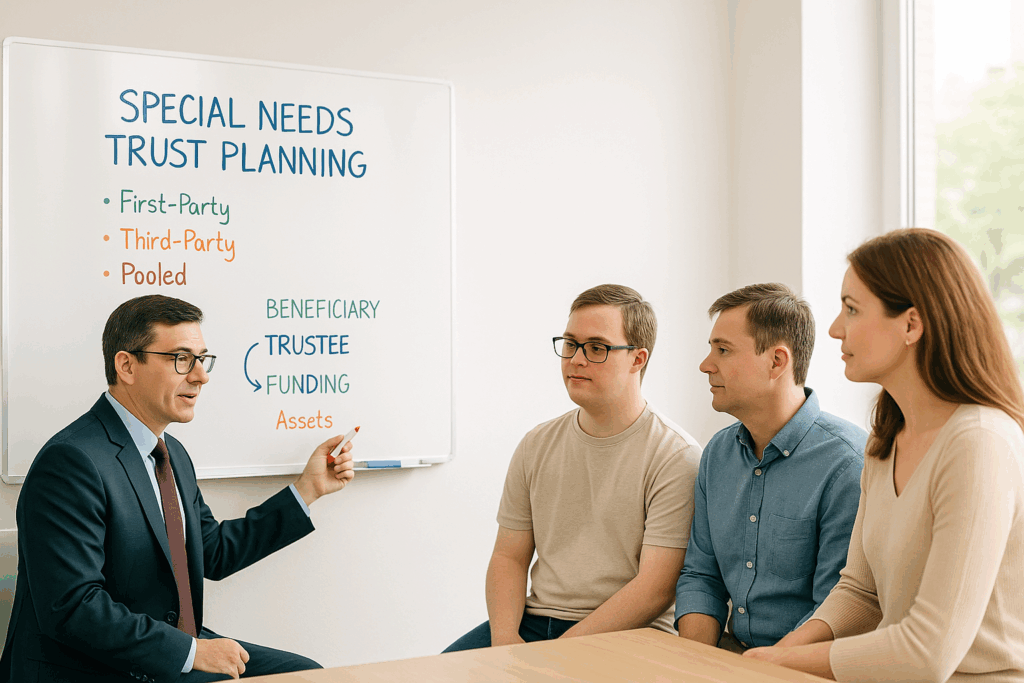
There are generally three types of special needs trusts:
- First-party SNTs (funded with the beneficiary’s own assets)
- Third-party SNTs (funded by someone else, typically parents or relatives)
- Pooled SNTs (managed by nonprofit organizations that combine multiple beneficiaries’ funds for investment purposes)
In Texas, all of these trusts must meet specific criteria to be valid. They must be irrevocable, and the funds should not be directly accessible to the beneficiary.
Proper planning includes:
- Choosing the right trust type
- Naming a qualified trustee
- Understanding permissible distributions
- Drafting the trust with Texas-specific compliance
- Preparing for long-term administration and potential successor trustees
When Special Needs Trust Planning Becomes Necessary
Many families start considering a trust after receiving a diagnosis that impacts lifelong independence. However, the need for planning often becomes urgent in specific scenarios:
Inheritance or Settlement
If your loved one is set to receive a lawsuit settlement, insurance payout, or inheritance, placing these funds directly in their name could disqualify them from government assistance. In Texas, any assets exceeding $2,000 can be considered countable and lead to loss of Medicaid or SSI benefits.
Planning ahead helps prevent this kind of disruption.
Aging Parents or Guardians
If you’re the primary caregiver and approaching retirement or managing your own estate, now is the time to ensure your child or relative will be protected even if you’re no longer there to manage their affairs. Trust planning allows you to pass on your assets securely and responsibly.
Key Decisions in Special Needs Trust Planning
Making the right choices during the planning process determines whether the trust is effective. These are the top elements to think through:
1. Selecting a Trustee
The trustee plays a central role in managing the trust, ensuring legal compliance, and authorizing distributions. You can choose:
- A trusted family member (only if they understand SSI and Medicaid rules)
- A professional fiduciary
- A trust company or bank
- A nonprofit organization that administers pooled trusts
In Texas, a trustee must be capable of handling fiduciary duties and must follow the Texas Property Code, which governs trust administration.
2. Determining Funding Sources
You may fund a special needs trust with:
- Life insurance proceeds
- Retirement accounts (carefully structured)
- Gifts or bequests
- Court settlements
- Savings and investments
A third-party SNT can be funded while you’re alive or through your will. A first-party SNT, on the other hand, often results from settlements or direct asset ownership by the individual with special needs.
3. Understanding Distributions
Funds in the trust must supplement what public benefits do not cover. For example:
Allowed:
- Education
- Transportation
- Medical and dental expenses not covered by Medicaid
- Assistive technology
Recreational activities - Travel with caregivers
Not allowed:
- Direct cash payments to the beneficiary
- Housing and food expenses (if not structured carefully)
Improper distributions can trigger benefit reductions or terminations. Texas follows federal rules here but also expects trustees to act in good faith and in compliance with trust purposes.
Why Texas Law Makes Special Needs Trust Planning Unique
In Texas, trust planning interacts with state-specific interpretations of Medicaid and SSI rules. Trustees must be aware of both federal Social Security Administration guidance and how the Health and Human Services Commission (HHSC) views asset limits, disbursements, and spend-down strategies.
Some key Texas-specific considerations:
- The Texas Estates Code governs guardianship and how SNTs may interact with guardian powers.
- The Texas Uniform Trust Code (Title 9, Subtitle B of the Property Code) lays out how trustees must behave, including fiduciary standards, investment prudence, and reporting.
- For first-party SNTs, a Medicaid payback clause is mandatory. Upon the beneficiary’s death, remaining funds may need to reimburse the state for Medicaid benefits provided.
Attorneys in Texas often tailor SNTs to include language that anticipates HHSC scrutiny or builds flexibility into trustee authority.
Common Mistakes to Avoid During Special Needs Trust Planning
Special needs trust planning can go wrong when key steps are skipped or misunderstood. Here are a few pitfalls:
Naming the Beneficiary as Trustee
This invalidates the structure and disqualifies them from benefits.
Forgetting the Medicaid Payback Clause
If omitted from a first-party trust, the document can be rejected by Medicaid reviewers in Texas.
Failing to Coordinate with Your Will or Life Insurance
Even with a trust in place, assets passed through a will or insurance policy must be directed properly, often by naming the SNT as a beneficiary.
Relying on Generic Online Templates
These often don’t include Texas-specific provisions, and small wording errors can create major eligibility problems.
Special Needs Trust Planning for Siblings and Extended Family
Sometimes extended family members want to support the beneficiary. Without proper planning, their gifts or inheritances could hurt more than help.
You may encourage relatives to:
- Name the third-party SNT in their will or living trust
- List the SNT as a beneficiary of life insurance or retirement accounts
- Avoid giving direct gifts, especially in cash
This strategy ensures that family generosity supports long-term care without affecting benefit eligibility.
Working with Professionals to Strengthen Your Planning
Creating a legally sound and practically useful special needs trust takes more than just filling out paperwork. Collaboration with the right professionals makes all the difference.
You’ll likely work with:
- Estate planning attorneys familiar with special needs issues
- Financial advisors who understand long-term care planning
- Care managers or social workers who assess support needs
- Professional trustees or trust administrators
This team can help you weigh the advantages of trust types, manage funding strategy, and make smart choices that protect both legal eligibility and quality of life.
How to Start Your Special Needs Trust Planning Today
If you’re ready to move forward, here are the first steps:
- Gather key documents: medical diagnosis, income and asset records, list of public benefits.
- Define long-term goals: What quality of life do you want the trust to support?
- Consider your successor trustee: Who will manage things when you’re no longer available?
- List all potential funding sources: including life insurance, savings, or property.
- Schedule a planning session with an attorney: This ensures your trust meets Texas law requirements.
You can also explore whether you need a letter of intent (a nonbinding document outlining your child’s preferences, routines, and medical needs) to accompany the trust. Though not legally binding, it’s extremely helpful to trustees and caregivers.
Conclusion
Special needs trust planning is a cornerstone of long-term support for individuals with disabilities. Done correctly, it allows you to provide meaningful care while preserving access to essential benefits. This isn’t something to delay or take lightly. With the right knowledge and professional support, you can set up a trust that protects your loved one for years to come—both financially and legally.
Other Related Posts
- What Are the Texas Guardianship Age Requirements? A Full Guide
- Living Will Documents: A Complete Guide to Making Your Wishes Clear
- Texas Guardian Background Check Qualifications: What Courts Look For
- Setting Up a First-Party Special Needs Trust: Everything You Should Know
- Difference Between Living Will and Last Will and Why Both Matter
- How to Get Money Out of a Special Needs Trust: Key Rules and Steps Explained
- Living Will vs DNR: Key Differences and How Each Impacts End-of-Life Care
- What Is a Special Needs Trust Fund and How It Protects Benefits
- Revocable Living Trust Tax Benefits: Essential Insights for Families
- Guardianship Application Process in Texas: Step-by-Step Legal Overview
- Special Needs Trust vs Supplemental Needs Trust: What’s the Real Difference?
- Should You Create a DIY Revocable Living Trust? What You Need to Know
Frequently Asked Questions
While you can find templates online, it’s strongly recommended to work with an attorney who understands special needs law and Texas-specific trust requirements.
Yes, third-party trusts can be funded during your lifetime, and doing so allows the trustee to start managing distributions and adjusting to the beneficiary’s evolving needs.
There is no legal minimum, but working with a professional trustee or corporate entity often involves minimum funding thresholds. Smaller amounts may be better suited to pooled trusts.
In a first-party SNT, remaining funds may be used to reimburse the state for Medicaid services. In a third-party trust, you can designate alternate beneficiaries.
They can, but doing so may reduce SSI benefits if not structured carefully. Trustees often use techniques like direct vendor payment or covering specific non-shelter costs first.