

When you have a loved one who lives with a disability, planning for their financial future involves more than just a standard will or trust. That’s why estate planning with a special needs trust becomes such a critical part of your overall strategy. The goal is to provide for your family member’s long-term well-being, ensure they can remain eligible for vital programs like Medicaid and SSI, and craft a plan that adapts to changing life circumstances. Drawing on Texas state law and federal benefit rules, you’ll want to align your estate plan so that the assets you set aside enhance support without undermining safeguards.
Let’s explore the core components of estate planning with a special needs trust. We’ll examine what it is, how to choose the right type, what funding and administration look like, how to work it into your broader estate-plan, and finally how you make decisions when you’re ready to act.
What Is Estate Planning with a Special Needs Trust
An essential step in protecting a loved one who receives government benefits is setting up a supplemental support vehicle. The concept of estate planning with a special needs trust refers to establishing a trust for the benefit of a person with a disability so that:
- The trust assets are managed by a trustee.
- The beneficiary’s eligibility for programs like Supplemental Security Income (SSI) and Medicaid remains intact.
- The funds supplement, rather than replace, the public benefits your loved one receives.
Under Texas law, there are no special statutory provisions that apply exclusively to a “special needs trust” rather the trust must satisfy general trust requirements and be drafted and administered in a way that avoids triggering disqualification from public benefits.
Types of Trusts to Consider
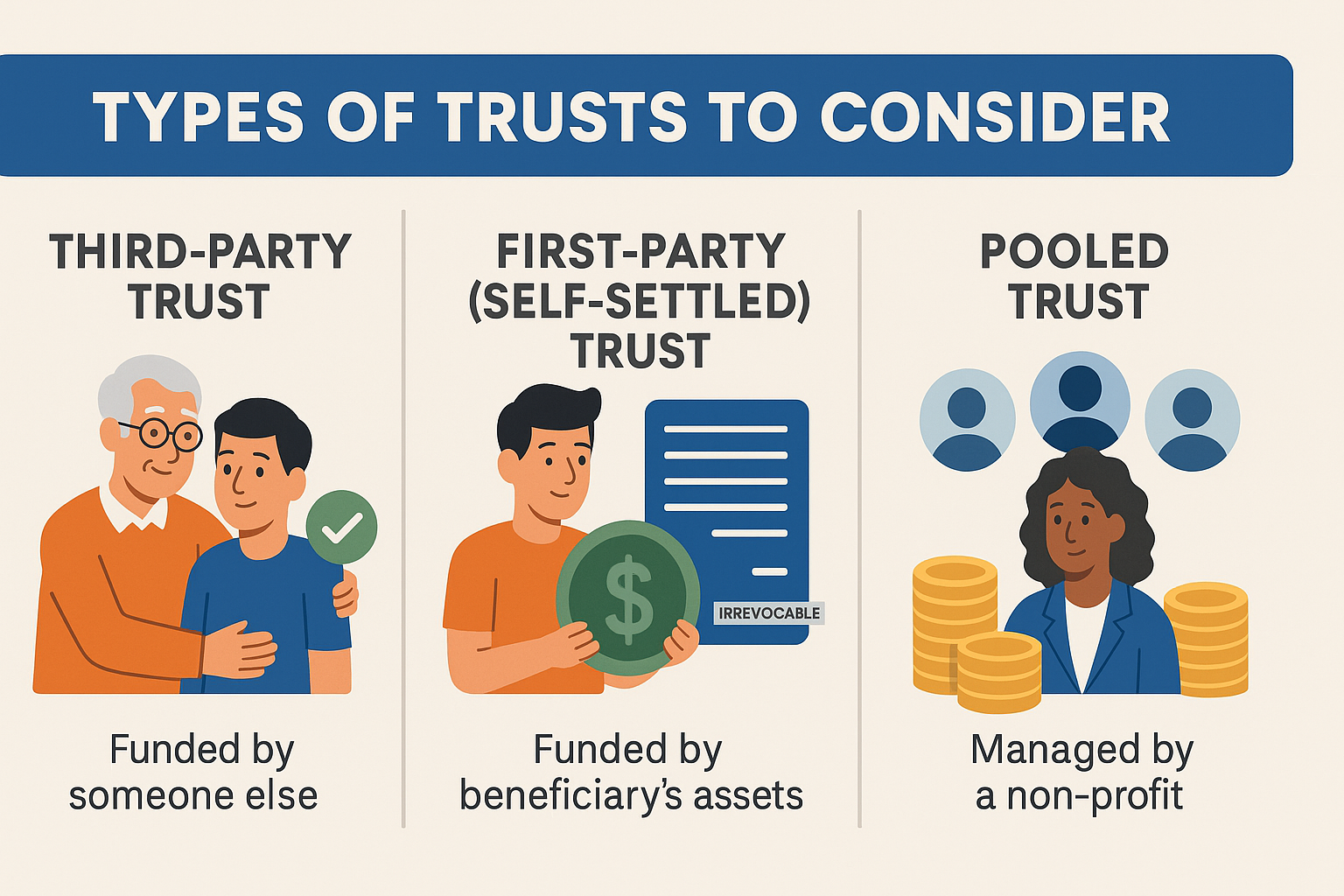
When you engage in estate planning with a special needs trust, you typically choose among:
- Third-party trust: Funded by someone other than the beneficiary (for example parents, grandparents). There is generally no Medicaid payback requirement for remaining assets.
- First-party (self-settled) trust: Funded by the beneficiary’s own assets (settlement, inheritance) and must meet special federal rules such as being irrevocable, established by certain parties, and often subject to payback to the state for Medicaid.
- Pooled trust: Managed by a non-profit organization pooling funds of multiple beneficiaries, each with separate accounts; useful when a dedicated individual trust is not feasible.
Understanding which option fits your family is a key early step in effective estate planning with a special needs trust.
Why Integrate a Special Needs Trust Into Your Estate Planning
There are several reasons you’ll want to include this tool in your estate plan:
- To protect government-benefit eligibility by segregating assets so they are not “countable” for SSI or Medicaid.
- To provide discretionary support for your loved one, things beyond basic necessities, which public benefits may not cover.
- To define a clear structure of who manages assets (trustee), how funds are used, and what happens to leftover assets if the beneficiary passes away.
- To coordinate with other estate planning vehicles (will, power of attorney, guardianship designation) so your entire plan works together.
Funding and Administering the Trust
Once you decide to incorporate estate planning with a special needs trust, you’ll need to focus on funding and administration details. Key considerations include:
- Timing: For a first-party trust in Texas, the trust must be established by a qualifying party and funded before the beneficiary turns 65 years old.
- Assets: Funding can come from cash, investment accounts, real estate, life insurance proceeds, settlement awards, or even retirement accounts (though special care is needed with those).
- Trustee role: The trustee must act with discretion, follow the trust’s terms, maintain proper records, and make distributions consistent with benefit-eligibility rules. Missteps can result in loss of benefits.
- Permissible uses: The trust may pay for expenses beyond basic necessities like food or shelter (which risk interfering with SSI), such as educational classes, assistive equipment, therapies, home modifications, travel, hobbies, or technology.
- Administration oversight: Best practice is to review the trust periodically, update it to reflect changes in law, ensure successor trustees are named, and monitor beneficiary’s changing needs.
Integrating Into Your Estate and Legacy Plan
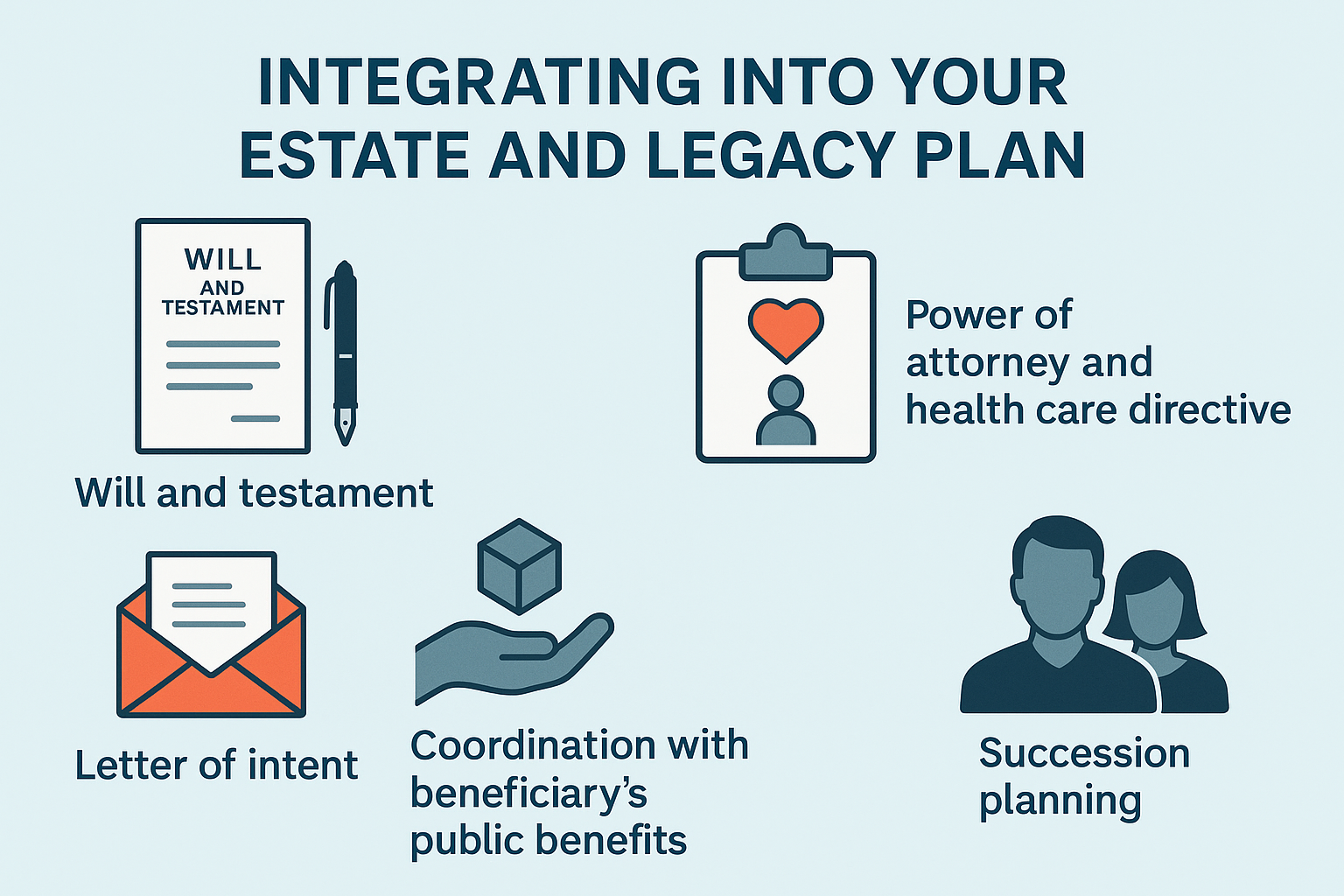
Estate planning with a special needs trust does not exist in isolation. You’ll also want to address how it fits into the broader scheme:
- Will and testament: Your will should provide for funding the special needs trust (especially for third-party trusts) and designate remainder beneficiaries if permitted.
- Power of attorney and health care directive: You should consider who will act for the beneficiary if they need financial or medical decision-making support.
- Letter of intent: Although not legally required, a letter of intent can help communicate your wishes about the beneficiary’s quality of life, preferences, routines, and trusted contacts.
- Coordination with beneficiary’s public benefits: Because the goal is to preserve eligibility for SSI, Medicaid and other waiver programs, you’ll want your estate planning with a special needs trust to be aligned with benefit counsel.
- Succession planning: Who will serve as trustee now, and who will take over if that person is unavailable? What happens if you (the grantor) can no longer serve your planning role?
Avoiding Common Pitfalls
Every plan has areas where errors can undermine your goals. When you engage in estate planning with a special needs trust, watch out for:
- Direct cash distributions to the beneficiary (which may count as income for SSI) instead of payments made to vendors or providers.
- Paying for housing or food where the trust fails to follow the “in-kind support and maintenance” rules, triggering an SSI reduction.
- Trustee lacks training or fails to keep records of distributions and correlate them with trust terms and eligibility rules.
- Failure to revisit the trust when laws change (for example digital assets, successor trustee, pooled trust options).
- Overlooking how the trust interacts with other parts of your estate plan, such as unintended inheritance going directly to the beneficiary and counting against eligibility.
Choosing the Right Trust Strategy and Getting Started
When you are ready to implement estate planning with a special needs trust, follow a step-by-step approach:
1. Identify the beneficiary’s current and anticipated needs: Their functioning, support network, housing, therapies, education, recreation.
2. Define your asset base: What resources you or others may allocate to the trust now or later (and how this fits with your overall estate plan).
3. Choose the trust type: First-party, third-party or pooled trust–based on who provides funding, when, and whether payback to Medicaid is a concern.
4. Select the trustee and successor trustees: Someone trustworthy, disciplined, familiar with fiduciary duties and benefit rules, or consider a professional trustee.
5. Draft the trust document: Clearly articulate purpose, allowable distributions, trustee authority, remainder beneficiaries, succession. In Texas, the trust must meet general trust law; there are no unique statutory “special needs trust” requirements but it must be structured with benefit-eligibility in mind.
6. Fund the trust: transfer assets into it at the right time. For third-party trusts you might fund at death or during life. For first-party trusts you must follow age and sourcing rules.
7. Coordinate with your estate documents: your will, power of attorney, healthcare directive and guardianship or supported decision-making documents should reflect how the trust fits your plan.
8. Maintain administration: periodic review, documentation of distributions, review of beneficiary’s status, trustee performance, and making sure your plan evolves with laws and life changes.
9. Communicate with relevant parties: trustee, beneficiary (where appropriate), other family members, your estate planning attorney, benefits advisor. Clear communication helps avoid unintended disruptions.
10. Review regularly: as laws change (for example new rules for distribution reporting or digital assets), revisit your estate planning with a special needs trust to confirm it remains aligned.
When It Becomes Time to Act
Deciding when to implement your plan is important. If your loved one is already receiving public benefits and you anticipate an inheritance, settlement, or you want to set aside funds in advance, acting sooner rather than later gives you more flexibility and control. If you wait, you risk assets passing outright and counting against eligibility, or missing the ideal timing for trust funding and structure. From the decision-stage perspective: once you understand your objectives and resources, engage your professional advisors (estate planning attorney, benefits advisor, trust professional) and move forward with the trust creation and integration.
Conclusion
Including a special needs trust as part of your estate planning offers you a powerful way to support a loved one with a disability while preserving their access to vital public benefits. By selecting the right type of trust, funding it in a timely way, choosing a prudent trustee, integrating it into your broader estate plan, and reviewing it regularly, you create a flexible support vehicle that aligns with both your family’s goals and legal requirements. Your attention now to estate planning with a special needs trust can mean enhanced quality of life for your beneficiary, peace of mind for your family, and a clear path forward for what comes next.
Other Related Posts
- Why You Need an Attorney for Living Will Decisions and Planning
- Finding the Right Texas Special Needs Trust Lawyer for Your Family’s Future
- Is a Living Will Legally Binding and How It Works in Real Situations
- Key Benefits of Minor Guardianship in Texas: Legal Protection and Parental Support
- Creating a Living Will: A Clear Legal Framework for Your Future Care
- How to File for Temporary Guardianship the Right Way: What You Need to Know
- Understanding the Cost of Special Needs Trust for Long-Term Planning
- How to Set Up a Living Will: Step-by-Step Legal Planning Guide
- Texas Guardianship Attorney Services: Essential Legal Support for Families
- Special Needs Trust Medicaid Guide: Protecting Benefits Without Sacrificing Support
- Advance Directives vs Living Will: A Practical Comparison for Medical Planning
- Texas Court Guardianship Evaluation Process: How It Works and What to Expect
Frequently Asked Questions
If funds are given directly to a person receiving SSI or Medicaid without the protection of a special needs trust, those assets may be considered “countable” and could cause a reduction or loss of benefits.
While you can name yourself (or a family member) as trustee, you should ensure the trustee understands fiduciary duties and benefit-eligibility rules. Sometimes appointing a professional or co-trustee is a better choice for complex situations.
Typically, third-party trusts funded by someone other than the beneficiary do not require repayment to Medicaid upon the beneficiary’s death. But you must ensure the trust document is drafted properly and follow other rules.
Distributions for food or shelter are treated differently under SSI rules and may reduce benefits if considered “in-kind support and maintenance.” Consult your advisor to determine whether the trust may pay rent, utilities or related housing costs without triggering eligibility issues.
It’s wise to review your estate planning with a special needs trust at least every few years or whenever major life events occur (inheritance, change in beneficiary needs, law changes, trustee changes). Regular reviews help ensure the plan remains effective and aligned with current law.