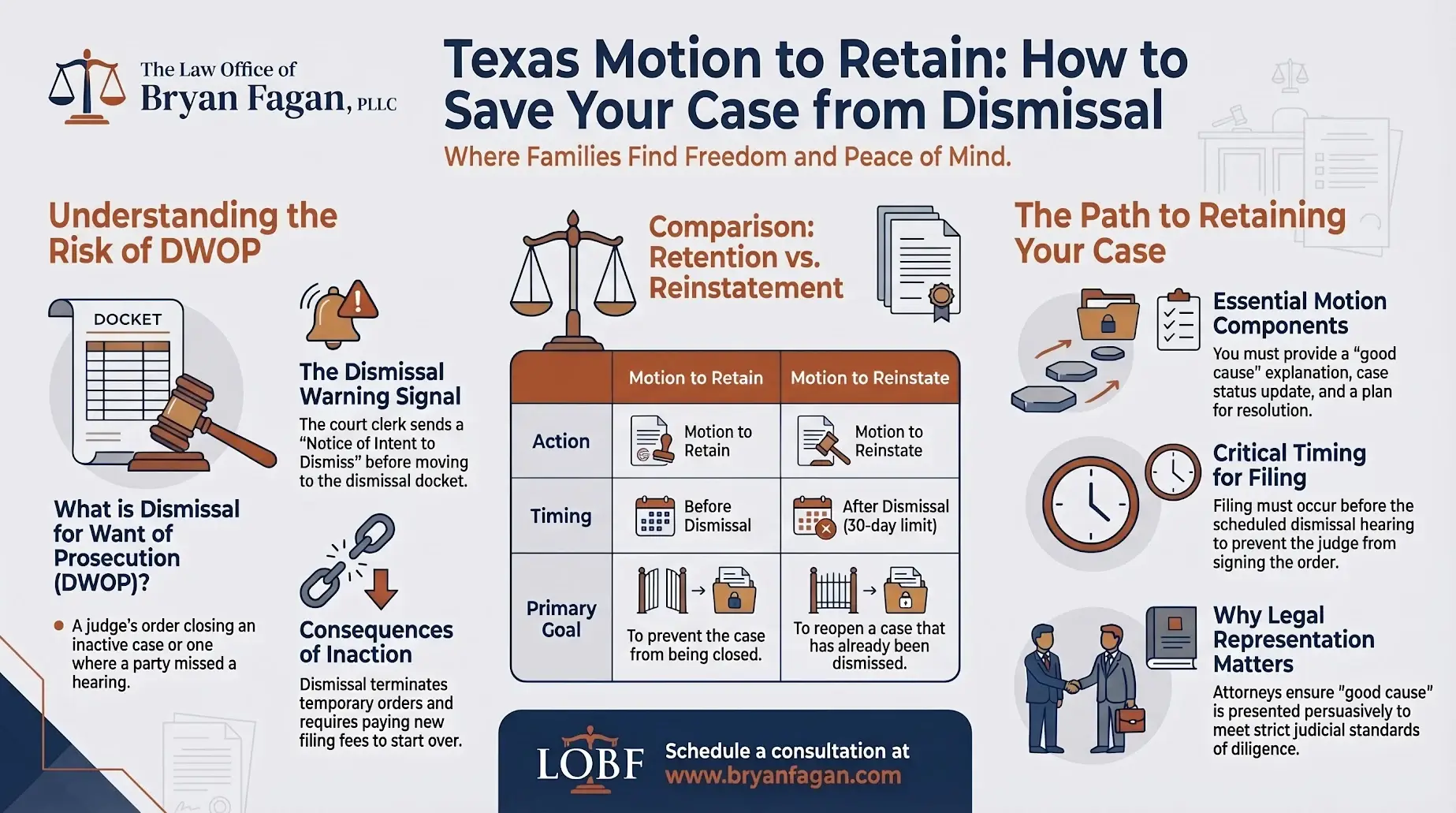
It often starts with something small—a missed court date, a delayed response, or a case that seems to stall without warning. One client once told us it felt like watching their case slowly drift out of their hands, unsure of what to do next or how to stop it. In moments like that, understanding tools like a Texas Motion to Retain can be the difference between regaining control and losing valuable ground in your case.
When a family law case is placed on the dismissal docket, it’s not just a procedural issue—it’s a signal from the court that action is required. Under Texas Rule of Civil Procedure 165a, courts have the authority to dismiss cases that appear inactive or abandoned. For families navigating divorce or custody disputes, that kind of setback can create confusion, delay important decisions, and add unnecessary stress to an already difficult situation.
At the Law Office of Bryan Fagan, PLLC, led by Bryan Joseph Fagan, a South Texas College of Law graduate and trusted authority in Texas family law, we’ve guided countless families through moments just like this. Our approach is rooted in a simple belief: when people understand their options and have a clear strategy, they can move forward with confidence—even during uncertain times.
In the sections ahead, you’ll learn what a motion to retain is, when it should be filed, and how taking the right steps now can help you protect your case and move toward a more stable, predictable outcome.
Key Takeaways: Texas Motion to Retain and Protecting Your Case
- A Texas Motion to Retain is a critical tool used to keep your case from being dismissed for lack of activity under Texas Rule of Civil Procedure 165a.
- Acting quickly is essential. Filing a motion to retain in Texas shows the court that you are actively engaged and prepared to move your case forward with a clear plan.
- Delays can weaken your position. If you wait too long, you may have to justify inactivity to a skeptical judge, which can impact credibility.
- Not all cases require the same approach. Simple procedural issues may be resolved with proper filings, while more complex cases—such as contested custody or financial disputes—often require a more structured legal strategy.
- Courts expect diligence and accountability. Demonstrating consistent effort and progress can make a meaningful difference in whether your case is retained.
- In family law matters, delays can affect more than just the legal process. They can impact stability, routines, and long-term outcomes, especially when children are involved.
- Texas courts prioritize the best interest of the child under Texas Family Code §153.002, and forward progress in your case helps support that standard.
- A Texas Motion to Retain is not just about avoiding dismissal—it is about maintaining control of your case, protecting your rights, and moving toward a stable resolution for your family.
- Taking action early—and with the right level of guidance—can help ensure your case stays on track and positions you for the best possible outcome.

Your Family’s Future Starts Here
Don’t navigate your legal journey alone. Schedule a consultation now and get the clarity and support you deserve.
What Is a Motion to Retain in Texas?
Understanding a Texas Motion to Retain is essential if your case is at risk of being dismissed before it ever reaches resolution. At its core, this motion is a formal request asking the court to keep your case active rather than removing it from the docket due to inactivity. It signals to the judge that your case still has merit, that progress is being made, and that you are prepared to move forward with a clear plan.
What a Motion to Retain Does
A properly filed Texas Motion to Retain allows you to explain delays and demonstrate that your case is not abandoned. Courts are not simply looking for excuses—they are evaluating whether you have acted with reasonable diligence and whether there is a structured path forward. In family law matters, this becomes especially important because delays can affect issues tied to stability, including parenting arrangements and decision-making authority under Texas Family Code §153.002, which prioritizes the best interest of the child.
In straightforward situations, a motion to retain may simply involve correcting a lapse in activity or addressing a missed deadline. However, in more complex cases—such as contested custody disputes or matters involving significant financial discovery—demonstrating diligence often requires a more detailed explanation and a well-developed strategy. The court wants reassurance that the case will not return to inactivity.
Why Cases Get Placed on the Dismissal Docket
Texas courts operate under “Dismissal for Want of Prosecution” (DWOP) rules, specifically Rule 165a of the Texas Rules of Civil Procedure. When a case shows little or no progress over time, it may be placed on a dismissal docket to keep the court system efficient and focused on active disputes. You can learn more about how these dismissals occur in our discussion on grounds for dismissing legal cases.
From the court’s perspective, inactivity raises concerns about credibility and commitment. Judges are managing large dockets, and they rely on parties to move cases forward. When deadlines are missed or progress stalls, the court may assume the case is no longer being actively pursued unless you take action to show otherwise.
Difference Between Retention and Reinstatement
It is important to understand the difference between retention and reinstatement because timing directly affects your legal options. A motion to retain is filed before a case is dismissed, giving you the opportunity to keep your case alive and avoid additional complications.
By contrast, a motion to reinstate is filed after a dismissal has already occurred. At that point, the burden becomes higher, and you may face additional risks, including cost, delay, and potential limitations issues. In more complex family law cases—particularly those involving custody determinations under Texas Family Code §153.134—losing time can impact not only the legal process but also the stability courts expect to see for children.
Taking action early with a Texas Motion to Retain allows you to stay in control of your case, maintain credibility with the court, and avoid unnecessary setbacks that could affect your long-term outcome.

Why Your Case May Be at Risk of Dismissal
Understanding why cases are dismissed is a critical first step in knowing when a Texas Motion to Retain may be necessary. Courts are not simply looking for technical compliance—they are evaluating whether a case is being actively pursued, whether deadlines are respected, and whether the parties are demonstrating a genuine effort to move toward resolution. When those elements are missing, the court may begin the process of dismissal.
Failure to Appear in Court
One of the most immediate triggers for dismissal is failing to appear at a scheduled hearing or trial. When a party does not show up, the court may interpret that absence as a lack of interest in continuing the case. Even a single missed appearance can raise concerns about diligence and credibility, particularly in courts that expect consistent participation.
In family law matters, this can carry additional weight. Judges are guided by the “best interest of the child” standard under Texas Family Code §153.002, and consistent involvement in the legal process can reflect how seriously a parent takes their responsibilities. Missing court can signal instability, especially in cases involving custody or decision-making under §153.134, where reliability and follow-through are key factors.
Lack of Activity or Delay
Courts closely monitor how actively a case is progressing. If months pass without filings, discovery, or meaningful movement, the court may view the case as abandoned. While some delays are understandable—such as ongoing settlement discussions or attempts to resolve issues outside of court—those efforts must still be supported by visible progress.
In straightforward situations, resolving inactivity may simply require re-engaging with the case and filing the appropriate motion. However, in more complex cases—such as contested custody disputes, cases involving Child Protective Services, or matters with significant financial discovery—delays often require a more structured approach. Without clear documentation and a defined plan forward, even legitimate delays can place your case at risk.
Where disputes are contested or involve multiple moving parts, courts expect a higher level of organization and accountability. Demonstrating that you have a strategy in place can be essential to avoiding dismissal and preserving your position.
Court-Imposed Deadlines and Time Standards
The Texas Supreme Court establishes administrative timelines for resolving cases, typically expecting family law matters to move toward resolution within 12 to 18 months. When a case exceeds these timeframes, it may be placed on the dismissal docket to ensure court efficiency and manage heavy caseloads.
At that point, the burden shifts to you to show that the case is still active and progressing. Filing a Texas Motion to Retain becomes an opportunity to demonstrate diligence, explain delays, and present a clear path forward. For a deeper understanding of how courts approach this process, you can review our discussion of dismissal hearings in Texas divorce cases.
In more straightforward cases, meeting court expectations may be as simple as addressing missed deadlines and reestablishing momentum. In more complex or high-conflict situations, however, courts often expect a more detailed and strategic approach to ensure the case does not return to inactivity. Recognizing which type of situation you are in—and responding accordingly—can make a meaningful difference in whether your case is allowed to move forward.
When Should You File a Motion to Retain?
Knowing when to act is one of the most important parts of protecting your case. A Texas Motion to Retain is not just about filing paperwork—it’s about responding at the right time to show the court that your case is active, organized, and moving forward with purpose.
Understanding the 30-Day Deadline
In most situations, once you receive a Notice of Intent to Dismiss, the clock starts ticking immediately. Courts typically give a limited window—often around 30 days—to file your motion and request a hearing. During that time, the court expects you to demonstrate diligence and a clear plan for how the case will proceed.
From a practical standpoint, this deadline is not flexible. Judges are managing heavy dockets, and missing it can signal a lack of attention or commitment. In family law cases, where decisions may affect stability and long-term outcomes under Texas Family Code §153.002, acting promptly also helps reinforce that you are taking your responsibilities seriously.
In straightforward situations, meeting this deadline may simply require filing the motion and setting the case back on track. In more complex cases—such as contested custody disputes, financial issues, or matters involving multiple deadlines—responding effectively often requires a more structured approach to ensure the court sees consistent forward progress.
What Happens If You Miss It
If you fail to act within the deadline, the court will typically move forward with dismissal. Once that happens, your situation becomes more complicated. You may need to pursue reinstatement, refile your case, or address potential timing issues that could affect your rights.
This shift can be significant. Instead of focusing on your goals, you are now trying to correct a procedural setback. In family law matters, delays can also affect stability—particularly in cases involving parenting arrangements under Texas Family Code §153.134, where courts look for consistency and follow-through.
When delay becomes risky, taking action early is often the difference between maintaining control and having to recover lost ground.
How Timing Impacts Your Case Strategy
Timing is not just about meeting deadlines—it is about how your case is perceived. Filing a Texas Motion to Retain promptly shows the court that you are engaged, prepared, and taking the process seriously. Judges are more receptive to parties who demonstrate initiative rather than those who react only after a problem arises.
In many situations, how you respond matters just as much as when you respond. A well-timed motion, supported by a clear explanation and a structured plan forward, signals that your case is being handled thoughtfully. In straightforward matters, this may involve correcting a lapse and reestablishing momentum. In more complex cases—especially where disputes are contested or involve multiple issues—courts often expect a more detailed and strategic approach.
Waiting too long shifts the dynamic. Instead of advancing your position, you are placed in the position of explaining inactivity to a skeptical court. At that point, credibility becomes a central issue. Taking action early allows you to maintain control, reinforce your reliability, and keep your case moving toward a resolution that aligns with your long-term goals.
If you are unsure how to respond or whether your situation requires a more structured legal approach, it may be helpful to understand the broader benefits of retaining an attorney. Recognizing when legal guidance becomes important can help you avoid missteps and ensure your case stays on track.
How to File a Motion to Retain in Texas (Step-by-Step)
What Must Be Included in the Motion
Your motion must be written, filed with the clerk, and served on each respondent and all opposing parties. It should clearly identify the cause number, the parties involved, and the specific reasons why the case has stalled.
Showing Good Cause to the Court
To succeed, you must demonstrate “good cause.” This requires a detailed explanation of why the delay occurred—such as a medical emergency, a previously denied continuance, a complex discovery process, or ongoing settlement negotiations—and a clear plan for how you will conclude the case.
Common Mistakes That Can Hurt Your Case
Failing to verify the motion, neglecting to provide a proper notice of hearing, or offering vague excuses can lead to a denial. Parallel to these errors is the failure to serve the opposing side, which can render your motion procedurally deficient.
What Happens at the Motion to Retain Hearing?
A Texas Motion to Retain hearing is where the court decides whether your case will move forward or be dismissed. While the filing itself is important, the hearing is often the moment that determines the outcome. Judges are not just reviewing paperwork—they are evaluating your credibility, your effort to move the case forward, and whether keeping the case active is justified under the circumstances.
What the Judge Looks For
During the hearing, the judge focuses on “reasonable diligence,” which means looking at how actively you have pursued your case. This includes whether deadlines were followed, whether meaningful steps were taken, and whether any delays were unavoidable or properly explained. Courts must balance fairness to both parties with the need to manage crowded dockets, which is why inactivity can quickly raise concerns.
In family law cases, this evaluation can carry additional weight. Judges are guided by the “best interest of the child” standard under Texas Family Code §153.002, and they often consider whether delays are affecting stability, consistency, or decision-making for children. Where disputes involve custody or parenting arrangements, maintaining forward progress becomes especially important. For more insight into how courts evaluate these issues, see our guide to child custody in Texas.
In straightforward situations, the court may simply need reassurance that the case is back on track. In more complex cases—such as contested custody matters or disputes involving significant delays—the judge may expect a more detailed explanation and a clear strategy moving forward.
How to Demonstrate Diligence
Demonstrating diligence requires more than general statements. The court expects to see specific actions that show your case has been actively pursued. This often includes presenting a timeline of recent activity, documenting communication with the other party, and outlining concrete next steps.
A well-prepared Texas Motion to Retain hearing presentation may include evidence of filings, discovery efforts, or ongoing negotiations. In cases where delays were unavoidable—such as waiting on evaluations, financial disclosures, or other developments—the key is showing that those delays were part of a legitimate process rather than inaction.
Where disputes are contested or involve multiple moving parts, demonstrating diligence may require a more structured approach. Judges are more likely to retain a case when they see a clear plan that moves the matter toward resolution rather than continued uncertainty. You can also learn more about how courts approach inactivity in cases through our discussion of dismissal for want of prosecution in Texas divorce cases.
Possible Outcomes and What They Mean
At the conclusion of the hearing, the judge will decide whether to grant or deny the motion. If the Texas Motion to Retain is granted, your case remains active, often with new deadlines or a scheduling order designed to ensure continued progress. This allows you to move forward without losing ground and helps restore momentum to your case.
If the motion is denied, the case will be dismissed. In that situation, you may need to refile the case or pursue reinstatement, which can involve additional costs, delays, and potential legal risks depending on your circumstances.
The outcome often comes down to preparation and timing. Acting early, presenting a clear explanation, and showing a defined path forward can make a meaningful difference. In more complex or high-stakes situations, having experienced legal guidance can help ensure that your case is presented effectively and positioned for the best possible outcome.

What Happens If Your Case Is Retained?
New Deadlines and Expectations
Retention is often conditional. The judge will likely issue a strict scheduling order with firm dates for mediation, discovery completion, and trial.
How to Avoid Dismissal Again
To prevent a second threat of dismissal, you must adhere strictly to the new schedule. Regular communication with the court and consistent filing of updates will signal that you are now moving with purpose.
Next Steps to Move Your Case Forward
Immediately following retention, you should initiate the next phase of your litigation, whether that is scheduling a deposition or filing a motion for summary judgment, to prove to the court that its leniency was justified.
Do You Need a Lawyer for a Motion to Retain in Texas?
Deciding whether to handle a Texas Motion to Retain on your own or seek legal guidance often depends on the complexity of your case and what is at stake. While some situations may appear straightforward, the consequences of mistakes can be significant—especially when dismissal is a real possibility.
Risks of Handling It Yourself
The procedural requirements for a Texas Motion to Retain are detailed, and even small errors can lead to serious setbacks. Missing a filing deadline, failing to properly notify the opposing party, or submitting a motion that lacks sufficient detail can result in dismissal, regardless of the strength of your underlying claims. Once a case is dismissed, you may be forced to start over, incur additional expenses, and potentially face limitations issues that could affect your rights.
Courts are not simply reviewing whether a motion was filed—they are evaluating diligence, credibility, and whether the case is being actively pursued. In family law matters, these factors can also influence how a judge views stability and responsibility, particularly in cases involving children under Texas Family Code §153.002. Understanding the common reasons for dismissal in Texas family courts can help illustrate how easily avoidable mistakes can escalate into more serious problems.
How an Attorney Can Improve Your Outcome
Working with an experienced Texas family law attorney provides more than procedural support. It ensures that your Texas Motion to Retain is presented in a way that aligns with what courts expect to see—clear explanations, evidence of diligence, and a defined path forward. Judges are often looking for reassurance that a case will not return to inactivity, and a well-prepared motion can make a meaningful difference in how your situation is perceived.
In straightforward cases, legal guidance may simply help ensure that all requirements are met and that the case stays on track. In more complex situations—such as contested custody disputes, cases involving Child Protective Services, or matters with significant financial issues—a more strategic, litigation-aware approach is often necessary. These types of cases require careful coordination and planning to demonstrate consistent progress and protect your position moving forward.
When Legal Help Is Most Important
Not every case requires the same level of legal involvement. In straightforward situations, a properly prepared motion may be enough to avoid dismissal. However, where disputes are contested, deadlines have already been missed, or the opposing party is actively seeking dismissal, the stakes become much higher.
In these circumstances, the focus shifts from simply filing a motion to building a strategy that keeps your case moving forward and protects your long-term interests. This is especially true in family law matters where delays can affect stability, parenting arrangements, and outcomes evaluated under Texas Family Code §153.134.
If you find yourself uncertain about how to proceed—or if your case involves multiple moving parts—seeking experienced legal guidance can help you avoid costly missteps. Taking action at the right time, with the right level of support, can make a meaningful difference in whether your case stays on track or faces unnecessary setbacks.
Conclusion:
When a case starts to stall, it’s not just about paperwork—it’s about whether you’re still moving forward or quietly losing ground. A Texas Motion to Retain gives you the opportunity to step back in, show the court your case matters, and reestablish direction before it’s too late. In straightforward situations, that may simply mean correcting a delay and getting things back on track. In more complex cases—especially where disputes are contested, deadlines have been missed, or custody or financial issues are involved—a more structured, strategic approach can make a meaningful difference in how your case is viewed.
If your case involves uncertainty about deadlines, inactivity, or a notice from the court, that’s often the moment to take a closer look at your next move. The right step now can protect your position, restore momentum, and give you clarity about what comes next. For many families, that means getting guidance that aligns with the complexity of their situation—so they can move forward with confidence instead of guesswork.
At its core, this process is about more than avoiding dismissal—it’s about protecting your future and creating stability for your family. Taking action early, with the right level of support, can help ensure your case stays on track and that you’re making decisions with clarity, not uncertainty.
Frequently Asked Questions About Texas Motions to Retain and Related Texas Laws
A Texas Motion to Retain is a legal filing used to ask the court to keep your case active when it has been placed on a dismissal docket for lack of activity. Under Texas Rule of Civil Procedure 165a, courts may dismiss cases that appear abandoned. Filing this motion allows you to show “good cause” for delays and present a plan to move the case forward.
Texas Rule of Evidence 402 states that relevant evidence is generally admissible unless a law or rule excludes it. While this rule applies more broadly in court proceedings, it can become important in family law cases when presenting evidence related to custody, finances, or other disputed issues.
There is no official “10-year divorce rule,” but this phrase commonly refers to eligibility for spousal maintenance (alimony) under Texas Family Code §8.051. In many cases, a spouse may qualify for maintenance if the marriage lasted 10 years or longer and they lack sufficient property or income to meet their minimum reasonable needs.
Rule 176.5(a) relates to subpoenas and requires individuals to comply with properly issued subpoenas, including appearing in court or producing documents. In family law cases, this rule may apply when financial records, school records, or testimony are needed to support issues like custody or property division.
The “3-year rule” can refer to different legal concepts depending on the context. In family law, it may relate to certain limitations periods or presumptions, but it is not a single defined rule in the Texas Family Code. It’s important to evaluate your specific situation with an attorney to understand how timelines may affect your case.
In civil and family law cases, the focus is not on “convincing a judge to drop charges,” but rather on meeting legal standards. To avoid dismissal, you must show:
Active participation in your case
Compliance with court deadlines
A valid reason for any delays
Filing a Texas Motion to Retain with a clear explanation and a plan moving forward is often the most effective way to demonstrate this.
The Dead Man’s Rule (Texas Rule of Evidence 601(b)) limits testimony about communications with a deceased person in certain civil cases. While it is more common in probate matters, it can occasionally intersect with family law cases involving estates or inheritance disputes.
The “51% rule” typically refers to comparative fault in personal injury cases, where a party cannot recover damages if they are more than 50% at fault. This rule does not apply to family law cases like divorce or custody but is often misunderstood and incorrectly associated with other legal matters.
This question generally falls under criminal law, not family law. In Texas, you are required to identify yourself if you are lawfully arrested. However, outside of that context, the rules can vary. If your situation involves both family and criminal law issues, it is important to seek legal guidance tailored to your circumstances.
If your case is at risk of dismissal or you’re unsure how these rules apply to your situation, it may be time to seek guidance. A properly filed Texas Motion to Retain can protect your case, but doing it correctly—and at the right time—matters.
Experienced Texas family law attorneys can help you:
Understand court expectations
Avoid costly procedural mistakes
Keep your case moving toward resolution
Taking action early can make a meaningful difference in protecting your rights and your family’s future.