If you're staring at an unpaid support issue, a stalled divorce settlement, or an executor who won't answer basic questions, you need pressure with a paper trail. A demand letter from attorney sample is useful because it puts the dispute in writing, sets a deadline, and shows you're serious without rushing straight into court. In Texas family and estate disputes, that can make the other side take the problem more seriously, especially when the facts are already documented and the law is on your side.
Why a Demand Letter Matters in Texas Family and Estate Disputes
A mother calls after months of silence on child support. A beneficiary calls after an executor keeps dodging questions about property and accountings. In both situations, the problem is the same, the other side has ignored informal asks, and the family needs a record that clearly shows patience ran out.
A demand letter creates that record. In Texas, these letters are commonly sent before a lawsuit in money-owed or contract disputes, and they should give the other side at least seven business days or another reasonable date to respond. That fits the practical reality of family and probate conflicts, where the goal is not to write a novel, it is to force a decision.
In Texas family law, the value of the letter is strategic. If someone is behind on support, refusing to divide property, or ignoring a court order, the letter shows a documented effort to resolve the issue before asking a judge for enforcement. Judges care about facts, evidence, and whether you tried to fix the problem without wasting court time.
Practical rule: If the issue can still be fixed by payment, disclosure, or compliance, send the letter first. If the problem is urgent, unsafe, or already spiraling, file immediately.
Estate disputes work the same way, but the pressure point is different. An executor who refuses to communicate may respond once the request is formal and specific. A written demand also helps preserve evidence if the dispute turns into probate litigation, and Probate administration and estate settlement in Texas often turn on whether heirs and fiduciaries kept proper records.
A good letter does not beg. It states the problem, names the relief sought, and sets a clean deadline. That is what gets attention.
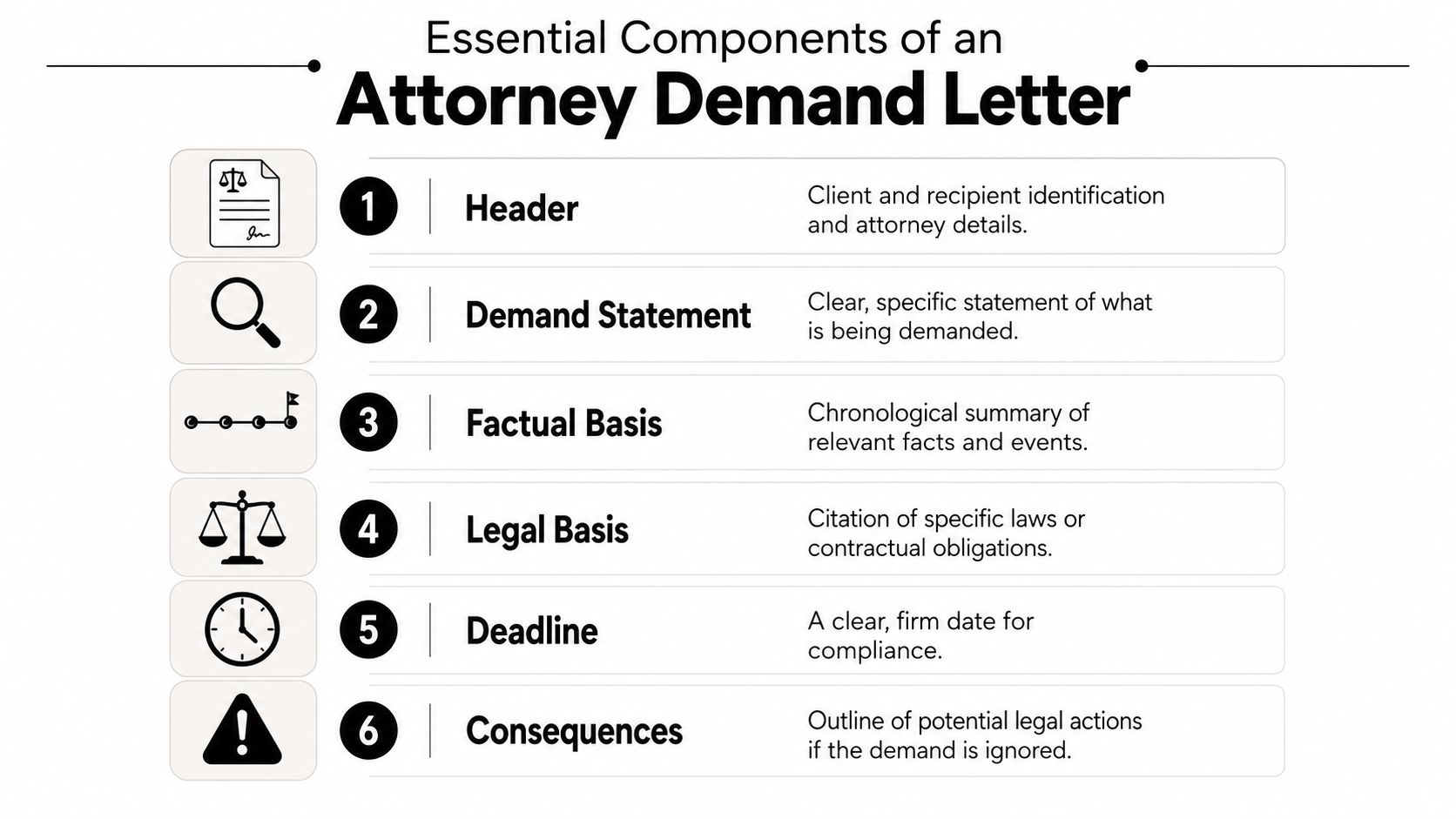
Essential Components of an Attorney Demand Letter
A weak demand letter reads like an angry email with letterhead. A strong one reads like a calm legal position the other side can act on without guessing what you want.
Start with identity, not emotion
The header should identify the lawyer, the client, the recipient, and the date. That matters because the letter needs to look like a real pre-suit communication, not an argument copied into a document.
The factual background should follow a clean chronology. Keep it tight and specific. In a family case, that may mean the order, the missed payment, the ignored text, and the unanswered follow-up. In an estate dispute, it may mean the date of death, the appointment of the fiduciary, the request for records, and the lack of disclosure.
Make the demand impossible to misunderstand
The letter must state precisely what actions are required. Pay the arrears. Produce the accounting. Sign the paperwork. Return the property. Vague requests waste negotiating power because they invite a vague response.
The best letters also state the legal basis. In family matters, that may involve Texas Family Code enforcement principles. In estate disputes, the relevant authority usually comes from the Texas Estates Code and fiduciary duties tied to administration and accounting. If the demand rests on a contract, say so plainly.
A useful template breaks this into concrete drafting steps, from letterhead to signature, and uses a chronological factual background, a specific demand, a legal basis, references to supporting documents, and a closing that warns of legal action if the demand is ignored (Debitura template). That structure is not decoration. It is what makes the letter useful later.
The deadline is the lever. Set a reasonable deadline and use a trackable delivery method, so the sender can prove the letter was delivered. A practical response window often runs from 14 to 30 days, with certified mail and return receipt requested used to document delivery (LegesGPT). Texas guidance expects the deadline to be firm and business-like, not open-ended (Texas Law Help).
A demand letter is strongest when it reads like a file a judge might someday see, not a rant the other side can brush off.
Demand Letter Samples for Family Law and Estate Scenarios
A family law letter and an estate letter can look similar on the page, but they should not sound the same. Family disputes usually need firmness with room for future co-parenting or enforcement. Estate disputes are usually more formal, more document-heavy, and less personal.
| Element | Family Law Letter | Estate Dispute Letter |
|---|---|---|
| Tone | Firm, measured, and practical | Formal, documented, and precise |
| Factual focus | Missed support, ignored orders, failed compliance | Missing accounting, withheld records, fiduciary delay |
| Legal reference | Texas Family Code enforcement principles | Texas Estates Code and fiduciary obligations |
| Demand | Pay, comply, or cure by a date certain | Produce records, account for assets, or take action |
| Deadline | Clear response date tied to enforcement | Clear response date tied to probate action |
A typical family law sample might open like this, in substance: the client has repeatedly requested payment or compliance, the obligation remains outstanding, and the recipient must cure the failure by a stated date or face enforcement proceedings. The strength of that letter is not drama. It's clarity. In a support dispute, for example, the letter should attach the order, identify the periods of noncompliance, and demand a complete cure rather than a half-answer.
That approach also works when the issue is part of a broader custody or support fight. A parent dealing with an order modification issue may need a different procedural path, especially if the facts point toward Custody & Support Modifications involving existing custody, visitation, and support orders. Don't use a demand letter to pretend a modification request is an enforcement case, or vice versa.
An estate sample looks different. It should identify the decedent, the representative, the requested information, and the legal duty to account or disclose. The letter should attach the supporting documents and state that failure to respond will lead to probate proceedings or other available remedies. The style is less emotional because the audience is a fiduciary, not a former spouse.
My view: In family cases, a demand letter should protect the relationship where possible. In estate cases, it should protect the record first.
A lawyer-written sample matters most when the facts are messy. If the issue involves property division, inherited funds, or competing claims over records, the letter should be drafted with the next filing in mind. That's the difference between a useful demand and a document that just feels satisfying to send.
How to Send and Document Your Demand Letter Properly
How you send the letter matters almost as much as what it says. If you cannot prove delivery, the other side can deny receipt, claim delay, or act like the letter never existed. That weakens your position before the dispute even gets traction.
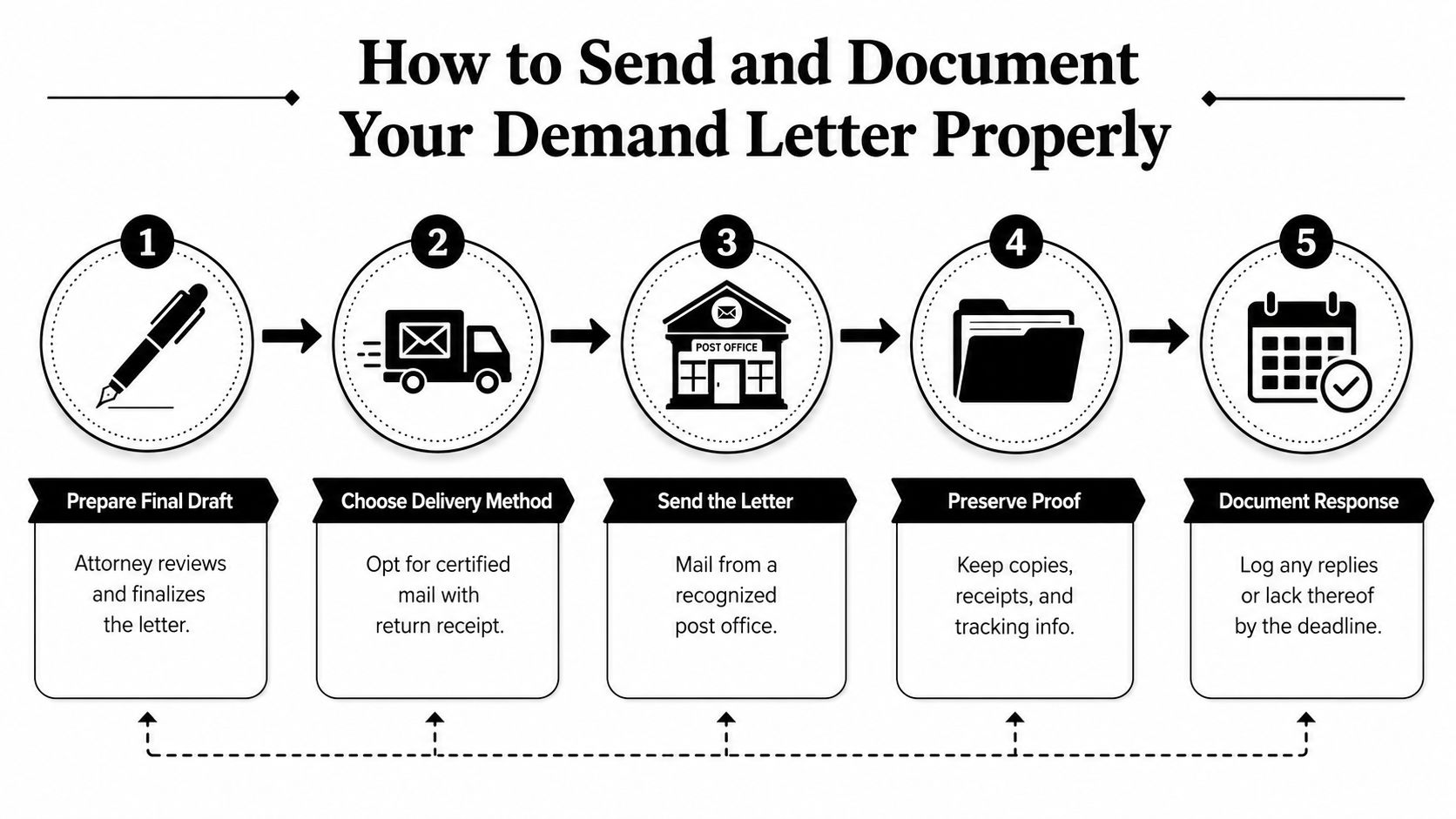
Use certified mail with return receipt requested. That is the cleanest way to prove both mailing and delivery timing. In Texas family, probate, and estate disputes, that proof matters if you later need to show notice, a fair chance to respond, or a failed effort to resolve the issue before enforcement or court action.
Keep a complete proof file. Include the final letter, every attachment, the mailing receipt, the return receipt, and any tracking confirmation. If you also send the letter by email, save the sent message, the exact attachment version, and every reply. Email can help, but it should never replace trackable service when the dispute may end up in court.
Log the delivery date, the deadline you gave, and every response or silence. If the recipient calls, write down the date, time, and what was said. If the recipient sends a partial answer, keep it with the original package. That record often becomes the backbone of settlement talks and, if needed, later filings.
Texas family and probate disputes turn on documents. The better organized your proof, the easier it is for a lawyer to use the letter later in enforcement, probate litigation, or negotiation. A sloppy file weakens a strong demand. A clean file gives the letter real weight.
Keep the file like you expect to hand it to a judge. If you would not want to rely on it later, do not send it now.
Common Mistakes and When to Skip the Letter Entirely
A demand letter loses force fast when people turn it into a venting exercise. The other side should read one thing, what happened, what you want, and what happens if they do nothing.
The most common mistakes are simple. Vague demands invite delay. Emotional language makes you look reckless. Unrealistic deadlines make it easy for the other side to ignore you. The letter also gets weaker when it leaves out supporting documents or forgets to tie the demand to a legal basis.
There are situations where a letter is the wrong move. If you need immediate court protection in a custody emergency, waiting to draft and mail a demand letter can cost you time you don't have. If domestic violence is in the picture, notice may create risk instead of advantage. If the other side is already unreachable, hostile, or clearly acting in bad faith, the letter may be useless theater.
Texas legal-help guidance also stresses that a demand letter should follow informal attempts to resolve the issue and should use a business-like tone with records of contracts, bills, invoices, emails, and other support (Texas Law Help). That advice is right. A letter works best when it confirms a real record, not when it substitutes for one.
If you're close to a filing deadline, don't waste time hoping a letter will magically produce cooperation. Suit may be the better first move. The same is true if the conduct is ongoing and you need a temporary restraining order, enforcement, or immediate probate relief.
When the demand letter is the right tool, use it early and use it correctly. When it isn't, move straight to court.

Next Steps After Sending Your Demand Letter
After the letter goes out, three things can happen. The recipient complies, counters, or ignores it. Each outcome calls for a different response, and you should be ready for all three.
If the other side complies, document it immediately. Save the payment proof, the signed agreement, the email confirmation, or the accounting. If the issue involves property division, custody logistics, or probate administration, make sure the resolution is put in writing so there's no confusion later.
If the other side counters, read the response like a lawyer, not like a disappointed client. Is the offer complete, partial, or a stalling tactic? Does it solve the actual problem, or does it shift the burden back onto you? Attorney involvement pays off here, because settlement talks can go sideways fast when the dispute involves family orders or fiduciary duties.
If there's no response, act on the deadline you set. In Texas family matters, that may mean filing an enforcement action under the Family Code. In estate disputes, it may mean opening probate litigation or asking the court to compel the fiduciary to account. The deadline only has value if you enforce it.
A lawyer-written demand letter can help you frame the next move without giving up your position too early. In the right case, it clarifies the issues and opens settlement. In the wrong case, it just delays the inevitable.
If you need help sorting out a divorce, custody, support, or estate dispute in Texas, The Law Office of Bryan Fagan, PLLC can review the facts, draft a demand letter that fits your case, and tell you when filing suit is the smarter move. Visit Law Office of Bryan Fagan, PLLC to schedule a free consultation and get clear guidance before the other side controls the timeline.