 Skip to content
Ever come across a “No Trespassing” sign and wondered what it actually means under the law? Understanding what is trespassing in Texas is more important than many people realize. What might seem like a harmless shortcut or casual entry onto land can quickly become a criminal offense if legal boundaries are crossed.
Trespassing laws in Texas are designed to protect property owners while also giving clear guidance to others about where they can and cannot go. Whether you are visiting rural land, walking near private property, or simply trying to stay on the right side of the law, knowing how trespassing works can help you avoid serious consequences.
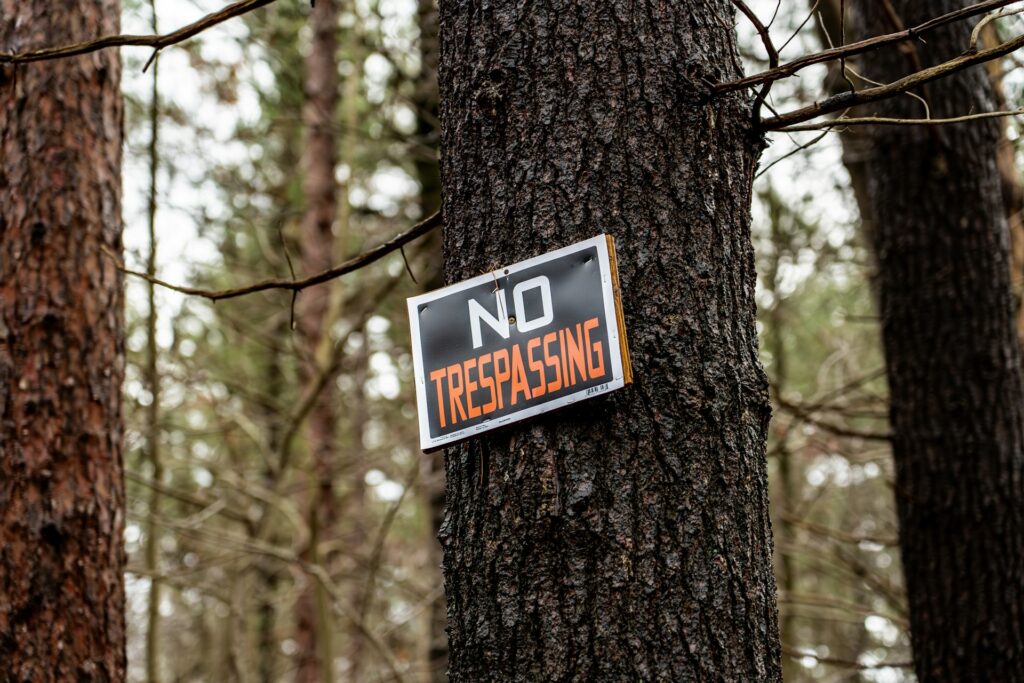
What Is Trespassing in Texas?
Under Texas Penal Code §30.05, criminal trespass occurs when a person enters or remains on property without effective consent and had notice that entry was forbidden. This definition is broader than many people expect. It does not require breaking in, causing damage, or even intending harm. Simply being on property without permission—after proper notice—can be enough to trigger a violation.
The law focuses heavily on awareness. If a reasonable person would understand that entry is not allowed, then remaining on the property can lead to criminal charges. This is why understanding how notice works is essential when applying trespassing laws in Texas to real-life situations.
What Counts as “Notice” Under Texas Law?
Notice is one of the most important elements in determining what is trespassing in Texas, because it establishes whether a person knew or should have known that entry was prohibited. Texas law allows notice to be given in several different ways, and not all of them require written signs.
Property owners can communicate restricted access through physical markings, direct communication, or visible boundaries. For example, a clearly posted sign or a direct verbal warning leaves little room for misunderstanding. In other cases, the law recognizes that certain markings or barriers are enough to signal that entry is not permitted.
Texas recognizes the following as valid forms of notice:
- Posted signs, such as “No Trespassing” warnings placed at visible entry points
- Verbal or written communication from the property owner or an authorized person
- Fencing, enclosures, or barriers that clearly indicate private property
- Purple paint markings on trees or posts, which carry the same legal weight as signage
The purple paint rule is unique to Texas and often surprises people. These markings are legally sufficient to warn others to stay off the property, even in areas where signs may not be practical.
Types of Trespassing Offenses in Texas
When discussing trespassing laws in Texas, it is important to distinguish between criminal and civil trespass. Although both involve unauthorized entry, they serve different legal purposes and lead to different outcomes.
Criminal trespass is the primary focus of Texas law enforcement. It involves knowingly entering or remaining on property without consent after receiving notice. This type of violation can lead to arrest, prosecution, and penalties such as fines or jail time.
Civil trespass, on the other hand, is handled through the civil court system. It typically arises when unauthorized entry results in harm, such as property damage or interference with the owner’s use of the land. Instead of criminal punishment, the goal is to compensate the property owner for losses.
Key Differences Between Criminal and Civil Trespass
| Category | Criminal Trespass | Civil Trespass |
|---|---|---|
| Legal basis | Texas Penal Code §30.05 | Common law |
| Purpose | Punish unlawful entry | Compensate for damages |
| Consequences | Fines, jail, criminal record | Monetary damages |
| Example | Ignoring posted warning signs | Damaging property after entry |
Penalties for Criminal Trespass in Texas
Violating trespassing laws in Texas can lead to consequences that are more serious than many people expect. Most criminal trespass cases are charged as Class B misdemeanors, which can result in up to 180 days in jail and fines of up to $2,000. Even at this level, a conviction creates a criminal record that may affect employment, housing, and future opportunities.
In certain situations, the offense becomes more severe. Trespassing inside a habitation, such as a home or apartment, or doing so while carrying a deadly weapon, can elevate the charge to a Class A misdemeanor. This higher-level offense carries increased penalties, including up to one year in jail and fines of up to $4,000.
These escalating penalties highlight why understanding what is trespassing in Texas is not just a legal technicality—it can have lasting real-world consequences.
Property Owner Rights in Texas
Property owners in Texas have the right to control access to their land and to take reasonable steps to prevent unauthorized entry. However, these rights are balanced by legal limits designed to prevent unnecessary harm or escalation.
In most situations, a property owner’s first step is to clearly communicate that a person must leave. If the trespasser refuses, law enforcement may be contacted to handle the situation appropriately. Owners are also allowed to take preventative measures, such as installing fencing, signage, or surveillance systems.
Use of Force and Legal Limits
Texas law does allow the use of force in certain circumstances, but it must always be reasonable and proportional to the situation. The use of deadly force is highly restricted and generally limited to scenarios involving serious threats, such as preventing violent crimes or protecting against significant harm.
It is important to understand that the presence of a trespasser alone does not automatically justify the use of force. The law carefully distinguishes between protecting property and using excessive or unlawful force.
Special Situations Under Trespassing Laws in Texas
Certain environments create unique considerations when applying trespassing laws in Texas, particularly where public access and private ownership intersect.
Navigable waterways are a common example. In Texas, the public may use these waterways for activities such as boating or fishing. However, stepping onto privately owned land along the banks without permission can still constitute trespassing. This distinction often leads to confusion, especially in outdoor recreational settings.
Rural and agricultural land also presents unique challenges. These properties are often large and may not have traditional signage. Instead, they may rely on fencing or purple paint markings to indicate boundaries. Entering these areas without permission can still meet the legal definition of trespass, even if the property appears open.
Government-owned or restricted areas may carry additional rules and heightened penalties. Trespassing in these locations can involve safety concerns and may lead to more serious consequences depending on the nature of the property.
How Trespassing Cases Are Handled
When a trespassing incident occurs, the legal process typically begins with a report from the property owner or a witness. Law enforcement then evaluates whether proper notice was given and whether the individual knowingly remained on the property without consent.
If there is sufficient evidence, charges may be filed, and the case will proceed through the court system. The outcome depends on several factors, including the nature of the property, the presence of aggravating circumstances, and the individual’s prior history.
This process reflects the broader goal of trespassing laws in Texas, which is to balance the rights of property owners with fair and consistent enforcement.
Preventing Trespassing: Practical Tips

Preventing trespassing is often more effective than addressing it after it occurs. Clear communication and visible boundaries play a major role in reducing misunderstandings and legal disputes.
Property owners can take practical steps such as:
- Posting clear and visible signage at entry points
- Using fencing or paint markings to define boundaries
- Installing lighting or surveillance systems for added security
At the same time, individuals can avoid accidental violations by being mindful of their surroundings, respecting posted warnings, and seeking permission before entering private land. These simple actions go a long way in preventing legal issues.
Why Understanding Trespassing Laws in Texas Matters
Understanding what is trespassing in Texas goes beyond avoiding fines or criminal charges. It reflects a broader respect for property rights and legal boundaries that shape everyday interactions. Whether in urban neighborhoods or rural landscapes, these laws exist to maintain order and protect both individuals and communities.
Failing to recognize these boundaries—even unintentionally—can lead to consequences that extend far beyond a single incident. Awareness and caution are key to staying compliant with the law.
Conclusion
Trespassing laws in Texas provide a clear framework for determining when entry onto property becomes unlawful. At their core, these laws focus on consent, notice, and reasonable understanding of boundaries.
By learning how notice works, recognizing restricted areas, and respecting property rights, individuals can avoid unnecessary legal trouble. For property owners, understanding these rules helps ensure that their rights are properly protected. When questions arise, seeking guidance from a qualified attorney can provide clarity based on the specific circumstances involved.

Other Related Articles
- Growth In The Squatter Crisis: The Legal Framework Behind It
- Cost-Effective Ways to Use a Private Investigator in Your Texas Divorce
- Understanding the Return on Investment from Hiring a Private Investigator for Your Texas Divorce
- Texas Drug Offenses
- Examining Criminal Responsibility
- The Ins and Outs of Plea Bargaining in Texas Criminal Cases
- Criminal Homicide: And All it Entails
- The Different Types of Criminal Trials
- The Reality of the Criminal Justice System in Today’s Time
- What to Look for in a Criminal Defense Lawyer in Texas
Frequently Asked Questions
Trespassing in Texas becomes illegal when a person enters or remains on property without the owner’s consent after receiving notice that entry is forbidden. The key factor is not just being on the property, but whether the person knew or should have known they were not allowed to be there.
No, a sign is not required. Texas law recognizes multiple forms of notice, including verbal warnings, fencing, and purple paint markings. Any of these can legally establish that entry is prohibited.
Yes, it is possible. For example, entering land marked with purple paint or ignoring a boundary fence can lead to a trespassing charge even if there was no intent to break the law. This is why awareness of surroundings is important.
If charged, the case may proceed through the criminal justice system. Penalties can include fines, jail time, and a permanent criminal record. The severity depends on factors such as the type of property and whether aggravating circumstances are present.


