
Divorce can be one of life’s most difficult transitions—but understanding your rights under Texas law can make it less overwhelming. Choosing the right divorce lawyer isn’t just about hiring an attorney; it’s about finding a partner who understands both the law and your unique situation. This decision is the most critical first step you’ll take toward protecting your future, and our goal is to help you make it with confidence.
Your First Step in a Texas Divorce: Finding the Right Legal Partner
Facing a divorce can feel like you’re navigating a storm without a compass. It is often an emotionally draining and financially stressful experience, but you do not have to go through it alone. The single most important decision you’ll make—the one that will shape almost every part of this process—is choosing the right legal partner. Your attorney is your guide, your advocate, and your strategist, helping you make clear-headed decisions when your emotions are running high.
This guide is designed to provide you with practical, actionable guidance for selecting a Texas divorce lawyer who not only knows the Texas Family Code inside and out but also aligns with your needs and goals. We will move beyond generic advice to give you real-world strategies for finding an attorney who offers both compassionate support and tenacious representation. The goal here is to ensure you feel supported, understood, and in control as you move forward.
Why Your Choice Matters So Much
The right lawyer does so much more than just file paperwork. They bring clarity and direction when everything feels uncertain. A skilled attorney will help you understand your rights and obligations under Texas law, from how property gets divided to what happens with child custody. For example, they can explain exactly how Texas’s community property laws, outlined in the Texas Family Code § 7.001, apply to your specific assets—like your house or retirement accounts—and then build a strategy to protect what you’ve worked so hard for.
Your legal advocate should be a source of stability, offering a clear path forward when the future seems overwhelming. Their role is to translate complex legal principles into practical, actionable steps that align with your long-term well-being.
While this guide is focused on divorce, many of the same ideas apply more broadly. For a comprehensive look at the general principles for finding and vetting any type of lawyer, you might find that resource helpful. Ultimately, you are looking for a professional you can trust with the most personal and critical parts of your life. It’s about finding a true partner for this journey.
If you’re feeling completely lost on where to even begin, our article on taking your first step in a Texas divorce is a great place to get your bearings: https://www.bryanfagan.com/2021/12/i-want-a-divorce-now-what-taking-your-first-step/
Figure Out What You Actually Need in a Texas Divorce Lawyer
Every divorce is different. That’s not just a cliché; it’s a fundamental truth that should guide your search for an attorney. Before you even begin searching for lawyers or asking for recommendations, it’s essential to take a clear look at your own situation. Understanding the specific issues in your marriage and separation is the single most important step you can take.
Think of it this way: you wouldn’t see a heart surgeon for a broken foot. In the same way, the lawyer who’s a rockstar in a simple, amicable split might be completely out of their depth in a high-stakes financial case involving a family business. Your goal is to match the lawyer’s skills to your specific needs.
Contested vs. Uncontested: What’s Your Starting Point?
The first big question to answer is whether your divorce is likely to be contested or uncontested. An uncontested divorce is one where you and your spouse agree on all the major issues—property division, child custody, and any support payments. These cases are generally quicker and less expensive.
A contested divorce, on the other hand, means there’s a disagreement on at least one of those core issues. This doesn’t automatically mean you’re headed for a contentious courtroom battle. In fact, most contested cases in Texas are eventually settled through negotiation or mediation. But it does mean you need a lawyer who is a skilled negotiator and is prepared to go to court if necessary to protect your interests.
To get your bearings, this flowchart lays out the basic path: first, you figure out your needs, then you evaluate a lawyer’s expertise, and finally, you find someone who is the right personal fit.
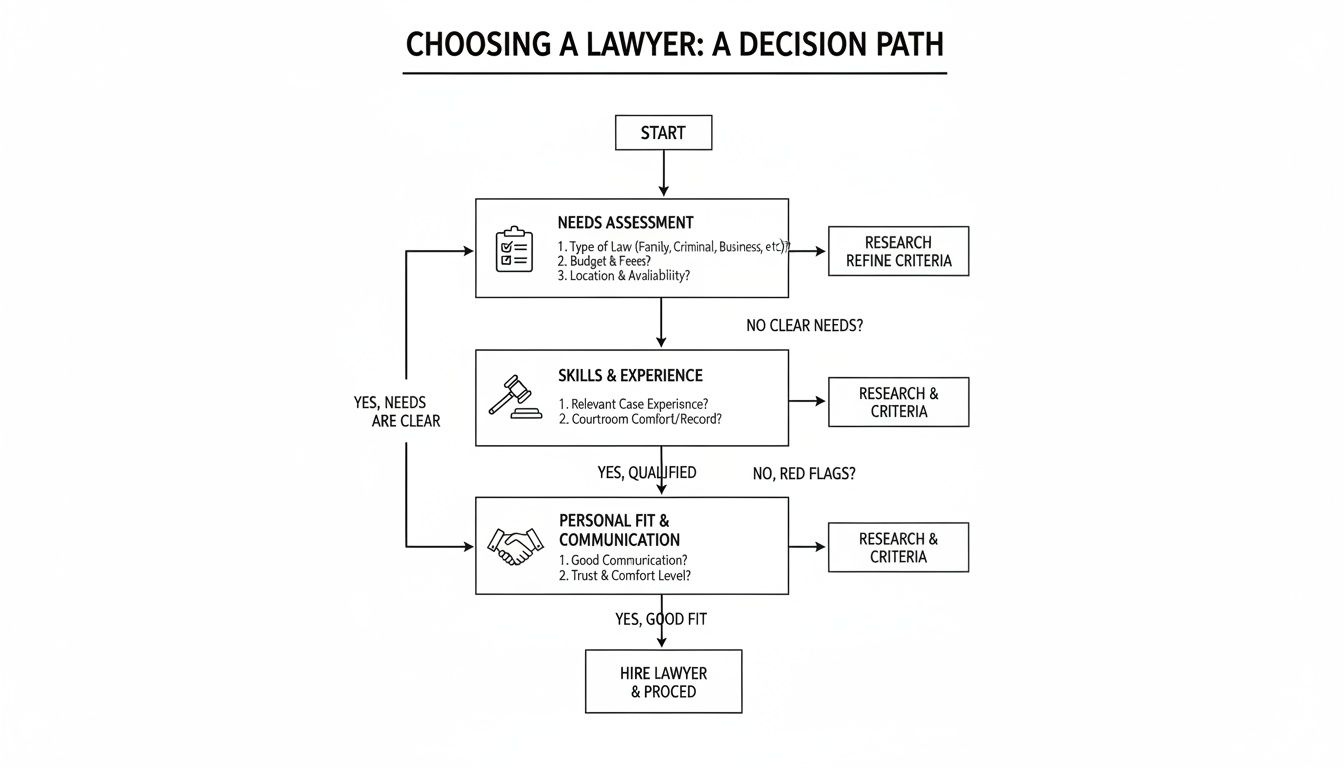
As you can see, the whole process begins with a clear understanding of your case. Everything else flows from there.
Drilling Down Into the Details of Your Case
Beyond the “contested” or “uncontested” label, you need to pinpoint the unique factors at play. We recommend making a list. This list will become your roadmap when you start interviewing potential attorneys.
Ask yourself which of these common scenarios feel familiar:
- Kids Are Involved: If you have minor children, the focus shifts. The conversation will center on custody (what Texas calls conservatorship), visitation schedules (possession and access), and child support. You absolutely need a lawyer who lives and breathes the Texas Family Code and its guiding principle: the “best interest of the child” standard (Texas Family Code § 153.002).
- High-Net-Worth Divorce: Is there a business involved? Significant assets, complex investments, or stock options? These situations call for a lawyer with real financial acumen, someone who works with forensic accountants and business valuation experts.
- Military Divorce: If you or your spouse is in the military, you’re playing by a different set of rules. Federal laws like the Uniformed Services Former Spouses’ Protection Act (USFSPA) dictate how military retirement benefits are divided, and there are unique challenges with jurisdiction and custody for service members.
- Spousal Maintenance (Alimony): Do you believe you’ll need to receive—or be asked to pay—spousal support? Texas has some of the strictest eligibility requirements in the country for post-divorce spousal maintenance. You’ll need an attorney who knows how to build a strong case for or against it based on the criteria in Texas Family Code Chapter 8.
Taking the time to pinpoint the legal and financial hot spots in your divorce helps you zero in on attorneys who have actually handled cases just like yours. This is the cornerstone of a smart, effective search.
For instance, if your divorce involves a family-owned business in Houston, you need someone with deep experience in business valuation and tracing separate property assets. If you’re a military parent facing a custody battle, you need an attorney who understands the complexities of creating possession schedules for a deployed service member.
This initial self-assessment does more than just help you find the right lawyer. It sets you up for a much more productive first consultation. You’ll be able to walk in, ask focused questions, and give a potential attorney the clear picture they need to provide you with practical guidance. It’s your first, and most powerful, move.
How To Evaluate A Lawyer’s Credentials and Expertise
Once you have a list of potential lawyers, it’s time to look beyond the websites and marketing promises. In a state as large as Texas, you need to dig into their actual credentials to find an advocate whose expertise translates into real-world advantages for you—whether in negotiations or in the courtroom.
This means learning how to read between the lines of various awards and certifications. It’s about figuring out what truly matters for your case and what is simply noise.

The Gold Standard: Board Certification in Family Law
In Texas family law, one credential stands head and shoulders above the rest: Board Certification in Family Law by the Texas Board of Legal Specialization. This isn’t just another plaque on the wall; it’s a rigorous certification that signals an exceptional level of skill and experience. Only a small fraction of Texas attorneys ever achieve it.
To earn this distinction, an attorney must:
- Practice for at least five years, with three of those years focused heavily on family law.
- Demonstrate substantial involvement in a wide range of family law matters, from trials and mediations to complex appeals.
- Pass a grueling, day-long written exam that tests their knowledge of the intricate Texas Family Code.
- Receive positive peer reviews from judges and other lawyers who have seen their work firsthand.
Hiring a Board Certified attorney provides confidence that you’re working with a true expert who has been vetted by the state’s highest legal authorities. It’s a powerful sign that they have a deep, practical command of the law that will directly benefit your case.
Decoding Awards And Online Ratings
As you research lawyers, you’ll see awards and online ratings from sites like Avvo, Justia, and Super Lawyers. These can be useful starting points, but you have to know how to interpret them.
A perfect “10.0” score looks great, but the real value is in the context. Look for consistency across different platforms and, more importantly, dive into the client reviews. Are they recent? Do they describe situations similar to yours, like a tough custody battle or a complicated property division?
A lawyer’s online footprint, from client testimonials to professional awards, offers a glimpse into their reputation. The key is to find consistent, positive feedback and credentials that line up with the specific challenges you’re facing.
Take a look at how they present themselves online, too. A professional, well-organized website, often the result of professional lawyer web design services, can be a good indicator of their attention to detail and commitment to clear communication.
To help you organize your thoughts, here’s a look at some of the key qualifications you’ll encounter and what they really mean for your situation.
Key Credentials for Your Texas Divorce Lawyer
| Credential | What It Signifies | Why It’s Important for You |
|---|---|---|
| Board Certification | Elite expertise in Texas Family Law, verified by the state board. | Confirms your lawyer has extensive, tested knowledge of the specific laws governing your divorce. |
| Years of Practice | The attorney’s overall time practicing law. | Provides a general sense of their experience, but specialization is more critical for a divorce case. |
| High Client Ratings | Positive feedback and testimonials on sites like Avvo and Google. | Offers social proof of client satisfaction and insight into their communication and case management style. |
| Peer Reviews (e.g., Super Lawyers) | Recognition from other attorneys and judges in the community. | Indicates a strong professional reputation, which can be beneficial in negotiations and court proceedings. |
Looking for these markers can help you quickly separate the true specialists from the general practitioners.
The Critical Importance of Local Experience
Impressive credentials are one thing, but they become exponentially more valuable when paired with deep, local experience. An attorney who is a regular in your specific county courthouse—whether it’s Harris, Dallas, Tarrant, or Travis—brings an advantage that can’t be overstated.
This local knowledge translates to:
- Familiarity with Judges: They know the personalities, preferences, and procedures of the local family court judges who could be assigned to your case.
- Relationships with Opposing Counsel: A respected local attorney often has working relationships with other lawyers, which can lead to more productive and less contentious negotiations.
- Knowledge of Local Rules: They’re experts on the specific administrative rules and filing quirks of your courthouse, helping you avoid frustrating and costly procedural delays.
This insider perspective can dramatically influence the strategy and outcome of your case. With nearly 56,970 family law attorneys practicing across the country, this kind of local expertise is what makes a Texas lawyer truly stand out.
Knowing what questions to ask is the next step in uncovering this expertise. For a detailed list of what to cover in your consultations, check out our guide on how to interview a Texas family law attorney.
Asking the Right Questions During Your Consultation
The initial consultation is much more than a meet-and-greet. Think of it as your opportunity to interview a potential legal partner—someone you’ll be trusting with the most sensitive details of your financial and family life. To make this meeting count, you should arrive prepared with strategic questions. These questions are designed to cut through the sales pitch and reveal an attorney’s true approach, communication style, and legal philosophy.
This conversation is where you determine if their way of working aligns with your personality and needs. Remember, you’re not just hiring a legal mind. You’re hiring a guide and an advocate for a difficult journey. Finding a good fit is absolutely essential for your peace of mind.

Uncovering Their Strategic Approach
Every lawyer looks at a case differently. Some are aggressive from day one, while others prioritize negotiation and finding a reasonable settlement first. Neither approach is inherently right or wrong, but one will be much better suited to your specific situation.
To get a feel for their mindset, move beyond generic questions and ask them directly for their initial thoughts on your case.
- “Based on what I’ve shared so far, what is your initial strategic approach for a case like mine?” This question prompts them to apply their knowledge to your facts, giving you a preview of how they think on their feet.
- “What are the biggest potential challenges you see, and how would you suggest we prepare for them?” A seasoned attorney can spot potential roadblocks from a mile away. Their answer will tell you a lot about their foresight and problem-solving skills.
Pay close attention to their response. It should be clear, logical, and tailored to the information you’ve provided. If the answer feels vague or like a one-size-fits-all script, that’s a red flag. It might mean they aren’t giving your case the individual attention it deserves.
Understanding the Communication Plan
One of the biggest sources of frustration for clients during a divorce is feeling like they’re in the dark. A lack of communication from their legal team only adds to the stress and uncertainty. Because of this, you must set crystal-clear expectations from the beginning.
Don’t be shy about asking for specifics:
- “What’s your firm’s communication philosophy? How do you keep clients informed?” This open-ended question lets them describe their process in their own words.
- “How often can I expect to get updates, and who will be my main point of contact?” This gets down to the details. Will you be talking to the lead attorney, a paralegal, or an associate? There’s no wrong answer, but you need to know what to expect.
- “What is your policy on returning calls and emails?” A reasonable timeframe is usually within 24 business hours. A firm with a clear, client-focused policy will have a confident answer ready.
Knowing how—and how often—you’ll receive information can make a world of difference in how supported you feel.
The legal strategy is critical, but the human element of communication is what will sustain your trust and confidence in your attorney. Clear, consistent updates are not a luxury; they are a fundamental part of good legal representation.
Gauging Their Courtroom Credibility
While it’s true that the vast majority of Texas divorces—around 95%—settle out of court through negotiation or mediation, an attorney’s courtroom experience is still a vital asset. Why? Because their reputation as a skilled litigator gives you incredible leverage at the negotiating table.
When the opposing counsel knows your lawyer isn’t afraid to go to trial and has a track record of success in front of a judge, they are far more likely to come to the table with a fair settlement offer. An attorney who rarely sees the inside of a courtroom may not command that same level of respect, potentially weakening your bargaining position from the start.
Here’s what to ask to get a sense of their litigation experience:
- “How much of your practice is dedicated to litigation versus settlement?”
- “Can you share a non-confidential example of a difficult case you took to trial and what the outcome was?”
- “How familiar are you with the family court judges in this county?”
An attorney who is a respected and credible litigator brings a powerful, unspoken advantage to your case, even if you never step foot in court. This strength encourages reasonable behavior from the other side and protects your interests if a fair settlement can’t be reached. Asking these tough questions now empowers you to choose a true advocate who is fully prepared to fight for you, no matter where that fight leads.
Making Sense of Legal Fees and Retainer Agreements
Let’s discuss the financial aspect of hiring a lawyer. It’s often an intimidating topic, but it doesn’t have to be. Gaining a clear understanding of the costs from day one is essential for building a trusting, productive relationship with your attorney. We want you to feel in control, not in the dark.
Here’s a breakdown of how the finances typically work in a Texas divorce case.

Most family law attorneys in Texas, including our firm, work on an hourly billing model. This is straightforward: you pay for the actual time your legal team spends working on your case. That team can include senior attorneys, junior associates, and paralegals, each with a different hourly rate that reflects their experience level.
This system is almost always paired with a retainer. A retainer is not a flat fee for your entire divorce. Think of it more like a down payment. You pay a lump sum upfront, which the law firm holds in a special trust account. As your legal team works, they bill their time against that fund.
How Retainers and Billing Work in Practice
When you officially hire the firm, you’ll pay an initial retainer. For instance, a common starting retainer might be $5,000.
Each month, you will receive a detailed, itemized invoice. This document should show every task performed—every phone call, email drafted, and document reviewed—along with who did the work and precisely how much time it took. That total is then deducted from your retainer balance.
If your retainer balance gets low, the firm will ask you to replenish it. This ensures there is no interruption in the work on your case. It’s a transparent system designed to show you exactly where your money is going. For a more in-depth look, we have a guide that explains how family law attorneys in Texas bill for their services.
A clear and detailed fee agreement is the foundation of a healthy attorney-client relationship. It should leave no room for ambiguity, ensuring you understand every potential cost before you commit.
Before you sign anything, read the fee agreement from top to bottom. This contract spells out the entire financial relationship. Look for the fine print on what is and isn’t considered a billable expense.
Questions to Ask About the Fee Agreement
Do not hesitate to ask direct questions. This is your money and your case.
- Will I be billed for short phone calls or emails with your team? Is there a minimum billing increment?
- Are costs like printing, postage, and court filing fees included in your rate or billed separately?
- What are the exact hourly rates for every person who might work on my case, from the senior partner to the legal assistant?
- Under what circumstances would my retainer need to be replenished, and what is that process like?
Knowing these answers is crucial. With only about 5% of divorces ever making it to a full-blown courtroom trial, the vast majority of legal work happens behind the scenes in negotiation, mediation, and drafting documents. All of that work is captured through hourly billing. Gaining clarity on these costs upfront helps you budget for your divorce and builds a foundation of trust with your legal team.
Recognizing Red Flags and Making Your Final Choice
Knowing what to look for in a divorce lawyer is only half the battle. It is just as important to know what to avoid. As you meet with potential attorneys, your intuition will be one of your most valuable assets. Do not underestimate that gut feeling; it is often telling you something important.
The first, and possibly biggest, red flag is any attorney who guarantees a specific outcome. No lawyer can ethically—or realistically—promise you will “win” or that you are guaranteed a certain dollar amount in the settlement. The legal system is filled with variables, from the actions of the opposing side to the final discretion of a judge. A good lawyer will discuss potential scenarios and strategies with you, but they will never make a concrete promise they cannot keep.
Also, be wary of a lawyer who seems overly aggressive or eager for a fight from the moment you meet. While you absolutely need a strong advocate, an attorney whose first instinct is to escalate conflict will likely drive up your legal bills and create unnecessary emotional stress. The best lawyers know when to negotiate and when to litigate. They prioritize a constructive path forward whenever possible.
Key Warning Signs to Watch For
During your initial consultations, keep an eye out for these subtle signs. They might seem small, but they can signal much bigger problems down the road:
- Disorganized or Unresponsive: If they’re late to your first meeting, seem unprepared, or take a long time to return your initial call, imagine what communication will be like once they have your retainer.
- Poor Listening Skills: A good attorney should be listening far more than they talk in the first meeting. If you feel constantly interrupted or like they’re pushing a cookie-cutter strategy without understanding your specific concerns, they probably aren’t going to truly hear you as the case unfolds.
- Vague About Fees: Any hesitation or lack of clarity when you ask about their fee structure, retainer, or billing practices is a major red flag. You need complete transparency when it comes to money.
The right lawyer will make you feel heard, respected, and more confident—not more anxious. This relationship has to be built on trust and clear communication right from the start.
In the end, making your final choice comes down to putting everything together. It’s a combination of their objective qualifications, a legal strategy that makes sense to you, and a genuine personal connection. You have to feel confident they can represent your interests and comfortable enough to share the most private details of your life with them.
Think of this as a partnership. You’re choosing someone who not only has the legal skills to protect your interests but also the compassion to guide you through one of life’s most difficult transitions. Trust yourself to make the right choice for your future.
If you need help navigating divorce, custody, or estate planning in Texas, contact The Law Office of Bryan Fagan today for a free consultation.
Answering Your Questions About Choosing a Divorce Lawyer
Going through a divorce brings up many questions, and that is completely normal. Having clear, straightforward answers can provide a sense of control as you take these first critical steps. Let’s tackle some of the most common concerns we hear from Texans in your situation.
Can I Really Handle My Divorce Without a Lawyer?
Legally, yes. In Texas, you are allowed to represent yourself, which is known as “pro se.” This route might seem tempting for what appears to be a simple, uncontested divorce—perhaps you have no children and very few assets to divide.
However, the reality is that if there is even a hint of disagreement over property, debt, or especially if children are involved, hiring an attorney is one of the smartest decisions you can make. An experienced lawyer acts as your safeguard, protecting you from accidentally overlooking a crucial detail in the Texas Family Code that could negatively impact you for years. A seemingly small mistake in a divorce decree can become a massive, expensive problem to fix later.
What’s the Bottom Line? How Much Will My Divorce Cost?
This is one of the most common questions we get, and the most honest answer is: it depends. The final cost is almost always tied directly to two things: the complexity of your case and the level of conflict between you and your spouse.
Here’s what influences the cost:
- Contested vs. Uncontested Issues: The more you and your spouse disagree on, the more time your legal team must spend on negotiations, mediation, or preparing for court. In a divorce, time translates to legal fees.
- The Complexity of Your Assets: A divorce involving a family business, multiple real estate properties, or complex investments requires a much deeper financial analysis than one with a shared bank account and two cars.
- The Cooperation Factor: Spouses who can communicate and work toward solutions will almost always spend less on legal fees. Those who fight over every detail will see their costs rise significantly.
The single biggest factor in keeping legal costs down is reducing conflict. An attorney who focuses on practical, resolution-oriented strategies can save you not just money, but a tremendous amount of time and emotional energy.
What Should I Bring to My First Consultation?
Coming prepared will make your first meeting incredibly productive. You don’t need to bring a mountain of paperwork, but a simple summary of your situation is a huge help.
Try to put together a list that includes your date of marriage, your children’s names and birthdays, a general overview of your assets (what you own) and debts (what you owe), and a few notes on your main goals or biggest worries. Most importantly, bring your questions. This meeting is your opportunity to interview the attorney and determine if they are the right person to guide you through this process.
If you need help navigating divorce, custody, or estate planning in Texas, contact The Law Office of Bryan Fagan, PLLC today for a free consultation.