You're probably here because something is already pressing on you. Maybe you're sorting through a divorce, trying to protect time with your kids, or wondering whether your parent's will is going to create a mess after they're gone. In that moment, you don't need legal fluff. You need a Heights Boulevard attorney who can tell you what matters, what can wait, and what to do next under Texas law.
A lawyer on Heights Boulevard is useful for one simple reason, they're close enough to stay reachable and experienced enough to handle the problems families bring to the table. In Houston's Heights area, legal-services presence is not just a mailing address. Public directories place Heights Law Group at 1148 Heights Blvd, Houston, TX 77008, list it again at 1402 Heights Blvd, and also identify Heights Law Group, PLLC at 912 Heights Blvd, Houston, Texas 77008 in a separate listing, which shows how neighborhood-rooted branding appears across the corridor in public records and listings. For a worried neighbor, that matters because local help should be easy to verify before you ever walk through the door. LawInfo directory listing for Heights Law Group
What a Heights Boulevard Attorney Does for Houston Families
Many families wait until they are about to file before calling a lawyer. That timing usually shrinks your choices under Texas law. A Heights Boulevard attorney steps in earlier, while the facts are still developing, the paperwork is still incomplete, and one rushed decision could box you in later.
The first job is to stabilize the situation
If you are dealing with divorce, a custody dispute, or a probate problem, the first task is to stop things from getting worse. In a divorce, that can mean preparing the petition, answering a temporary orders request, or getting your financial records in order before property division begins. In an estate matter, it can mean checking whether a will exists, whether assets are titled correctly, and whether Texas probate rules require a filing.
A Heights-area client usually needs practical guidance, not legal theory. A parent may need a clear answer about whether a custody filing should happen before school starts. A surviving spouse may need to know whether a bank account passes outside the estate because a beneficiary form already controls it.
Practical rule: If your case depends on documents, dates, or title records, bring in counsel before you make assumptions. In family law and probate, assumptions get expensive fast.
The lawyer also translates Texas procedure into plain English
Texas family law runs through the Texas Family Code. Estate administration runs through Texas probate and estate rules, including the Estates Code. A good local lawyer helps you understand which process applies, because divorce, custody, adoption, paternity, guardianship, and probate all move differently.
If you want a clearer picture of the broader role, this guide to Texas family law attorneys explains how a lawyer handles the moving parts across family law and related planning work. The point is simple. The lawyer should be ready for the legal problem you have now, and the one that usually follows it.
Core Services a Heights Boulevard Attorney Handles
A Heights Boulevard attorney should identify the problem fast and match it to the right Texas process. That means more than filing forms. It means handling the family-law issue in front of you, then making sure the estate-planning or probate work lines up with it when documents, titles, or beneficiaries control the outcome.
A client on Heights Boulevard usually needs direct answers, not a lecture. One family may be dealing with divorce paperwork and child support at the same time. Another may be trying to protect a house, a business interest, or a future inheritance before a dispute turns into a court fight.
Family-law matters come first for many clients
Divorce can be contested or uncontested, but the Texas Family Code still controls the process. A lawyer helps with property division, spousal maintenance, child custody and visitation, child support, mediation, enforcement actions, paternity, adoption, and prenuptial or postnuptial agreements. In a high-conflict case, the lawyer has to manage temporary orders, evidence, and settlement posture at the same time, because each one affects the next decision.
Child-related disputes need especially careful handling. A custody order that looks fine on paper can cause real problems later if visitation terms are vague or support details are incomplete. A local attorney should spot those pressure points early and press for language that works in daily life.
Estate planning and probate matter just as much
The estate side is different, but just as technical. Many clients need wills, revocable living trusts, pour-over wills, powers of attorney, healthcare directives, guardianship planning, or probate administration. For readers organizing assets and wishes, Estate Planning means wills, trusts, and estate plans to protect assets and wishes. If the documents are wrong or missing, Texas law controls the result, and that result usually does not match what the family expected.
Probate work often follows a loss, but it can also come up while a family is trying to fix title problems or sort out who has authority to act. That is where practical lawyering matters. A good Heights Boulevard attorney reviews the paperwork, checks the beneficiary designations, and tells you what needs court involvement and what does not.
Common practice areas at a glance
| Practice Area | Texas Code Anchor | What It Covers |
|---|---|---|
| Divorce | Texas Family Code | Contested and uncontested divorce, property division, temporary orders |
| Child custody and support | Texas Family Code | Conservatorship, visitation, support, enforcement |
| Mediation and agreements | Texas Family Code | Settlement talks, prenups, postnups |
| Wills and trusts | Estates Code | Planning for incapacity, asset transfer, probate avoidance |
| Probate administration | Estates Code | Estate settlement, filings, court supervision when needed |
The better local firms do not stop at one silo. They can handle family-law work and related estate issues without making you explain the same facts to two different offices. If you want a clearer explanation of the broader role, the firm's own guide on what Texas family law attorneys do is a useful companion read.
Why Local Texas Coverage and Experience Matter
A Heights Boulevard address is not the whole story. A law office can sit on a neighborhood street and still operate like a distant shop, slow to respond and narrow in scope. What you want is local accessibility backed by enough Texas coverage to handle cases that don't stay neatly in one lane.

The broader market matters too. Nationally, lawyers held about 859,000 jobs in 2023, and the median annual wage for lawyers was $151,160 in 2024 (Rev's summary of U.S. lawyer statistics). That tells you legal services are crowded, established, and competitive. In a market like that, a neighborhood office has to do more than exist. It has to earn trust through response time, clarity, and real case experience.
A family-law case often moves through several tracks at once. Temporary orders can set the tone before final hearings. Property valuation can affect settlement strength. Enforcement can come back later if the decree is vague or incomplete. If a lawyer doesn't know how to sequence those issues, you pay for it in time and power.
The firm background matters here because Houston families dealing with divorce, custody, or estate planning often need something more than a single-city practice. The publisher serves Texas clients across Houston, Dallas–Fort Worth, Austin, and San Antonio, and its attorneys bring more than 100 years of combined legal experience. That kind of depth is useful when a case involves business ownership, military service, interstate facts, or a high-stakes estate. The local office on Heights Boulevard is the front door, but the reach behind it is what gives the client room to maneuver.
A neighborhood office only helps if the lawyers can actually move your case forward in Texas court procedures, not just put a local name on the website.
What to Expect at Your First Meeting With a Heights Boulevard Attorney
Your first meeting should feel focused, not mysterious. If the office is doing its job, you'll leave with a clearer sense of your legal posture, the next deadlines, and what documents still need to be gathered. For divorce clients, that meeting is often about facts and timing. For estate-planning clients, it's about titles, beneficiaries, and who should control what if something happens to you.
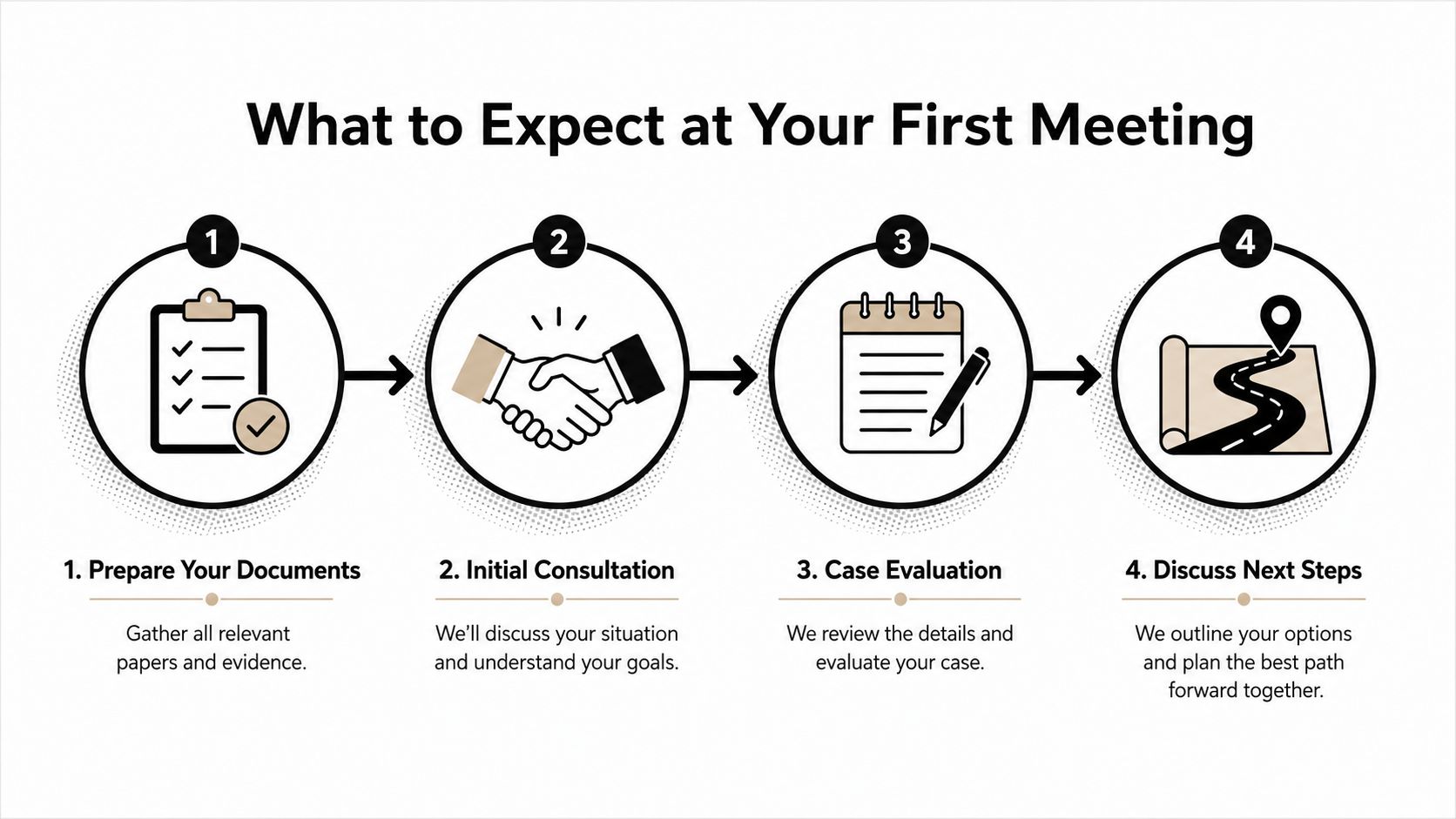
Start by bringing the documents that affect the case. For a family-law consultation, that often means a petition, decree, financial statements, pay records, school or custody paperwork, and any temporary orders already in place. For probate or estate planning, bring the will, trust instruments, deeds, account statements, beneficiary forms, powers of attorney, or probate letters if they already exist.
Before you walk in, organize by issue
If you're dealing with a Divorce, don't dump every bank statement into one pile and hope the lawyer sorts it out. Separate property, children's records, and urgent deadlines. If you're handling estate planning, separate documents that control assets now from documents that only say what happens later.
Ask direct questions during the meeting
You should ask what the lawyer sees as the biggest legal risk, what the next step will be if you hire them, and whether the case can be handled by phone, video, or in person. You should also ask how communication works, because a short consultation is useless if nobody tells you what happens after it ends.
The firm's consultation guidance on what to expect in a family-law consultation is a solid reference point if you want to arrive prepared. In practical terms, the best first meeting leaves you with one clear decision, whether to move forward now, gather more documents, or wait until a deadline hits.
Bring the paper trail. Texas family-law and probate cases turn on records, not memory.
How to Choose the Right Heights Boulevard Attorney for Your Case
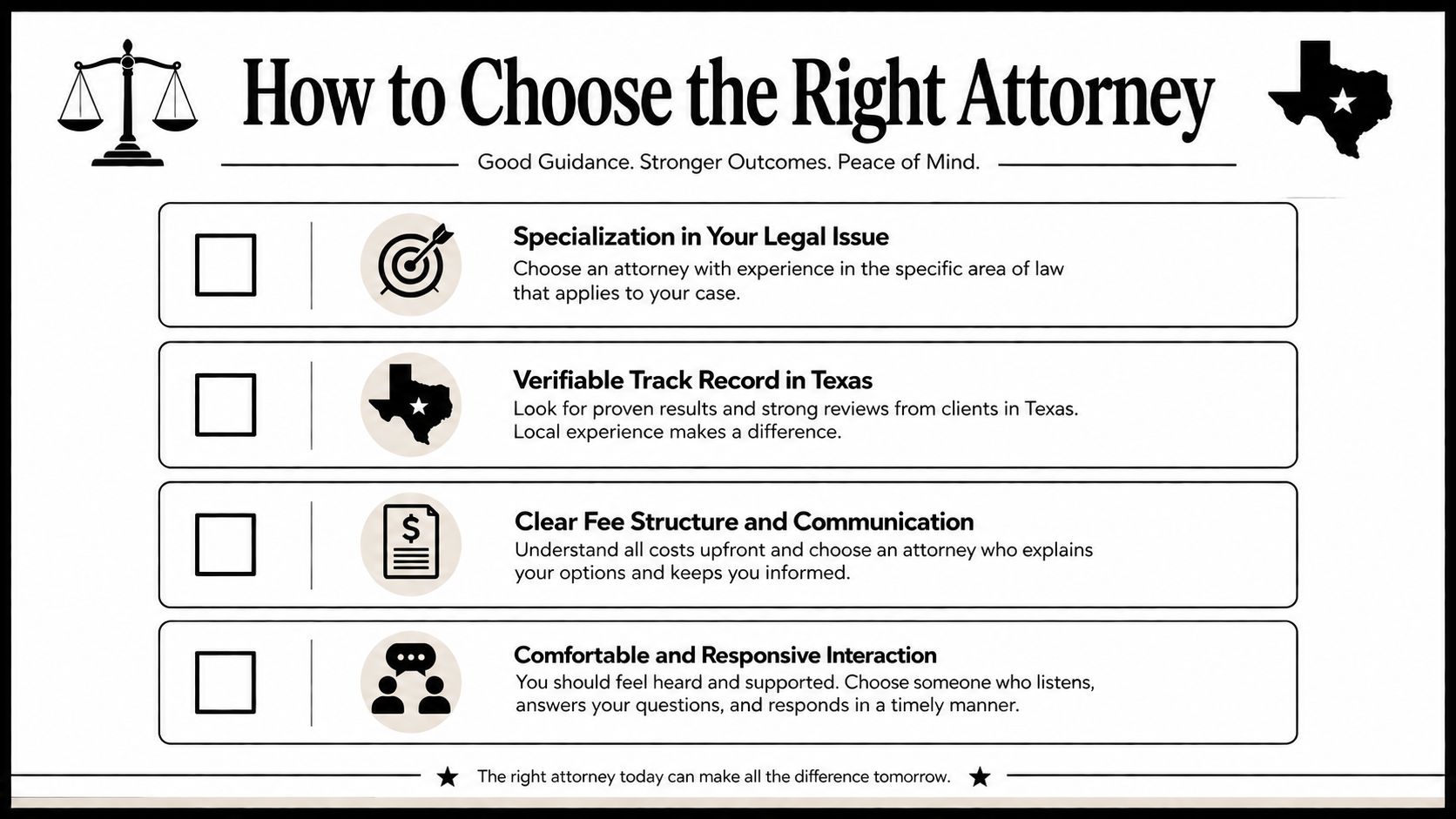
Don't pick a lawyer because the office sounds local. Pick one because the local details check out. A real Heights Boulevard attorney should make verification easy, not confusing.
Verify the office before you trust the branding
One public directory lists Heights Law Group at 1148 Heights Blvd, another lists the same firm at 1402 Heights Blvd, and a separate listing identifies 912 Heights Blvd. That kind of variation doesn't automatically mean anything is wrong, but it does mean you should confirm the exact entrance, suite, and meeting location before you drive over. In a city like Houston, that's basic due diligence.
Match the office to your issue
If you need custody help, don't hire an estate-only office. If you need probate, don't hire a lawyer who mainly handles traffic tickets and advertises neighborhood familiarity. The right attorney should have a clear lane and enough Texas practice depth to explain how your issue fits into procedure, deadlines, and evidence.
Ask how the office handles access
The public listings for Heights Law Group show weekday hours of 9:00 a.m. to 5:00 p.m., with weekend closure on at least one listing. That's useful because it tells you when the office is available for a live conversation. If you're a caregiver, a military spouse, or you can't leave work easily, a lawyer should tell you whether the matter can start by phone or video.
If you want a broader checklist for choosing counsel, this guide on how to choose a family law attorney gives you a solid framework. My advice is blunt. Choose the lawyer who can prove where they are, what they do, and how fast they respond.
Real Scenarios a Heights Boulevard Attorney Handles Every Day
Legal problems in the Heights rarely make headlines. They are practical, messy, and time-sensitive, and that is exactly where a local attorney earns their keep.
A spouse walks in during a contested divorce because the family owns a business and both names are tied to the finances. The core issue is property division under the Texas Family Code, but the work is tracing accounts, valuing the business, and deciding whether temporary orders should protect cash flow while the case is pending. A Heights Boulevard attorney would usually push for early document exchange and a settlement strategy that does not leave the business frozen.
A parent may also need help after getting a job offer out of state and wanting to change a custody arrangement. That case turns on conservatorship, possession, and modification rules, but the lawyer has to think ahead about school schedules, travel costs, and whether the current order can be changed without turning the matter into a bigger fight. The smart move is to build the evidence first and file after the facts are organized.
A blended family often comes in with a different problem. One parent wants an estate plan that will not create confusion later, and the lawyer has to look at the will, trust funding, beneficiary designations, and whether the plan fits the family structure. If the assets are not titled properly, the paperwork will not do what the client expects it to do.
Probate brings its own set of headaches after a parent dies with an old will and no recent updates. The key question is whether the estate needs formal administration and how the property passes under Texas probate rules. A lawyer can tell the family whether the case is simple, court-supervised, or stuck in a title issue that will not fix itself.
A lawyer's value here is not talking in circles. It is seeing the path early, handling the work in a way that fits the client's life, and preventing one problem from becoming three.
Practical Questions to Ask Before You Schedule a Consultation
If you're short on time, ask the office the right questions before you book. A call should give you a clear read on whether the lawyer is a fit, whether the office can handle your problem, and whether the process will work with your schedule.
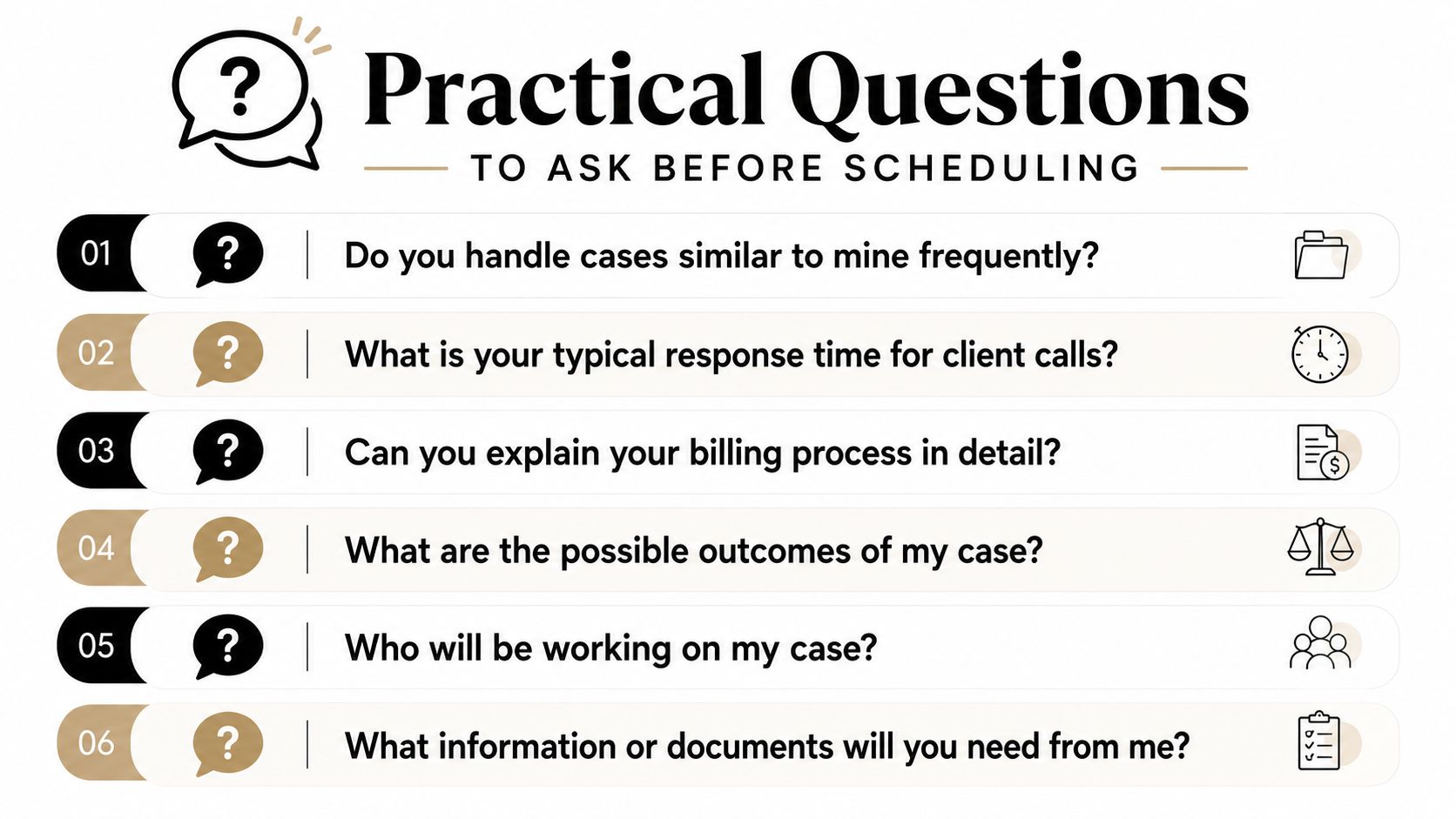
- Can I speak by phone or video? If you work long hours or are caring for a child, remote access saves time and keeps the first contact simple.
- What should I bring to the first meeting? You want a short, direct list of documents, not a pile of papers or a guessing game.
- How do you handle urgent issues? Divorce deadlines, custody disputes, and probate filings do not wait for a convenient opening on the calendar.
- What does the consultation cover? Ask whether the lawyer will review the facts, explain your options, and talk through a plan.
- How do you communicate after the meeting? You need to know who answers questions, how responses come back, and how quickly the office usually follows up.
- Is the consultation free, and what happens next? Get a straight answer before you move forward, including whether the office can take the case and what the next step looks like.
A good office gives direct answers. It should tell you whether your matter belongs in family law, probate, or estate planning, and whether the lawyer has the time and systems to handle it without making you rearrange your whole week.
If you are a caregiver, a military spouse, or someone balancing work and children, say that plainly when you call. A Heights Boulevard attorney who serves the neighborhood should make intake easier when life is already complicated, because that is part of the job.
Schedule a Free Consultation With a Heights Boulevard Attorney
If you're in the Heights and you need straight answers, start with a lawyer who knows Texas family law and estate planning, not one who just borrows the neighborhood name. A real Heights Boulevard attorney should help you understand your options, explain the next filing or planning step, and give you a practical path forward. That's what matters when your family, your property, or your future is on the line.
If you need help navigating divorce, custody, or estate planning in Texas, contact The Law Office of Bryan Fagan today for a free consultation.
The Law Office of Bryan Fagan, PLLC helps Texas families with divorce, custody, probate, and estate planning from a practical, education-first perspective. If you're comparing options for a Heights Boulevard attorney, visit Law Office of Bryan Fagan, PLLC to schedule a free consultation and get guidance for your situation.