You may be sitting at your kitchen table in Houston Heights, looking at a mortgage statement, a family photo, and a growing mental list of “what ifs.” What happens to the house if one of you dies first? Who manages things if you become ill? How do you make life easier for your children instead of leaving them with court paperwork and uncertainty?
Those questions are personal, not abstract. Estate planning is one of the clearest ways to protect the people you love, and it often starts before there's any crisis at all. A will or trust doesn't just move property. It gives your family instructions, structure, and a measure of calm during a hard season.
Planning Your Legacy in Houston Heights
Many people delay this process because they think estate planning is only for retirees or families with unusual wealth. That's rarely true. If you own a home, have children, want to choose who handles your affairs, or want to make sure your wishes are followed, planning matters now.
In Houston Heights, that often looks very ordinary. A couple wants to name guardians for young children. An adult child wants to help aging parents organize documents. A homeowner wants to keep the house transfer as smooth as possible. Those aren't edge cases. They're everyday reasons to speak with a Houston Heights wills and trusts attorney.
When cognitive decline becomes part of the family conversation, legal planning can feel even more urgent. Alongside your legal documents, it can help to read a practical guide for families that explains how changes in memory and decision-making may show up at home.
What most families are really asking
Usually, the first question isn't “Do I need a revocable trust?” It's something more human:
- Will my family know what to do
- Can I keep my children protected
- Will this become a burden after I'm gone
- What happens if I can't make decisions for myself
Those concerns are exactly why estate planning works best when it's explained in plain language. A good starting point is understanding the basic legal tools, then matching them to your family, your property, and your goals. If you want a broader local overview, this Houston Heights estate planning lawyer resource is a helpful next read.
Good estate planning isn't about expecting the worst. It's about making sure your family isn't left guessing.
Wills vs Trusts A Clear Texas Comparison
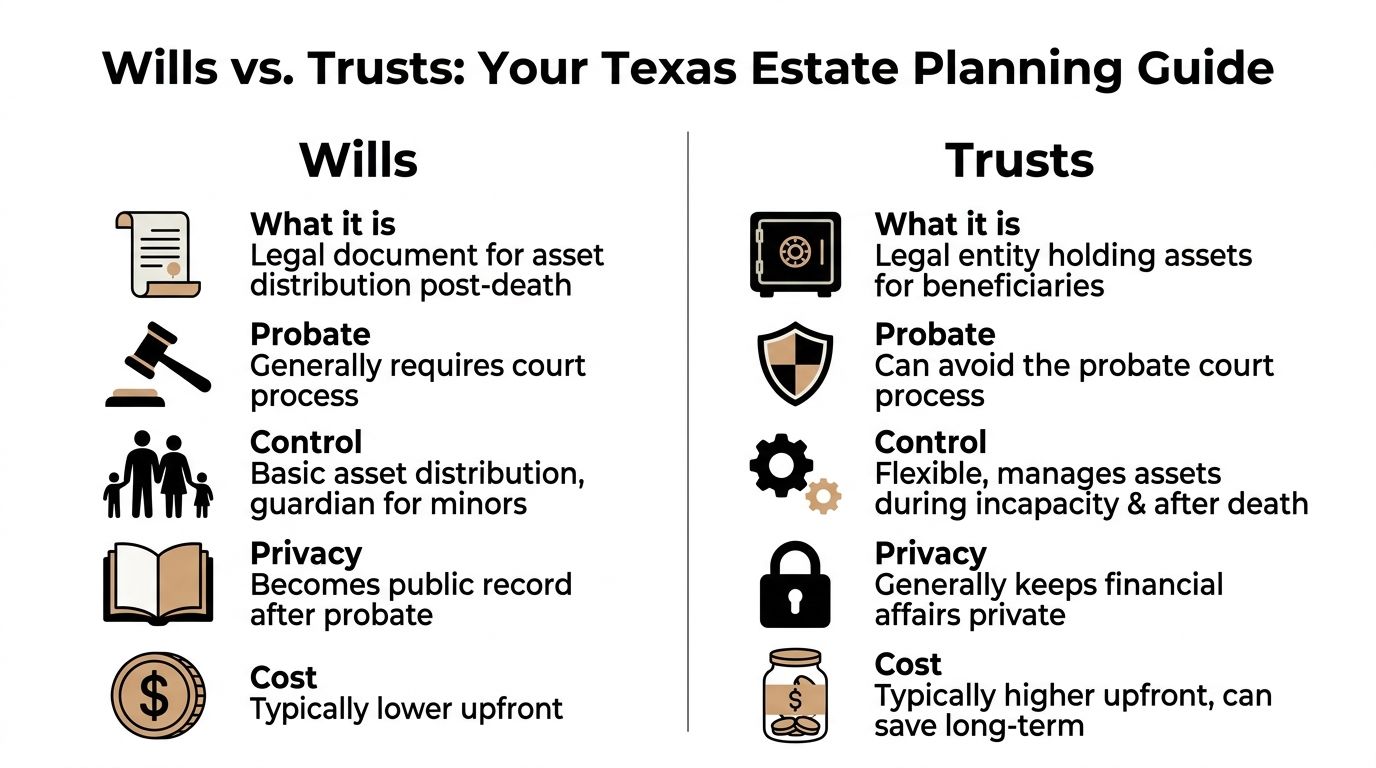
People often use “will” and “trust” as if they mean the same thing. They don't. A will is more like a written instruction sheet that speaks at death. A trust is more like a legal container that can hold assets and direct how they're managed during your life, during incapacity, and after death.
Here's a visual comparison many families find useful:
What a will does in Texas
A will lets you state who should receive property, who should serve as executor, and who you want to care for minor children. Under Texas probate law requirements for a valid will, a valid will must be in writing, signed by the testator or by another person at the testator's direction and in their presence, and attested by two or more credible witnesses who are at least 14 years old and who sign in the testator's presence. If the will is entirely in the testator's handwriting, witnesses aren't required.
That rule matters because families often come in with a document they found online, or a handwritten note they hope will work. Sometimes it does. Sometimes it creates avoidable problems. Execution details matter in Texas.
What a trust does differently
A trust can do more than direct who gets what after death. It can also spell out who manages assets if you become incapacitated, when beneficiaries receive money, and whether assets stay protected for a child, a person with special needs, or a beneficiary who isn't ready to receive a lump sum.
That's why many people compare a will to a letter and a trust to a lockbox with instructions. The letter tells people what you want done. The lockbox can already hold the assets and appoint the person who controls them.
For readers weighing those options, this discussion of the benefits of trust vs will breaks down the decision in more detail.
Side by side questions clients ask
| Question | Will | Trust |
|---|---|---|
| Does it name who gets property | Yes | Yes |
| Can it name a guardian for minor children | Yes | Not usually the main tool for this |
| Does it generally require probate | Yes | Often used to avoid probate for funded assets |
| Does it help during incapacity | Limited on its own | Often yes |
| Does it stay private | Probate filings can become public | Often offers more privacy |
A simple will may be enough for some families. A trust may be the better fit if privacy, management during incapacity, or controlled distributions matter more. In many cases, the answer isn't either-or. It's a coordinated plan using both.
That's the practical role of Estate Planning. Wills, trusts, and estate plans to protect assets and wishes.
If you have minor children, blended family concerns, real estate, or a beneficiary who needs support over time, a trust often solves problems that a will alone can't.
Your Step-by-Step Estate Planning Process
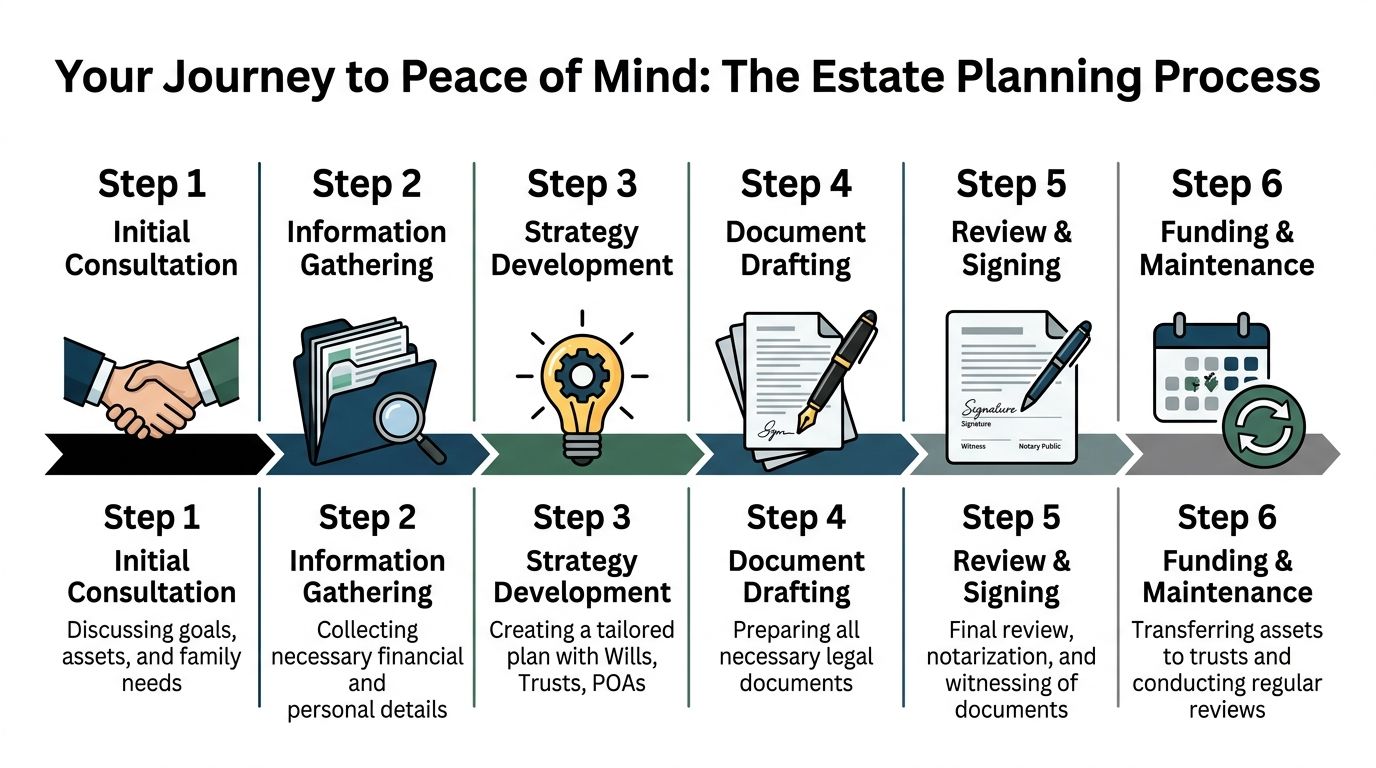
One reason people put this off is simple. They don't know what the process will feel like. Once you understand the path from first meeting to signed documents and long-term maintenance, it becomes much less intimidating.
Step one and step two
The process usually starts with a consultation and some basic information gathering. You'll talk through family relationships, property, goals, and any concerns that keep you up at night. If you're worried about a child's inheritance, a remarriage, an aging parent, or a family business, those facts will shape the plan.
Bring a simple list of what you own and who you want involved. You don't need a perfect spreadsheet. A rough inventory of real estate, bank accounts, retirement accounts, life insurance, business interests, and major debts is enough to start.
Step three and step four
Next comes strategy and drafting, when legal tools get matched to real-life goals. For one family, that may mean a straightforward will, powers of attorney, and medical directives. For another, it may mean a revocable living trust, backup testamentary trusts for children, and carefully coordinated beneficiary designations.
This stage is collaborative. You should understand why each document exists, what problem it solves, and what it doesn't do. If a lawyer can't explain your plan in plain English, that's a warning sign.
Practical rule: You should be able to explain your estate plan to your spouse or adult child in a few minutes without reading from the documents.
Signing and making it work
The signing meeting matters more than people realize. Texas has formal execution rules for wills, and trust-related documents may also require notarization or other formalities depending on the document. A well-drafted plan can still fail if it isn't properly executed.
After signing, many clients think they're done. Often, they aren't. If your plan includes a trust, assets usually need to be retitled or aligned with that trust. Lawyers call this funding the trust. If the trust exists on paper but your assets never move into it or coordinate with it, the plan may not work as intended.
Long-term management after signing
Estate plans aren't set-and-forget documents. You should revisit them after major life changes such as marriage, divorce, a birth, a death in the family, a move, or the purchase of significant property. Reviews also help catch outdated executors, trustees, and beneficiary choices.
If your will is later used in probate, Texas allows independent administration in many cases. Under Texas probate court basics, independent administration can be established if the will expressly requests it or all adult beneficiaries agree. Once appointed, the executor must file a sworn Inventory, Appraisement, and List of Claims, or an Affidavit in Lieu of Inventory, within 90 days of appointment.
That rule is a good example of why planning ahead matters. A thoughtful will doesn't just say who inherits. It can also make estate administration more workable for the person left to handle it.
Why Probate Avoidance Matters in Harris County
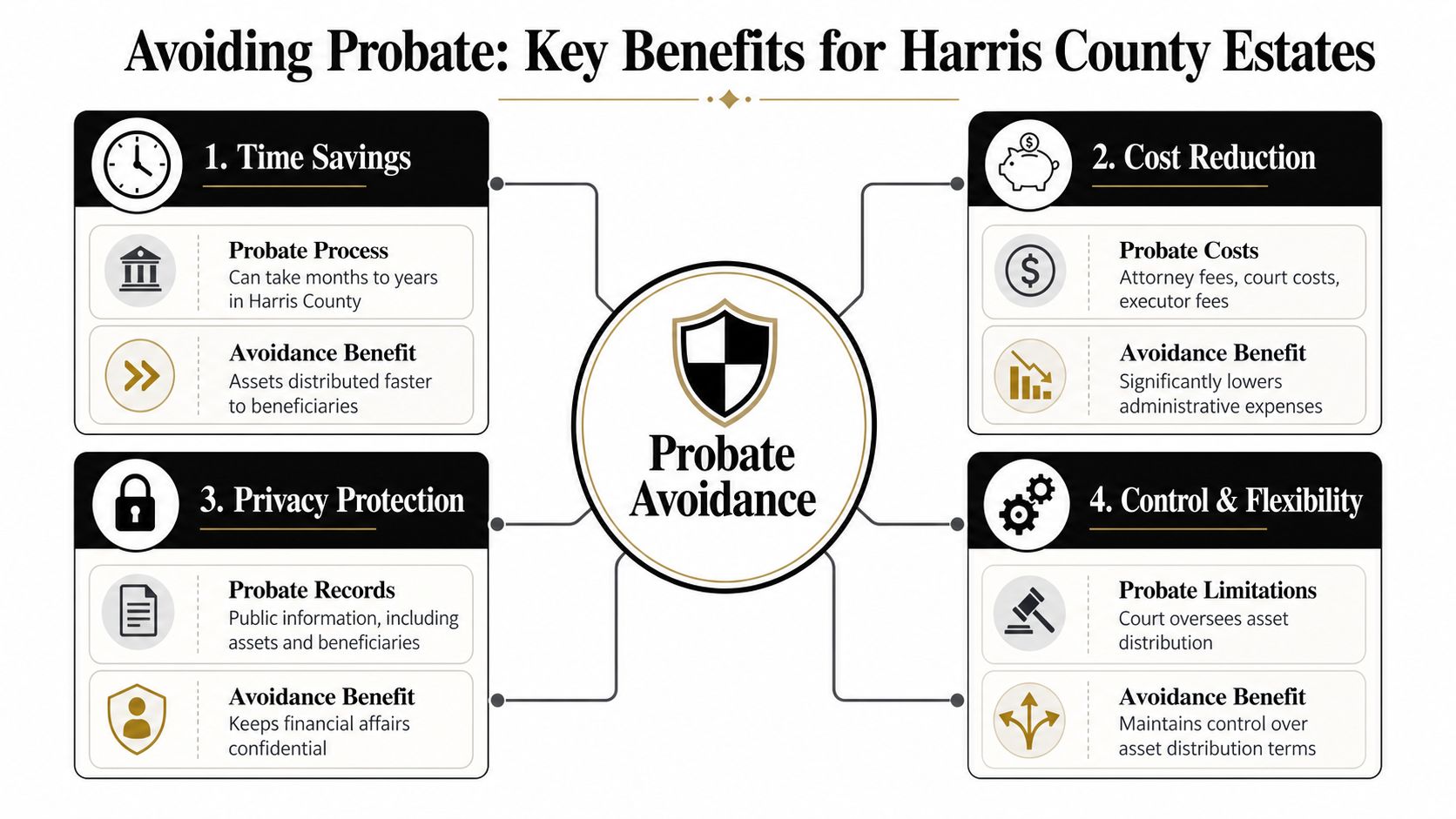
A common Houston Heights scenario goes like this. A parent dies owning a home, a few bank accounts, and a car. The family already knows who should receive what, but they still have to slow down and deal with court procedure before certain assets can be transferred. That delay is why probate avoidance matters to many families in Harris County.
Probate has a real purpose. It gives the court a formal way to recognize a will, appoint the person in charge of the estate, and create a legal path for transfers. Still, many residents want to reduce how much of their estate has to pass through that process, especially if their goal is to make life easier for a spouse or children during a hard season.
In Harris County, Houston Heights probate matters are generally handled through Probate Court No. 1 and Probate Court No. 2. Local costs can add up quickly. In this Houston Heights probate attorney overview, attorney fees are described as typically starting at $3,000, with court filing fees generally ranging from $700 to $1,600.
What probate avoidance really means
Probate avoidance does not mean hiding property or cutting corners. It means setting up ownership and beneficiary designations so certain assets can pass by a route other than a full court proceeding.
A revocable living trust works much like a container that holds assets during your lifetime and gives clear instructions for what happens after death. Accounts with beneficiary designations work in a similar way. So do some jointly owned assets. The point is to create a cleaner handoff.
That difference becomes very practical in the client journey. During the planning meeting, you identify which assets are likely to create probate work. During drafting and signing, you choose the legal tools that fit your family. After that, the follow-through matters. Titles, deeds, and beneficiary forms need to match the plan or the paperwork may not deliver the result you expected.
Why this matters so much in Harris County
Court involvement often means more documents, more waiting, and more opportunities for confusion. Families in Houston Heights are usually not worried about legal theory. They are worried about paying the mortgage, accessing accounts, and keeping conflict low.
The family home is often the clearest example. If a house must pass through probate before the next step can happen, that can affect sale timing, refinancing decisions, insurance questions, and basic peace of mind. If the property is already aligned with a trust-based plan, the successor trustee may have a more direct path to manage or transfer it.
If you want a plain-English overview of the court process itself, this guide on how probate works in Texas provides helpful background.
A Heights-centered example
Consider a Houston Heights resident with a bungalow, one checking account, one brokerage account, and two adult children who get along reasonably well. If everything passes only under a will, the executor may still need to open a probate case in Harris County to gather authority and complete transfers. If the home and accounts are instead coordinated with a trust and beneficiary designations, much of that work may happen outside the courthouse.
That does not eliminate every task. Someone still has to collect information, communicate with beneficiaries, and carry out the plan. But it can reduce the number of court steps your family has to handle at the same time they are grieving.
Probate avoidance is usually about reducing delay, expense, and stress for the people you leave behind.
Pricing Your Peace of Mind What to Expect in Houston
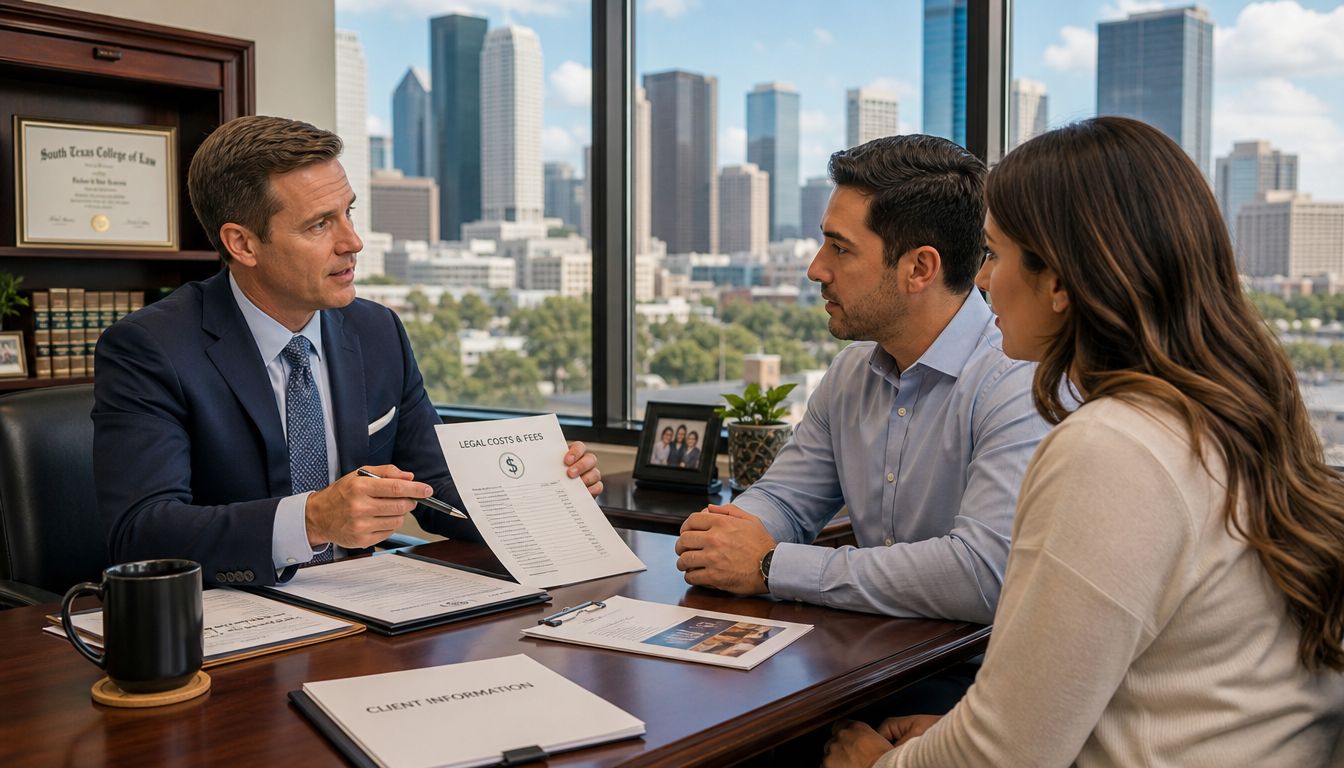
A Houston Heights couple often starts here: "We know we need a plan. What will it cost, and what are we paying for?" That is the right question. In my experience, families feel calmer once they can see the full path, from the first meeting through signing, funding, and future updates.
Benchmarks for wills and trusts
According to Houston estate planning cost benchmarks published by Elaine Law Group, a standard will often falls between $500 and $1,200, while a trust may range from $1,050 to $4,900. The same source explains that fees tend to rise when an estate includes higher-value assets, more complicated property ownership, or tax planning needs.
Those numbers are a starting point, not a final quote. Estate planning works a lot like building plans for a home. A simple layout takes less time than a design that has to account for multiple owners, special protections, and detailed instructions for the future.
In Houston Heights, the price often reflects more than document drafting alone. It may include your initial consultation, decision-making guidance, customized documents, signing instructions that fit Texas rules, and practical follow-up so your plan works the way you expect in real life.
What affects the fee
Several factors usually change the scope of the work:
- What you own. A home, rental property, business interest, or several financial accounts usually takes more coordination than a single bank account and a car.
- Who you are planning for. Minor children, a second marriage, stepchildren, or a family member who needs extra support often require more careful choices.
- How much control you want. Plans that stagger inheritances, prepare for incapacity, or set rules for managing money usually require more drafting and counseling.
- Whether assets need to be aligned. A trust-based plan may also involve deed review, beneficiary designation review, and instructions for retitling assets so the plan is not just signed, but usable.
That last point causes confusion for many families. Signing a trust without changing ownership on the right assets can leave part of the plan unfinished. The document is only one part of the job.
Price versus long-term value
A lower fee can be appropriate for a very simple plan. It can also mean the work stops at the paper stage.
A stronger question is this: what support are you receiving from start to finish? Ask whether the quoted fee covers powers of attorney, a medical directive, funding guidance, deed work if needed, and later reviews as your family changes. Those details shape the client experience far more than the headline number.
This is similar to reading understanding pet hospice services reviews before making a difficult family decision. The price matters, but so do clarity, responsiveness, and what people experience once the process begins.
For many Houston families, peace of mind comes from knowing the plan fits their life now and will still make sense years from now. That is what you are really buying: informed advice, documents that match Texas law, and a relationship you can return to when your circumstances change.
Choosing Your Attorney Red Flags and Green Lights
You sit down for an estate planning meeting in Houston Heights after finally deciding to get this done. You expect guidance. Instead, the lawyer starts naming documents before learning much about your family, your home, or who would step in if something happened tomorrow. That is usually the moment people realize they are not just choosing paperwork. They are choosing a guide for a process that may affect their family for years.
The better fit is often the attorney who treats estate planning as a full client journey. Your first meeting should clarify your goals. The drafting stage should match those goals. The signing meeting should leave you understanding what you signed. After that, you should know what to update, what your loved ones need to find, and when to revisit the plan as life changes. In Houston Heights, that practical approach matters because your documents may one day be used in Harris County courts, by a bank, or by a family member under stress.
A useful local reference point comes from the Houston Lawyer Referral Service probate and estate planning page, which notes that its affiliated probate, wills, and trusts attorneys average 17 years of legal experience. Experience alone does not guarantee a good fit, but it gives you a reasonable benchmark as you compare lawyers serving Houston families.
Green lights to look for
- They teach as they go. A good attorney explains wills, trusts, powers of attorney, and beneficiary designations in plain language. The conversation should feel like a map is being drawn in front of you, one step at a time.
- They start with your life, not a preset package. You should hear questions about your children, marriage, home, business interests, aging parents, and the people you trust to make decisions.
- They explain how the plan works after signing. Drafting is only one part of the job. Your lawyer should also talk about how an executor or trustee would carry out the plan.
- They discuss Harris County realities. A lawyer handling this work in Houston should be comfortable explaining what could require court involvement, what may stay outside probate, and where families often run into delay or confusion.
- They define the relationship clearly. You should know what is included now, what may require follow-up later, and whether the office helps with reviews as your life changes.
- They offer relevant services in this area. The Law Office of Bryan Fagan, PLLC handles estate planning matters including wills, trusts, and related planning documents as part of its Texas legal practice.
Red flags that deserve caution
Some warning signs look convenient at first.
- Recommendations come too quickly. If a trust, will, or package is recommended before the lawyer understands your goals, slow the process down.
- The meeting feels rushed. You should leave with more clarity than you had before, not a stack of papers and new confusion.
- There is little discussion of implementation. A trust works like a safe with no contents if assets are never aligned with it.
- Questions about local procedure get vague answers. If the lawyer cannot explain, in clear terms, how Texas rules and Harris County practice affect your family, keep looking.
- You are sold documents, not counsel. Estate planning is not just form selection. It is judgment, explanation, and planning for what happens next.
Reviews can help, but they work best when you read them carefully. The same way families benefit from reading about understanding pet hospice services reviews before making an emotional care decision, it helps to look for patterns in legal reviews. Do former clients mention patience, clarity, responsiveness, and help after signing? Those details usually tell you more than a star rating.
A good estate planning attorney leaves you with more than signed documents. You should leave knowing what your plan does, how your family would use it, and when to update it.
Take the First Step to Secure Your Family's Future
If you've made it this far, you probably already know the main truth. Putting an estate plan in place isn't about paperwork for its own sake. It's about protecting your spouse, children, home, and wishes in a way that reduces confusion later.
For some Houston Heights families, that starts with a will and guardianship planning. For others, it means a trust-based plan designed to avoid unnecessary court involvement and keep administration more private and manageable. The right answer depends on your life, not someone else's checklist.
If you're feeling behind, don't. Many individuals start this process because something finally made it feel real: a new child, a parent's illness, a home purchase, a remarriage, or the realization that no written plan exists. Starting now is what matters.
You don't have to figure it all out before you speak with a lawyer. Bring your questions. Bring the uncertainty. A thoughtful planning conversation should leave you clearer, not more overwhelmed.
If you need help navigating divorce, custody, or estate planning in Texas, contact Law Office of Bryan Fagan, PLLC today for a free consultation.