
Ever try to stick to a budget after your teenager discovers they “absolutely need” the latest phone, or your ex calls saying the kids have outgrown everything—again? Life changes fast, and sometimes your child support order just can’t keep up. Whether it’s a new job, an unexpected layoff, or a sudden shift in living arrangements, these real-life twists are exactly why understanding Valid Reasons for Modifying Texas Child Support matters more than most parents realize.
Here’s the thing: Texas law doesn’t expect you to predict the future. When circumstances change in a big way—like income fluctuations, medical issues, or a new custody schedule—the courts allow for adjustments that keep things fair for everyone. The goal isn’t to win or lose; it’s to make sure your child’s needs are met without either parent feeling financially overwhelmed.
In this post, you’ll learn what counts as a valid reason under Texas law, what evidence judges actually pay attention to, and how smart legal strategy can help you avoid costly mistakes. We’ll even share real stories of Texas parents who successfully modified their support to match life’s new reality.
At The Law Office of Bryan Fagan, PLLC, we know these conversations can be tough—but they don’t have to be confusing. Pour yourself a cup of coffee and stick around. By the end, you’ll know when it’s time to request a modification, how to do it the right way, and how to protect your family’s financial stability every step of the way.
Key Takeaways
- In Texas, child support modifications can be requested based on significant changes in income, child needs, custody arrangements, or substantial changes in circumstances.
- To request a modification, parents must file a petition in the original court, substantiating their claims with relevant evidence and documentation.
- Consulting a Texas family law attorney can significantly improve the chances of a successful modification by ensuring proper filing and strong evidence presentation.

Your Family’s Future Starts Here
Don’t navigate your legal journey alone. Schedule a consultation now and get the clarity and support you deserve.
Legal Grounds for Requesting Child Support Modifications in Texas
In Texas, child support orders can be modified when a parent’s circumstances change significantly. According to Texas Family Code §156.401, a modification may be requested if it has been three years since the last order or if the current amount differs by 20% or $100 or more from the guideline amount. Either the paying or receiving parent can file a Petition to Modify the Parent-Child Relationship under §156.002, ensuring that the child’s needs are continually met in line with the parent’s financial realities.
The Law Office of Bryan Fagan, PLLC regularly assists parents with understanding and pursuing the Valid Reasons for Modifying Texas Child Support. Common reasons include major changes in income, such as losing a job or receiving a pay cut, or significant shifts in the child’s financial needs, including medical treatments, educational expenses, or developmental support. These changes must be both material and substantial to qualify under Texas law.
Beyond financial shifts, modifications can also stem from changes in custody arrangements or new family responsibilities, such as the birth of another child. Texas courts evaluate these circumstances carefully to ensure that support remains fair and consistent with the child’s best interests. Filing in the same court that issued the original order ensures continuity and judicial oversight of the modification process.
To explore how these laws apply within your community, review our detailed guide on Modifications to Court Orders in Montrose. This resource offers clarity on what to expect and how local courts interpret “material and substantial change” under current Texas Family Code provisions. Staying informed helps parents act proactively rather than reactively when life circumstances evolve.
At the Fagan firm, we believe education and empowerment go hand in hand. By understanding your rights and the Valid Reasons for Modifying Texas Child Support, you can protect your child’s well-being while maintaining financial balance. To learn more about child support enforcement, calculations, or modifications, visit our Texas Child Support Resource. Our experienced family law attorneys are here to guide you through every step with compassion and confidence.

Significant Changes in Income
One of the most common reasons for modifying Texas child support is a significant change in income. Whether due to job loss, a pay cut, or a substantial increase in income, these changes can impact the financial responsibilities of both parents. For instance, if a parent suddenly loses their job, it can create a financial strain that necessitates a review of child support obligations.
Failing to report changes in income promptly can lead to delays in adjusting child support payments. Notify the court and provide evidence of any significant income changes to ensure that child support obligations are fair and reflective of the current financial situation.
Job Loss or Pay Cut
Experiencing a job loss or pay cut can be a significant financial burden, especially when there are child support obligations to meet. In Texas, if a parent experiences a decrease in their income due to involuntary job loss, they can request a review of their child support obligations. The court can adjust child support payments based on the parent’s previous income and current employment status, ensuring that the support amount is fair and manageable.
Courts will not approve modifications for temporary job loss or voluntary reduction in income. Providing thorough documentation, such as termination letters or pay stubs, supports the modification request.
Increase in Income
An increase in income by either parent can also justify a modification of child support obligations under Texas law. For instance, a significant promotion or salary increase can warrant higher child support payments as part of the modification process.
Documenting changes with evidence such as pay stubs or employer letters ensures the new child support order accurately reflects the parent’s financial capacity to pay child support.
Changes in Custody or Living Arrangements
Life changes—sometimes unexpectedly—and when it does, child support obligations may need to be adjusted to reflect a family’s new reality. Under Texas Family Code §156.401, either parent can request a modification if there has been a material and substantial change in circumstances or if it has been at least three years since the last order and the current amount differs by 20% or $100 from guideline support. These provisions ensure that support orders remain fair, relevant, and focused on the child’s best interests.
Some of the most common Valid Reasons for Modifying Texas Child Support include job loss or significant income changes, relocation, shifts in custody or living arrangements, and the evolving needs of a child—such as increased medical, educational, or extracurricular expenses. Courts take these changes seriously and will only approve a modification when clear evidence shows that it aligns with the child’s welfare. Documentation like updated lease agreements, employment records, school enrollment forms, or revised custody schedules often serves as critical proof.
According to Texas Family Code §156.101, any modification—whether for child support or custody—must be determined to be in the child’s best interest. This legal safeguard ensures fairness for both parents while prioritizing stability for the child. The process typically involves filing a petition in the same court that issued the original order, followed by a review of the family’s updated circumstances and supporting evidence.
To learn more about how modifications work and what documentation is needed, explore our detailed guide on Divorce and Support Modifications in Texas. The attorneys at the Law Office of Bryan Fagan, PLLC have extensive experience helping parents navigate these changes with clarity and compassion. For additional insights on how Texas calculates and enforces child support, visit our Texas Child Support Resource. Our mission is to educate families, protect futures, and ensure every child receives the support they deserve.

Change in Primary Custody
A change in primary custody can significantly impact child support obligations. If the primary custody shifts from one parent to another, it may necessitate a child support modification to reflect the new custody arrangement. For instance, if a parent relocates and the other parent assumes primary custody, the child support obligations must be adjusted accordingly.
Parents must file a petition in the court that issued the original child custody order to initiate a custody modification, especially if there has been a change in circumstances affecting the custodial parent. This ensures the child’s best interests are considered and the new custody arrangement is legally recognized.
Relocation
Relocation is another significant reason for modifying child support and custody arrangements. When a parent relocates, it can impact the child’s living situation and financial needs. Moving to a new city or state may affect the cost of living and the financial realities of raising a child, which the court will consider during modification hearings.
Parents should gather evidence such as lease agreements, school enrollment forms, or updated addresses to support a relocation claim. This documentation demonstrates the substantial change in circumstances and justifies the need for a child support modification.
New or Increased Expenses for the Child
Under Texas Family Code §156.401, parents may seek a modification of child support when a material and substantial change in circumstances occurs, or if three years have passed since the last order and the current amount differs from guideline support by 20% or $100. This legal safeguard ensures that child support orders evolve with the family’s changing needs and continue to serve the child’s best interests.
Among the Valid Reasons for Modifying Texas Child Support are new or increased medical or educational expenses. A child’s diagnosis, changes in health insurance, or rising costs for schooling—such as tutoring, special education, or extracurricular programs—can all justify revisiting an existing order. According to Texas Family Code §156.101, the court will only approve a modification when supported by credible evidence that the change benefits the child. Parents should document expenses thoroughly through bills, insurance statements, and school records to strengthen their case.
For guidance on how to begin the process, review our in-depth article on How to Petition for a Modification After a Change of Circumstances in Texas Family Law. The compassionate attorneys at the Law Office of Bryan Fagan, PLLC help Texas families understand their rights, gather evidence, and navigate every step of the modification process. To further explore how Texas calculates and enforces support, visit our Texas Child Support Resource. Our mission is simple: to educate families, protect futures, and ensure every child receives the support they deserve.

Medical Bills
Documenting new or increased medical expenses is essential for justifying modifications. Thorough records, such as bills, receipts, and doctors’ notes, support modification requests.
These medical records can demonstrate the substantial change in circumstances and justify the need for a child support modification.
Educational Costs
Additional educational expenses, such as tuition or special education fees, can justify a child support modification. These educational expenses can significantly affect the financial responsibilities of the parents, potentially warranting a reassessment of child support amounts.
Documentation of these expenses, such as tuition bills or receipts for tutoring services, supports the modification request.
Health Insurance Coverage Changes
Changes in health insurance coverage can significantly impact child support obligations. When a parent’s health insurance coverage changes, it may necessitate a modification of the child support order to reflect the new financial circumstances. Parents should keep copies of insurance policies, premium statements, and employer communications as proof of health insurance changes for court.
These changes can influence who is responsible for paying for the child’s medical needs, potentially affecting the amount of child support required. Documenting these changes provides strong evidence to support the modification request and ensures the child’s medical needs are adequately met.
Loss of Coverage
When a parent loses their health insurance, they can seek a modification of the child support order to address the loss. This loss of coverage can significantly impact the financial obligations of a parent’s ability regarding medical support and child support.
Parents should document the loss of coverage and related changes to effectively petition for child support modifications.
New Coverage Requirements
Changes in health insurance coverage can significantly affect child support obligations, as they impact the financial responsibilities of parents in providing for their children. When a parent’s health insurance coverage changes, it may necessitate a modification of the child support order to reflect the new financial circumstances.
Documentation of these changes, such as new insurance policies or premium statements, supports the modification request.
Material and Substantial Change in Circumstances
When life circumstances change, child support orders may need to change too. Under Texas Family Code §156.401, a parent can request a modification if there has been a material and substantial change in circumstances since the previous order or if three years have passed and the current amount differs by 20% or $100 from the state’s guideline support. These provisions ensure that support obligations remain fair and accurately reflect each parent’s current financial and family situation.
Common Valid Reasons for Modifying Texas Child Support include a significant loss or increase in income, new family responsibilities such as the birth of additional children, or increased expenses for the child—particularly medical, educational, or developmental costs. Documentation, such as pay stubs, medical bills, or proof of household changes, must be submitted to demonstrate these circumstances to the court. According to Texas Family Code §156.101, any modification must serve the child’s best interests, ensuring that changes to support reflect the family’s evolving needs while maintaining stability for the child.
For families in Rice Village and surrounding areas, our team has created a comprehensive resource explaining the process of Modifications to Court Orders in Rice Village. The attorneys at the Law Office of Bryan Fagan, PLLC understand that life rarely stands still—and when it changes, your legal orders should adapt too. To learn more about how support is calculated and enforced across Texas, visit our Texas Child Support Resource. Our firm is committed to educating families, protecting futures, and ensuring every child receives the support they deserve under Texas law.

Birth of Additional Children
A new child’s birth can be legally recognized as a significant change, warranting a review of existing child support obligations related to the child’s living and the child’s life. When a parent has more children, Texas courts use multi-household guidelines to assess child support responsibilities rather than automatically reducing child support payment.
This approach ensures that all children receive adequate financial support.
Parent’s Financial Hardship
Financial difficulties faced by a parent, which extend beyond mere income fluctuations, can justify a modification in child support arrangements, as failing to address these issues may lead to serious consequences. Examples of valid financial hardships include unexpected medical expenses, significant debt, or prolonged unemployment.
Documenting these hardships with evidence such as medical bills or unemployment records supports the modification request.
How to File for Modification of Texas Child Support
In Texas, parents may seek to modify a child support order when circumstances have significantly changed since the last ruling. Under Texas Family Code §156.401, a modification may be requested if it has been at least three years since the previous order or if a material and substantial change has occurred—such as job loss, income fluctuation, changes in custody, or the child’s increased medical or educational expenses. These provisions ensure that child support remains fair, relevant, and aligned with the child’s best interests as outlined in Texas Family Code §156.101.
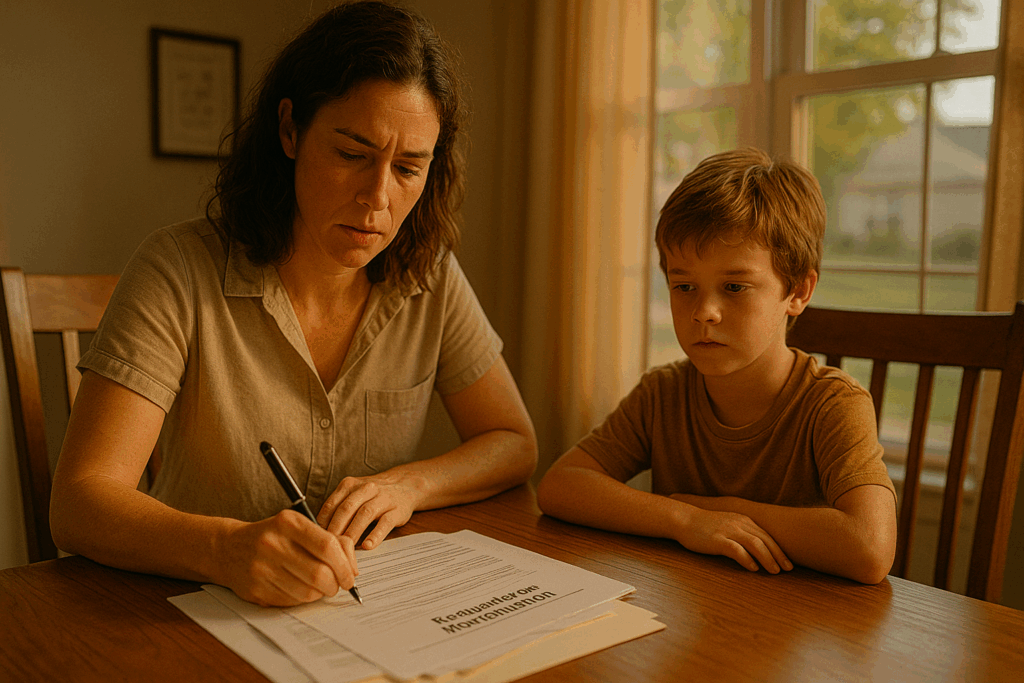
To begin the process, a parent must file a Petition to Modify the Parent-Child Relationship in the same court that issued the original order. The petition should include detailed reasons for modification and credible supporting evidence, such as financial statements, pay stubs, medical records, or proof of new childcare or education costs. Once the petition is submitted, the court will review the evidence, schedule a hearing, and—if justified—issue a new order officially modifying the support obligations in accordance with updated Texas Family Code standards.
For step-by-step guidance through this process, explore our comprehensive resource, Top Child Support Modification Attorney in Texas: Your Guide to Legal Assistance. The attorneys at the Law Office of Bryan Fagan, PLLC are highly experienced in identifying Valid Reasons for Modifying Texas Child Support and advocating effectively for parents navigating these legal changes. To learn more about how Texas calculates and enforces child support, visit our Texas Child Support Resource. Our mission is to educate families, protect futures, and ensure every child receives the financial support they deserve under Texas law.
Preparing Your Petition
It’s crucial to gather comprehensive evidence to support the modification request. Essential documents for income-related modifications include:
- Pay stubs
- W-2 forms
- Letters from employers
- Proof of unemployment
Gathering supporting evidence, including medical bills and childcare costs, is necessary to provide a strong case for modification.
Filing in the Correct Court
A motion to modify must be filed. It should be submitted to the same court that issued the original child support order. Use the same cause number from the earlier modification case when filing for a modification.
Filing promptly is crucial, as orders aren’t retroactive until submitted.
Attending Mediation or Court Hearings
During the child support modification court hearing, the judge will consider the evidence presented and the best interests of the child. Failing to deliver legal documents to all parties may delay the court date for modification in court.
Attend mediation or court hearings where the judge will review evidence and determine if modification is appropriate. Contested modification cases can last weeks or months, so be prepared for a potentially lengthy process.
Common Mistakes to Avoid When Filing for Modification
Filing for a child support modification can be complex, and avoiding common mistakes is crucial for a successful outcome. One significant error is lying about income, which can result in denial of modification requests and potential legal penalties. Another common mistake is assuming that child support obligations end automatically when a child turns 18. In Texas, child support usually continues until the child graduates high school, whichever happens later.
Without legal representation, parties risk making errors that could jeopardize their chances of a favorable outcome. Legal representation enhances understanding of one’s rights and options in child support modification cases.
Additionally, to ensure a smooth modification process:
- Avoid failing to provide enough evidence.
- Do not wait too long to file.
- Always continue making payments under the current order until the new one is approved.
The Role of a Texas Family Law Attorney
Before pursuing a modification, it’s essential to determine whether your situation meets the legal standards outlined under Texas Family Code §156.401. A parent may seek a change if there has been a material and substantial change in circumstances—such as a job loss, income fluctuation, increased medical or educational expenses for the child, or a shift in custody—or if three years have passed and the current amount differs by 20% or $100 from the guideline support. Understanding these Valid Reasons for Modifying Texas Child Support ensures your petition is based on recognized legal grounds and supported by credible evidence.
Consulting with an experienced Texas family law attorney is critical to the success of your modification request. A skilled attorney can confirm whether your circumstances qualify under the latest provisions of the Texas Family Code, ensure your petition is properly filed, and help you gather the financial records, medical documentation, and other supporting evidence needed to strengthen your case. Without proper legal guidance, even valid modification requests can be delayed or denied due to procedural missteps or insufficient proof.
At the Law Office of Bryan Fagan, PLLC, our attorneys help parents across Texas understand their rights, navigate the complexities of child support law, and advocate effectively for fair outcomes. For a detailed overview of how child support is determined and modified in Texas, visit our in-depth guide on Child Support in Texas or explore our Texas Child Support Resource. Our mission is to educate families, protect futures, and ensure every child receives the support they need to thrive.
Benefits of Legal Representation
Legal representation offers numerous benefits when seeking a child support modification:
- An attorney can help you understand the legal process.
- They ensure that you are legally responsible for providing adequate financial support for your child.
- They can assist in gathering and presenting evidence to support your modification request.
- This makes the process smoother and less stressful.
Contact an attorney for a consultation to discuss valid reasons for modifying Texas court child support in Texas and explore the best options for your situation.
Limited Scope Representation
Limited scope representation allows clients to:
- Receive specific legal assistance without full representation.
- Have flexibility if they do not require comprehensive legal representation.
- Obtain expert advice on certain aspects of their case.
Hiring a lawyer for specific tasks, such as preparing legal documents or providing guidance on court procedures, makes legal services more affordable and tailored to their needs.
Success Stories and Testimonials
Hearing from others who have successfully navigated the child support modification process can be incredibly inspiring. Anonymized success stories serve as powerful examples of how modifications can positively impact families. For instance, one parent shared how a significant job loss led to a successful modification that allowed them to continue providing for their child without financial strain.
Testimonials from clients highlight various circumstances, such as changes in income, health issues, and adjustments in custodial arrangements that warranted modifications. These stories reflect the challenges and triumphs of seeking a child support modification and offer hope to others in similar situations.
Knowing that successful modifications are achievable can provide the motivation needed to pursue the necessary changes for your family’s well-being.
Conclusion:
Life has a way of surprising us, doesn’t it? Jobs change, families grow, circumstances shift—and what once made sense on paper may not reflect your reality anymore. When that happens, modifying child support isn’t about starting a fight; it’s about keeping things fair and protecting what matters most—your child’s well-being and your peace of mind.
At The Law Office of Bryan Fagan, PLLC, we’ve helped countless Texas parents navigate these transitions with clarity and compassion. Whether you’re facing a job loss, income change, or evolving family needs, our team understands the legal steps and emotional weight that come with adjusting child support. We’ll walk you through it, explain your options, and help you move forward with confidence.
If you’re feeling that quiet nudge that something about your current order no longer fits, listen to it. A quick consultation today could spare you months of stress down the road. Because when your family’s situation changes, your support plan should, too—and having the right legal partner makes all the difference.
So take a breath, reach out, and let’s make sure your child’s future—and yours—stay on steady ground.
Frequently Asked Questions
In Texas, a child support order can be modified when there’s been a material and substantial change in circumstances since the last order or if at least three years have passed and the guideline amount differs by either 20% or $100. Common reasons include major income changes, shifts in custody, or new child-related expenses like medical or educational costs. (See Texas Family Code §§156.401, 154.125)
Examples include job loss, a significant raise, a new disability, the birth of additional children, changes in insurance coverage, or major shifts in custody or visitation. Any change that meaningfully affects a parent’s ability to pay—or a child’s needs—can qualify.
Many parents focus too much on criticizing the other parent instead of proving what benefits the child. Judges look for stability, cooperation, and consistency. Disrespecting court orders or showing hostility can seriously hurt your case.
File a petition in the same court that issued the existing order, or request a review with the Texas Office of the Attorney General. You’ll need to show proof of your changed circumstances. Once filed, continue making payments until a judge signs a new order.
There’s no set schedule—it depends on life changes. If no major change occurs, reviews can happen every three years. However, if something significant happens sooner, such as a job change or medical emergency, you can file right away.
While not a legal term, an “unstable parent” is generally one who cannot provide consistent care—due to factors like substance abuse, mental health issues, unsafe housing, or repeated failure to follow court orders. Courts always prioritize the child’s safety and well-being.
Amendments to family court orders can include adjusting support amounts, updating possession schedules, changing insurance responsibilities, or modifying decision-making authority. These updates reflect evolving family circumstances.
A qualifying change might be financial (job loss or promotion), medical (new health issues), or parental (relocation or new custody arrangement). The key is that it’s significant, ongoing, and impacts the child or parent in a lasting way.
It’s a major change since the last order that justifies revisiting child support or custody. Examples include income fluctuations, new child expenses, incarceration, disability, or changes in living arrangements. Judges always decide based on the child’s best interest under Texas Family Code §156.401.