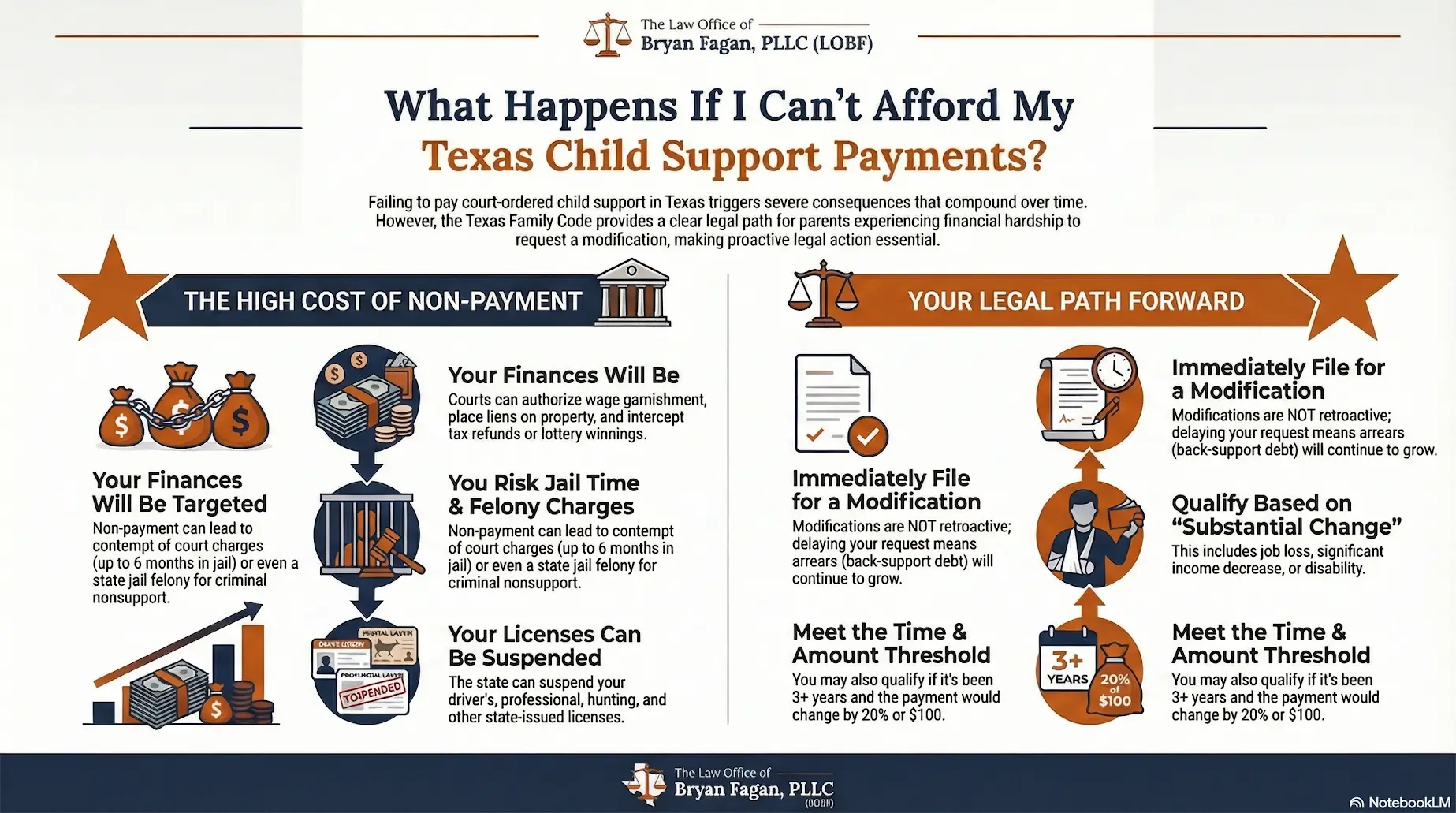

Have you ever had a moment where life hits you all at once? Maybe you’re standing in the kitchen late at night, staring at a stack of bills, replaying the conversation you had with your boss about reduced hours, and feeling that sinking worry in your stomach. In that quiet moment, when the house is finally still, many parents find themselves whispering the question they hoped they’d never face: “What Happens if I Can’t Afford My Texas Child Support Payments?” It’s a question filled with fear, guilt, and uncertainty—one that can make even the strongest parent feel overwhelmed.
At The Law Office of Bryan Fagan, PLLC, we understand these moments on a human level. Our “Why” is simple yet powerful: to empower people to reclaim freedom and peace of mind during life’s hardest transitions. Led by Bryan Joseph Fagan—a South Texas College of Law graduate and respected authority in Texas divorce and custody law—our firm has guided countless families through the complicated, deeply personal world of child support and post-divorce life. We know that behind every legal question is a real parent trying to do the right thing for their child while navigating circumstances they never expected.
Texas law, including the best-interest standard in Texas Family Code §153.002 and child support guidelines under §154.125, can feel intimidating when you’re already under financial stress. The fear of enforcement, arrears, or court consequences can make anyone feel trapped. But here’s the truth many parents don’t realize: you have options, and you have rights. Understanding the law—and acting early—can be the difference between spiraling debt and a manageable, legally supported path forward.
In this article, you’ll learn exactly how Texas handles situations where a parent can’t afford their child support payments, what steps you can take right now, and how compassionate, knowledgeable legal guidance can help you regain stability and peace of mind.
No matter how heavy things feel today, you’re not alone—and you’re not without solutions. Let’s walk through them together.
Key Takeaways
- Falling behind on child support in Texas creates arrears that do not disappear and will continue to accrue 6% interest each year.
- Texas courts cannot reduce past-due support, which makes filing for a modification as early as possible absolutely critical.
- Judges look at whether your financial hardship was involuntary and whether you’ve made good-faith efforts to pay what you can.
- Enforcement tools can include wage withholding, tax refund interceptions, license suspensions, liens, and in severe cases, jail time.
- Child support and visitation are completely separate—missing payments does not eliminate your right to see your child.
- Even minimal or partial payments can help show responsibility and reduce the risk of severe enforcement consequences.
- Disability, job loss, medical emergencies, and natural disasters may qualify as substantial changes that support a modification request.
- The Attorney General’s Office may offer payment plans or administrative reviews, but relief is not automatic.
- Acting early, documenting your hardship, and staying engaged with the process gives you the strongest legal position.
- An experienced Texas family law attorney can help you navigate modification, defend against enforcement, and protect your long-term stability.
Immediate Consequences of Not Paying Child Support in Texas
When parents begin searching What Happens if I Can’t Afford My Texas Child Support Payments, it’s often because the consequences of missing even one payment have already started to unfold. Under Texas Family Code §§157.262–157.263, unpaid child support becomes a judgment by operation of law the moment it is due and not paid. This transforms each missed payment into a permanent debt, and interest—set at 6% annually under Texas Family Code §157.265—continues to accumulate until the balance is satisfied, even long after the child turns 18.
Because arrears form instantly, addressing payment problems early is essential. Texas applies some of the strictest enforcement measures in the country, and a parent’s inability to pay does not shield them from wage withholding, tax refund interception, license suspension, liens, or even contempt proceedings. These enforcement tools are designed to ensure compliance, and they continue (and often intensify) the longer a parent waits to seek help. For a deeper understanding of your options, the firm’s resource What to Do If You Can’t Afford Child Support Payments in Texas offers step-by-step guidance rooted in current Texas law.
At this stage, many families benefit from speaking with the experienced attorneys at the Law Office of Bryan Fagan, PLLC, who blend legal precision with compassionate counsel. The firm’s educational articles, including the Texas Child Support Enforcement Overview, help parents understand not only the legal implications but also the proactive steps they can take to regain control. Acting early is the most effective way to protect yourself, stabilize your situation, and safeguard your family’s future.
Criminal Penalties and Jail Time
The most serious immediate consequence of failing to pay support is potential jail time. Texas courts can hold you in civil contempt for willfully violating a court order, which can result in up to six months in county jail for each proven violation. The judge will examine whether you had the ability to pay and chose not to, versus genuinely being unable to afford the payments.
Beyond civil contempt, Texas Penal Code Section 25.05 makes criminal nonsupport a state jail felony when a parent intentionally or knowingly fails to provide court-ordered support. This criminal charge can result in six months to up to two years in prison, plus a permanent criminal record that affects future employment and housing opportunities.
If your child lives in another state and you fall significantly behind on payments, federal criminal nonsupport laws may apply. Federal prosecution can result in fines and up to two years in federal prison, depending on the amount owed and duration of nonpayment.
It’s important to understand that jail time doesn’t eliminate the child support debt you owe. Interest continues to accrue on unpaid amounts while you’re incarcerated, potentially making your financial situation even worse when you’re released.
Financial Enforcement Actions
Texas employs aggressive financial enforcement mechanisms that can devastate your economic stability. The most immediate action is wage garnishment through Income Withholding Orders, which can take up to 50% of your disposable income to satisfy current support and past-due amounts.
If you’re employed, your employer is legally required to comply with income withholding orders. Additional withholding beyond your monthly support obligation can be ordered to catch up on arrears, creating severe financial pressure on families already struggling to make ends meet.
The Texas Office of the Attorney General can intercept your state and federal tax refunds to pay down child support debt. This often comes as a surprise to parents who were counting on tax refunds to pay other bills or handle emergencies. Even if you file jointly with a new spouse, your portion of the refund can still be intercepted.
Bank account seizures are another powerful enforcement tool. The state can place liens on your bank accounts and levy funds to satisfy unpaid support. This means money you’ve set aside for rent, utilities, or groceries can disappear without warning to pay child support arrears.
Property liens can be placed on your real estate, vehicles, and other assets. These liens must be satisfied before you can sell or refinance property, potentially trapping you in financial situations or preventing you from accessing equity when you need it most.
Unpaid child support is regularly reported to credit bureaus, severely damaging your credit rating. Poor credit affects your ability to get loans, rent apartments, and in some industries, even qualify for employment. The damage to your financial reputation can persist for years.
Interest accrues on unpaid child support at 6% per year under Texas law. This means a few months of missed payments can quickly snowball into thousands of dollars of permanent debt that grows larger each year until paid in full.
License Suspensions and Travel Restrictions
Parents searching What Happens if I Can’t Afford My Texas Child Support Payments are often surprised to learn how quickly license-related consequences can unfold under Texas law. According to Texas Family Code §232.003, falling behind on child support can lead to the suspension of your driver’s license, making it difficult—or even illegal—to commute to work. This loss of mobility can worsen your financial situation, reduce earning ability, and create a cycle that becomes harder to break without timely legal action. Professional licenses are equally vulnerable under this statute. Whether you work as a teacher, nurse, contractor, attorney, or in any field requiring state certification, nonpayment can result in the suspension of your credentials. This can effectively halt your career and earning capacity until the arrears are addressed, which is why understanding your options early is so important. A helpful resource on this topic is the firm’s guide Steps to Take When You Can’t Afford Child Support Anymore, which outlines practical measures parents can take before enforcement intensifies.
Beyond employment-related licenses, Texas Family Code Chapter 232 also authorizes the suspension of business licenses, hunting and fishing permits, and recreational licenses when child support remains unpaid. These measures are designed to encourage compliance, but they can feel overwhelming for parents already in financial distress. Federal consequences may also come into play. When arrears exceed $2,500, federal regulations allow for the denial or revocation of a U.S. passport, which can impact travel for work, family emergencies, or personal obligations.
In more serious cases, parents with significant arrears and an active warrant may be listed on the Texas Child Support Evader website—a consequence that can damage personal reputation, employment prospects, and community relationships. Families navigating these pressures often find reassurance in working with the experienced legal team at the Law Office of Bryan Fagan, a firm dedicated to educating families and protecting futures. To explore additional options and rights you may have, visit the Texas Child Support Resources section of the firm’s website, where you’ll find guidance grounded in the latest updates to the Texas Family Code.
Legal Solutions for Parents Who Cannot Afford Child Support Payments
While the consequences of unpaid child support are severe, Texas law recognizes that circumstances can change dramatically after a support order is entered. Several legal mechanisms exist to help parents who genuinely cannot afford their current support obligation, but these solutions require prompt legal action and proper documentation.
The key principle is distinguishing between parents who truly cannot pay due to involuntary circumstances versus those who simply choose not to pay or prioritize other expenses. Courts look closely at evidence of genuine hardship and good-faith efforts to meet obligations within your means.
Child Support Modification
The primary legal solution for unaffordable child support is filing a petition to modify the existing child support order. Texas law allows modification when there has been a material and substantial change in circumstances since the last order, or when at least three years have passed and the monthly amount would differ significantly from current guidelines.
Material and substantial changes include involuntary job loss, significant reduction in work hours, disability that affects earning capacity, major medical emergencies, or other circumstances beyond your control that substantially impact your net resources. Voluntary underemployment, such as quitting a higher-paying job without good reason, typically does not qualify for a reduction.
The modification process requires filing a Motion to Modify Child Support in the court that issued the original order. You must serve the other parent or the Texas Attorney General’s Child Support Division and provide evidence supporting your request for modification. This includes pay stubs, unemployment documentation, medical records, tax returns, and detailed financial statements.
Critical timing considerations apply to modifications. Texas courts generally cannot retroactively reduce support amounts that came due before your modification petition was filed. This means delaying your filing can cost thousands of dollars in permanent debt. The sooner you file after experiencing a qualifying change in circumstances, the sooner any approved reduction can take effect.
Temporary modifications may be available in emergency situations, such as sudden disability or plant closures. Courts have discretion to issue temporary orders pending a full hearing, but this relief is fact-dependent and requires compelling evidence of immediate hardship.
The modification hearing involves presenting financial evidence to demonstrate both your changed circumstances and your ability to pay a modified amount. Having experienced legal representation significantly improves your chances of achieving a realistic, sustainable support modification that serves both your child’s needs and your financial reality.
Income Withholding Adjustments
If you remain employed but at reduced income, working with your employer on income withholding arrangements may provide some relief. Employers are required to comply with court orders, but they may be able to coordinate timing or method of deductions to help manage cash flow.
The Texas Attorney General’s Child Support Division sometimes offers payment plan options for parents experiencing temporary hardships. These plans typically require demonstrating good faith by making partial payments while working toward full compliance.
Hardship payment schedules may be available that reduce monthly payments for a limited period while you recover from financial setbacks. However, these arrangements typically still require you to pay something toward current support and may include provisions for catching up on reduced amounts later.
Bankruptcy Considerations
While child support debt cannot be discharged in bankruptcy, Chapter 13 bankruptcy may help organize payment plans for significant arrearages while providing some protection from certain collection actions. Chapter 13 allows you to propose a repayment plan for debts over three to five years.
The automatic stay in bankruptcy provides limited protection from child support enforcement, but current support obligations continue and certain enforcement actions can proceed even during bankruptcy proceedings. Bankruptcy is a complex decision that requires careful analysis of your total debt situation.
Chapter 7 bankruptcy will not eliminate child support debt but may discharge other debts, potentially freeing up income to better meet your support obligation. However, the means test and other bankruptcy requirements must be carefully evaluated.
Emergency Steps to Take When You Cannot Pay
For many parents searching What Happens if I Can’t Afford My Texas Child Support Payments, the most important thing to understand is that the first few weeks after falling behind are critical. Under Texas Family Code §156.401, courts can modify support orders when a material and substantial change occurs—but only from the date a modification request is filed. Acting quickly helps prevent arrears from growing and reduces the risk of enforcement. The attorneys at the Law Office of Bryan Fagan often remind clients that early action is one of the strongest ways to avoid escalating legal consequences, a topic also explored in How to Avoid Legal Trouble If You Can’t Afford Child Support in Texas.
During this initial period, documentation becomes your strongest form of protection. Courts and the Office of the Attorney General require proof of any legitimate financial hardship, such as termination notices, reduced-hours letters, disability certifications, medical records, unemployment benefit documentation, and detailed pay stub comparisons showing diminished income. Texas Family Code §157.008 recognizes the importance of presenting evidence when defending against enforcement actions, and thorough documentation is often the difference between a court finding inability to pay versus willful nonpayment.
As you gather this information, consider exploring additional guidance through the firm’s educational resources, such as the Texas Child Support Modification Guide. These tools help Texas parents understand their rights, identify early warning signs of legal risk, and take proactive steps to protect their future. By acting promptly, staying organized, and seeking qualified legal support, you place yourself in the best possible position to regain stability and move forward with confidence.

Contact the Texas Attorney General’s Child Support Division
Your first step should be contacting the Texas Attorney General’s Child Support Division to explain your hardship and explore available options. The OAG sometimes offers payment plan arrangements for parents experiencing temporary financial difficulties.
Be prepared to provide detailed financial information, including proof of income loss, medical documentation for disability or illness, or other evidence supporting your hardship claim. The more documentation you can provide, the better your chances of negotiating a workable temporary arrangement.
Request temporary suspension of enforcement actions while you work on a more permanent solution. While the OAG cannot guarantee suspension of all enforcement, they may be willing to delay certain actions if you demonstrate good faith and active efforts to address the situation.
Keep detailed records of all communications with the OAG, including dates, times, names of representatives you spoke with, and any agreements or commitments made. This documentation protects you if misunderstandings arise later.
File for Emergency Modification
For parents searching What Happens if I Can’t Afford My Texas Child Support Payments, one of the most important legal truths to understand is that timing matters. Under Texas Family Code §156.401, courts may modify child support when a “material and substantial change” occurs, but they cannot retroactively reduce any amount owed before the date your modification petition is filed. This means delays—even hopeful ones—can cause arrears and interest to build unnecessarily. Acting quickly is essential, and the guidance provided in Legal Remedies for Parents Who Can’t Afford Child Support in Texas helps parents understand these protections in more depth.
To support your modification request, gathering comprehensive documentation is critical. Texas courts expect clear, credible financial records demonstrating your hardship, including pay stubs showing reduced income, unemployment benefit letters, disability award notices, recent tax returns, and bank statements. When health concerns limit your ability to work, medical documentation may also be required. This evidence helps establish not only that your circumstances have changed, but that the change is significant enough to justify adjustment of your child support order under current Texas Family Code standards.
When filing your Motion to Modify Child Support, it is important to clearly explain the substantial change in circumstances and request both temporary and permanent relief. In urgent situations, you may ask the court for an expedited hearing. Texas courts may also issue temporary orders pending the final hearing when the evidence shows genuine hardship and an inability to pay the current amount. These temporary measures can provide meaningful relief while your case progresses. Families who want to learn more about modification strategies may also benefit from the firm’s resource on Texas Child Support Modification, which outlines practical steps to protect your financial stability while staying compliant with Texas law.
Our Mission at Law Office of Bryan Fagan PLLC
At the Law Office of Bryan Fagan PLLC, we understand that financial crises can strike any family without warning. Our mission is to provide compassionate, experienced legal guidance to Texas parents facing child support challenges while always keeping children’s best interests at the forefront of our advocacy.
We believe that every parent deserves competent legal representation, regardless of their current financial circumstances. When you cannot afford your child support payments, you need an attorney who understands both the legal complexities and the human realities of family financial crises.
Our approach focuses on finding practical solutions that serve your child’s needs while addressing your genuine financial limitations. We work diligently to help you navigate the complex Texas child support system, negotiate with enforcement agencies, and protect your rights throughout the legal process.
We recognize that facing potential jail time, license suspension, or wage garnishment creates enormous stress for parents who are already struggling. Our team is committed to standing beside you through every step of the legal process, from initial consultation through final resolution of your case.
Our mission extends beyond individual cases to helping Texas families understand their rights and obligations under state law. We believe that education and early intervention prevent many enforcement crises and lead to better outcomes for both parents and children.
Action Checklist for Parents Unable to Afford Child Support
Taking organized, prompt action when you cannot afford your Texas child support payments can mean the difference between resolving your situation successfully and facing serious legal consequences. This checklist provides a roadmap for protecting yourself while working toward a sustainable solution.
Remember that timing is critical throughout this process. Each day you delay taking action can result in additional debt and missed opportunities for relief. Follow this checklist systematically, but don’t wait to complete one step before beginning the next.
Immediate Actions (Within 7 Days)
Contact the Texas Attorney General’s Child Support Division to report your financial hardship and explore payment plan options. Be prepared to explain your situation clearly and provide basic financial information during this initial contact.
Gather all financial documentation including recent pay stubs, termination or layoff notices, unemployment benefit statements, disability award letters, medical records affecting your earning capacity, bank statements, and expense documentation. Organize these documents chronologically and make copies for your records.
Communicate with the other parent if possible about your temporary financial difficulties. While informal agreements cannot change court orders, maintaining respectful communication may reduce conflict and make future negotiations easier. Document any conversations in writing.
Consult with a qualified Texas family law attorney immediately. Many firms, including the Law Office of Bryan Fagan PLLC, offer free consultations to evaluate your situation and explain your legal options. Don’t delay this crucial step due to concerns about attorney fees.
Short-Term Actions (Within 30 Days)
File a Motion to Modify Child Support with the court that issued your original order if you qualify based on material and substantial change in circumstances. Include all supporting documentation and request both temporary and permanent relief.
Request an expedited hearing due to the emergency nature of your financial situation. Courts have discretion to prioritize cases involving genuine hardship, but you must specifically request expedited treatment.
Submit a complete Income and Expense Affidavit to the court detailing your current financial situation. Be thorough and accurate, as this document will be crucial evidence in your modification case. Include all sources of income and necessary expenses.
Explore employment assistance or job training programs that might help improve your earning capacity. Document your efforts to find work or increase income, as courts view favorably parents who take active steps to meet their obligations.
Consider debt counseling or financial planning services to help manage your overall financial situation. Credit counseling agencies can often help reorganize debt payments to free up money for child support obligations.
Long-Term Planning
For many parents searching What Happens if I Can’t Afford My Texas Child Support Payments, long-term financial stability becomes just as important as addressing the immediate crisis. Once a modification has been granted or a payment plan is in place, creating a sustainable budget is essential. Texas law—specifically Texas Family Code §154.006, which governs payment methods and enforcement—makes clear that child support remains a priority obligation. Treating these payments like a core expense, similar to rent or mortgage, helps prevent the accumulation of arrears and the interest that automatically attaches under §157.265. Families looking for practical financial planning guidance can benefit from Resources for Parents Who Can’t Afford Child Support in Texas, which outlines tools that support long-term compliance.
Building even a modest emergency fund is another powerful step toward financial stability. Setting aside small amounts—sometimes as little as $25 to $50 per month—can help prevent future disruptions that might otherwise lead to unpaid support. Equally important is staying in consistent communication with the Texas Office of the Attorney General and complying with all court-ordered payment arrangements. When circumstances change, maintaining transparency shows good-faith effort and can help you avoid unnecessary enforcement actions. The firm’s educational materials, such as the Texas Child Support Resource Center, offer guidance on how to stay proactive and compliant.
Documentation remains a crucial part of protecting your rights throughout the child support process. Keeping organized records of payments, receipts, correspondence, modification filings, and financial statements ensures you can verify compliance and address any discrepancies promptly. These records also support your credibility if future modifications become necessary under Texas Family Code §156.401. For parents working to regain financial footing, staying organized and engaged with the process is one of the most effective ways to safeguard themselves and their families while moving toward greater stability and peace of mind.
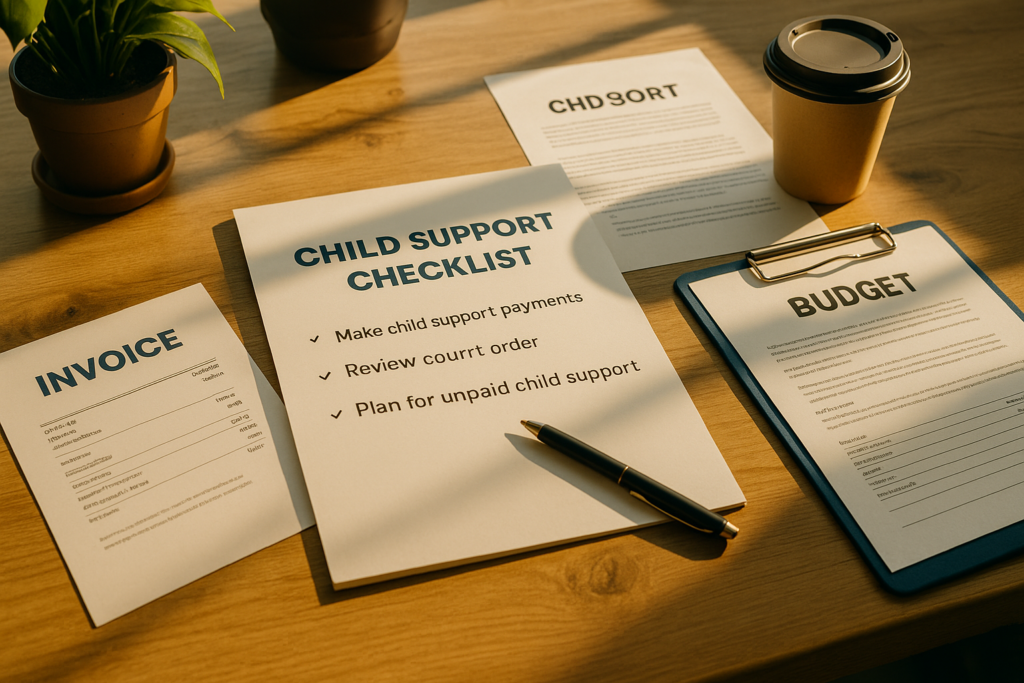
You Have Options – But Time is Critical
When parents begin searching What Happens if I Can’t Afford My Texas Child Support Payments, it is usually because the pressure of missed payments is already mounting. Texas law moves quickly. Under Texas Family Code §157.001 and §157.263, unpaid support becomes an automatic judgment the moment it is late, and interest begins accruing under §157.265 until the debt is satisfied. Because the child support enforcement system is designed to act swiftly, the window for proactive solutions can shrink rapidly. The attorneys at the Law Office of Bryan Fagan frequently explain that acting early can make the difference between manageable adjustments and harsh enforcement consequences.
Ignoring the problem does not make it go away—child support obligations never expire simply because a parent is unable to pay. Allowing arrears to accumulate without seeking legal relief increases the likelihood of wage withholding, license suspension, liens, and even contempt proceedings. Parents who take action early, however, often secure better outcomes. Texas courts recognize that financial difficulties happen, and the modification process under Texas Family Code §156.401 exists precisely to address substantial and involuntary changes in circumstances. For parents wanting to understand why disputes arise and how to prevent escalation, the firm’s resource What Are Common Reasons for Disputes Over Child Support in Texas? provides valuable insight into the legal and practical issues families encounter.
The support of experienced counsel can be crucial. Skilled family law attorneys can help parents navigate the modification process, communicate with the Office of the Attorney General, assemble necessary financial documentation, and protect their rights at every stage. Financial hardship is not a personal failure—it is a challenge that many Texas families face. Seeking help early is an act of responsibility and care for both yourself and your children. Additional guidance is available through the firm’s Texas Child Support Resource Center, where parents can learn more about their options and the steps needed to regain stability and peace of mind.
Schedule Your Free Consultation Today
When parents search What Happens if I Can’t Afford My Texas Child Support Payments, it’s often because they feel overwhelmed, scared, and unsure of where to turn. The attorneys at the Law Office of Bryan Fagan understand how emotionally draining this situation can be. Texas child support obligations are enforceable judgments under Texas Family Code §157.001 and interest continues to accrue under §157.265, which makes timely action essential. Our team is committed to helping parents understand their rights, explore all available legal remedies, and build a strategy that protects both their financial stability and their child’s long-term well-being.
That is why our firm offers confidential, judgment-free consultations where you can speak with an experienced Texas child support attorney at no cost. During your consultation, we review your financial circumstances, explain your modification and enforcement options under Texas Family Code §156.401, and outline practical steps for regaining control of your situation. We believe that every parent deserves access to clear, accurate legal guidance before making decisions that affect their future. For those seeking a deeper understanding of the support available to them, our article Best Texas Child Support Lawyer Services: Expert Legal Help offers an in-depth look at how experienced counsel can make a meaningful difference.
If you’re struggling, you don’t have to wait for enforcement actions to escalate. The sooner you reach out, the more options you typically have and the more effectively we can help you avoid severe consequences. Every day that passes can increase arrears, interest, and enforcement risks, but taking action today can help protect your rights and restore peace of mind. Additional guidance is also available through our Texas Child Support Resource Center, where parents can explore tools and information designed to support them through every step of this process.
Conclusion:
When you’re struggling to keep up with child support, it’s easy to feel like the ground is shifting beneath your feet. But if there’s one thing we hope you take away from this guide, it’s that you’re not powerless—and you’re certainly not alone. Life changes, finances change, and Texas law has pathways to help parents adjust when the unexpected happens. Reaching out for support isn’t a sign of failure; it’s a sign that you’re committed to doing right by your child while protecting your own stability.
If you’re feeling overwhelmed or unsure of your next step, that’s exactly when a knowledgeable Texas family law attorney can make all the difference. Having someone in your corner who understands the law, the courts, and the realities families face can bring clarity to a situation that feels anything but clear. At The Law Office of Bryan Fagan, PLLC, we’ve helped thousands of Texas parents navigate moments just like this—with compassion, practical guidance, and a genuine commitment to protecting your future.
Whether you’re worried about falling behind, considering a modification, or simply trying to understand your options, we’re here to walk through it with you. Sometimes the hardest part is just starting the conversation, but you might be surprised by how much lighter things feel once you do. And who knows—this may be the moment you look back on as the day things finally started moving in a better direction.
Whenever you’re ready, we’re only a call or message away. Let’s take the next step together.
Texas Child Support Frequently Asked Questions
If you can’t pay child support in Texas, the unpaid amount becomes “arrears,” and it does not go away. Texas adds 6% simple interest per year on past-due support. The Office of the Attorney General can take enforcement actions such as wage withholding, tax refund interception, property liens, credit reporting, and even license suspension. In more serious cases, a court can hold you in contempt, which carries the possibility of jail time. If your financial situation has genuinely changed—such as job loss, illness, or disability—you must file for a modification as soon as possible. Texas courts generally cannot reduce what you already owe, so timing matters.
If you don’t have enough money to pay child support, Texas law still requires you to take action instead of simply stopping payments. Continue paying what you reasonably can, gather proof of your financial hardship, and speak with a Texas family law attorney about filing a modification. Courts look carefully at whether your income dropped through circumstances beyond your control and whether you’ve shown good-faith efforts to find work and prioritize support. Acting early helps protect you from aggressive enforcement.
There’s no specific dollar amount or number of missed payments that automatically results in jail. Jail becomes a possibility when an enforcement case is filed and the court determines that you had the ability to pay but chose not to. In a contempt case, a judge may order up to six months in county jail for each proven violation. The best way to prevent this outcome is to communicate, pay what you can, and request a modification before arrears grow.
Texas calculates child support based on a percentage of “net resources.” For one child, the guideline is generally 20%, with increasing percentages for more children. However, courts can set a lower amount if the paying parent has extremely low income, a disability, or other special circumstances that make guideline support unrealistic. There is no universal “minimum” payment—it’s based on your financial situation and the child’s needs.
Texas doesn’t have a law that uses the term “deadbeat dad,” but the state has strong child support enforcement tools that apply to all parents. These include civil contempt, license suspensions, property liens, credit reporting, wage garnishment, and, in severe cases, criminal nonsupport charges. The goal of Texas enforcement laws is to ensure children receive the financial support they are legally entitled to—not to shame parents.
Warrants are generally issued after a court finds you in contempt for failing to follow the support order—not based solely on a specific amount of arrears. This usually happens after the other parent or the Attorney General files an enforcement case and you either fail to appear or the court concludes that you had the ability to pay and did not. Attending all court hearings, documenting your efforts, and seeking legal assistance early help reduce the risk of a warrant being issued.
Similar to the earlier question, the lowest amount depends on your net resources and circumstances. Courts begin with guideline percentages but may deviate downward if you have very low income, a disability, or financial hardships that would make a guideline order impossible to maintain. Judges aim to balance fairness to the parent with the child’s best interest.
If the other parent is not paying child support, you have several enforcement options. The Texas Office of the Attorney General can assist with wage withholding, tax refund intercepts, liens, and license suspensions. You can also hire a private family law attorney to file an enforcement action, request a judgment for arrears, and ask the court for stronger remedies when needed. Keeping accurate records of missed payments is essential to successful enforcement.