
Navigating a custody battle can be one of life’s most difficult transitions, especially when you feel your relationship with your child is being intentionally damaged. Proving parental alienation in a Texas courtroom means showing a judge a clear, undeniable pattern of harmful behaviors. It's not about one-off arguments; it's about a consistent effort by one parent to poison your child's relationship with you. While you won't find the exact term "parental alienation" in the Texas Family Code, judges absolutely recognize and address these destructive actions, always through the lens of what's in the best interest of the child.
Understanding Parental Alienation in a Texas Context
It's a devastating feeling. Your child, who you love more than anything, starts pulling away for reasons you can't understand. You suspect the other parent is whispering things, manipulating situations, but it's hard to prove. It's a quiet, isolating battle. Here at The Law Office of Bryan Fagan, PLLC, we understand. We want you to know that what you're seeing is real, it's recognized by the courts, and you have legal options to protect your child and your relationship.
While the Texas Family Code doesn't have a chapter on "parental alienation," it is built on a foundational principle: protecting a child's right to have a healthy, loving relationship with both parents. Every custody decision a judge makes comes back to the “best interest of the child” standard, as laid out in Texas Family Code § 153.002. Any behavior that sabotages that core principle is taken very seriously.
Recognizing the Red Flags of Alienation
The first step in building your case is to move from a general feeling of being pushed out to identifying specific, provable actions. These aren't just disagreements over parenting styles; they are deliberate and repeated tactics.
Texas courts are looking for concrete evidence of behaviors like:
- Constant Badmouthing: The other parent repeatedly says negative or untrue things about you directly to your child. For example, they might say, "Your dad doesn't care about us; that's why he moved out."
- Blocking Communication: They "forget" to give your child messages, screen your calls, or prevent your child from contacting you.
- Forcing a Choice: The child is put in the middle and made to feel guilty for loving you or enjoying their time with you. They might hear things like, "If you go with your mom this weekend, you'll miss my birthday party."
- Making False Allegations: The other parent invents stories of neglect or abuse to make the child fear you.
- Undermining Your Authority: They consistently ignore or reverse your parenting decisions, making you look like the "bad guy."
Spotting these patterns is crucial. You can dive deeper into the specific signs and legal definitions of what is parental alienation in our detailed guide.
The Real-World Impact on Your Child
The most heartbreaking part of parental alienation is the damage it does to your child. Kids caught in this toxic dynamic are often anxious, confused, and filled with conflict. You might see them suddenly express anger or fear toward you, sometimes even repeating the exact negative phrases the other parent uses. These behavioral shifts are powerful pieces of evidence because they show the direct harm being caused.
The tricky part is that many people, including friends and family, don't recognize these behaviors for what they are. Research highlights this disconnect: when asked directly, about 39.2% of people say they've experienced parental alienating behaviors (PABs). But that number skyrockets to 59.1% when they're asked about specific actions like badmouthing or interference with contact. This shows just how critical it is to document the specific actions, not just a vague feeling that something is wrong.
Recognizing Parental Alienation Behaviors in Texas
It's often hard to distinguish between typical co-parenting frustrations and a deliberate pattern of alienation. This table can help you identify the differences between alienating red flags and healthy co-parenting green flags.
| Alienating Behavior (Red Flags) | Healthy Co-Parenting (Green Flags) |
|---|---|
| Frequently speaks negatively about you to the children. | Encourages the children to have a positive relationship with you. |
| Blocks or limits your calls, texts, and video chats. | Facilitates open and regular communication between you and the children. |
| Makes children feel guilty for enjoying time with you. | Celebrates the children's time and experiences with you. |
| Shares inappropriate adult details about the divorce with the children. | Shields children from adult conflicts and legal matters. |
| Undermines your rules and authority in your own home. | Respects your role as a parent and supports consistent boundaries. |
| Blames you for financial problems or the divorce in front of the children. | Manages disagreements privately, away from the children. |
Seeing a consistent pattern of behaviors in the "Red Flags" column is a strong indicator that you need to start documenting everything.
A Texas court's primary duty is to create a safe and nurturing environment for the child. Actions that intentionally sever a healthy parent-child bond are viewed as being in direct opposition to the child's best interests.
Getting a handle on broader family law principles can also provide context for how a judge will view your claims. Ultimately, your attorney’s job is to take your documented evidence and draw a straight line from the other parent's actions to the emotional harm your child is suffering. This creates a compelling case that the court must intervene to protect your child's well-being.
How to Document and Gather Your Evidence
When you’re trying to prove parental alienation, your word alone isn’t enough in a Texas court. Judges need to see a clear, consistent pattern of behavior backed up by real proof. This is where you shift from being a frustrated parent to a strategic evidence collector. It's the single most powerful thing you can do to protect your child.
Your goal is to build a case that shows a judge this isn't just a simple co-parenting squabble. You need to paint a clear picture of a deliberate campaign to poison your relationship with your child.
Building Your Foundation with a Detailed Log
Stress can blur memories, but a written record doesn’t forget. It's essential to start a detailed, dated log or journal—today. Think of this document as the backbone of your case. It’s what your attorney will use to connect all the dots for the judge.
Every entry must be factual and objective. Stick to the who, what, when, and where. Instead of writing, "She blocked my call again," get specific: "Tried calling my son at 7:00 PM for our scheduled nightly call. Phone rang once, went straight to voicemail. Texted my ex at 7:05 PM asking if everything was okay; received no response."
Make sure you’re logging everything, including:
- Missed or Denied Visits: Track every time your court-ordered possession is denied, and note the excuse you were given.
- Blocked Communication: Every unanswered call, ignored text, or missed video chat gets an entry.
- Disparaging Remarks: If your child repeats negative things about you, write down their exact words whenever possible.
- Withheld Information: Jot down every time you were kept in the dark about school events, doctor’s appointments, or extracurricular activities.
This isn’t just busywork. A detailed log shows a relentless pattern of interference that’s very hard for the other parent to explain away.
The process below breaks down how to turn what you're seeing into something you can use in court. It’s about observing, connecting the pieces, and then taking decisive action.
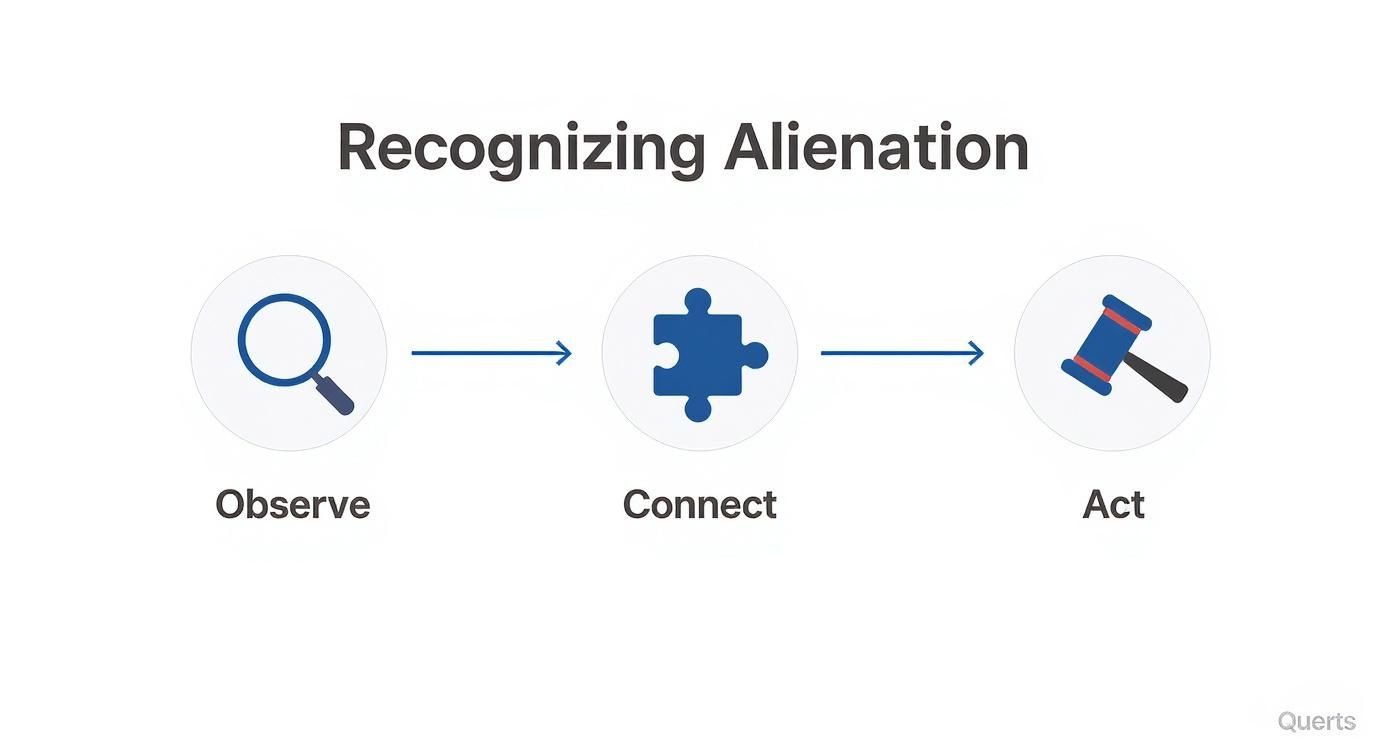
This really is the blueprint: start by paying close attention, then piece the evidence together to reveal the full picture before making your legal move.
Gathering Digital and Written Evidence
So much of our communication happens in writing, and those records can become undeniable proof of the other parent’s intentions. Your job is to meticulously save and organize every single relevant digital conversation.
Your evidence file must include:
- Text Messages: Screenshot entire conversations where the other parent is hostile, uncooperative, or makes negative comments about you.
- Emails: Save every email that shows them refusing to co-parent, providing incorrect information, or trying to block your access to your kids.
- Social Media Posts: Grab screenshots of any public posts where the other parent is airing details about your case or misrepresenting your relationship with your child. Make sure the date and time are visible.
This evidence is powerful because it’s in their own words. It can completely dismantle any claims of cooperation they try to make in the courtroom.
The Power of Witness Testimony
You are not fighting this battle alone. Neutral, third-party witnesses can provide testimony that backs up what you’re claiming. These are people who have no stake in the outcome but have seen the alienating behaviors or the negative changes in your child firsthand.
Think about the people in your child's life who could speak to what they’ve seen:
- Teachers or School Counselors: Have they noticed a sudden drop in grades or a change in your child’s personality? Have they heard your child repeating negative things about you?
- Coaches or Extracurricular Leaders: These individuals can speak to your involvement and may have witnessed the other parent trying to exclude you.
- Family Friends or Neighbors: People who have known your family for a long time can talk about how strong your bond with your child was before the alienation started.
The most compelling witnesses are the ones who can offer specific, firsthand stories. Their objective viewpoint can be a game-changer, showing the court that other people are seeing the same troubling patterns you are.
These cases get complicated, and managing all the documentation is key. For example, if psychological reports are involved, you might even consider leveraging a medical record review service to ensure no detail is missed. The bottom line is to be organized, thorough, and relentless in gathering every piece of evidence that tells your story.
Using Experts to Strengthen Your Case
When you're fighting a parental alienation case, it often feels like your word against theirs. This is precisely when the objective, professional opinion of a neutral expert becomes your most powerful tool. In Texas, the court can appoint specific professionals to investigate complex family dynamics, giving the judge the unbiased insight needed to protect your child.
Bringing in an expert isn't about escalating the conflict; it's about getting to the truth. These professionals are trained to cut through the emotional noise and focus solely on your child’s well-being.

Who the Court Can Appoint to Help
Texas family courts have several powerful options for getting to the bottom of alienation claims. Your attorney can file a motion asking the judge to appoint one of these professionals to investigate your family's situation.
Here are the key players you need to know:
- Custody Evaluator: This is a licensed mental health professional who conducts an in-depth investigation into your family. They will interview you, the other parent, and your child. They may also speak with teachers, doctors, and others in your child’s life to build a complete picture. Their final report, which includes a custody recommendation, carries significant weight with the judge.
- Guardian ad Litem (GAL): A GAL is an individual appointed specifically to represent the child's best interests in court. While often an attorney, they don't have to be. Their job is to investigate the facts, talk to everyone involved, and then report their findings and recommendations back to the judge.
- Amicus Attorney: Similar to a GAL, an amicus attorney is appointed to provide legal services necessary to protect a child's interests. Think of them as the "eyes and ears" of the court. They conduct an independent investigation and offer a legal perspective on what custody arrangement would truly serve the child.
Requesting one of these appointments is a formal legal move. It signals to the court that you're confident in your position and are willing to have an impartial expert examine your family life.
These professionals can be game-changers in an alienation case. To make it clearer, here's a breakdown of who does what and how they can help your case.
Key Professionals in a Texas Alienation Case
| Professional Title | Role in Your Case | How They Help Prove Alienation |
|---|---|---|
| Custody Evaluator | A neutral mental health expert who conducts a comprehensive investigation into the family. | Interviews all parties, observes parent-child interactions, and may use psychological testing. Their final report provides an expert opinion on the presence of alienation and makes a custody recommendation to the court. |
| Guardian ad Litem (GAL) | An advocate appointed to represent the child's best interests. | Investigates the child's circumstances, speaks directly with the child, and reports their findings. They can highlight manipulative behaviors and how they are impacting the child's well-being and wishes. |
| Amicus Attorney | An attorney appointed to assist the court by representing the child's interests. | Functions as the court's agent to gather facts. They can interview witnesses, review documents, and provide a legal analysis of the evidence of alienation, offering a powerful, independent perspective. |
Each of these professionals offers the court a different lens through which to view the case, and your attorney can help determine which appointment is the most strategic for your situation.
The Role of Therapy in Your Case
Beyond court-appointed professionals, getting therapy for both you and your child can be incredibly helpful—personally and legally. It’s a proactive step that shows your commitment to your child’s emotional health and your own stability.
Engaging a therapist provides two key advantages for your case.
Therapy for Your Child
A child's therapist can be an invaluable, neutral observer. While they generally can't be forced to testify against their patient, their records can sometimes be reviewed by a custody evaluator or amicus attorney with a court order.
These therapy records might document:
- Unexplained anxiety or anger directed at you.
- Parroting the alienating parent's negative language.
- Fear or resistance to spending time with you that seems completely out of character.
A therapist’s notes can provide a clinical context for the behavioral changes you've seen, potentially linking them to the manipulative environment created by the other parent.
A child’s sudden and irrational rejection of a once-loved parent is a huge red flag. A therapist can help uncover the source of this shift, providing crucial insight that a court-appointed evaluator can use in their final report.
Therapy for You
The emotional toll of being alienated from your child is immense. Seeing your own therapist shows the court that you're responsibly managing your stress and grief. It reinforces your image as a stable, proactive parent focused on healing.
Your therapy sessions also become a place where you can document the alienating parent’s impact on you. It creates a record of your efforts to cope with the situation in a healthy way, which stands in stark contrast to the destructive behavior of the other parent. This demonstrates maturity and resilience—exactly the qualities a judge wants to see in a parent.
Presenting Your Case Effectively in Court
You’ve done the hard work of gathering text messages, emails, and witness statements. That’s a critical first step, but it's only half the battle. How you present this evidence in a Texas courtroom is what ultimately persuades a judge to step in.
The key is to shift the narrative. This isn't about you versus the other parent; it’s about protecting your child's well-being and their fundamental right to a relationship with both parents.

From Isolated Incidents to a Clear Pattern
A judge might easily dismiss a single missed phone call or one nasty comment as a simple co-parenting spat. But it’s a whole different story when your attorney lays out a clear timeline.
When you can show dozens of missed calls, a log of consistently disparaging remarks, and pair that with testimony from a teacher about your child's sudden change in behavior, the pattern becomes impossible to ignore. The goal is to connect the dots and reveal a relentless campaign of alienating conduct.
This is where your lawyer’s strategy comes in. We will take the mountain of evidence you've collected and organize it to show the judge that the other parent's actions are systematically damaging your relationship with your child. In the eyes of the Texas Family Code, that is not in the child’s best interest.
Your Testimony: The Most Powerful Tool You Have
When you take the stand, your composure and credibility are everything. It's completely natural to feel angry and hurt, but letting those raw emotions take over in court can seriously backfire. The judge needs to see you as the calm, reasonable, and child-focused parent in the room.
Your testimony needs to be:
- Factual, Not Emotional: Stick to what happened, when it happened, and who was there. Let the facts speak for themselves.
- Specific, Not General: Vague accusations like "She's poisoning him against me" are easy to deny. Specific, documented examples are what land.
- Child-Centered, Not Self-Centered: Every concern you raise should be framed around the impact on your child, not the personal injustice you feel.
For instance, instead of saying, "She never lets me talk to him," try a data-driven approach. "Prior to June, our weekly calls were a highlight for us. Since then, 15 of the last 20 scheduled calls have been missed for various reasons, and my child now says they are 'too busy' to talk." This is far more persuasive. For more on this, check out our guide on how to present yourself and testify well in court.
The Broader Context of Alienation
It’s also helpful for the court to understand that parental alienation isn't some rare, fringe issue you've pulled from the internet. Presenting it as a recognized, widespread problem adds significant weight to your case.
A landmark U.S. poll revealed that 13.4% of parents report being alienated from one or more of their children. That translates to a staggering 22.2 million parents nationwide. This statistic is powerful because it helps establish that alienation is a measurable, documented social issue—not just a convenient label for a messy divorce.
Your courtroom presentation has to rise above the parental conflict. Every piece of evidence, every statement you make, and every argument your attorney presents must draw a straight line back to one thing: the best interest of your child.
Your attorney's job is to be your advocate, using the evidence you’ve gathered to build a powerful case that aligns with Texas law. We will cross-examine the other parent to expose inconsistencies and highlight manipulative behaviors. We’ll also present the findings from any court-appointed experts, like a custody evaluator or amicus attorney, whose professional, unbiased opinions can often be the deciding factor for a judge.
The courtroom can be intimidating, but with the right preparation and a strategic focus on the facts and your child’s needs, you can present a case that is clear, credible, and ultimately, successful.
Common Mistakes That Can Weaken Your Claim
When you're fighting to prove parental alienation, the emotional stakes are incredibly high. It’s a pressure-cooker situation, making it easy to make missteps that—while understandable—can seriously undermine your credibility in a Texas courtroom. To win, you must not only prove the other parent's destructive behavior but also show that you have consistently been the one acting in your child's best interest.
Avoiding common pitfalls is just as critical as gathering your evidence. The court needs to see you as the stable, reasonable parent focused on solutions, not on pouring fuel on the fire. Giving in to reactive behavior just muddies the waters and can make you look like part of the problem.
Getting Dragged into Retaliatory Fights
It’s natural to feel intense anger when the other parent is badmouthing you to your child or interfering with your time. The urge to fight fire with fire—to send a hostile text or vent to a mutual friend—can be overwhelming. But this is one of the most damaging mistakes you can make.
Every angry text or frustrated voicemail you leave becomes ammunition for the other side. They will gleefully present your reaction to the court as "proof" that you are unstable or equally responsible for the conflict. You have to rise above it. Your calm, consistent demeanor, especially when provoked, will stand in stark contrast to the alienating parent's conduct.
A crucial part of this is never making false allegations yourself. Recent research has uncovered a troubling pattern: alienated parents are far more likely to have been falsely accused of abuse by the alienator. When you can demonstrate a history of baseless accusations against you, combined with their interference and your child's sudden rejection, it powerfully strengthens your claim. You can read the full research about these findings to see the statistical link for yourself. This makes it absolutely critical that you never make an accusation you can't back up with solid proof. Doing so would shatter your credibility.
Neglecting Your Digital Footprint
In this day and age, your social media profile is an open book, and you have to assume the other parent’s attorney is reading every single page. Posting angry rants about the case, vague complaints about your ex, or emotional pleas to your child can be easily twisted and used against you in court.
A judge's perspective: Every public post is a snapshot of your judgment and emotional stability. One angry, impulsive post can undermine months of careful documentation and testimony.
Before you post anything—anything at all—ask yourself: "How would this look to a judge?" The safest bet is often to just stop posting about your personal life entirely while the case is active. Lock down your profiles, make them private, and stick to neutral topics. Remember, anything you post helps build a narrative about who you are. Make sure it’s the right one.
Failing to Follow Court Orders Perfectly
When the other parent is constantly making life difficult, it's tempting to bend the rules. Maybe they're always 15 minutes late for exchanges, so you start showing up late, too. Or they deny a scheduled visit, so you decide to withhold a phone call. Don't fall into this trap.
You must follow every single court order to the letter. No exceptions. Meticulous compliance is non-negotiable. It proves to the judge that you respect the court's authority and are the reliable, law-abiding parent.
Every time the other parent violates an order while you stick to the rules, you hand your attorney another piece of evidence. They can file enforcement actions based on the other parent's violations, while you remain blameless. By refusing to sink to their level, you make the distinction between the two of you crystal clear for the court.
Answering Your Questions About Parental Alienation
When you’re grappling with parental alienation, you’re flooded with questions and uncertainty. It's an incredibly stressful and emotionally draining experience, and getting straightforward answers can make a world of difference. We hear many of the same questions from parents in your shoes, so we've put together some answers to give you clarity and direction.
How Long Does It Take to Prove Parental Alienation in Texas?
There’s no magic number here. The timeline depends entirely on the unique facts of your case. Factors like how much evidence you already have, the local court's docket, and whether we need to bring in experts like a custody evaluator all play a significant role.
Proving a consistent pattern of this harmful behavior can take anywhere from several months to over a year. The process usually involves a discovery phase (where we exchange evidence), expert evaluations, and potentially several court hearings. It's natural to want it over with quickly, but patience is your best ally. Rushing the process is a mistake; it's far more effective to work with your attorney to build an undeniable, rock-solid case that truly serves your child's best interests.
Can the Other Parent Be Ordered to Pay My Legal Fees?
It's not a guarantee, but yes, it is absolutely possible for a Texas judge to order the other parent to cover your attorney's fees. This is something your lawyer can—and often should—ask the court to do.
Under the Texas Family Code, judges have the discretion to award legal fees, especially if they believe one party’s actions dragged out the case unnecessarily or were done in bad faith. If we can prove the other parent’s alienating behavior and false claims forced you into this long, expensive legal fight, the court may order them to pay those fees in the final orders. It’s one way to hold the alienating parent accountable for the damage they've caused.
What Happens if the Judge Finds Parental Alienation Occurred?
If a Texas judge agrees that parental alienation is happening and harming your child, they have a lot of power to step in and fix it. The court’s number one priority is always the child's best interest, and the remedies are designed to protect their well-being.
Some of the most common outcomes include:
- Modifying Custody Orders: The judge could completely flip the custody arrangement. This might mean giving you more possession time or even making you the primary parent with the right to decide where the child lives.
- Ordering Reunification Therapy: This isn't just regular counseling. It's a specialized therapy designed specifically to repair a parent-child relationship that has been intentionally damaged by alienation.
- Mandatory Counseling for the Alienating Parent: The court can order the other parent into individual therapy to address the behaviors that are causing the harm.
- Issuing Injunctions: A judge can issue a very clear order telling the other parent to stop specific alienating behaviors, like badmouthing you in front of the child.
The court will tailor its response to how severe the alienation is and what’s needed to get the parent-child bond back on track. The entire focus is on creating a healthy path forward for your child.
Is Parental Alienation Considered Child Abuse in Texas?
This is a really common and important question. While the Texas Family Code doesn't have a statute that uses the exact phrase "parental alienation" and labels it as "child abuse," the behaviors involved are absolutely seen as a form of emotional abuse.
Judges understand that a calculated campaign to destroy a child's relationship with a loving parent causes deep psychological and emotional harm. Any action by a parent that puts a child’s emotional well-being at risk is a huge red flag for the court and will weigh heavily in any custody decision. Your attorney's job is to frame these alienating behaviors in exactly these terms, highlighting the serious danger they pose to your child.
If you need help navigating divorce, custody, or estate planning in Texas, contact The Law Office of Bryan Fagan today for a free consultation.