
Navigating a child custody case can be one of life’s most difficult transitions, especially when you believe your child’s safety is at risk. If you are seeking sole custody in Texas, you are likely feeling a mix of fear, determination, and uncertainty. Understanding your rights and the legal process under Texas law can make the path forward less overwhelming and empower you to protect your child.
The journey to becoming a Sole Managing Conservator is challenging because Texas law presumes that keeping both parents involved is best for a child. To succeed, you must provide clear and convincing evidence that giving you sole decision-making authority is not just better, but necessary for your child’s physical or emotional well-being.
The Foundation of Custody Decisions in Texas

When you are fighting for your child's well-being, the first step is understanding how the court sees things. In Texas, every family court decision is guided by one core principle: the "best interest of the child" standard. This means a judge's every move is centered on what will best support a child's health, safety, and development.
The Presumption of Joint Custody
The Texas Family Code automatically presumes that a Joint Managing Conservatorship (JMC) is what's best for a child. This is the standard arrangement where both parents share the rights and duties of raising their child, even if they live apart. Think of this presumption as the legal hill you have to climb to get sole custody.
To overcome it, you cannot just argue that you are the "better" parent. You must present compelling evidence showing that a joint arrangement would be actively harmful to your child. This means proving the other parent poses a potential danger or would create a seriously unstable environment due to issues like family violence, neglect, or substance abuse.
What is Sole Managing Conservatorship?
In Texas, the legal term for sole custody is Sole Managing Conservatorship (SMC). If a judge names you the Sole Managing Conservator, you gain the exclusive right to make most of the major decisions in your child's life.
The other parent is usually named the Possessory Conservator. This role typically comes with visitation rights but strips them of the power to make key decisions for the child.
As the Sole Managing Conservator, you'll likely have the exclusive right to:
- Decide where your child lives, without any geographic restrictions.
- Consent to your child's medical, dental, and psychological care.
- Make all decisions about your child's education.
A judge will not take the step of awarding sole custody lightly. The court's goal is to foster a relationship with both parents whenever possible. Therefore, an award of SMC happens only when there is compelling evidence that limiting one parent's rights is necessary to protect the child.
For example, a parent with a documented history of domestic violence or a severe, untreated substance abuse problem is a prime candidate to be named Possessory Conservator. This setup protects the child while still allowing for some contact—often supervised—with the other parent.
It’s a serious undertaking, and you have to be ready for the tough legal standards you'll need to meet. And while you're navigating custody, it can be helpful to get a handle on other related family law topics, like understanding prenuptial agreements, as these issues can sometimes overlap.
If you need help navigating divorce, custody, or estate planning in Texas, contact The Law Office of Bryan Fagan today for a free consultation.
Proving Sole Custody Is Best for Your Child

The idea of sharing custody with a parent you believe is a danger to your child is a terrifying prospect. We understand that feeling. It’s critical to know that Texas courts start with a strong legal preference for what’s called a Joint Managing Conservatorship, which keeps both parents deeply involved.
To win a case for sole custody, you have to overcome this starting assumption. Your job is to present clear, compelling evidence that proves a joint arrangement would actively harm your child’s physical or emotional well-being. This isn’t about who was a better spouse—it’s entirely about who is a fit parent. Every piece of your case must be viewed through the lens of your child’s best interest.
The Holley Factors: What Texas Judges Consider
When making these tough decisions, Texas judges don't just go with their gut. They use a legal framework known as the "Holley Factors," which comes from a landmark case called Holley v. Adams. Think of these as the questions the judge is trying to answer.
Your evidence needs to speak directly to these factors:
- What are the child's emotional and physical needs, both right now and down the road?
- Is the child in any emotional or physical danger at this moment or in the future?
- What are the parental abilities of each person fighting for custody?
- How stable is the home each parent is offering?
- Has either parent done something (or failed to do something) that shows the current parent-child relationship isn't a healthy one?
Framing your case around these points gives the judge a clear, legally sound reason to award you sole custody. For instance, providing medical records and police reports related to the other parent's untreated substance abuse directly hits on the "physical danger" and "parental abilities" factors.
Demonstrating a Pattern of Harmful Behavior
A judge is unlikely to strip a parent of their rights over a single mistake or a one-time argument. What they're looking for is a consistent pattern of behavior that puts a child at risk. Your mission is to connect the dots for the court.
For example, one nasty text message can be easily dismissed as a moment of anger. But a folder containing dozens of threatening messages sent over six months? That paints a much more disturbing picture of ongoing emotional abuse that could seriously damage a child.
In Texas, while courts begin with a presumption favoring joint managing conservatorship (JMC), they will award sole managing conservatorship (SMC) when it's proven to be in the child’s best interest. This typically involves evidence of domestic violence, abuse, or abandonment. The Texas Family Code puts the child's well-being above all else, and you can learn more about how courts approach these disputes on johnnwosu.com. The bar is high, and the burden of proof rests on you to show why sole custody is necessary.
Grounds for Sole Managing Conservatorship
Some situations are so serious that they carry immense weight with a judge. If you can provide solid proof of any of the following, your argument for sole custody becomes significantly stronger.
- Family Violence or Abuse: This is the big one. A documented history of physical, sexual, or severe emotional abuse toward the child or another family member is often the most direct path to sole custody.
- Substance Abuse: A current, ongoing struggle with drugs or alcohol that clearly impairs the parent's ability to safely care for a child is a major red flag for the court.
- Child Neglect or Abandonment: This could mean anything from failing to provide food, shelter, and medical care to a parent who has been completely absent from the child's life for a long time.
- Extreme Conflict: Sometimes, parents are so hostile toward each other that they simply cannot co-parent. If this conflict creates a toxic, harmful environment for the child, a judge might decide sole custody is the only way to create stability.
- Parental Alienation: This is when one parent intentionally tries to poison the child’s relationship with the other parent. Courts see this as a form of emotional abuse that can justify limiting the alienating parent's rights.
It's crucial to understand that the court's decision is not punitive. The goal isn't to punish the other parent; it's to protect the child. Every piece of evidence you present should be framed through this lens of protection and safety.
Gathering Evidence for Your Custody Case
Winning a sole custody case isn't about who tells the most emotional story; it’s about who presents the most compelling proof. When you walk into a Texas courtroom seeking sole custody, the judge needs to see hard facts that back up your claims. Your job is to become a detective for your child's future, gathering the documents, communications, and testimony that paint an undeniable picture of why this drastic step is in your child's best interest.
This can feel overwhelming, but every piece of evidence you collect is a building block. Each one should directly support the argument that the other parent's actions or environment poses a real danger to your child’s physical safety or emotional stability.
Official Documents Tell an Unbiased Story
A judge is far more likely to trust a police report than a heated "he said, she said" argument. Records from neutral, third-party sources carry immense weight in court because they are seen as objective and unbiased.
Start by zeroing in on these critical documents:
- Police Reports and Criminal Records: If domestic violence, substance abuse, or other dangerous behavior has been a problem, get copies of any police reports. A documented criminal history showing arrests for things like assault, DWI, or drug possession is incredibly powerful.
- Child Protective Services (CPS) Records: Has CPS ever investigated the other parent for neglect or abuse? Those official findings are gold. They provide a formal assessment of the risk factors surrounding your child.
- Medical and School Records: These documents can reveal patterns that scream neglect. Think about records of untreated injuries, or a log of excessive school absences that show a parent isn't meeting their most basic responsibilities.
Personal Communications Can Reveal True Colors
In our digital age, people often provide the most damning evidence against themselves. Text messages, voicemails, emails, and social media rants offer a direct window into the other parent's mindset and behavior.
But you have to be strategic. One nasty text might be dismissed as a momentary lapse in judgment. However, a consistent pattern of threatening, harassing, or wildly unstable messages over several months proves a chronic problem. This kind of communication can demonstrate parental alienation, emotional abuse, or an inability to co-parent—all of which directly harm a child's well-being. And if you have audio recordings, using an audio to text converter is a smart move to create accurate transcripts for the court.
Key Takeaway: Don't just dump a pile of papers on your lawyer's desk. The real power comes from organizing your evidence into a clear timeline. When you can connect specific documents and messages to key events, you create a compelling narrative that makes it easy for the judge to follow the pattern of harmful behavior.
The Power of Credible Witnesses
Sometimes, the most persuasive evidence doesn't come from a document, but from another person's testimony. A neutral third party who has seen the other parent’s behavior firsthand can validate your claims and give the judge an objective viewpoint.
Think about who has seen what's really going on:
- Teachers or School Counselors: They can speak to a child’s sudden behavioral issues, poor hygiene, or concerning things the child has said about life with the other parent.
- Therapists or Doctors: These professionals can offer expert opinions on your child’s emotional or physical health and the potential causes.
- Family, Friends, or Neighbors: While potentially seen as biased, people who have witnessed specific incidents—like seeing the parent intoxicated with the child or hearing violent fights—can still provide crucial testimony.
As you build your case, thinking about your evidence in distinct categories is a huge help. It ensures you’re constructing a solid, multi-faceted argument that addresses every concern a Texas judge will have when deciding something as serious as sole custody.
Types of Evidence to Support a Sole Custody Claim
| Evidence Category | What It Proves | Specific Examples |
|---|---|---|
| Official Records | Provides objective facts from neutral third parties about safety, stability, and parental fitness. | Police reports (domestic violence, disturbances), CPS investigation files, criminal background checks, child's medical records showing untreated injuries. |
| Communications | Reveals the other parent's state of mind, intent, and patterns of abusive or unstable behavior. | A string of threatening text messages, harassing emails, voicemails filled with verbal abuse, social media posts admitting to drug use or neglect. |
| Witness Testimony | Corroborates your claims and offers an outside perspective on the child's environment and the other parent's actions. | Testimony from a teacher about signs of neglect, a neighbor who witnessed substance abuse, or a therapist’s expert opinion on emotional harm. |
| Financial Records | Shows instability or how funds are used for harmful activities instead of meeting the child's basic needs. | Bank statements with large cash withdrawals at bars, receipts for excessive alcohol purchases, proof of chronic unemployment or job instability. |
Ultimately, a strong collection of evidence shows the court you aren't acting out of spite, but out of a genuine need to protect your child. By methodically gathering and organizing these items, you give the judge the clear, factual basis they need to make a decision in your child's best interest.
Walking into a Texas family court can feel like stepping into a foreign country where you don't speak the language. The piles of paperwork, the formal hearings, the legal jargon—it’s enough to make anyone feel completely lost. But when your child's well-being is at stake, finding your way through the maze is the first step toward taking back control.
The path to getting sole custody in Texas isn’t a chaotic free-for-all. It’s a structured legal journey with deliberate steps, all designed to give a judge the full picture before they make a decision in your child's best interest. Knowing what’s coming can make all the difference, cutting down on anxiety and helping you prepare a much stronger case.
The First Steps: Filing and Service
Your case officially kicks off the moment you file an Original Petition in Suit Affecting the Parent-Child Relationship (SAPCR). Think of this as the legal document that opens the courthouse doors. It formally asks for sole managing conservatorship and lays out the fundamental reasons why this is necessary for your child.
Once it's filed, you can't just text a screenshot to the other parent. They have to be formally notified through a legal process called service of process. This is a non-negotiable step where a sheriff, constable, or private process server must personally deliver the lawsuit papers. This ensures they are legally aware of the case and have a fair chance to respond.
The Temporary Orders Hearing
Life doesn't hit pause just because you have a court case, which can easily take months to resolve. That's why the Temporary Orders Hearing is often one of the first and most critical hearings on the calendar. In this hearing, a judge makes immediate, temporary decisions to create stability for your child while the case unfolds.
The judge will tackle urgent issues like:
- Where the child will live for the time being.
- A temporary visitation schedule for the other parent.
- Orders for temporary child support and medical support.
- Injunctions to prevent one parent from harassing the other or taking the child out of state.
Because these orders establish a "status quo," they can heavily influence the final outcome. Making a strong, evidence-backed presentation here is absolutely vital.
The Crucial Role of Mediation
Before you ever get to a final trial, a Texas judge will almost always order you and the other parent to attend mediation. This is a confidential meeting where a neutral, third-party mediator works with both sides to try and hammer out an agreement without needing a judge to decide for you.
Mediation puts you in the driver's seat, giving you a chance to control the outcome. It might seem impossible to agree on anything, but a surprising number of cases find common ground and settle here. Of course, if serious issues like family violence or substance abuse make a safe agreement impossible, you'll move forward toward trial.
Under Texas Family Code Sec. 153.002, the court starts with the presumption that joint custody is in the child’s best interest. The entire court process is your chance to present the powerful evidence needed to challenge and overcome that presumption.
Court-Appointed Professionals Representing Your Child
In a really high-conflict custody battle, a judge might feel they can't get the whole truth just by listening to the parents. When that happens, the court will often appoint a neutral professional to dig deeper and report back.
An amicus attorney is a lawyer appointed specifically to represent the best interests of the child—not either parent. They act as the "eyes and ears" of the court. They will interview the parents, the child, teachers, counselors, and anyone else relevant to provide the judge with an unbiased, informed recommendation. Their input carries a tremendous amount of weight.
This is why building your case involves gathering proof from every possible angle.
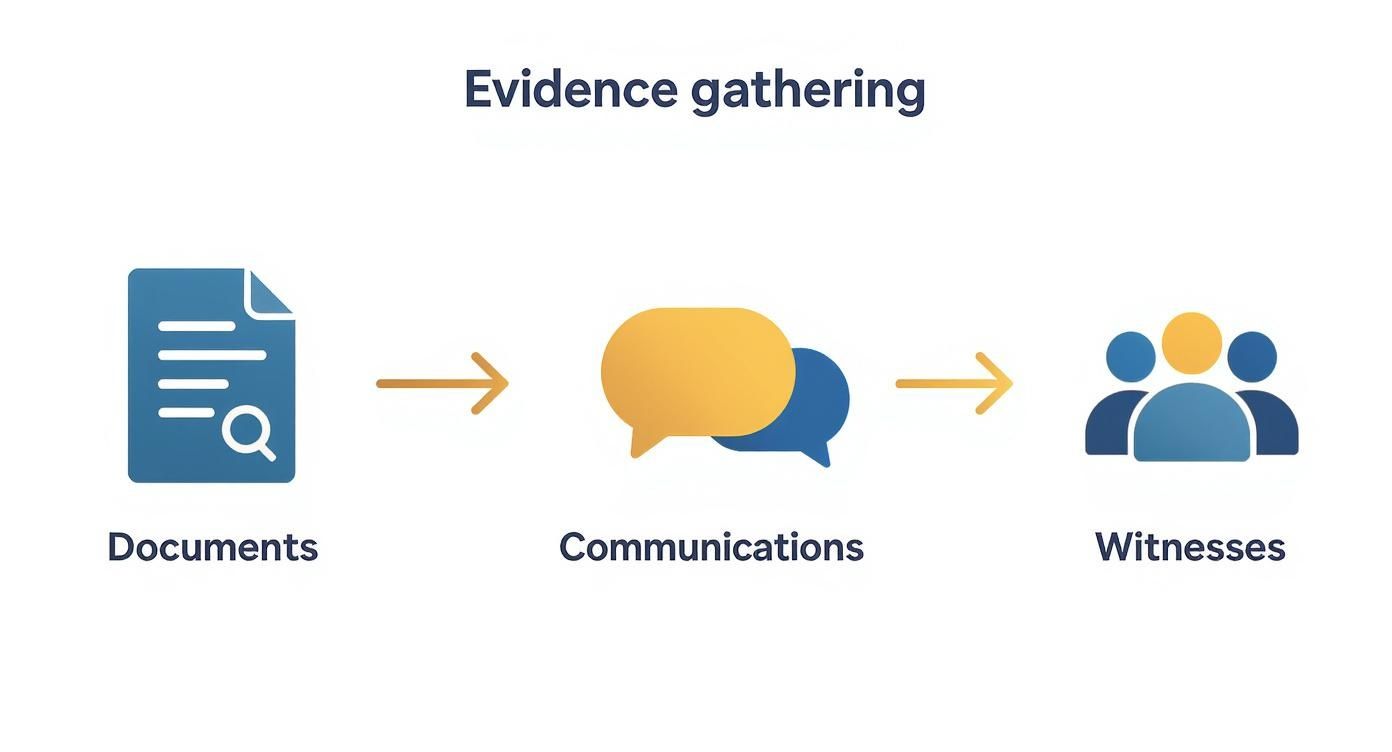
As you can see, a winning case is built on a solid foundation of diverse evidence, from official reports to the testimony of people who know your situation firsthand.
The Final Trial
If mediation doesn't lead to a settlement, your case will be scheduled for a final trial. This is the moment you and your attorney present all your evidence, call witnesses to the stand, and make your final arguments to the judge. The other parent gets the same opportunity.
After hearing everything, the judge will make a final, legally binding ruling. Winning at trial demands meticulous preparation and a sharp understanding of courtroom rules and procedures. It is the last hurdle in the fight to secure a safe and stable future for your child.
If you need help navigating divorce, custody, or estate planning in Texas, contact The Law Office of Bryan Fagan today for a free consultation.
What a Sole Custody Order Really Means

After a grueling legal battle, holding that final court order granting you Sole Managing Conservatorship feels like the finish line. It’s a huge win for your child's safety and stability. But once the dust settles, what does this piece of paper actually change in your day-to-day life?
It's crucial to understand the specific rights you’ve just gained—and what role, if any, the other parent still has. This isn't just about a title; it's a legal framework that fundamentally shifts parental authority, putting the critical decision-making power squarely in your hands.
The Rights of the Sole Managing Conservator
When a Texas court names you the Sole Managing Conservator (SMC), it's a profound statement. The judge is entrusting you with the exclusive authority to steer your child’s life, believing this is necessary for their well-being. This power goes far beyond just deciding where your child sleeps at night.
Under the Texas Family Code, you now have the final say on the big-ticket items:
- Designating Primary Residence: You alone decide where your child lives. This often removes the geographic restrictions that can hamstring parents in joint custody situations, giving your child a stable home base.
- Consenting to Medical Treatment: From routine check-ups and braces to emergency surgeries and therapy, you are the sole decision-maker for your child's medical, dental, and psychological care.
- Making Educational Decisions: You have the exclusive right to choose your child's school, approve tutoring, and handle all other education-related matters.
These rights are designed to create consistency and eliminate the conflict or danger that led to the sole custody order in the first place.
Here's the bottom line: The court's order empowers you to act decisively for your child. It removes the other parent’s ability to obstruct or delay crucial decisions about your child's health, schooling, or safety.
The Role of the Possessory Conservator
There's a common myth that sole custody makes the other parent a ghost—completely erased from the child's life. While that can happen in the most severe cases of abuse or endangerment, it’s incredibly rare.
More often, the other parent is named the Possessory Conservator. This means they lose the right to make major decisions but usually retain the right to see their child.
The court order will spell out a specific possession schedule, which is often a version of the Standard Possession Order. However, it will almost certainly be modified to address the very issues that made you the SMC. For instance, if the other parent struggles with substance abuse, the judge will likely order that their visitation must be supervised. This means a neutral third party has to be present during every visit, ensuring the child is safe.
This setup protects the child while still allowing for a parental relationship, something courts often see as beneficial if it can be managed safely. The Possessory Conservator also typically keeps the right to be kept in the loop about the child's health and school progress, even though they can't call the shots.
Understanding this distinction is key. A sole custody order centralizes authority to protect your child, but it doesn't automatically sever the other parent's connection. It redefines their role from partner to visitor, ensuring your child finally has the safe, stable, and consistent home life they need to thrive.
Common Questions About Sole Custody in Texas
Even after mapping out the legal steps, you're bound to have questions. This journey can feel isolating, but trust us, you're not the first parent to wonder about these things. Let's tackle some of the most common questions we hear from parents in your exact situation.
Our goal is to give you clear, straightforward answers based on the Texas Family Code—no confusing legal jargon. You deserve to feel prepared and confident as you move forward.
Can I Get Sole Custody If We Were Never Married?
Yes, absolutely. In Texas, your marital status has no bearing on your rights and responsibilities as a parent. The court isn't focused on whether you were married; its entire decision hinges on one thing: the "best interest of the child."
The process for unmarried parents is almost identical to that of a divorcing couple. You'll file a Suit Affecting the Parent-Child Relationship (SAPCR) and will need to show the court that giving you sole custody is the only way to protect your child from real physical or emotional harm.
What Happens If the Other Parent Is Dodging the Process Server?
You can't stop a lawsuit just by playing hide-and-seek with a process server. If the other parent is actively avoiding being served the court papers, Texas law has workarounds to keep the case moving.
Your attorney can file a motion asking the judge for "substituted service." If the judge approves it, you might be allowed to serve them in less conventional ways, such as:
- Leaving the documents with anyone over 16 at their known address.
- Serving them via social media or email.
- Posting the notice on the courthouse door.
Once service is completed using one of these approved methods, the clock starts ticking for them to file a response. If they still don't show up, you could win a default judgment, which may grant you the sole custody you're fighting for.
Does My Child Get to Decide Who They Live With?
This is a big one, and the answer often surprises parents. While a child's opinion is taken into account, it is not the deciding factor. Under the Texas Family Code, a judge can speak privately with a child who is 12 or older to hear their preferences. The judge will listen, but that conversation is just one piece of a much larger puzzle.
The judge’s final decision will always circle back to the "best interest" standard. A child's preference is weighed against everything else—parental stability, the home environment, and any history of abuse or neglect. A child's wish will never trump evidence of danger.
Ultimately, these situations are complex and require a strategy built around your family's unique circumstances. An experienced family law attorney can provide the specific guidance needed to navigate these issues effectively.
If you need help navigating divorce, custody, or estate planning in Texas, contact The Law Office of Bryan Fagan, PLLC today for a free consultation.