
Picture this: It’s a Friday night, the kids are finally asleep, and you’re staring at a stack of bills, a half-empty mug of coffee, and a text from your ex about “adjusting” the next child support payment. You sigh, wondering how something that’s supposed to help your family feels so complicated. You’re not alone — thousands of Texas parents find themselves in this exact spot, trying to do the right thing but unsure where to start. That’s why Child Support Legal Resources for Texas Parents are so important — they exist to give you clarity, confidence, and control when life after divorce gets messy.
At The Law Office of Bryan Fagan, PLLC, we’ve seen it all — parents frustrated by delayed payments, confused by Texas Family Code sections, or unsure when they can legally request a modification. The good news? Texas law provides tools and safeguards to help families stay financially stable and emotionally grounded. In this article, you’ll learn how to make those resources work for you — from understanding enforcement options and medical support rules to handling big life changes like job loss or relocation.
Stick around, because we’ll share real stories from Texas families who turned financial stress into stability with the right legal help, plus practical tips you can use today. Whether you’re just starting the process or knee-deep in it, this guide will show you how to protect your peace, your finances, and — most importantly — your family’s future.
Key Takeaways
- Child support in Texas is mandated by Chapter 154 of the Texas Family Code, requiring financial support for children until they reach 18 or graduate high school.
- Key resources such as the Texas Attorney General’s Child Support Division and family law attorneys are essential for establishing, enforcing, and modifying child support orders.
- Parents must understand their rights and responsibilities regarding child support, including the ability to challenge calculations and the necessity of legal assistance for compliance and modifications.

Your Family’s Future Starts Here
Don’t navigate your legal journey alone. Schedule a consultation now and get the clarity and support you deserve.
Understanding Child Support in Texas
Child support in Texas is governed by Chapter 154 of the Texas Family Code, which outlines how financial responsibilities between parents are determined. The law requires that both parents contribute to their child’s well-being until the child turns 18 or graduates from high school—whichever happens later. These obligations cover essential needs like healthcare, education, housing, and food, ensuring that children continue to receive consistent support even after their parents separate or divorce.
Under §154.125, Texas courts calculate child support based on the noncustodial parent’s net income and the number of children involved. Judges may adjust those figures when unique circumstances exist, such as special medical needs or extraordinary educational expenses. If a parent experiences a material and substantial change—like a job loss or a new custody arrangement—§156.401 allows for modification of an existing order to keep it fair and in line with the family’s current circumstances.
At The Law Office of Bryan Fagan, PLLC, we know that managing the financial and emotional aspects of divorce can be challenging. That’s why we’ve developed valuable Texas family law resources to help parents understand their rights and responsibilities when it comes to child support. Our team’s Child Support Legal Resources for Texas Parents guide offers clarity on calculating, enforcing, and modifying support while helping families protect their stability and their children’s future.
When a parent fails to make payments, enforcement provisions under §157.001 et seq. allow courts to use measures such as wage withholding, license suspension, or property liens. To explore these enforcement strategies in depth, visit our article on Effective Strategies for Enforcing Child Support Agreements in Texas. The Law Office of Bryan Fagan remains dedicated to educating Texas families, safeguarding their futures, and ensuring every child receives the support they deserve.

Essential Child Support Legal Resources
Several essential tools and agencies exist to help parents navigate the often-complicated world of child support in Texas. Among the most important are the Texas Attorney General’s Child Support Division, the Texas State Disbursement Unit, and experienced family law attorneys. Together, these resources ensure that parents understand their rights and responsibilities, receive accurate payment calculations, and have access to enforcement remedies when obligations aren’t met. For families seeking clarity, Child Support Legal Resources for Texas Parents provide a strong foundation for understanding how these systems work and how to make them work effectively for you.
The Texas Attorney General’s Child Support Division, established under Texas Family Code Chapter 231, serves as the state’s primary enforcement agency. It assists parents with locating noncustodial parents, establishing paternity, enforcing orders, and distributing payments through the Texas State Disbursement Unit. The Disbursement Unit ensures timely processing and accurate recordkeeping for all child support payments ordered under Chapter 154 of the Texas Family Code. These state-run services help protect children’s financial stability while reducing disputes between parents over payment management.
Beyond state assistance, Texas family law attorneys play a critical role in guiding parents through the legal and procedural complexities of child support. Attorneys can help ensure that court-ordered payments align with updated guidelines under §154.125, which currently account for the new income cap effective September 1, 2025. Legal counsel can also help parents pursue modifications under §156.401 when financial circumstances, custody arrangements, or medical needs change substantially—keeping orders fair, compliant, and sustainable for both parties.
At The Law Office of Bryan Fagan, PLLC, our attorneys help parents take full advantage of these resources and advocate for lasting, practical solutions that protect their children’s financial futures. For a detailed guide on calculating payments, visit our resource on How to Properly Calculate Child Support in Texas, or explore additional insights through our Texas Family Law Resource Center. With compassion and precision, our team remains committed to educating families, simplifying the legal process, and ensuring every Texas child receives the support they deserve.
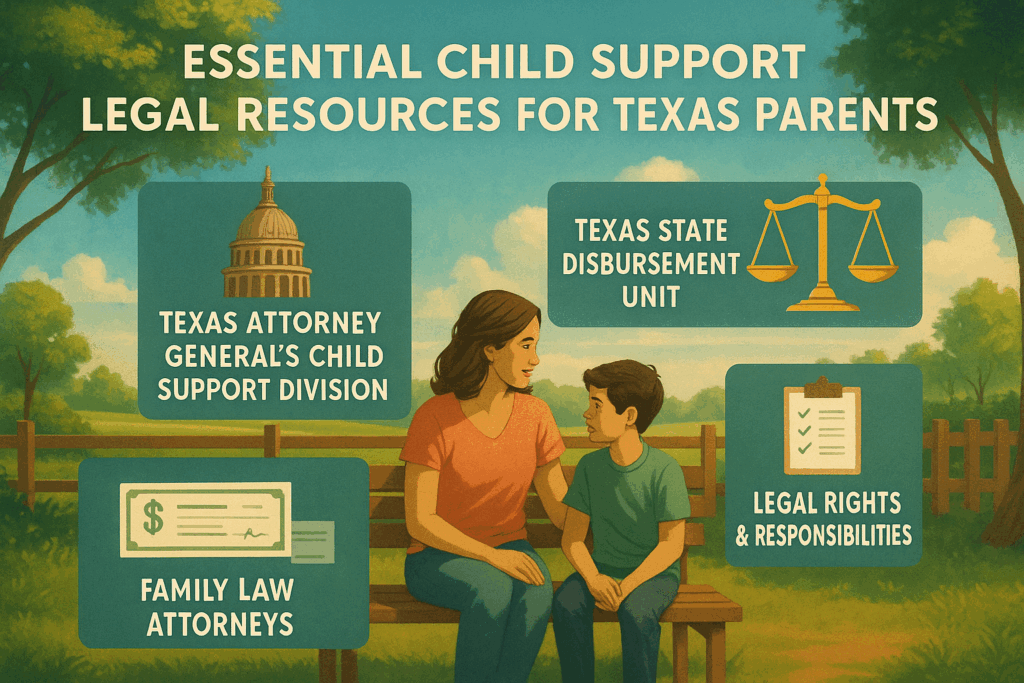
Texas Attorney General’s Child Support Division
The official agency for child support enforcement in Texas is the Child Support Division of the Texas Attorney General child support. They are responsible for managing child support cases in the state. This division’s responsibilities include:
- Enforcing child support laws
- Locating parents
- Establishing orders
- Collecting payments
When one parent applies for child support services, the other parent will receive notice that receiving services for obtaining child support case has been opened, initiating the court process for parenting time.
The Child Support Division also plays a key role in collecting and distributing child support payments, ensuring that parents meet their financial obligations promptly and efficiently. This general child support division offers information and assistance to help parents manage the child support process smoothly and securely, including support from child support staff.
Texas State Disbursement Unit
The Texas State Disbursement Unit is a crucial component of the state’s child support system. It is responsible for managing the tracking and distribution of child support payments, ensuring that payments are accurately recorded and processed. This system helps maintain transparency and accountability, providing parents with reliable records of their child support transactions.
Family Law Attorneys
Family law attorneys provide critical support for parents navigating the child support process. They ensure that child support calculations are fair and comply with legal standards, representing clients in court to advocate for their interests as a family law attorney. Legal representation is essential in child support cases to navigate the complex legal standards and ensure compliance with court orders.
Attorneys also assist parents in modifying child support orders, enforcing existing orders, and addressing issues related to child custody and visitation. Their expertise and advocacy can make a significant difference in the outcome of child support cases, providing parents with the legal and financial resources they need to support their children.
Calculating, Enforcing, and Modifying Child Support
Understanding how to calculate, enforce, and modify child support is essential for every parent involved in a Texas child support case. The process is governed primarily by Chapter 154 of the Texas Family Code, which provides the statutory framework for calculating payments, establishing obligations, and ensuring ongoing compliance. Under §154.125, child support is determined as a percentage of the noncustodial parent’s net resources, with recent legislative updates (effective September 1, 2025) increasing the income cap used to calculate guideline support to $11,700. For parents seeking clarity and practical tools, Child Support Legal Resources for Texas Parents offer valuable insight into navigating these updated legal standards.
Calculation accuracy is critical to ensuring that payments meet both the child’s needs and the parent’s financial reality. While the Texas Attorney General provides an online calculator to help estimate support, legal counsel is often necessary to interpret complex income scenarios, deductions, and medical support requirements under §154.181. For a step-by-step explanation of the calculation process and the latest guidelines, visit our resource on Calculating Child Support Payments in Texas.
When a parent fails to meet their court-ordered obligations, enforcement becomes essential to protect the child’s financial stability. Texas courts have strong authority under §157.001 et seq. to use enforcement tools such as wage garnishment, property liens, license suspension, and contempt proceedings. These measures ensure that support orders are not just words on paper but legally enforceable commitments to the child’s well-being.
Sometimes, life changes—jobs are lost, income fluctuates, or custody arrangements shift. In these cases, §156.401 of the Texas Family Code allows for modification when a “material and substantial change” occurs, ensuring fairness and flexibility for both parents. The attorneys at The Law Office of Bryan Fagan, PLLC help parents pursue these modifications efficiently while minimizing conflict. To explore additional Texas family law topics and learn how our firm helps parents protect their families and their futures, visit our Texas Family Law Resource Center.

Calculating Child Support
Child support payments are typically calculated based on the non-primary parent’s income and other financial factors. The Texas Attorney General offers an online calculator that helps determine appropriate child support amounts based on these guidelines. While these calculators are useful, it is crucial to have a legal expert review the figures to ensure compliance with Texas child support laws.
Parents must keep the court updated about any changes in custody arrangements or financial circumstances to ensure accurate calculations. To pay child support, payments can be conveniently received through direct deposit or a Texas Payment Card, making the process seamless for both parties.
Enforcing Child Support Orders
Enforcing child support orders is essential to ensure that children receive the financial support they need. In Texas, enforcement can involve actions taken in IV-D Courts, which specialize in handling child support issues. Methods such as wage garnishment and property liens can be utilized if the obligated parent fails to pay.
The Texas Family Code permits the court to:
- Mandate periodic child support payments, enforceable through income withholding.
- Allow parents to report non-payment to courts.
- Enable courts to take legal measures to enforce the orders.
Modifying Child Support Orders
Modifying child support orders is necessary when there are significant changes in financial circumstances or custody arrangements. Texas law allows modifications for:
- Custody
- Visitation
- Child support
- Medical support
- Dental support orders
Both parents are required to comply with the court’s order until a formal modification is granted.
Effective communication from legal teams is crucial for parents navigating the modification process. Retroactive child support can also be ordered by the court if a parent has not previously been ordered to provide support.
Rights and Responsibilities for Parents
Parents involved in Texas child support cases have distinct legal rights and financial responsibilities that are carefully defined under Chapter 154 of the Texas Family Code. These laws ensure that both parents share the duty to support their child’s health, education, and overall well-being, regardless of custody arrangements. When a court issues a child support order, it establishes clear financial expectations for the noncustodial parent while ensuring the custodial parent receives timely and reliable payments. This shared obligation reflects Texas’s commitment to prioritizing the child’s best interests and maintaining financial stability after a separation or divorce.
Understanding and fulfilling these obligations can be complex, especially when circumstances change. Texas law allows for modification of support orders under §156.401, which permits adjustments when a “material and substantial change” occurs—such as job loss, changes in income, or new medical or educational needs. Parents seeking to ensure their orders remain fair and up to date can turn to Child Support Legal Resources for Texas Parents for guidance on navigating the modification process and understanding how the most recent updates to the Family Code may impact their situation.
At The Law Office of Bryan Fagan, PLLC, our attorneys provide compassionate, strategic legal representation to help parents understand and exercise their rights while meeting their obligations under the law. Whether you need help modifying an order, enforcing payments, or clarifying your responsibilities, our team ensures that every action aligns with both the legal requirements and your child’s best interests.
To learn more about your rights and options, visit our in-depth article, Top Child Support Lawyer Texas: Expert Legal Assistance, or explore our Texas Family Law Resource Center. Backed by years of experience and a firm-wide commitment to educating families and protecting futures, we help parents make confident, informed decisions that safeguard their children’s financial security and well-being.
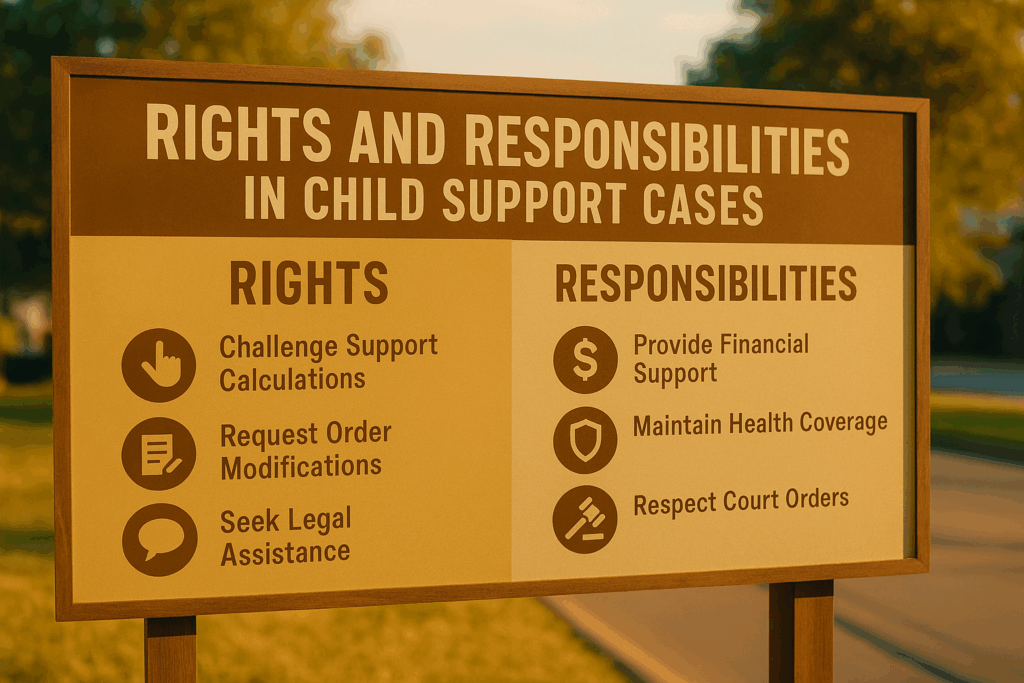
Financial Support Obligations
Under Texas law, non-primary parents are obligated to financially support their children through monthly child support payments. In addition to these payments, courts may also order non-primary parents to provide health insurance, as well as medical and dental support for their children.
A legal review of child support calculations is essential to ensure they comply with Texas child support laws and match court-approved amounts. This helps avoid potential legal penalties and ensures fair support amounts.
Legal Rights in Child Support Cases
Parents are entitled to challenge child support calculations if they believe them to be inaccurate or unfair. Anonymized testimonials indicate that clients felt well-supported and informed throughout the legal process, contributing to positive outcomes in their cases.
The commitment and thorough understanding of child support laws by attorneys at Bryan Fagan have been appreciated by clients, highlighting the importance of having expert legal representation in child support cases.
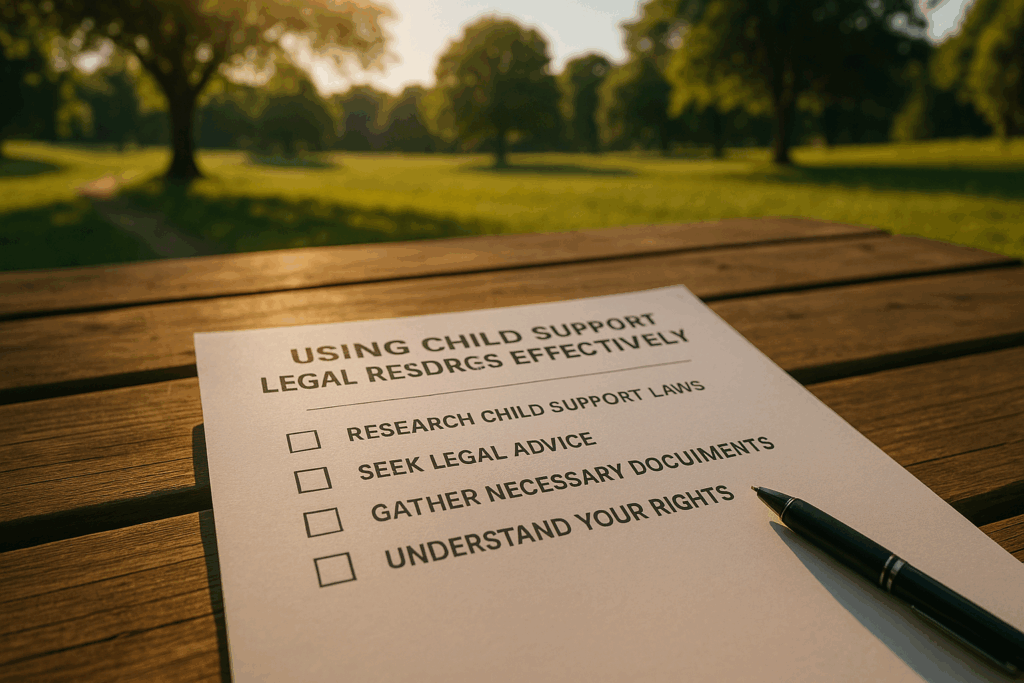
Checklist for Using Child Support Legal Resources
Effectively using Child Support Legal Resources for Texas Parents requires organization, preparation, and a clear understanding of the legal process outlined in the Texas Family Code. Under Chapter 154, both parents are legally responsible for supporting their child, and ensuring that all filings, documentation, and communications are handled correctly can make the difference between a smooth process and unnecessary delays. Parents should begin by gathering essential financial documents—such as pay stubs, tax returns, health insurance details, and proof of childcare expenses—to ensure that any calculation or modification request complies with the requirements of §154.125 and related provisions.
Texas courts and the Office of the Attorney General require accurate and complete documentation when establishing or modifying child support orders. Missing or inaccurate information can delay payments or even lead to default judgments. Parents should also pay close attention to deadlines for filing responses or motions under §156.401, which governs modifications due to material and substantial changes in circumstances. Staying organized not only protects your rights but also ensures that your child receives consistent financial support without unnecessary interruptions.
At The Law Office of Bryan Fagan, PLLC, we encourage parents to approach the child support process with both diligence and confidence. Our attorneys assist with preparing financial disclosures, filing court documents, and ensuring compliance with Texas Family Code procedures. For parents seeking practical guidance on how to navigate financial complexities, our article Child Support: When Money Is on the Line offers insight into the most effective strategies for managing payments and avoiding common pitfalls.
Taking the time to properly prepare can empower parents to handle their child support matters efficiently and responsibly. To explore additional resources and step-by-step legal support, visit our Texas Family Law Resource Center. With compassion, experience, and attention to detail, the team at The Law Office of Bryan Fagan helps families navigate the legal system with confidence—ensuring their children’s financial security and their own peace of mind.
Common Mistakes to Avoid
Common mistakes in child support cases can lead to complications and potential legal issues. Relying on verbal agreements for child support is risky, as they lack legal backing and are difficult to enforce. Parents should be aware of these pitfalls and seek legal counsel to ensure their agreements are formalized and legally binding.
Avoiding these common mistakes helps parents stay compliant and prevents unnecessary complications in their child support cases.
Success Stories and Legal Assistance from Bryan Fagan’s Attorneys
The attorneys at The Law Office of Bryan Fagan, PLLC have helped countless Texas families successfully navigate child support modifications with care, precision, and compassion. By applying the latest updates under Chapter 154 and §156.401 of the Texas Family Code, our legal team ensures that every modification request—whether due to income changes, custody adjustments, or new family circumstances—is handled in full compliance with current state guidelines. Families often find that with the right legal strategy, they can achieve fairer, more manageable child support arrangements that reduce financial tension and promote long-term stability for their children.
Our attorneys combine deep legal knowledge with an understanding of the emotional realities families face when revisiting support orders. Through comprehensive case evaluations and a client-centered approach, the firm has developed a reputation for resolving child support issues efficiently and effectively. Many clients who turned to us for guidance have reported improved financial security and peace of mind, knowing their orders now reflect their true circumstances and their child’s best interests.
Parents looking for trusted, step-by-step assistance can explore Child Support Legal Resources for Texas Parents to better understand how the process works, including how the court evaluates net resources under §154.125 and what qualifies as a “material and substantial change” warranting modification. This resource, created by our legal team, outlines practical strategies for maintaining compliance, seeking fair adjustments, and ensuring children receive the support they deserve.
If you are considering a child support modification or simply want to ensure your current order reflects the latest Texas Family Code updates, our firm invites you to learn more about your options. Visit our Texas Child Support Resource to discover how experienced family law attorneys can help you achieve stability and peace of mind. At The Law Office of Bryan Fagan, we remain dedicated to educating families, protecting futures, and ensuring that every Texas parent has access to the guidance and advocacy they need.
Relevant Texas Family Code Chapters and OAG Resources
Chapter 154 of the Texas Family Code governs child support obligations, ensuring that support is provided for the child’s basic needs. The Texas Attorney General’s Office provides resources for parents navigating child support laws, including guidance on how to modify or enforce support orders.
These resources are invaluable for parents seeking to understand and comply with Texas child support laws and find texas law help.
Conclusion:
Life after divorce doesn’t come with a manual — but having the right information (and the right team) can make all the difference. Whether you’re sorting out payment details, navigating Texas Family Code provisions, or just trying to make ends meet while keeping your household running smoothly, remember this: you don’t have to figure it out alone. The purpose of child support isn’t just to follow court orders — it’s to build stability and peace of mind for your family.
At The Law Office of Bryan Fagan, PLLC, we help Texas parents turn uncertainty into clarity and conflict into workable solutions. Our attorneys understand both the legal and human sides of family law — the late-night worries, the tough conversations, and the deep desire to do what’s best for your kids. If you’re facing questions about enforcement, modification, or just want to make sure you’re on the right path, we’re here to guide you every step of the way.
And maybe that’s the heart of it — child support isn’t just about money; it’s about making sure life keeps moving forward, even after it’s taken a few unexpected turns. So take a breath, know that help is available, and when you’re ready, reach out. Your family’s next chapter can start with a single conversation — and we’d be honored to be part of it.
Frequently Asked Questions
Beginning September 1, 2025, Texas raises the guideline “cap” on monthly net resources used to calculate child support from $9,200 to $11,700 under Family Code §154.125. This affects new orders and modifications entered on or after that date; existing orders don’t change automatically—you must seek a review or file to modify.
Texas doesn’t use a formal “hardship waiver,” but courts can modify support when there’s a “material and substantial change” since the last order—e.g., job loss or significant income drop, disability, extraordinary medical expenses, or major custody changes. You’ll need documentation and to request a review or a court hearing.
There isn’t a statute by that nickname, but Texas has strong enforcement tools: license suspension (driver’s, professional, hunting/fishing), liens, wage withholding, and contempt (fines/jail) for nonpayment. The Attorney General can pursue suspension when someone is three months behind and fails to comply with a repayment schedule.
Start with www.bryanfagan.com for free guides and forms, then check eligibility with programs like Legal Aid of NorthWest Texas, Lone Star Legal Aid, Texas RioGrande Legal Aid, and Houston Volunteer Lawyers. Local bar associations often host free legal clinics or pro bono referrals. (Programs and availability vary by county.)
If there’s a valid court order, you must pay unless a court changes or ends it. Lawful options include seeking a modification after a substantial change, terminating when the legal duty ends (e.g., child turns 18/graduates), or limited mistaken-paternity relief if strict statutory requirements are met. Stopping payments on your own risks enforcement, fees, and interest.
No. Child support remains required under the Texas Family Code. The 2025 update raises the income cap used for guideline calculations; it does not end child support. Parents who want the new cap considered must request a review or modification.
Bring clear, recent proof: pay stubs showing reduced income, termination or furlough letters, medical bills or disability awards, proof of new dependents, and a monthly budget. Then request a review with the OAG or file a motion to modify—courts look for a material and substantial change since the last order.
Not always, but federal tax refunds can be intercepted through the Treasury Offset Program when the state certifies past-due support. You’ll receive a pre-offset notice and can request an administrative review if you disagree.
Automate payments to avoid arrears, build a realistic budget that treats support as a first-priority bill, track everything in the Texas Child Support Interactive portal, and act early—don’t wait if income drops or custody changes; request a review. If you have arrears, ask about repayment plans and talk with an experienced Texas family law attorney about whether you meet the standard for modification.