Ever feel like your life took a hard left turn while you were just trying to keep the day-to-day running smoothly? One minute you’re managing carpool, groceries, and weekend plans—and the next, you’re staring down the overwhelming prospect of divorce, wondering how to hold it all together without losing your sanity. That’s where Texas Divorce Mediation Benefits come in: a smarter, more peaceful way to navigate separation without dragging everyone through an emotional and financial battlefield.
In this article, we’re breaking down how mediation works, why it’s gaining popularity across Texas, and what real families just like yours have gained by choosing it over litigation. You’ll walk away with practical tools you can use right now, legal insights most people don’t know, and firsthand stories that show you’re not alone in this process.
At The Law Office of Bryan Fagan, PLLC, we believe in resolutions that respect your time, your peace of mind, and your future. So, if you’re looking for a clearer, calmer path forward—we’re here to walk it with you. Let’s get started.
Key Takeaways
- Divorce mediation is faster and more cost-effective than litigation, reducing emotional strain and legal expenses for couples.
- Mediation fosters better communication and cooperative co-parenting arrangements, benefiting children’s emotional well-being during divorce.
- While mediation has many benefits, it may not be suitable in cases of domestic violence or significant power imbalances between parties.

Your Family’s Future Starts Here
Don’t navigate your legal journey alone. Schedule a consultation now and get the clarity and support you deserve.
Benefits of Choosing Mediation Over Litigation
Divorce mediation is a structured process where a neutral third-party mediator helps divorcing spouses negotiate and reach Many Texas families are turning to mediation for its practical and emotional advantages—and for good reason. Texas Divorce Mediation Benefits include quicker resolutions, reduced legal costs, and a more peaceful process compared to traditional litigation. Rather than engaging in a drawn-out court battle, mediation allows both spouses to work together with a neutral third party to find common ground on essential issues like child custody, support, and property division.
According to our family law team, one of the strongest legal advantages of mediation lies in its enforceability. Under the Texas Family Code §§ 6.602 and 153.0071, a properly executed Mediated Settlement Agreement (MSA) is binding and can be entered as a final order by the court without modification. The latest updates to these sections reinforce the finality of MSAs when both parties sign them voluntarily, ensuring the terms can be relied on with confidence.
The structure of mediation also empowers families to maintain more control over the outcome. Mediators guide the discussion, but it’s the parties—not a judge—who make the final decisions. This results in creative, personalized solutions that better reflect the family’s unique circumstances. As we’ve seen in our work with Texas families, this flexibility often leads to smoother transitions and stronger long-term co-parenting relationships.
To explore different mediation styles and how to find the best fit for your situation, we recommend reading this resource. Our attorneys are here to help you understand the process and protect what matters most. Choosing mediation isn’t just about resolving the legal side of divorce—it’s about building a future with less conflict, more stability, and meaningful control.
Legal Tip:
Navigating divorce in Texas? Whether you’re facing a cooperative split or a high-conflict situation, understanding your Texas Divorce Mediation Options can make all the difference. Mediation is often faster, more affordable, and less emotionally draining than courtroom battles—especially when children, property, or long-term financial interests are on the line.
At The Law Office of Bryan Fagan, PLLC, we offer proven mediation strategies tailored to meet your family’s needs. From dividing assets to creating parenting plans, our experienced attorneys help you find common ground while protecting your legal rights. Learn how mediation can support a smoother path forward by visiting: Top Texas Divorce Mediation Options: What You Need to Know .
Financial Advantages of Divorce Mediation
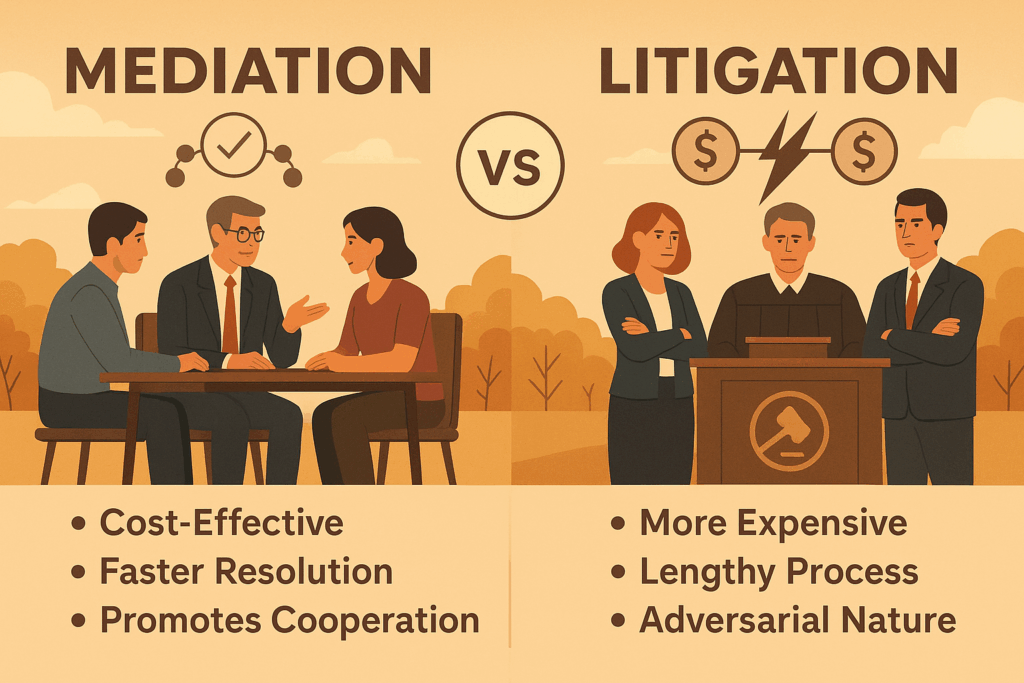
Divorce can place enormous financial strain on families, but Texas Divorce Mediation Benefits offer a practical and often more affordable alternative. As our attorneys frequently advise, mediation enables both parties to share the cost of a single neutral mediator rather than pay separate attorney fees for extended courtroom litigation. Mediators generally charge lower hourly rates than litigation attorneys, making this route especially appealing for couples looking to reduce legal expenses without sacrificing fairness or clarity.
In addition to saving on professional fees, mediation also helps avoid the hidden costs of court proceedings. These include filing fees, multiple hearings, and other litigation-related expenses that can quickly add up. Under the Texas Family Code §§ 6.602 and 153.0071, a properly executed Mediated Settlement Agreement (MSA) is legally binding and enforceable—meaning couples can resolve key issues without repeated trips to court. Updates to the Code continue to emphasize the efficiency and finality of MSAs, particularly when both parties act voluntarily and with full disclosure.
According to our family law team, mediation not only reduces costs but also fosters healthier financial outcomes after the divorce is finalized. The process encourages open communication around property division, spousal support, and long-term financial planning, helping couples develop realistic, sustainable agreements. This level of collaboration leads to fewer misunderstandings and a smoother post-divorce transition—especially when compared to rigid court orders handed down through adversarial litigation.
To better understand how mediation can support your financial goals during divorce, we invite you to explore this article or visit our divorce and mediation blog hub. At The Law Office of Bryan Fagan, PLLC, we’re committed to helping Texas families find solutions that protect their future and preserve peace of mind.
Legal Tip:
Considering divorce in Texas? Whether things are amicable or tense, Understanding Divorce Mediation Process is essential to making informed, confident choices. Mediation offers a calmer, more cost-effective alternative to litigation—especially when your goals include protecting children, dividing property fairly, or preserving long-term financial stability.
At The Law Office of Bryan Fagan, PLLC, our attorneys guide families through every stage of mediation with personalized strategies that prioritize clarity, respect, and resolution. From parenting plans to property agreements, we help you move forward with dignity and control. Discover what to expect during mediation by visiting: Understanding Divorce Mediation Process: What to Expect .

Emotional and Psychological Benefits
The emotional and psychological benefits of divorce mediation cannot be overstated. Mediation:
- Eases the emotional strain of divorce, making the process less traumatic for both parties involved.
- Is particularly important for children, who often suffer the most during contentious divorces.
- Minimizes the emotional suffering of children by promoting a more peaceful and cooperative environment.
One of the key benefits of mediation is its ability to facilitate better communication between spouses. This improved communication can carry over into the post-divorce relationship, fostering a more supportive co-parenting dynamic. Engaging in mediation encourages both parties to work together to resolve conflicts, which can lead to a more positive and constructive relationship moving forward. The collaborative atmosphere of mediation allows families to address their issues without lingering hostility, promoting a healthier environment for everyone involved.
A client testimonial highlights the emotional benefits of mediation. Jane, who sought mediation after a painful divorce, experienced a significant turnaround thanks to the mediator’s ability to understand both parties’ perspectives. This understanding helped Jane and her ex-spouse achieve a fair division of assets and a co-parenting plan that worked for both parties. Jane’s experience illustrates how mediation can reduce emotional strain and promote a healthier, more cooperative post-divorce relationship.
Greater Control and Flexibility in Mediation
Divorce mediation offers greater control and flexibility compared to traditional divorce litigation. One of the most significant One of the most empowering Texas Divorce Mediation Benefits is the level of control it gives to families navigating separation. Unlike traditional litigation where a judge ultimately makes decisions, mediation allows the spouses themselves to craft tailored solutions that reflect their unique circumstances. As our attorneys frequently advise, this ability to retain decision-making power often results in more satisfying and practical outcomes—especially when it comes to issues like property division, spousal support, and parenting arrangements.
Flexibility is another major advantage of mediation. Rather than being bound by a court’s docket, mediation sessions are scheduled at times that work for both parties, including evenings or weekends when needed. Discussions are held in private, low-pressure settings that promote honest communication and constructive problem-solving. According to the most recent updates to the Texas Family Code §§ 6.602 and 153.0071, agreements reached through mediation can be submitted to the court in the form of a Mediated Settlement Agreement (MSA), which—when properly executed—is legally binding and enforceable. This ensures that the flexibility of the process doesn’t come at the cost of legal validity.
Our legal professionals have helped many clients understand that choosing your own mediator is more than a convenience—it’s a strategic decision. Couples are free to select a mediator whose style and experience suit their specific situation, which can significantly affect how productive and respectful the process feels. As we’ve seen in our work with Texas families, some of the most successful outcomes have come from mediators who stayed engaged even after sessions concluded, helping both parties find solutions that initially seemed out of reach.
For a deeper look at how mediation works and whether it’s right for your situation, visit this resource. You can also explore our growing library of divorce and mediation insights for more practical guidance. At The Law Office of Bryan Fagan, PLLC, we’re committed to helping families across Texas find peaceful, future-focused solutions that honor both their legal rights and personal values.
Legal Tip:
If you’re going through a divorce or custody dispute, exploring Family Law Mediation in Texas could lead to a more peaceful, affordable resolution. Mediation gives families the chance to collaborate on customized solutions—reducing stress, legal expenses, and unnecessary court appearances.
At The Law Office of Bryan Fagan, PLLC, we believe that mediation should protect both your rights and your family’s future. Whether you’re working through parenting plans or complex asset division, our attorneys provide trusted legal guidance every step of the way. To learn how mediation can support a smoother transition, visit: Family Law Mediation in Texas: Options for a Smooth Transition .

Privacy and Confidentiality in Mediation
Confidentiality is one of the most powerful yet often overlooked Texas Divorce Mediation Benefits. Unlike courtroom proceedings—which are a matter of public record—mediation takes place in a private, controlled environment where sensitive issues can be discussed without fear of judgment or exposure. As our attorneys frequently advise, this privacy fosters a sense of safety that allows spouses to speak more openly and work toward productive, personalized resolutions.
The legal foundation for this confidentiality is reinforced by the Texas Alternative Dispute Resolution Act and supported by provisions within the Texas Family Code, including updated interpretations that strengthen protection for mediation communications. Under these laws, statements made during mediation cannot be disclosed in court, and participants are generally shielded from being called to testify about what occurred during the sessions. This legal assurance plays a key role in promoting trust between parties and helps mediators guide families through emotionally charged topics—especially those involving children.
Confidentiality becomes even more important when discussing issues like child custody, parenting plans, and support. Mediation provides parents with a safe space to negotiate terms that prioritize their children’s well-being, without the pressure of public court proceedings. As we’ve seen in our work with Texas families, this privacy not only reduces conflict but also encourages healthier co-parenting dynamics post-divorce.
To explore how confidentiality fits into the broader benefits of mediation, visit this article or browse our library of mediation insights. At The Law Office of Bryan Fagan, PLLC, we’re committed to helping clients make informed decisions in a safe and respectful environment—because protecting your future starts with protecting your voice.

Child-Focused Solutions in Mediation
As our legal professionals have helped many clients understand, one of the most meaningful Texas Divorce Mediation Benefits is its emphasis on child-centered outcomes. Mediation creates space for parents to prioritize their children’s emotional needs while working through the complexities of divorce. This cooperative process often lays the groundwork for healthier, more effective co-parenting relationships, which directly supports a child’s sense of stability and security during a difficult life transition.
Under the guidance of a trained mediator, parents are encouraged to develop customized parenting plans that reflect the child’s best interests—as required by Texas Family Code § 153.002, which establishes that the “best interest of the child shall always be the primary consideration.” With the latest updates to the Code emphasizing alternative dispute resolution when appropriate, child custody mediation has become a preferred tool for minimizing courtroom battles and focusing instead on solutions that promote emotional well-being and consistency for the child.
According to our family law team, mediation is particularly effective at reducing hostility between parents—something that not only eases the legal process but also benefits children in the long term. When parents are able to calmly discuss visitation schedules, decision-making authority, and daily routines, they set the stage for a more harmonious environment where children feel supported rather than caught in the middle. This cooperative tone is often lost in litigation, where parents may be pitted against one another in an adversarial setting.
To learn more about creating effective custody solutions through mediation, visit this article. You can also find additional insights in our child custody and parenting resource center. At The Law Office of Bryan Fagan, PLLC, we believe protecting your child’s future starts with the right approach today—and mediation is often the path that offers clarity, compassion, and long-term success.
Legal Tip:
Navigating child custody in Texas? Whether you’re facing a cooperative split or a high-conflict situation, Understanding Custody Arrangements in Texas is crucial. The Texas Family Code emphasizes the child’s best interests, focusing on stability, emotional well-being, and consistent routines. Grasping the nuances of Joint Managing Conservatorship and Sole Managing Conservatorship can make all the difference in your family’s future.
At The Law Office of Bryan Fagan, PLLC, we offer personalized strategies tailored to your family’s unique needs. From crafting effective parenting plans to understanding visitation rights, our experienced attorneys are here to guide you every step of the way. Dive deeper into the intricacies of Texas custody laws by visiting: Understanding Custody Arrangements in Texas: A Practical Guide for Parents .

Successful Mediation Case Study
To illustrate the effectiveness of divorce mediation, let’s look at a successful divorce case study. Jane, a client who sought mediation after a painful divorce, hoped to resolve issues amicably. Before mediation, Jane struggled with communication breakdown and escalating conflicts with her ex-spouse. The traditional divorce process had left both parties feeling frustrated and overwhelmed.
Through the mediation process, Jane achieved a fair division of assets and an effective co-parenting plan that worked for both parties. The mediator’s role was crucial in guiding the discussions and helping both parties understand each other’s perspectives. This understanding led to a more amicable resolution and a healthier post-divorce relationship.
Reflecting on her experience, Jane expressed gratitude for the mediation process, stating that it allowed her to retain control and promote a healthier environment for her children. Jane’s case study highlights the practical benefits and effectiveness of mediation in resolving disputes and achieving positive outcomes for all parties involved.
When Mediation May Not Be Suitable
ChatGPT said:
While Texas Divorce Mediation Benefits are numerous, mediation is not a one-size-fits-all solution. As our attorneys frequently advise, there are certain situations where mediation may not be appropriate—particularly when safety, power dynamics, or unwillingness to participate in good faith are involved. Cases involving domestic violence or intimidation can make mediation unsafe or unproductive, as the process requires open, voluntary communication between both parties. In these circumstances, the structure and legal protections of litigation may provide a more appropriate path forward.
The Texas Family Code recognizes the importance of voluntary participation in mediation, particularly under § 6.602 and § 153.0071, which govern the enforceability of mediated settlement agreements. These provisions emphasize that both parties must knowingly and voluntarily sign an agreement for it to be binding. When one spouse refuses to engage honestly—such as by concealing assets or resisting any form of compromise—the foundation of mediation begins to erode. A fair resolution depends on transparency, mutual respect, and a shared willingness to find common ground.
According to our family law team, another red flag is a significant imbalance of power—whether emotional, financial, or informational. If one spouse feels pressured, lacks the confidence to advocate for their needs, or is unable to understand the implications of their decisions, mediation may unintentionally reinforce that imbalance. In such cases, traditional litigation provides more structure, legal safeguards, and court oversight to ensure fairness.
To explore when mediation may or may not be right for you, visit this article or browse our Texas family law resource hub. At The Law Office of Bryan Fagan, PLLC, we believe the right divorce strategy is one that protects your safety, respects your rights, and supports your long-term well-being—whether that’s through mediation or litigation.
How the Law Office of Bryan Fagan Can Help
As we’ve seen in our work with Texas families, navigating divorce through mediation can be far more empowering when you have experienced legal counsel by your side. One of the most important Texas Divorce Mediation Benefits is the ability to reach personalized, peaceful resolutions—but that doesn’t mean you should go through the process alone. Legal representation ensures your rights are protected, your agreements are fair, and your future is secure. At The Law Office of Bryan Fagan, PLLC, we provide compassionate, knowledgeable support through every step of the mediation process, helping our clients feel informed, confident, and in control.
Mediation is designed to be collaborative, but it still involves critical legal decisions—especially concerning property division, spousal maintenance, and parenting plans. Under Texas Family Code §§ 6.602 and 153.0071, mediated settlement agreements (MSAs) that meet specific requirements are binding and enforceable. However, without proper legal guidance, parties may unintentionally agree to terms that are inequitable or difficult to change later. That’s why our attorneys frequently advise clients to consult with a family law attorney before, during, and after mediation to ensure they fully understand their legal rights and the long-term implications of their agreements.
Our legal professionals have helped many clients understand that mediation isn’t about compromising just for the sake of peace—it’s about building durable, customized solutions that align with the law and your family’s unique needs. Whether you’re preparing for your first session or reviewing the final terms of an agreement, having a skilled attorney involved adds an extra layer of clarity and protection.
If you’re considering mediation or want to learn more about how it works in Texas divorce cases, we invite you to explore this resource or visit our family law information center. At The Law Office of Bryan Fagan, PLLC, we’re here to educate, support, and protect your future—one decision at a time.
Legal Tip:
Choosing the right Texas Divorce Attorney can make all the difference in how your divorce is handled—and how your future is shaped. Whether your case involves complex assets, custody disputes, or simply a desire for a smoother transition, having a knowledgeable, compassionate advocate on your side ensures your rights and goals are protected every step of the way.
At The Law Office of Bryan Fagan, PLLC, we offer personalized representation backed by years of experience in Texas family law. From initial filings to final agreements, our team is committed to helping you navigate divorce with clarity and confidence. Learn more about working with a skilled divorce lawyer by visiting: Texas Divorce Attorney – Legal Guidance You Can Trust .
Conclusion:
Every family’s story is different, and if yours is entering a new chapter, you deserve a path that brings clarity—not chaos. Choosing mediation isn’t just about avoiding court; it’s about making intentional, thoughtful decisions that give you more control, less stress, and a better foundation for whatever comes next. That’s the real power behind a peaceful resolution.
At The Law Office of Bryan Fagan, PLLC, we’re not here to throw legal jargon at you or pressure you into one-size-fits-all solutions. We’re here to listen, to guide, and to help you make choices that truly serve your family’s future. If you’re thinking about mediation or just trying to figure out what your next move should be, a conversation with an experienced Texas family law attorney can make all the difference.
And if you’ve made it this far—take a breath. You’re doing the hard work of showing up, getting informed, and taking care of yourself and your loved ones. That’s not easy, and it matters more than you might realize. So when you’re ready, reach out. We’re here to help you move forward with confidence—and maybe even a little peace of mind.
Frequently Asked Questions About Divorce Mediation in Texas
What is the downside to divorce mediation?
Mediation may not be effective when there is a significant power imbalance, a history of domestic violence, or one party refuses to be honest or cooperative. It also doesn’t provide the formal protections of courtroom litigation if one party is trying to hide assets or manipulate the process.
How long after mediation is a divorce final in Texas?
After successful mediation, the Mediated Settlement Agreement (MSA) is submitted to the court. If approved, the court can finalize the divorce after the 60-day mandatory waiting period has passed from the date the divorce petition was filed.
Who pays for mediation in Texas?
Typically, both parties share the cost of mediation equally, unless they agree otherwise. In some cases, a court may order one party to cover more of the cost based on financial circumstances or other equitable considerations.
What is a wife entitled to in a divorce settlement in Texas?
In Texas, a wife is entitled to a just and right division of community property, which includes income and assets acquired during the marriage. Depending on circumstances, she may also receive spousal support, custody rights, and child support.
What not to say in divorce mediation?
Avoid threats, blame, or emotionally charged language. Statements like ‘You never cared about the kids’ or ‘I’ll take everything’ can derail productive conversation. Stay focused on facts, solutions, and respectful communication.
What is the success rate of divorce mediation?
Success rates for divorce mediation are generally high—often cited between 70% and 80%. When both parties are willing to communicate and compromise, mediation can resolve disputes faster and more amicably than litigation.
How long after divorce mediation will I get my money?
Once a divorce decree is finalized and property division terms are approved, the timeline for receiving assets like retirement funds or home proceeds depends on the terms of the agreement and the responsiveness of involved institutions—usually a few weeks to a few months.
What are the rules for divorce mediation in Texas?
Texas mediation is governed by the Texas ADR Act and local court rules. Mediation is confidential, voluntary unless court-ordered, and typically involves a neutral mediator helping parties resolve issues. Mediated Settlement Agreements are binding if they meet legal requirements.
What makes a divorce final in Texas?
A divorce becomes final in Texas when the judge signs the Final Decree of Divorce after the 60-day waiting period and any settlement agreements (like an MSA) are approved. The decree must be entered into the court record to be enforceable.