

Ever tried splitting holidays with your ex… and their new dog? One parent swears Christmas Eve is theirs “because it always has been,” the other insists it was agreed on in a group chat that mysteriously vanished. The kid’s caught in the middle, the mashed potatoes are cold, and suddenly your “amicable” co-parenting situation feels like a bad sitcom rerun. That’s exactly why child custody agreements for unmarried couples matter more than most people realize—they set the ground rules before things get messy.
In this article, we’ll walk you through how to build a custody agreement that brings order to the chaos. You’ll learn how to establish paternity, what Texas law says about parental rights, and how to avoid future drama with clear schedules, defined responsibilities, and enforceable court orders. Along the way, we’ll share real-life examples, legal insights you won’t find on Google, and advice you can put into practice right away.
Whether you’re newly separated or just trying to get ahead of potential conflict, this guide is your next smart move. The Law Office of Bryan Fagan, PLLC is here to help you protect your peace—and your child’s future—with clarity and compassion. Let’s get started.
Key Takeaways
- Unmarried mothers in Texas automatically hold legal decision-making rights and physical custody, while unmarried fathers must establish paternity to gain custody rights.
- A strong child custody agreement should clearly define legal and physical custody, visitation schedules, transportation responsibilities, and incorporate a well-defined parenting plan.
- Formalizing a custody agreement in court is essential for legal enforceability, and the best interests of the child standard guides all custody decisions in Texas.

Your Family’s Future Starts Here
Don’t navigate your legal journey alone. Schedule a consultation now and get the clarity and support you deserve.
Understanding Custody Laws for Unmarried Parents in Texas
In Texas, child custody laws treat unmarried parents differently than married couples. Under Texas Family Code § 160.201, an unmarried mother automatically has sole legal and physical custody of her child at birth. This grants her the right to make all major decisions regarding the child’s care, education, and medical needs without needing court approval. However, the same is not true for unmarried fathers. As we’ve seen in our work with Texas families, a father must first establish legal paternity before he can exercise any rights to custody or visitation.
Establishing paternity is the essential first step for unmarried fathers seeking involvement in their child’s life. This can be done by signing an Acknowledgment of Paternity or, if necessary, through a court-ordered DNA test, as outlined in Texas Family Code § 160.301. Without this step, a father has no legal standing to request visitation, share decision-making, or even be notified about major events in the child’s life. According to our family law team, establishing paternity not only protects a father’s rights—it also benefits the child by creating a legally recognized relationship with both parents.
Once paternity is established, it’s strongly recommended that both parents formalize their parenting plan through child custody agreements for unmarried couples. These agreements outline how responsibilities are shared, where the child will live, and how holidays and time will be divided. A clearly defined custody arrangement—also known as a possession and access order—helps prevent misunderstandings and provides structure, especially if the relationship between the parents changes over time. For a deeper look at how these arrangements work, see our full guide on Texas Child Custody Laws for Unmarried Parents.
At The Law Office of Bryan Fagan, PLLC, we believe that custody planning is just as important for unmarried parents as it is for married ones. Our legal professionals have helped many clients understand their rights and create lasting solutions that prioritize the child’s well-being. If you’re an unmarried parent in Texas and want to establish a secure, court-recognized custody plan, visit our child custody resource center or schedule a consultation to get personalized guidance on child custody agreements for unmarried couples.

Establishing Paternity: The First Step for Fathers
Unmarried fathers must establish paternity to gain custody and actively participate in their child’s life. Key points include:
- Without legal recognition as the child’s father, they cannot seek custody or visitation rights.
- Paternity can be established by signing the child’s birth certificate at birth.
- If paternity is disputed, it can be established through a court-ordered DNA test.
In situations where paternity is contested:
- A father can submit a petition to establish paternity to the court.
- The court may order a DNA test to determine biological fatherhood and prove biological fatherhood, including a paternity test.
- For the court to recognize the results, the DNA test must show a probability of 95% or higher that the man is the biological father.
- Once paternity is confirmed, the father gains the right to seek custody or visitation through a legal process known as a Suit Affecting the Parent-Child Relationship (SAPCR).
Navigating this legal maze can be complex, and having legal representation can be invaluable. An experienced family law attorney can help fathers understand their legal rights, file the necessary petitions, and represent them in court to ensure a fair and just outcome.
Once paternity is established, legal parents and the other parent can move forward with creating custody agreements that will present their roles and responsibilities as one parent.
Components of a Strong Child Custody Agreement
A well-structured custody agreement is essential for protecting a child’s stability and minimizing future conflict between parents—especially when those parents were never married. Child Custody Agreements for Unmarried Couples must be tailored with particular care, as the Texas Family Code provides distinct legal pathways for parents outside of marriage. According to Texas Family Code §§ 153.001 and 153.131, the court’s primary focus is the best interest of the child, and the law recognizes both legal and physical custody as key components of that standard. Legal custody refers to decision-making authority regarding education, medical care, and religious upbringing, while physical custody pertains to the child’s primary residence and living schedule. As our attorneys frequently advise, clearly defining these aspects in writing is one of the most effective ways to promote consistency and peace of mind for both parents.
A strong custody agreement should also include a detailed parenting plan that addresses where the child will live, the frequency of visitation with each parent, and how major responsibilities will be shared. This includes decisions related to healthcare, school involvement, and extracurricular activities. Incorporating specific provisions for holidays, summer breaks, and special occasions is particularly helpful in avoiding misunderstandings. According to our family law team, outlining these expectations upfront creates a roadmap that not only benefits the parents but also fosters a sense of security and routine for the child.
Transportation logistics—such as who picks up and drops off the child—should also be addressed in the agreement, as this is one of the most common sources of frustration in co-parenting arrangements. The clearer these terms are from the start, the easier it becomes to maintain consistency and minimize unnecessary conflict. Our legal professionals have helped many clients understand how crucial it is to anticipate practical challenges and build those into the agreement to ensure a more seamless co-parenting experience.
While online templates may seem appealing, there is no substitute for working with an experienced attorney who understands how Texas law applies to your specific family dynamic. At The Law Office of Bryan Fagan, PLLC, we believe that comprehensive, customized planning protects everyone involved—especially the children. For more on this topic, read our in-depth resource: Rights of Unmarried Parents in Texas Child Custody Cases. You can also explore our child custody services page for additional guidance on building strong, enforceable Child Custody Agreements for Unmarried Couples in accordance with the most recent updates to Texas law.
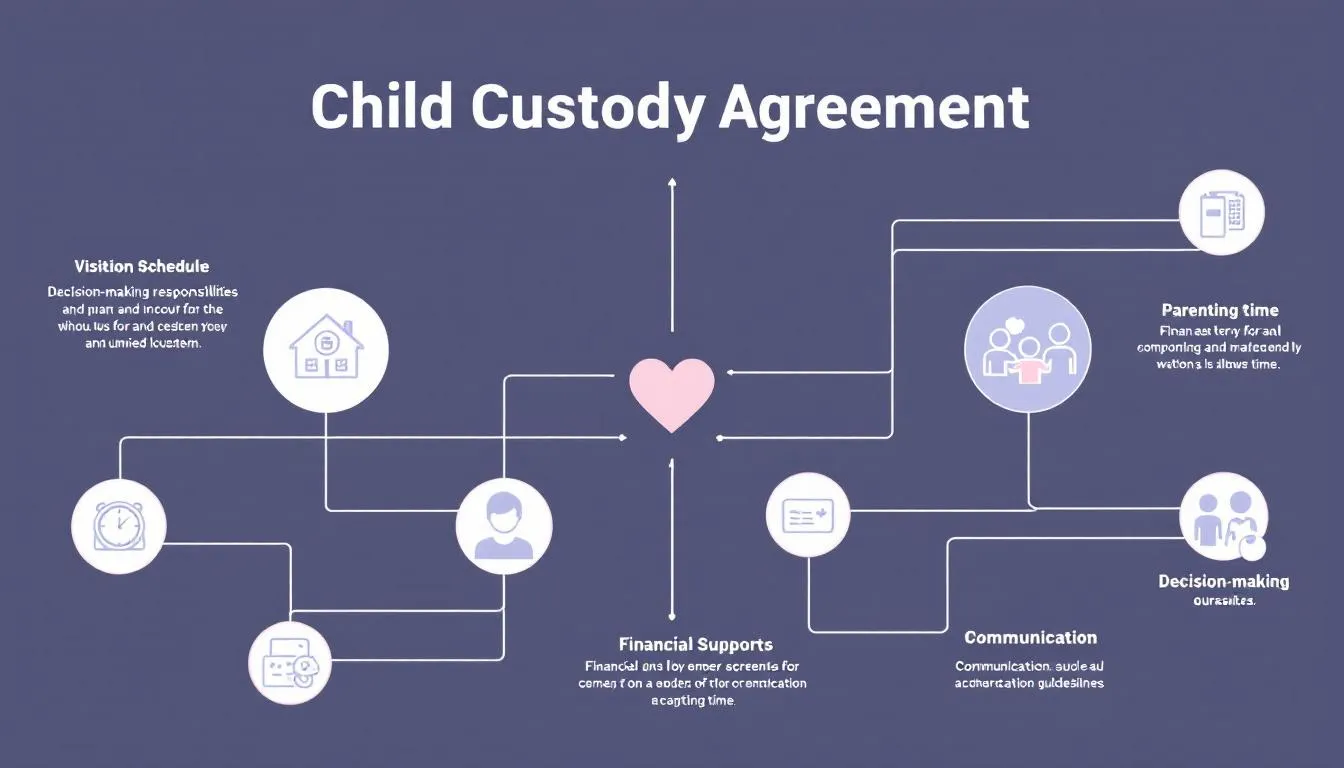
Formalizing Your Custody Agreement in Court
Formalizing a child custody agreement through the court system is one of the most important steps unmarried parents can take to protect their parental rights and ensure long-term stability for their child. While verbal or informal written agreements may work temporarily, they are not enforceable under Texas law and often lead to avoidable disputes. According to Texas Family Code § 153.007, parents can submit a written custody agreement for court approval, but it must meet the legal standard of serving the child’s best interest. As our attorneys frequently advise, even cooperative co-parents should seek court validation to create a binding agreement that safeguards both their rights and their child’s well-being.
The formalization process begins with both parents signing and dating the proposed custody agreement. It is then notarized and submitted to the court for judicial review. The judge will examine whether the terms align with the child’s best interests, and may approve, request modifications, or propose an alternative arrangement. If the parents are unable to agree beforehand, Texas Family Code § 153.010 encourages alternative dispute resolution, such as mediation. However, if mediation fails, the case may proceed to trial for a judge to issue a final custody order. As we’ve seen in our work with Texas families, having a family law attorney guide you through this process helps ensure compliance with legal standards and can significantly reduce stress during emotionally charged situations.
For unmarried couples, it is especially vital to document a clear, court-approved custody plan. This includes outlining conservatorship (legal custody), possession and access (physical custody), visitation schedules, transportation responsibilities, and decision-making rights. Creating comprehensive Child Custody Agreements for Unmarried Couples ensures that both parents understand their obligations and protects the child’s routine, safety, and emotional well-being. Without court enforcement, either parent could unilaterally change or withhold access, leaving the other without legal recourse. Our legal professionals have helped many clients understand the importance of converting mutual parenting intentions into enforceable court orders.
If you’re navigating custody as an unmarried parent, we encourage you to read our in-depth guide: What Are the Parental Rights of Unmarried Parents in Texas?. You can also explore our Texas child custody services page to learn more about building effective Child Custody Agreements for Unmarried Couples that meet all legal requirements under the most recent updates to the Texas Family Code. At The Law Office of Bryan Fagan, PLLC, we’re here to help you protect your rights and provide your child with the security they deserve.

Best Interests of the Child Standard in Texas Courts
In Texas, all child custody decisions are rooted in one foundational principle: the best interest of the child. As defined in Texas Family Code § 153.002, this standard guides the court in determining a parenting plan that fosters a safe, stable, and nurturing environment. Factors considered include the child’s emotional and physical needs, each parent’s ability to meet those needs, the wishes of the child (if age-appropriate), and the stability of each parent’s home. As our attorneys frequently advise, the court takes a holistic view to ensure that any custody arrangement protects the child’s present and future well-being.
Additional elements—such as a history of family violence, substance abuse, or neglect—can strongly influence the outcome. Under Texas Family Code §§ 153.004 and 153.005, courts are empowered to limit or deny parental rights when such concerns arise. Even if one parent is presumed fit, these presumptions can be overcome with sufficient evidence that another arrangement would better serve the child. As we’ve seen in our work with Texas families, bringing these issues to light with clarity and compassion can be pivotal in shaping a custody order that truly supports the child’s needs.
For unmarried parents, understanding how this best-interest standard applies is especially critical. Because paternity must be legally established before a father can assert his rights, crafting thoughtful and enforceable Child Custody Agreements for Unmarried Couples is essential. These agreements not only define conservatorship and possession terms but also anticipate potential areas of conflict and resolve them with proactive planning. Our legal professionals have helped many clients understand the nuances of these arrangements and how to present a custody proposal that reflects both parental capacity and the child’s developmental needs.
To learn more about how unmarried fathers can protect their parental rights under Texas law, we encourage you to explore our guide: Unmarried Fathers’ Rights in Texas. For additional insight, visit our child custody legal resource center, where we offer practical guidance on building legally sound, compassionate Child Custody Agreements for Unmarried Couples that reflect the most current updates to the Texas Family Code. At The Law Office of Bryan Fagan, PLLC, we’re here to help you make informed choices that protect both your parental rights and your child’s future.

Tips for Creating Effective Custody Agreements
Creating a successful custody agreement for unmarried parents requires more than just outlining a schedule—it demands clear communication, thoughtful planning, and legal precision. In Texas, Texas Family Code § 153.006 emphasizes the importance of parenting plans that define rights, duties, visitation schedules, and decision-making responsibilities in the child’s best interest. As our attorneys frequently advise, one of the most effective ways to promote long-term cooperation is to maintain open communication and document all parenting terms in a formal, court-approved agreement.
For unmarried couples, these agreements are particularly important. While an unmarried mother automatically has legal custody at birth under Texas Family Code § 160.201, a father must establish paternity before he can be granted rights of possession, conservatorship, or access. Once paternity is confirmed, creating clear Child Custody Agreements for Unmarried Couples ensures that both parents understand their roles and that the child has a stable, consistent routine. This includes outlining visitation schedules, holiday arrangements, and transportation responsibilities—details that help prevent misunderstandings and promote healthy co-parenting.
Planning for future changes is also essential. According to our family law team, successful agreements often include clauses that require written notice before a parent relocates with the child, as well as provisions that address changes in finances, education plans, or living arrangements. These forward-thinking elements help manage uncertainty and protect the child’s best interests as circumstances evolve. Including this level of detail not only strengthens the agreement but also makes it easier to enforce if disputes arise later.
Our legal professionals have helped many clients understand how to build parenting plans that reflect their family’s unique needs while complying with Texas law. To learn more about what steps unmarried mothers or fathers may need to take, we encourage you to read: Does an Unmarried Mother Need to File for Custody in Texas?. You can also explore our comprehensive custody resources to get guidance on building strong, enforceable Child Custody Agreements for Unmarried Couples in accordance with the most recent updates to the Texas Family Code. At The Law Office of Bryan Fagan, PLLC, we are committed to protecting your rights while helping you create a stable and secure future for your child.
Avoiding Legal Battles Through Cooperation
Cooperation and open communication are essential to avoiding legal battles. Establishing communication guidelines minimizes conflicts and promotes cooperative co-parenting. If parents cannot agree on a custody arrangement, mediation sessions can help parents communicate effectively to reach a resolution.
Incorporating dispute resolution methods helps prevent escalation and encourages amicable solutions. These methods include:
- Mediation
- Open discussions
- Counseling
- Therapy
These approaches can help parents reach a custody agreement without litigation.
Focusing on cooperation and long-term planning can help avoid unnecessary legal battles and ensure a stable and supportive environment for the child.
How the Law Office of Bryan Fagan PLLC Can Help
At The Law Office of Bryan Fagan, PLLC, we understand that child custody can feel overwhelming—especially for unmarried parents. Our family law team is dedicated to providing personalized, strategic legal support tailored to the unique needs of each client. Whether you are just beginning to draft a parenting plan or need help enforcing an existing order, we’re here to guide you through every legal step. Child Custody Agreements for Unmarried Couples require careful attention to detail and full compliance with Texas law, particularly Texas Family Code §§ 153.001–153.007, which outline the rights, duties, and best-interest considerations the court uses in custody decisions.
As we’ve seen in our work with Texas families, the stakes are too high to rely on informal arrangements or generic templates. Our legal professionals have helped many clients understand the importance of establishing formal custody agreements that clearly define conservatorship, possession, access schedules, and decision-making responsibilities. In cases where parents disagree, we provide skilled representation in both mediation and litigation, always with the goal of securing stable, child-centered outcomes.
Real-life success stories from our clients reflect the impact of working with a firm that balances compassion with legal precision. Whether you need help establishing paternity, negotiating a parenting plan, or responding to a modification request, our attorneys bring clarity to complex family dynamics. According to our family law team, this proactive legal approach can protect your rights, reduce conflict, and support the emotional and developmental needs of your child long term.
If you are navigating custody as an unmarried parent, visit our Texas Child Custody Attorney page for helpful resources, or explore our child custody legal services to learn how we can help you build strong, enforceable Child Custody Agreements for Unmarried Couples based on the most recent updates to the Texas Family Code. At The Law Office of Bryan Fagan, PLLC, we are committed to protecting your rights while helping you create a safe, stable future for your family.
Conclusion:
Co-parenting without a wedding ring doesn’t mean you have to parent without a plan. Whether things are calm or complicated between you and your child’s other parent, a clear, enforceable custody agreement can make all the difference—for you, your child, and your peace of mind. And the good news? You don’t have to figure it all out alone.
At The Law Office of Bryan Fagan, PLLC, we help Texas families navigate the not-so-straightforward parts of parenting with legal clarity and compassion. We know every situation is unique, and we’re here to craft solutions that actually work for your life—not just your paperwork.
So if you’ve been putting off that conversation, wondering what your rights are, or trying to avoid another text-message misfire about who has the kid this weekend… maybe it’s time. You’ve got options, and we’re here to walk you through them.
Because at the end of the day, a solid plan beats crossed fingers—and your future (and your kid’s) deserves better than guesswork. Ready when you are.
Frequently Asked Questions – Child Custody & Unmarried Parents
Does having a boyfriend affect custody?
It can. Courts consider whether a parent’s new partner negatively impacts the child’s well-being. If the relationship creates instability, safety concerns, or interferes with the child’s routine, it could influence custody decisions. However, simply dating someone is not enough to lose custody.
What happens if an unmarried couple breaks up with a kid?
If an unmarried couple with a child breaks up, both parents still have legal responsibilities. The mother typically has primary custody until the father establishes paternity. Once paternity is confirmed, a court can issue custody, visitation, and child support orders to protect the child’s interests.
Can cohabitation affect child custody?
Yes. If one parent lives with a new partner and the living situation is unstable or unsafe, a court may view this negatively during custody evaluations. The court’s focus is always on the best interests of the child, including home stability and safety.
What rights do unmarried fathers have in the US?
Unmarried fathers have the right to seek custody and visitation once they establish legal paternity. Until paternity is confirmed, they do not have automatic parental rights. Afterward, they can petition the court for shared custody, visitation, and decision-making authority regarding the child.
Can I lose custody of my child for dating?
Not usually. Courts don’t penalize parents for dating unless the relationship harms the child’s emotional or physical well-being. If your new partner poses a danger or disrupts your parenting, it could become a custody issue. Otherwise, dating alone is not a reason to lose custody.
What is an unmarried mother entitled to?
An unmarried mother is typically entitled to full physical and legal custody of her child at birth, unless a court orders otherwise. She can also seek child support from the father once paternity is legally established.
How to separate when not married with kids?
Separating without being married still requires legal steps if children are involved. You’ll need to establish custody, visitation, and child support arrangements through a court. A parenting plan and formal court orders help avoid future disputes and provide stability for your child.
How to break up with someone you live with and have a baby with?
Start by planning a calm, honest conversation. Focus on your child’s well-being and make a temporary co-parenting plan. Seek legal advice to protect your rights and establish a formal custody agreement. If living together isn’t safe or healthy, consider mediation or legal action to separate.