

Ever tried deciding who gets the kids for Thanksgiving… while standing in line at H-E-B holding a half-frozen turkey and dodging passive-aggressive texts? Custody disputes don’t just show up in court—they show up in your kitchen, your calendar, and your peace of mind. That’s why understanding your Child Custody Dispute Resolution Options is more than legal jargon—it’s the key to getting your life (and your kids’ lives) back on track.
In this post, we’ll walk you through the different paths Texas parents can take to resolve custody issues—like mediation, collaborative law, and litigation—and how each one impacts your day-to-day life. You’ll see how the right approach can reduce conflict, restore structure, and create a co-parenting plan that actually works.
Here’s the short version: when you pick the right dispute resolution method, you protect your rights, reduce emotional chaos, and give your kids the stability they deserve.
Keep reading for practical tips you can use today, legal insights most parents don’t know, and real-life stories from Texas families who’ve been exactly where you are. At The Law Office of Bryan Fagan, PLLC, we’re here to educate families, protect futures, and turn tough moments into solid ground.
Key Takeaways
- Understanding child custody disputes requires recognizing the emotional and legal complexities, emphasizing the need for parents to navigate these challenges with appropriate support.
- Mediation and collaborative law provide parents with constructive, cost-effective alternatives for resolving custody disputes, promoting communication and cooperation outside of court.
- Effective practical strategies, such as respectful communication, documentation, and prioritizing the child’s needs, are essential for parents entering custody disputes to foster amicable resolutions.

Your Family’s Future Starts Here
Don’t navigate your legal journey alone. Schedule a consultation now and get the clarity and support you deserve.
Understanding Child Custody Disputes
Child custody disputes are rarely just legal battles—they’re emotional minefields that leave parents uncertain and children caught in the middle. In Texas, courts are required to prioritize the best interest of the child under Texas Family Code §153.002, focusing on what promotes stability, emotional growth, and safety. As we’ve seen in our work with Texas families, understanding how the law works—and how it applies to your unique circumstances—is critical to building a custody arrangement that supports your child’s long-term well-being.
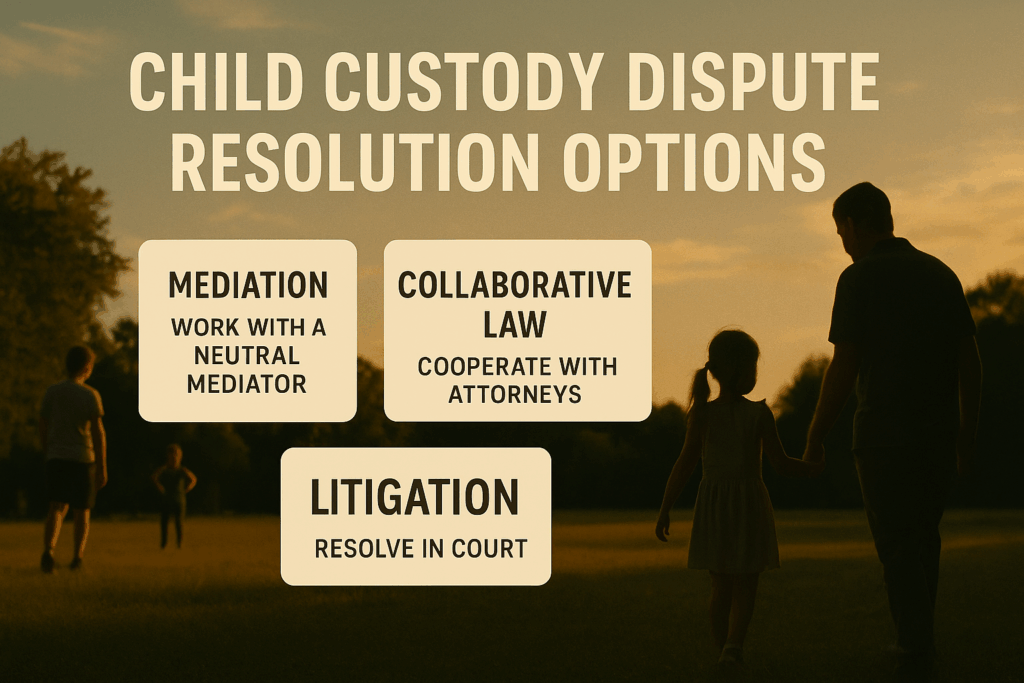
There are several Child Custody Dispute Resolution Options available to parents in Texas, each with its own approach to reaching a parenting agreement. Mediation and collaborative law offer more cooperative pathways, while litigation may be necessary when safety or communication issues are involved. According to our family law team, choosing the right resolution method can minimize stress, protect your child from conflict, and improve the likelihood of a stable co-parenting relationship.
Recent updates to the Texas Family Code, including §153.009, allow children aged 12 or older to express a preference in custody decisions. Judges also consider academic continuity, emotional support, and each parent’s ability to provide a safe and nurturing environment. At this stage, working with an experienced attorney can help ensure your parenting plan aligns with what the court is likely to view as being in the child’s best interest.
For more insight into how Texas courts approach custody enforcement and parental rights, explore our article on Strategies from Top Texas Attorneys for Custody Enforcement. Our legal professionals are committed to helping families make informed, empowered decisions—because custody isn’t just a legal matter; it’s a chance to shape your child’s future with care and clarity.
Emotional and Legal Challenges
Parents often face emotional turmoil, including guilt and confusion, as they navigate custody disputes. These emotionally charged situations are compounded by the legal complexities of determining legal and physical custody, which often involve family law cases that can escalate into court battles. As parents create their strategies, they must consider the best interests of their children, leading to a complete breakdown of communication at times.
Mental health, substance abuse, and traditional litigation further complicate the landscape, highlighting the need for parents to seek guidance from legal issues professionals.
Common Issues in Custody Disputes
Typical disagreements in custody disputes include:
- Parenting time schedules
- Decision-making authority regarding the child’s upbringing
- Custody type
- Visitation schedules
- The implications of one parent’s relocation
Relocation can disrupt child custody arrangements and requires careful legal consideration. Children with disabilities or special needs require tailored custody plans.
Acknowledge how disagreements about parenting time, decision-making authority, or relocation can quickly escalate—and why parents need structured, legally sound pathways for resolution in their parenting plan.
Mediation: A Collaborative Approach
As our attorneys frequently advise, mediation can be one of the most effective Child Custody Dispute Resolution Options for Texas families seeking to reduce conflict and protect their child’s well-being. In this approach, a neutral third-party mediator helps parents work through disagreements and craft a parenting plan without going to court. Rooted in cooperation and communication, mediation often promotes more respectful and productive co-parenting relationships, which Texas courts view favorably under the best interest of the child standard outlined in Texas Family Code §153.002.
The mediation process is especially valuable in cases where parents are willing to collaborate but need structure and legal guidance to reach agreement. According to our family law team, this method can result in faster resolutions, lower legal costs, and more child-centered outcomes. Mediation also allows parents to remain in control of decisions that would otherwise be left to a judge—decisions that affect where the child lives, how time is shared, and who makes educational and medical choices. For families interested in reducing emotional strain, mediation can be a meaningful path forward.
Recent updates to the Texas Family Code further emphasize the value of cooperative parenting, encouraging alternative dispute resolution before resorting to litigation. This makes mediation and collaborative law increasingly important for parents who want to prioritize peace and protect their children from the stress of court battles. If you’re interested in exploring peaceful alternatives to contested divorce and custody proceedings, our team recommends reading Collaborative Divorce: A Peaceful Alternative, which explains how collaborative law supports families during separation.
Our legal professionals have helped many clients understand when mediation is appropriate and how to make the most of it. If you’d like to know more about whether mediation is right for your case or how to prepare for it, visit our resource on Child Custody and Visitation to learn how we support families throughout every step of the custody process.

The Mediation Process
Mediation involves a neutral party helping parents reach agreements on child custody outside of court. Mediators facilitate open communication and, as the mediator explains, a mediator helps identify areas of agreement during mediation sessions.
This process involves techniques like active listening and avoiding antagonistic language to foster a more productive environment. Prioritizing the child’s needs during mediation helps create a more effective and positive outcome.
Benefits of Mediation
Mediation is typically more cost-effective and faster than litigation, enabling parents to create personalized custody arrangements through private mediation.
Clients appreciate mediators who maintain neutrality and focus on creating fair, amicable solutions during emotionally charged situations. This private environment reduces stress compared to adversarial court settings and often results in lower costs, highlighting the mediator’s role in the process.
When Mediation is Appropriate
Mediation is beneficial when both parents are willing to communicate and cooperate, making it a suitable option for many families. It is particularly effective for families willing to cooperate and communicate, making it suitable for many custodial situations.
Mediation focuses on the children’s well-being, facilitating co-parenting despite divorce’s emotional challenges. It’s advisable for parents with ongoing conflicts affecting their ability to co-parent.
Collaborative Law: Working Together with Legal Professionals
According to our family law team, collaborative law is one of the most constructive Child Custody Dispute Resolution Options available to Texas parents who want to avoid the emotional and financial toll of litigation. In this approach, each parent hires an attorney trained in the collaborative process, and together—with the help of neutral professionals such as financial advisors or child specialists—they work toward a resolution that reflects the unique needs of their family. Unlike court battles, the collaborative process is private, child-focused, and built on the principle that respectful negotiation often leads to more durable and peaceful outcomes.
The Texas Family Code recognizes collaborative law as a valid alternative dispute resolution method under §153.0072, and recent legislative updates continue to support solutions that minimize adversarial proceedings, especially when children are involved. As we’ve seen in our work with Texas families, this process can be particularly beneficial in high-stakes custody matters where preserving co-parenting relationships and minimizing disruption for children are top priorities. The process fosters honest communication, encourages transparency, and allows parents to remain in control of their parenting decisions—something courts are increasingly supportive of, provided it aligns with the best interest of the child standard in §153.002.
When parents choose collaborative law, they’re not only reducing stress and legal costs—they’re also creating a structured pathway toward long-term co-parenting success. Our legal professionals have helped many clients understand how the collaborative model can open the door to creative custody solutions that reflect their child’s emotional, educational, and physical needs. To better understand how this process compares to other legal routes, we encourage you to explore Why Go with the Collaborative Process in a Texas Divorce? for deeper insight.
If you’re considering the collaborative approach but aren’t sure whether it fits your situation, we invite you to read our Child Custody FAQs or schedule a consultation with one of our experienced attorneys. The right resolution method can protect your child’s well-being and help you move forward with clarity and confidence—and we’re here to guide you every step of the way.

How Collaborative Law Works
As our attorneys frequently advise, one of the most impactful Child Custody Dispute Resolution Options for Texas families is collaborative law—a process built on transparency, trust, and mutual respect. What sets collaborative law apart is its structure: both parents agree in writing that their attorneys cannot represent them in court if the process breaks down. This agreement reinforces everyone’s commitment to resolving disputes amicably, rather than through costly and adversarial litigation. Guided by legal counsel and often supported by neutral experts like child specialists or mental health professionals, parents work together to develop a custody plan that reflects the needs of their children and aligns with their family’s unique dynamics.
Under Texas Family Code §153.0072, collaborative law is recognized as a legally valid method for resolving custody and parenting issues, and recent updates to the Code further encourage non-litigious solutions that preserve family relationships. As we’ve seen in our work with Texas families, this method fosters a healthier environment for both parents and children by encouraging long-term cooperation, reducing emotional strain, and keeping decision-making power in the hands of the parents rather than a judge. The collaborative process allows families to craft creative and flexible parenting arrangements that serve the best interest of the child, consistent with the guiding principle set forth in Texas Family Code §153.002.
Our legal professionals have helped many clients understand when collaborative law makes the most sense—especially in cases where preserving co-parenting dynamics is critical for the child’s emotional and educational stability. For a deeper dive into whether collaborative divorce mediation may be right for your situation, explore Choosing Collaborative Divorce Mediation in Texas: Key Insights to learn how this process balances legal strategy with family-centered goals.
If you’re unsure whether collaborative law fits your custody situation, we invite you to explore our Child Custody Services Overview or speak directly with one of our experienced attorneys. At The Law Office of Bryan Fagan, PLLC, we’re committed to protecting futures and guiding families through their most challenging transitions with clarity, compassion, and trusted legal insight.
Advantages of Collaborative Law
According to our family law team, collaborative law stands out as one of the most valuable Child Custody Dispute Resolution Options for parents who want to resolve conflict without destroying co-parenting relationships in the process. Unlike traditional litigation, collaborative law prioritizes open communication and respectful negotiation, empowering both parents to work through differences with the support of trained professionals. This approach not only reduces emotional strain but also helps families avoid the high costs—both financial and emotional—of a courtroom battle.
Under Texas Family Code §153.0072, collaborative law is formally recognized as a valid legal method for settling custody disputes outside of court. The process results in legally binding agreements that clearly outline parenting responsibilities, visitation schedules, and decision-making authority. As we’ve seen in our work with Texas families, the ability for parents to maintain control over the outcome—rather than having a judge impose decisions—creates more lasting, child-centered solutions. The latest updates to the Texas Family Code continue to support dispute resolution methods that prioritize cooperation and protect the emotional well-being of the child, in alignment with the best interest of the child standard in §153.002.
One of the greatest advantages of the collaborative process is the speed and flexibility it offers. Our legal professionals have helped many clients navigate collaborative law to reach thoughtful, personalized agreements without the delays often associated with litigation. This approach also encourages mutual accountability, as parents work together to create solutions that serve both their child’s current needs and long-term development. For a closer look at how attorneys support clients in this process, read The Roles of a Collaborative Divorce Lawyer to understand how strategic guidance and emotional insight go hand in hand.
If you’re exploring the right path for your custody case, we encourage you to visit our Child Custody Resource Center for answers to common questions and guidance on what to expect. At The Law Office of Bryan Fagan, PLLC, we remain committed to helping parents find clarity, security, and peace of mind—because every child deserves a future shaped by stability and care, not conflict.
Ideal Situations for Collaborative Law
As our attorneys frequently advise, collaborative law is one of the most practical and relationship-focused Child Custody Dispute Resolution Options available to Texas parents. This process is designed for families who want to preserve civility and protect their child’s emotional well-being during what can otherwise be an overwhelming experience. Collaborative law works best when both parents are committed to open, honest communication and are willing to prioritize cooperation over courtroom confrontation. For parents looking to build or maintain a strong co-parenting dynamic, this approach offers the flexibility and privacy to reach thoughtful, customized agreements outside of litigation.
The Texas Family Code §153.0072 explicitly authorizes collaborative law as a recognized legal path for resolving custody matters, reinforcing the state’s support for non-adversarial conflict resolution. Recent updates to the Code continue to promote parenting models that minimize disruption and uphold the best interest of the child as defined in Texas Family Code §153.002. As we’ve seen in our work with Texas families, collaborative law often results in healthier communication, quicker resolutions, and parenting agreements that better reflect the day-to-day realities of shared custody. It allows parents to address sensitive issues—such as school choice, holiday scheduling, and medical decisions—in a way that supports mutual respect and long-term family stability.
Our legal professionals have helped many clients understand when collaborative law is the right fit for their situation. For those who value privacy and control, the process eliminates the stress of courtroom testimony and judicial rulings, replacing them with meaningful dialogue and professional support. If you’re curious about the full benefits and structure of the collaborative process, we recommend reading What Is Collaborative Divorce? to see how this method can transform conflict into cooperation.
To learn more about your custody options or whether collaborative law fits your family’s needs, visit our Child Custody Legal Guide. At The Law Office of Bryan Fagan, PLLC, we’re here to help you protect what matters most—your children, your peace of mind, and your future.
Court Litigation: When Judges Decide
As we’ve seen in our work with Texas families, litigation often becomes the necessary path when other Child Custody Dispute Resolution Options fail to produce a workable agreement. In these cases, the matter is brought before a judge who evaluates evidence, hears testimony, and ultimately makes a binding decision based on what the court deems is in the best interest of the child, as outlined in Texas Family Code §153.002. While litigation may feel intimidating, it serves a vital role in high-conflict situations where cooperation has broken down or one parent refuses to engage in good faith.
Texas courts consider a variety of factors when determining custody, including the child’s physical and emotional needs, each parent’s ability to care for the child, history of involvement, and, when appropriate, the child’s own wishes—especially for children age 12 or older under Texas Family Code §153.009. Recent updates to the Code also encourage early judicial intervention in cases involving safety concerns, parental alienation, or repeated violations of existing custody orders. According to our family law team, presenting a clear and well-documented case—backed by school records, medical information, and consistent communication logs—can significantly influence the court’s decision.
Our legal professionals have helped many clients understand how to prepare for custody litigation while minimizing emotional harm to children. While it’s always ideal to resolve disputes through less adversarial means, litigation remains a critical tool for protecting parental rights and ensuring a safe, stable environment for children. For families navigating court-ordered custody enforcement or struggling with non-compliance, we encourage you to read Texas Custody Agreement Enforcement: Legal Insights Revealed to better understand the process and your rights.
If you’re preparing for a custody hearing or seeking to enforce an existing order, visit our Enforcement and Modifications page for guidance. At The Law Office of Bryan Fagan, PLLC, we’re here to offer clarity, protection, and confidence through every stage of your custody journey.

The Litigation Process
As our attorneys frequently advise, while litigation is sometimes necessary in high-conflict custody matters, it is often the most complex and financially demanding of the available Child Custody Dispute Resolution Options. In Texas, the litigation process typically begins with the filing of a Suit Affecting the Parent-Child Relationship (SAPCR), followed by pre-trial motions, status conferences, and ultimately a trial where both parents present evidence and testimony. At each stage, the court carefully examines what will serve the best interest of the child, as required by Texas Family Code §153.002.
During a contested custody case, parents must be prepared to submit thorough documentation—such as communication logs, school reports, and parenting time records—to support their role in the child’s life. The court also considers any relevant concerns related to the child’s safety, emotional well-being, or parental conduct. With the most recent updates to the Texas Family Code, judges are increasingly attentive to patterns of behavior that reflect a parent’s willingness to foster a positive co-parenting environment, maintain educational continuity, and meet the child’s daily needs. In some cases, child preferences (if the child is 12 or older) may be considered under Texas Family Code §153.009.
One of the main drawbacks of custody litigation is the potential for escalating legal fees and prolonged court involvement. However, for situations involving substance abuse, domestic violence, or total communication breakdowns, court intervention may be the only viable path. Our legal professionals have helped many clients understand how to prepare for each phase of litigation while minimizing emotional strain and financial impact.
If you believe litigation may be necessary in your case—or you want to better understand your alternatives—we invite you to explore our Texas Child Custody Attorney page for guidance. You can also visit our Enforcement and Modifications resource to learn more about how the court handles ongoing disputes and non-compliance. At The Law Office of Bryan Fagan, PLLC, we’re committed to helping you make informed, confident decisions to protect your rights and your child’s future.
Pros and Cons of Litigation
Parents may experience significant emotional strain while navigating the legal challenges of custody arrangements, especially when disagreements arise. Allegations of domestic violence can significantly impact custody decisions, with courts prioritizing child safety in such cases.
One major advantage of litigation is the ability to appeal a judge’s decision if one party disagrees with the outcome.
Situations Necessitating Litigation
Domestic violence allegations complicate custody cases, with courts prioritizing the child’s safety. Litigation may be essential in such cases or when communication breakdowns prevent amicable resolutions.
In situations involving domestic violence or unwillingness to collaborate, mediation may not be a suitable resolution method.
Parenting Coordination and Facilitation
Parenting Coordination or Facilitation involves experts who help reduce conflict and improve communication between parents, promoting a more stable environment for children.
Parenting coordinators facilitate better communication between parents to help resolve disputes amicably.
Role of Parenting Coordinators
Parenting coordinators facilitate better communication between parents during custody disputes and help identify disputed issues.
By facilitating these discussions, parenting coordinators help improve the overall dynamics of co-parenting.
Benefits of Parenting Coordination
A key benefit of parenting coordination is providing tailored conflict resolution strategies for each family’s unique dynamics. Prioritizing children’s needs promotes their emotional well-being and stability.
Parenting coordination focuses on reducing conflict and improving communication between parents in custody disputes.
When to Consider Parenting Coordination
A parenting coordinator primarily assists parents in making timely decisions about their children’s needs and can sometimes have the authority to make decisions when parents cannot agree. In high-conflict scenarios, a parenting coordinator acts as a neutral third party to help parents navigate decisions without escalating conflict.
For ongoing post-divorce issues, parenting coordinators provide structured support to facilitate communication and resolution.
Practical Tips for Parents Entering Custody Disputes
As our attorneys frequently advise, preparation is one of the most powerful tools a parent can use when facing custody challenges. Among the many Child Custody Dispute Resolution Options available under Texas law, your ability to document, communicate, and organize plays a crucial role—whether you’re pursuing mediation, collaborative law, or preparing for litigation. Texas courts make custody decisions based on the best interest of the child, as defined in Texas Family Code §153.002, which means that clear evidence of your involvement, reliability, and parenting strengths can significantly influence the outcome.
The latest updates to the Texas Family Code continue to emphasize parental cooperation and active engagement in a child’s daily life, including education, healthcare, and emotional development. As we’ve seen in our work with Texas families, courts often review how well each parent communicates and whether they demonstrate a willingness to support the child’s relationship with the other parent. Keeping detailed records—such as parenting time logs, school involvement, and respectful co-parenting messages—can help create a strong narrative that reflects your commitment to your child’s stability and growth.
Practical strategies like using co-parenting apps, maintaining consistent routines across households, and staying proactive with teachers and caregivers can ease day-to-day tension and build trust—both with the court and with your co-parent. Our legal professionals have helped many clients understand that even small efforts, like attending parent-teacher conferences or documenting positive parenting moments, can support a more favorable outcome.
If you’re navigating custody concerns and want to learn more about your legal options, we encourage you to explore our Texas Child Custody Attorney resource. For additional support, visit our Child Custody Services page. At The Law Office of Bryan Fagan, PLLC, we’re here to guide you with empathy, clarity, and the legal insight your family deserves.

Maintain Respectful Communication
Using neutral language and sticking to practical discussions can help avoid conflicts during communication with the other parent. Using inclusive language, such as ‘our children,’ can promote a collaborative co-parenting environment.
Maintaining respectful interactions between parents can foster a more constructive environment during custody discussions.
Document Parenting Efforts
Keeping a parenting time calendar helps track specific details about child exchanges, minimizing confusion for both parents. Well-documented evidence can significantly support parents in custody disputes by providing a clear narrative of their involvement with the child.
Stay Child-Focused
Prioritizing the child’s needs over personal disagreements is crucial in custody discussions. All decisions should prioritize the child’s welfare and stability, which helps create a more constructive environment for resolving disputes in the child’s life.
Emphasizing the child’s well-being can lead to more amicable resolutions and foster a healthier co-parenting relationship.
Consult Legal Counsel
Consulting legal counsel ensures parents’ rights are protected and decisions are informed. A legal professional offers customized strategies tailored to each family’s circumstances, fostering more effective custody arrangements.
It is crucial for parents to communicate openly with their legal counsel and document all relevant information, which can aid in developing a stronger case.
Real-Life Examples and Testimonials
Real-life examples and client testimonials show how the Law Office of Bryan Fagan PLLC has helped Texas families achieve peaceful, legally sound custody outcomes, even in high-conflict scenarios.
These stories provide valuable insights into the practical application of the various alternative dispute resolution methods and other forms discussed.
Case Studies
Case studies show how parents can navigate custody disputes effectively, leading to amicable resolutions. Through collaborative mediation and open communication, parents reached custody arrangements honoring both parties’ needs. Clients expressed gratitude for the guidance they received, noting it made a significant difference in achieving a harmonious agreement.
These real-life examples demonstrate that with the right approach, it is possible to achieve peaceful custody outcomes that prioritize the best interests of children.
Client Testimonials
Client testimonials offer real-life examples of successful outcomes achieved through the Law Office of Bryan Fagan PLLC. A case study highlighted a parent who used customized legal strategies to secure a favorable custody arrangement, resulting in a smoother transition for the child.
The firm’s commitment to customized legal strategies has helped clients maintain healthy co-parenting relationships and reduce conflict. These tailored approaches not only address immediate legal concerns but also promote long-term stability for families navigating custody disputes.
How the Law Office of Bryan Fagan PLLC Can Help
The Law Office of Bryan Fagan PLLC is dedicated to helping clients evaluate their child custody dispute resolution options. Attorneys guide clients in choosing the most effective path tailored to their individual circumstances.
Customized Legal Strategies
The Law Office of Bryan Fagan emphasizes personalized legal strategies that nurture the parent-child relationship during custody disputes, fostering positive co-parenting arrangements that prioritize children’s emotional needs.
These strategies are designed to protect the parent-child bond and support long-term family stability.
Supporting Long-Term Family Stability
The Law Office of Bryan Fagan, PLLC focuses on effective dispute resolution that contributes to enduring family stability and reduces recurring legal conflicts. Using tailored techniques, the law firm helps families achieve lasting stability by addressing core issues between parents.
Utilizing tailored dispute resolution techniques, the firm helps families achieve lasting stability by addressing the core issues between parents.
Conclusion:
Custody disputes aren’t just legal issues—they’re deeply personal turning points for families. Whether you’re navigating tense conversations, shifting routines, or trying to give your child the most stable life possible, knowing your child custody dispute resolution options can make all the difference. The good news? You don’t have to figure it out alone.
At The Law Office of Bryan Fagan, PLLC, we understand that co-parenting doesn’t come with a manual—but with the right plan, the right guidance, and a little compassion, it can absolutely come with peace of mind. We’re here to help you choose the legal path that protects your rights, supports your child’s future, and gives your family the best chance to move forward with stability and respect.
If you’re feeling overwhelmed, that’s okay. This stuff is hard. But it’s also manageable—and we’ve walked this road with hundreds of Texas parents just like you. So whether you’re considering mediation, collaborative law, or need a strong courtroom advocate, reach out. We’re ready when you are.
And hey—if you’ve just spent the last 15 minutes reading this while hiding in the laundry room with a cup of cold coffee? You’re doing great. Let’s take the next step together.
What looks bad in a custody case?
Behaviors like violating court orders, interfering with visitation, making false accusations, or demonstrating instability (such as erratic housing or employment) can significantly harm your credibility and weaken your position in a custody case.
Who usually wins in a custody battle?
Texas courts prioritize the child’s best interest over either parent’s preferences. The outcome depends on factors like each parent’s ability to provide a stable environment, the child’s needs, and each parent’s involvement—so there’s no automatic “winner.”
What is the biggest mistake in custody battle?
The biggest mistake is putting personal conflict with the other parent above the child’s well-being. Hostile communication, refusal to cooperate, or ignoring the court’s instructions can severely impact your credibility and case outcome.
How to be a good witness in a child custody case?
Be honest, calm, and focused on your child’s best interests. Avoid attacking the other parent. Stick to facts, provide examples, and answer questions clearly. Preparation with your attorney beforehand is key.
What should I not say in a custody case?
Avoid making threats, lying, badmouthing the other parent, or admitting to behaviors that suggest instability or irresponsibility. Anything that shifts focus away from the child’s well-being can hurt your case.
Yes. Posts that show partying, substance use, aggression, or inappropriate behavior can be used against you. Even innocent posts can be misinterpreted, so it’s best to limit social media use during a custody case.
What states favor mothers in custody?
While some states historically favored mothers, modern custody laws in Texas and most states are gender-neutral. Courts evaluate parenting abilities, involvement, and the child’s needs—not gender—when determining custody.
What to say in court to win child custody?
Focus on your child’s needs and well-being. Share specific ways you support them emotionally, educationally, and financially. Express willingness to co-parent and provide a stable home life. Let your actions and commitment speak for you.
What percentage of child custody cases go to trial?
Most child custody cases—roughly 90%—are resolved through negotiation, mediation, or settlement. Only about 10% go to trial, often due to high conflict or inability to agree on key parenting issues.