
Ever feel like life hands you orders faster than you can follow them? Between deployments, relocations, and unpredictable pay, the process of Calculating Texas Child Support with Military Pay can feel like trying to balance two worlds—military life and family law. One day you’re managing your duty schedule, and the next, you’re trying to divide time and financial responsibility after a divorce. For many Texas service members and their families, that’s more than just a legal task—it’s about restoring stability when everything familiar feels like it’s shifting beneath your feet.
Under Texas Family Code §154.062, every source of military income—base pay, housing allowances, and special pays—must be considered when determining child support. But military life is rarely static. Deployment bonuses, duty reassignments, or the cost of maintaining two households can turn what should be a simple calculation into a complex equation. Without informed legal guidance, these shifts can easily lead to confusion, unfair results, or even conflict.
At The Law Office of Bryan Fagan, PLLC, a Houston-based family law firm led by Bryan Joseph Fagan, a South Texas College of Law graduate and recognized authority on Texas divorce and custody law, we understand that these aren’t just numbers—they’re the foundation of your family’s financial future. Our mission is to help military parents navigate these challenges through compassionate counsel, clear education, and innovative legal solutions that simplify even the most complicated child support matters.
In this guide, we’ll walk you through how Texas calculates child support for military families, how your service-related income impacts the process, and what steps you can take to protect your rights and your family’s stability. Because at our firm, protecting what matters most—your peace, your future, and your family—isn’t just our profession. It’s our purpose.
Key Takeaways
- Texas child support calculations for military members include all forms of military pay and require accurate income documentation to reflect true financial situations.
- Different statuses of military service—active duty, reserve, or retired—affect child support calculations due to fluctuations in income and benefits, necessitating thorough documentation.
- Legal representation is crucial for accurate child support calculations in military cases, helping to navigate complexities in military pay and ensuring compliance with Texas laws.

Your Family’s Future Starts Here
Don’t navigate your legal journey alone. Schedule a consultation now and get the clarity and support you deserve.
Understanding Texas Child Support Laws for Military Members
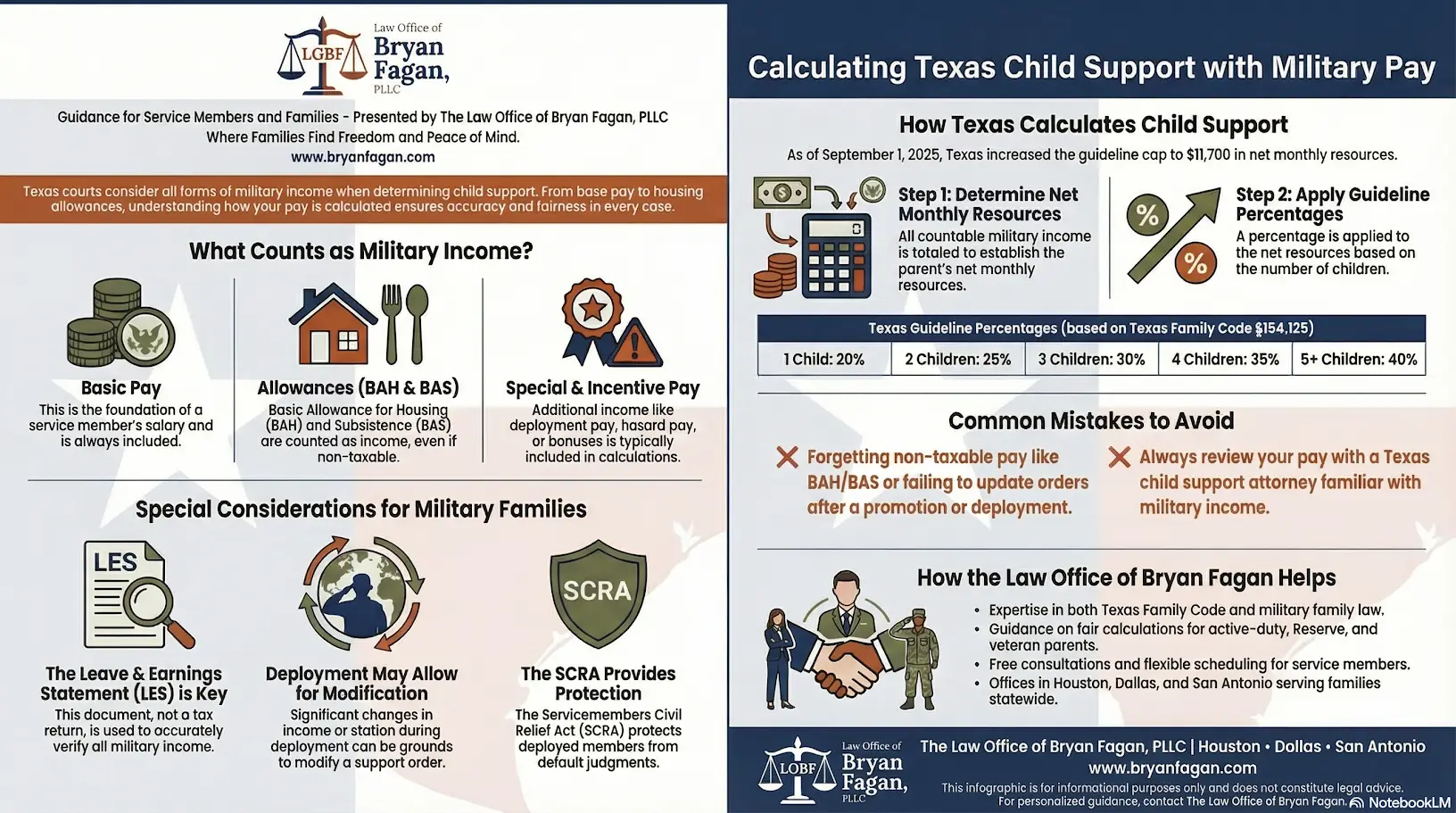
Texas courts recognize that military families face unique financial circumstances, which is why understanding Calculating Texas Child Support with Military Pay is essential for parents who serve or have served. Under Texas Family Code §154.062, all sources of income—whether taxable or nontaxable—must be considered when determining child support obligations. This includes base pay, bonuses, special pay, and allowances such as the Basic Allowance for Housing (BAH). Accurate documentation of military income ensures that both parents’ contributions are calculated fairly and reflect the true financial resources available for the child’s care and stability.
Since the 2025 update to Texas Family Code §154.125(a-1) increased the cap on net monthly resources to $11,700, this adjustment directly impacts how support amounts are calculated for higher-earning service members. Active-duty, reserve, and retired personnel must ensure their income records—including Leave and Earnings Statements (LES), deployment pay, and housing benefits—are complete and up to date. Omitting these details can lead to incorrect calculations, potential enforcement issues, or unfair financial burdens.
At The Law Office of Bryan Fagan, PLLC, we’ve helped countless Texas military families navigate the intersection of family law and service obligations with clarity and confidence. Our attorneys understand that military pay structures are complex and that accuracy is key to protecting your child’s best interests while ensuring compliance with Texas law. For more insight into how housing allowances affect military family finances, explore our in-depth Texas Child Support Resource to learn how proper documentation and legal guidance can simplify the process and safeguard your family’s future.

Active-Duty Service Members
For active-duty service members, child support calculations account for deployment status and temporary assignments, which can affect income. These fluctuations necessitate accurate representation of all income components, as tax returns alone may not capture untaxed components.
Given the variable nature of military income, active-duty personnel should provide comprehensive financial documentation. This ensures calculations reflect true earning capacity, including all allowances and benefits.
Reserve and National Guard Members
Child support for reserve and National Guard members can fluctuate during activation periods, impacting overall income for those employed. These income changes must be accurately documented for fair assessments.
Income variability for reserve members requires careful consideration of activation status. Accurate documentation during these periods is crucial to avoid discrepancies in child support obligations, especially when involved in child support cases.
Retired Military Members
Retirement pay for retired military personnel is included in child support calculations and can significantly influence payment amounts. These benefits are considered income when determining obligations.
Understanding the impact of retirement benefits on child support obligations ensures calculations accurately reflect the financial situation, providing fair outcomes.
Defining Income Under the Texas Family Code
Texas child support calculations consider net income from all sources, not just wages. This includes salary, bonuses, and other compensations, with some exceptions. For military members, this can involve various forms of pay, including base salary and allowances.
Accurate income representation is key to determining fair child support obligations. The subsections below detail primary income components, including base salary, allowances, and special pay, to provide a comprehensive understanding under Texas law.

Base Salary
Base salary is the primary component of a parent’s income for child support calculations, including considerations for the other parent. Accurate identification ensures calculations reflect true income.
The Leave and Earnings Statement (LES) provides detailed information about base pay and other earnings and should be used to determine a service member’s income.
Allowances and Benefits
Non-taxable allowances for housing and meals are considered income in child support assessments. In-kind benefits like food or housing allowances can significantly affect calculations and should not be overlooked. Calculations should exclude nonrecurring benefits and untaxed income to avoid inflation.
Allowances for food and housing, even if untaxable, must be considered in child support calculations. Proper accounting ensures payments reflect the true financial situation.
Special and Incentive Pay
Bonuses and special pay can significantly influence total income for child support calculations. Variable income from these sources must be included, as they can greatly affect total earnings.
A common error in child support calculations is overlooking bonuses or special pay that might not be regularly received. Including these ensures accurate and fair assessments.
Calculating Child Support with Military Pay
Understanding Calculating Texas Child Support with Military Pay requires careful attention to how Texas law treats various forms of military income. According to Texas Family Code §154.062, all sources of a parent’s earnings—including base pay, special pay, housing allowances, and in-kind compensation—must be included when determining net resources for child support. This means that both taxable and non-taxable income, such as a Basic Allowance for Housing (BAH), play a key role in establishing accurate support amounts.
Recent updates to Texas Family Code §154.125(a-1) increased the child support cap on net monthly resources to $11,700, a change that directly affects many service members. To ensure fairness and compliance, each parent’s income must be verified using official documentation like the Leave and Earnings Statement (LES), along with any deployment-related or incentive pay. These records help courts understand the full financial picture and prevent underestimation or overpayment of child support.
At this stage, working with an experienced Texas family law attorney can make a significant difference. The attorneys at The Law Office of Bryan Fagan, PLLC help military families interpret their LES reports, identify qualifying pay elements, and apply Texas guidelines correctly. While military Legal Assistance Offices provide general information, our firm delivers the tailored representation needed to align your child support case with state and federal law.
To learn more about how Texas courts handle military income, explore our comprehensive Texas Child Support Resource, which offers practical guidance for service members and their families navigating child support, custody, and financial planning.

Using the Leave and Earnings Statement (LES)
The Leave and Earnings Statement (LES) is crucial for determining a service member’s income as it reflects their base salary and various allowances. It includes details such as:
- Base pay
- Housing allowances
- Subsistence allowances
- Special pays.
When calculating child support, combine LES information with the Military Pay Chart for a comprehensive view of a service member’s financial situation. Regularly review the LES, as pay changes can impact obligations.
Accounting for Variable Income
Service members can receive annual bonuses up to $75,000 for extending active duty. BAH can significantly change child support numbers, making it essential in calculations.
Consider all forms of military compensation, including special pays and allowances, for fair support calculations. Understanding variable income is crucial in military divorce cases, as it helps to determine the overall value of the compensation.
Considering In-Kind Compensation
In-kind compensations for military members generally include Basic Allowance for Subsistence (BAS) and Basic Allowance for Housing (BAH). These benefits must be included in financial affidavits and child support calculations as part of the agreement.
Incentive and special pays can also affect child support calculations for military members.
Legal Representation and Accuracy in Child Support Calculations
Legal representation is often the key to ensuring fairness and accuracy when Calculating Texas Child Support with Military Pay. Because military income involves multiple forms of compensation—base pay, allowances, bonuses, and entitlements—accurate legal guidance is essential to make sure that every factor is properly accounted for under Texas Family Code §154.062, which defines what constitutes a parent’s “net resources.”
Military child support cases also require attention to detail when reviewing documentation such as Leave and Earnings Statements (LES), deployment orders, and housing or subsistence allowances. These elements can significantly affect the total amount of support owed or received. The 2025 update to Texas Family Code §154.125(a-1), which raised the guideline cap on net monthly resources to $11,700, underscores the importance of precise calculations—particularly for higher-earning service members and retirees.
At this stage, working with a knowledgeable attorney can make all the difference. The legal team at The Law Office of Bryan Fagan, PLLC understands how to interpret complex military compensation structures, identify common errors, and ensure compliance with both state and federal regulations. Their compassionate, detail-oriented approach helps families reach outcomes that are equitable and sustainable, allowing parents to focus on what truly matters—the well-being of their children.
For deeper insight into the specific allowances, entitlements, and procedures used in these cases, explore our in-depth guide, Child Support, Military Entitlements, and Calculations. You can also visit our Texas Child Support Resource for practical tools and information that empower military families to navigate the child support process with confidence and clarity.

Role of a Military Family Law Attorney
Military family law attorneys offer specialized knowledge on the intricacies of military pay affecting child support. They address unique challenges, including navigating military regulations and benefits.
Engaging a legal expert in military family law provides tailored advice for your specific child support situation as a person. This expertise ensures both parties’ rights and obligations are clearly defined, leading to fair outcomes. If you need assistance, please feel free to contact us.
Ensuring Accurate Calculations
Accurate representation of military pay is crucial for fair child support calculated. Exclude nonrecurring or untaxed benefits to avoid inflated calculations of paid support.
Spouse should provide relevant financial documents, including tax returns and earning statements, to support calculations. Gathering essential documentation ensures all aspects of military pay are considered.
Common Mistakes to Avoid
Excluding sources of income can lead to significant discrepancies in child support obligations. Accurate income reporting is crucial for fair obligations. Omitting additional income may result in overpayment or underpayment, causing legal complications.
Preparing for Child Support Calculations
Life in the military can change quickly—deployments, new assignments, or shifts in pay can all impact financial obligations, including child support. That’s why understanding Calculating Texas Child Support with Military Pay is so important for service members and their families. Under Texas Family Code §156.401, significant changes in circumstances—such as income adjustments, deployment status, or changes in dependents—can justify a modification of an existing child support order.
Accurate preparation is essential when seeking a review or modification. Parents should gather updated Leave and Earnings Statements (LES), pay differentials, and any documentation showing new or discontinued allowances. These records provide the evidence courts rely on to make fair adjustments in line with Texas Family Code §154.062, which outlines how net resources—including base pay, housing, and other entitlements—are used to determine child support. With the 2025 update raising the child support cap on net resources to $11,700, keeping your financial information current ensures calculations remain fair and lawful.
At The Law Office of Bryan Fagan, PLLC, our attorneys understand how military income fluctuations affect child support obligations. Whether you’re stationed in Texas or deployed overseas, our team helps you navigate modifications smoothly and ensures your orders comply with Texas law while supporting your family’s stability.
To learn more about how Basic Allowance for Housing (BAH) affects your support obligations, visit our article, Can I Get BAH if I Pay Child Support?. You can also explore our Texas Child Support Resource for additional guidance on maintaining compliance, protecting your rights, and ensuring your child’s needs are met no matter where duty takes you.

Essential Documents
Spouses must gather and present complete financial documents for child support assessments. Key documents include tax returns, financial statements, and the Leave and Earnings Statement (LES).
Proper documentation, such as military orders and pay stubs, is crucial for accurate calculations. Collecting all necessary money documents aids in a smoother process.
Reviewing Pay Changes
Income fluctuations for military members are common and must be documented for accurate assessments. Regularly reviewing and updating pay information ensures obligations remain fair and reflective of the current situation.
Consulting an Attorney
When it comes to Calculating Texas Child Support with Military Pay, every detail matters. Military families face unique financial structures—base pay, housing allowances, and special duty pay—that must be properly accounted for under Texas Family Code §154.062, which defines “net resources” for child support purposes. With the 2025 update to §154.125(a-1) raising the cap on net monthly resources to $11,700, accuracy in reporting and interpreting income has never been more important.
Consulting an experienced military family law attorney is essential to navigating these complexities. The attorneys at The Law Office of Bryan Fagan, PLLC provide personalized guidance for service members and their families, ensuring all forms of military compensation are correctly calculated, and that court orders comply with both Texas law and federal regulations. From interpreting Leave and Earnings Statements (LES) to understanding Basic Allowance for Housing (BAH) implications, their team brings both legal precision and compassionate support to every case.
Accurate legal advice helps prevent underpayment or overpayment of support while protecting your rights and your child’s financial stability. For comprehensive information about Texas child support laws and how they apply to military families, visit Texas Child Support Resource. You can also explore the firm’s Texas Family Law Library for more guidance on child custody, military divorce, and family financial planning in Texas.
Enforcement of Child Support Orders
Military parents have a legal and moral duty to provide for their children—whether stationed in Texas or deployed overseas. When it comes to Calculating Texas Child Support with Military Pay, Texas courts take into account all income sources outlined in Texas Family Code §154.062, including base pay, housing allowances, and special duty pay. These comprehensive guidelines ensure that service members’ financial responsibilities are accurately reflected, regardless of where they are serving.
Child support payments for active-duty or retired service members are typically enforced through the Defense Finance and Accounting Service (DFAS), which can automatically deduct support from military pay once an order is in place. This system ensures consistency and compliance with Texas court orders. If a parent fails to make timely payments, enforcement actions—such as wage garnishment, license suspension, or contempt proceedings—may follow under Texas Family Code §157.001.
At The Law Office of Bryan Fagan, PLLC, our legal team understands the intersection of state and federal laws governing military family obligations. We help service members and spouses navigate enforcement and modification proceedings while maintaining compliance with both Texas law and military regulations. Whether you’re seeking to establish, modify, or enforce support, we guide you through every step with clarity and compassion.
To better understand the unique aspects of service-related divorce and family obligations, explore our article Military Divorce Laws in Texas for an in-depth overview of how Texas law protects both service members and their families. You can also visit our Texas Child Support Resource for practical insights into compliance, DFAS procedures, and how recent updates to the Texas Family Code—such as the 2025 increase in the net resource cap to $11,700—may impact your child support case.
Automatic Payroll Deductions
Automatic payroll deductions for child support can be set up through the Defense Finance and Accounting Service (DFAS), which processes child support directly from military pay.
Service members can opt-in for automatic deductions from their pay for child support via DFAS. Attorneys can assist in enforcing payments through military channels to ensure consistency.
Consequences of Non-Payment
Failing to pay child support can lead to legal repercussions, including disciplinary action from a commanding officer regarding the job. Non-compliance can result in wage garnishment and military disciplinary actions.
Service members must adhere to child support court order to avoid legal and military repercussions. A service member who fails to comply may face serious consequences.
Modifying Child Support Orders
It is important to reassess child support obligations following significant changes in income or employment status. If a parent’s financial situation changes significantly, they can request a modification of their child support order through the court. This ensures that child support payments remain fair and reflective of the current financial situation of the paying parent.
Modifying child support orders involves providing evidence of the change in circumstances and submitting a request to the court. Consulting an attorney can help navigate this process and ensure that the modification is handled correctly and efficiently.
Conclusion:
Life doesn’t come with a manual—especially when it comes to navigating divorce, military life, and child support in Texas. But having the right guidance can make all the difference between feeling overwhelmed and feeling in control. Understanding how Texas calculates child support with military pay isn’t just about numbers; it’s about creating fairness, stability, and peace of mind for everyone involved.
At The Law Office of Bryan Fagan, PLLC, we know that behind every legal question is a real family trying to find balance. Whether you’re stationed across the world or rebuilding your life here in Houston, you deserve clear answers and compassionate support. Our team has helped countless Texas parents—military and civilian alike—untangle complex legal issues while keeping their families’ best interests at heart.
If you’re facing child support or custody challenges, take this as your reminder that you don’t have to face them alone. Reach out for a consultation, ask your questions, and let us help you find a way forward that protects your family’s future. Because when it comes to what matters most—your peace, your children, and your sense of stability—you deserve a legal team that treats them like their own.
And if you take nothing else from today, remember this: even in the toughest transitions, you have the power to rebuild your next chapter—with the right support by your side.
Frequently Asked Questions
Yes. Texas courts generally include VA benefits—such as disability compensation—as part of a parent’s “net resources” when setting child support. While certain federal protections affect how those funds can be withheld, the benefits are still considered income when calculating support. If your benefits are complex or combined with retired pay, it’s best to consult a Texas family law attorney for proper guidance.
Texas applies the same formula to military and civilian parents. The court calculates a service member’s net resources, which typically include base pay, Basic Allowance for Housing (BAH), Basic Allowance for Subsistence (BAS), and any special or incentive pay. Guideline percentages are then applied based on the number of children, up to the statutory income cap.
There isn’t a separate formula for military personnel. Texas uses the same statutory guidelines for everyone. The actual amount depends on total military income, the number of children, and any adjustments the court makes to reflect the child’s best interest.
If your child enlists on active duty, that generally counts as emancipation under Texas law. This means your obligation to pay child support may end—but it doesn’t stop automatically. You’ll need to obtain a court order terminating the obligation to prevent overpayment or arrears.
The most common mistake is letting conflict take priority over your child’s needs. Courts focus on the child’s best interest, so showing cooperation, respect, and consistency goes a long way. Ignoring court orders, speaking negatively about the other parent, or refusing to co-parent can damage your credibility.
Yes. Basic Allowance for Housing (BAH) is considered part of a service member’s income when determining child support. Because BAH varies depending on location, rank, and family status, courts rely on current Leave and Earnings Statements (LES) for accuracy.
Possibly, but not automatically. Under the Uniformed Services Former Spouses’ Protection Act (USFSPA), Texas courts can divide the portion of military retirement earned during the marriage. The percentage depends on the specifics of your case and divorce decree. Child support and property division are treated separately.
Yes. Texas courts can award 50/50 custody (joint managing conservatorship) when it serves the child’s best interest. For military parents, orders often include special provisions for deployments or relocations to preserve stability and allow for make-up parenting time.