 Skip to content
Divorce rarely feels abstract when you are the one living it. It feels like the mortgage statement on the counter, the kids' school calendar on the fridge, and a conversation you've been avoiding because you know it has to happen sooner or later.
If you are stuck between calling a mediator or hiring a lawyer first, that hesitation makes sense. In Texas, the right answer depends on what you and your spouse already agree on, how much money and property are on the line, and whether the conflict is calm enough for a settlement-focused process.
A good divorce decision starts with clarity, not panic. If you want a steadier marriage transition and you're also trying to preserve your finances and your peace of mind, it can help to read this alongside practical support like Vernon couples therapy services from Interactive Counselling, especially when communication has gotten strained but not fully broken.
The Law Office of Bryan Fagan, PLLC wrote this guide for Texas families facing real pressure, not theoretical problems. If you're trying to decide whether to mediate, hire counsel, or use both, start with the three questions that matter most, who decides what, how much it costs, and how long it takes.
| Dimension | Mediator | Attorney |
|---|---|---|
| Role | Neutral facilitator | Advocate for one spouse |
| Cost profile | Usually lower | Usually higher |
| Timing | Often faster | Often slower |
| Best fit | Cooperative settlement | Contested rights protection |
| Court posture | Settlement-focused | Litigation-capable |
Where Texas Spouses Usually Start When Divorce Feels Inevitable
The call usually doesn't start in a conference room. It starts at the kitchen table, with one spouse staring at bills, a shared mortgage, and a pair of school schedules that still need to work even if the marriage doesn't.
That is the moment where people ask the wrong question first. They ask, “Should I get a mediator or a lawyer?” The better question is, “What am I trying to protect, and how much conflict is already in this case?” A calm, settlement-minded spouse may benefit from a structured negotiation path, while someone worried about rights, disclosure, or custody needs a lawyer who can act immediately.
Texas couples often move faster when they stop treating divorce like one giant choice and start treating it like a series of smaller ones. Property, children, support, and timing do not all require the same professional. A mediator can help a couple keep the conversation moving, while an attorney can step in when one spouse needs a stronger negotiating position, legal advice, or court action.
Practical rule: if you can talk honestly, disclose financial information, and stay focused on settlement, mediation is worth considering first. If you cannot trust the process yet, start with a lawyer.
That is also why some spouses look for outside support before filing. A therapist, coach, or counselor can help lower the temperature enough that mediation becomes realistic, while legal counsel can explain what Texas law will and won't allow in the final decree. For a simple roadmap on starting the divorce process in Texas, see how you start the divorce process.
The point is not to be sentimental about divorce. It is to pick the path that matches the facts in front of you, not the path that sounds most dramatic.
What a Mediator and an Attorney Actually Do in Texas
A mediator is neutral. A divorce attorney is not. That single difference drives almost everything else in the mediator vs attorney for divorce decision.
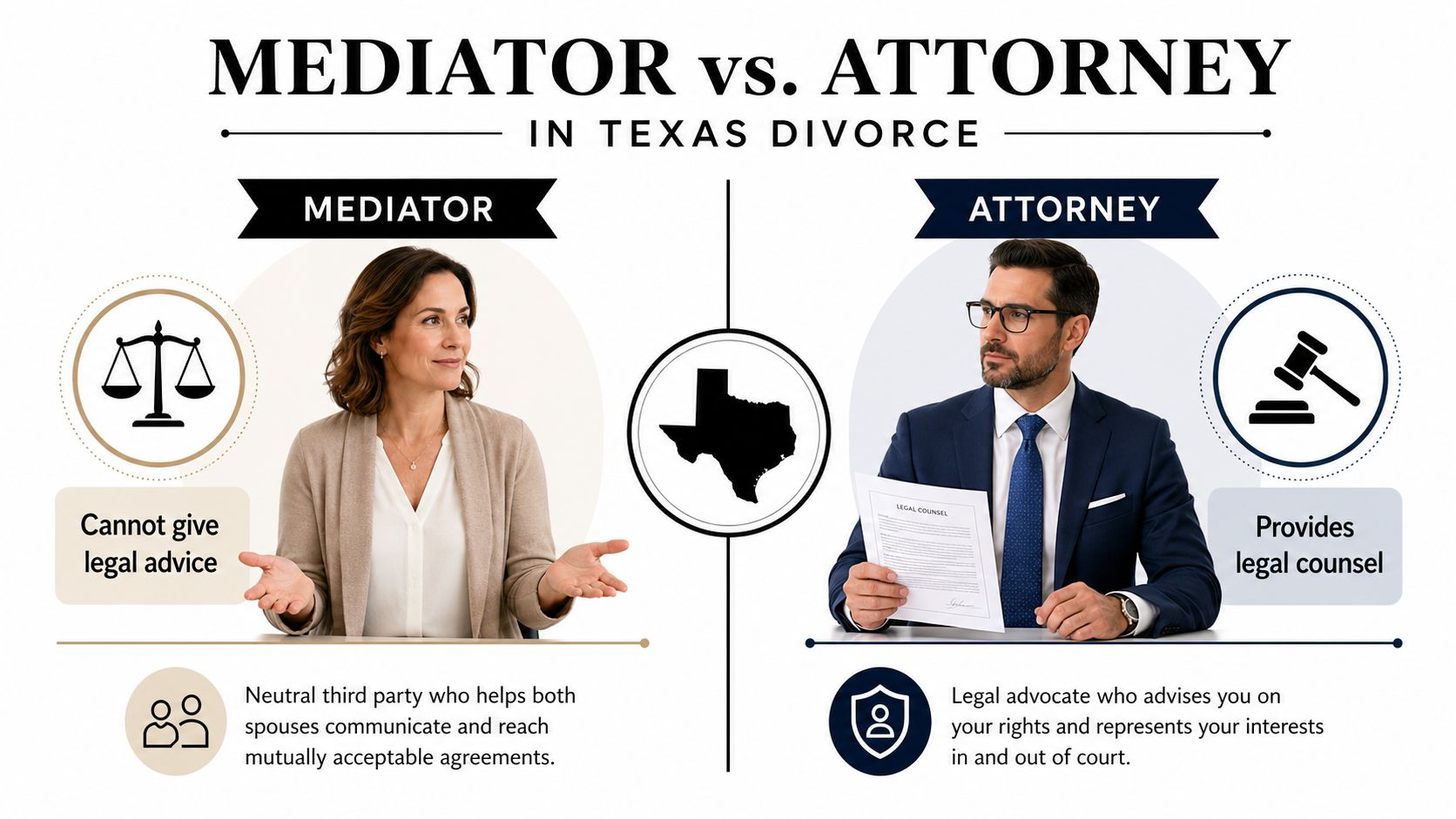
In Texas, mediation fits neatly into the settlement tools available in divorce cases under Texas Family Code Chapter 6. A mediated settlement agreement can become binding when it meets the statutory requirements, which is why people need to take it seriously before they sign. The mediator, though, still does not become either spouse's advocate. The mediator's job is to guide the process, keep the discussion moving, and help the parties reach terms they can both accept.
By contrast, an attorney owes loyalty to one client. That lawyer can give legal advice, negotiate hard, file motions, and appear in court when the other side won't cooperate. If your spouse is hiding information, controlling the conversation, or threatening to drag the case into court, you need an advocate, not a neutral table facilitator.
Texas families often confuse “helping us settle” with “representing me.” Those are not the same thing. A mediator may help both spouses draft property terms, parenting provisions, and support language, but each spouse remains responsible for understanding the legal effect of what gets signed.
A mediator can help you reach terms. A lawyer can tell you whether those terms protect you.
That difference matters in cases involving children, retirement assets, or a family home. It also matters if you're considering Divorce Mediation, which is mediated resolution of divorce issues outside of court. If you want a process that stays focused on settlement, the mediator is the right neutral. If you want rights protection, a stronger negotiating position, and courtroom backup, hire an attorney.
For a plain-English walkthrough of the mechanics, you can also review how mediation works in divorce cases. The bottom line is simple. Use a mediator to build agreement. Use an attorney to protect your position.
Side-by-Side Cost, Timeline, and Outcome Comparison
The split between mediation and attorney-driven divorce is usually obvious once you look at the practical tradeoffs. Mediation is cheaper and faster when both spouses are prepared to disclose information and settle. Attorney-led litigation costs more, takes longer, and gives you a stronger toolset when the other side will not cooperate.
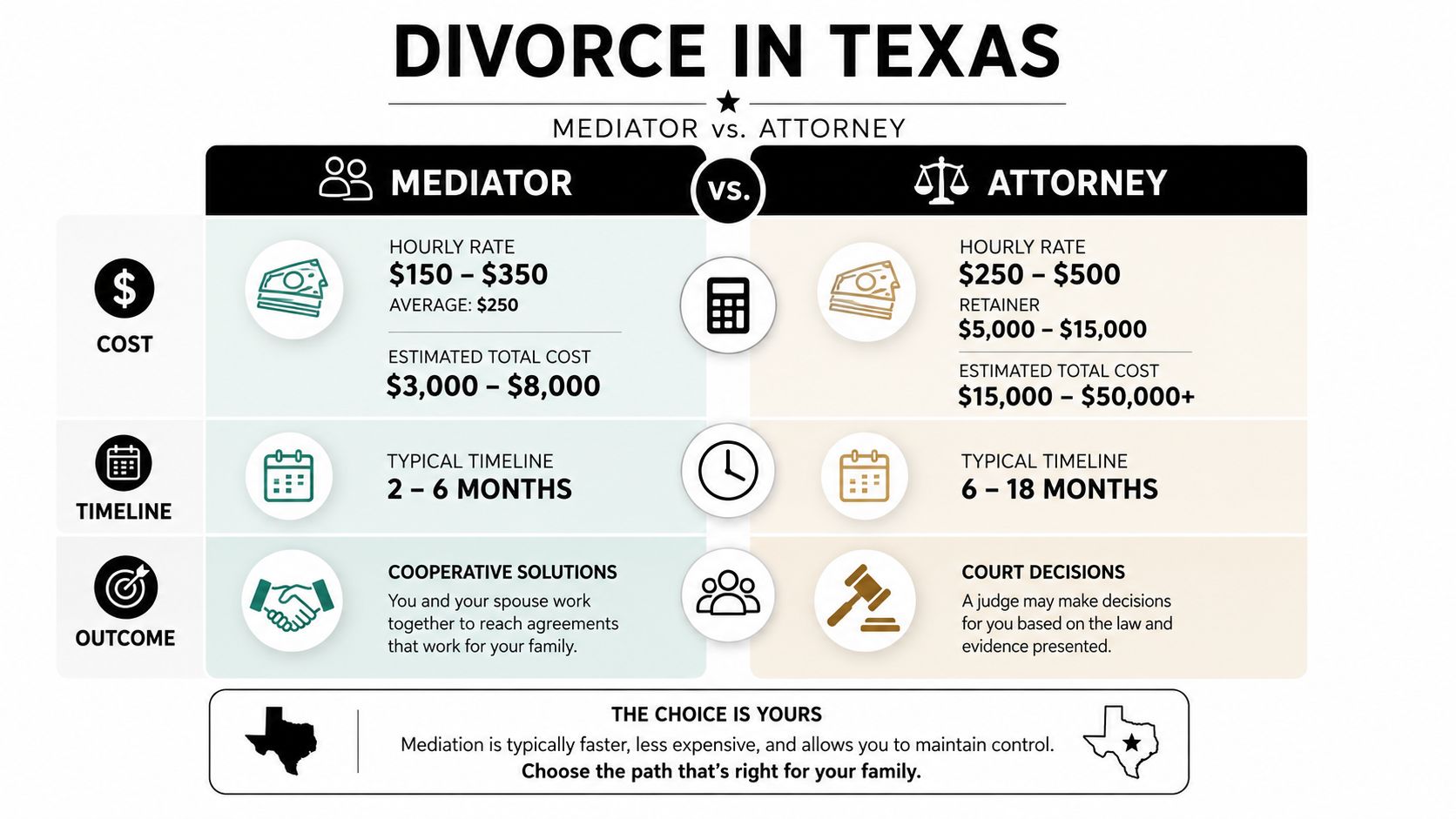
| Mediator vs Attorney for Divorce in Texas | Mediator | Attorney |
|---|---|---|
| Role | Neutral facilitator | Partisan advocate |
| Typical cost range | About $150 to $800 per hour, or flat-fee packages often $4,000 to $10,000 (Nolo) | Attorney hourly rates cited for family law average around $314 per hour and can exceed $400 per hour in large metros |
| Typical timeline | Often weeks to a few months (source: Nolo) | Often months to over a year in lawyer-driven cases (source: Nolo) |
| Outcome style | Cooperative settlement | Advocacy-driven resolution |
| Confidentiality | Generally private and confidential | Court filings can become public record |
A mediator helps both spouses work through the terms outside of court. An attorney prepares one spouse to protect rights, push back on unfair demands, and go to court if settlement falls apart. That difference is why one route usually feels efficient and the other usually feels heavier.
Texas procedure makes the gap even more important. A mediated settlement can become especially powerful once it is put into the right legal form, while attorney negotiation without agreement can still turn into pleadings, discovery, hearings, and pressure from the court. If you already know your case is contested, review Divorce services that handle contested, uncontested, and high-conflict matters.
Texas-specific note: once hearings, discovery, or emergency orders enter the case, the cost rises fast. A “try mediation first” plan can still make sense, but only if the dispute is not already moving toward formal court action.
If you are trying to decide whether the lawyer route fits your budget, a practical place to start is divorce attorney fees. The cheapest choice on day one is not always the cheapest choice by the end.
How Each Path Handles Texas Property Division and Children
Texas property division starts with a basic rule. Community property is divided in a just and right manner under Texas Family Code § 7.001, not by whoever shouts loudest. That makes full disclosure and a clear paper trail matter a lot, whether you mediate or litigate.
Property and disclosure
Mediation works well when both spouses know what exists and are willing to disclose it. If the house, retirement accounts, debt, and cash flow are all on the table, a mediator can help structure a practical settlement faster than a courtroom can. That is especially true when the parties already know they want to keep the peace and move on.
Attorney-led divorce becomes more useful when disclosure is a problem. If one spouse suspects hidden assets, an undisclosed bonus, or a closely held business that needs valuation, a lawyer can use discovery tools and court pressure to force the issue. That is not a moral preference, it is a procedural one.
Children and parenting plans
For children, the core Texas standard is the best interest of the child under Texas Family Code § 153.002. Mediation often produces parenting plans that parents can follow because the agreement was built by the two people who will live with it. When both parents are communicating well, that can lead to a more durable co-parenting structure.
Attorney representation becomes the safer choice when a parent wants to relocate, limit possession time, or push a custody issue into a high-conflict zone. In those situations, the court may need to hear evidence, and one parent may need direct advocacy. A mediator cannot protect your rights in the same way a lawyer can.
If custody is the issue, choose the process that matches the conflict level, not the one that sounds calmer on paper.
The practical Texas answer is this. Mediation usually shines when the dispute is mostly about terms. Lawyers matter more when the dispute is about evidence, or protecting children from instability. The better your disclosures and the lower your conflict, the more useful mediation becomes.
The Hybrid Path Mediator Plus Consulting Attorney
Most families do not need to choose between “no lawyer” and “full litigation.” Texas spouses often do better with a hybrid approach, and that is where a lot of people save money without giving up legal protection.

Here are the three realistic versions:
Full-scope mediation with attorney review. The spouses negotiate with a mediator, then each side has a lawyer review the final agreement before anything is signed. This is the cleanest fit for families with moderate property issues, provided no one is hiding information.
Mediation first, then attorney review at the end. This works when the couple is mostly aligned and only needs a legal check before filing. It is efficient, but only if the final review is taken seriously and not rushed.
Attorney-led negotiation with mediation on narrow issues. This is the right mix when the case is contested overall, but one or two issues still need a neutral table to break the deadlock.
The attorney review matters most when the agreement touches retirement accounts, the family home, or a parenting plan that will govern the next decade. A mediator can help the spouses land on terms, but a lawyer can tell you whether those terms are clean, enforceable, and realistic under Texas law.
Best practice: use the mediator to move the deal forward, then use a lawyer to pressure-test the deal before it becomes final.
That hybrid structure is often the best value for families who can still cooperate but don't want blind spots. The Law Office of Bryan Fagan, PLLC handles both settlement-focused and litigated matters, so clients can get advice on whether to stay with mediation, add a consulting attorney, or switch to representation before a small mistake becomes a permanent one.
You can also watch a short overview here:
If you're deciding how much legal help to buy, the answer is usually not “all or nothing.” It is “enough to protect the deal.”
When Mediation Is the Wrong Choice in Texas
Mediation is not a moral test. Choosing a lawyer does not mean you are difficult, and choosing litigation does not mean you failed. Some cases need protection first.
A documented history of domestic violence is the clearest red flag. A neutral mediator cannot shield a vulnerable spouse the way a lawyer and, when needed, the court can. If one spouse is intimidated, the process stops being voluntary and the balance of power is already broken.
Suspicion of hidden assets or undisclosed income is another warning sign. A mediator can encourage disclosure, but a lawyer can pursue records, demand answers, and press the issue through formal procedures. If you think your spouse is withholding financial information, mediation alone can leave you negotiating blind.
A major power imbalance also changes the analysis. That imbalance can be financial, emotional, or tied to access to the children. When one spouse dominates the conversation, the “neutral” table may still produce an unfair result if nobody is legally representing the weaker party.
Urgent custody issues, including relocation and abuse allegations, often need immediate court attention. A mediator cannot issue temporary orders or protect a parent from a fast-moving threat. Those cases need a lawyer who can move quickly.
High-net-worth estates with businesses, multiple properties, or complex investment accounts also tend to outgrow simple mediation. There may still be room for settlement, but the legal and financial stakes justify counsel from the start.
If you try mediation, fail, and then hire counsel anyway, you can end up paying for both paths. Sometimes the right move is to start with representation and negotiate from a stronger position. That is not overlawyering. It is common sense.
How to Decide Which Path Fits Your Texas Divorce
Use three questions and answer them directly.
Question one, how much do you already agree on
If you and your spouse mostly agree on property, parenting, and support, mediation or a hybrid setup makes sense. If every discussion turns into an argument, start with a lawyer.
Question two, is there a power imbalance
If one spouse controls the money, the other spouse feels intimidated, or there is a safety issue, you need counsel. A neutral mediator is not a substitute for protection.
Question three, are there complex assets or children at the center of this
A house, retirement accounts, a business, or a complicated parenting situation usually calls for at least some attorney review. The more complex the case, the more useful it is to have someone focused on rights and long-term consequences.
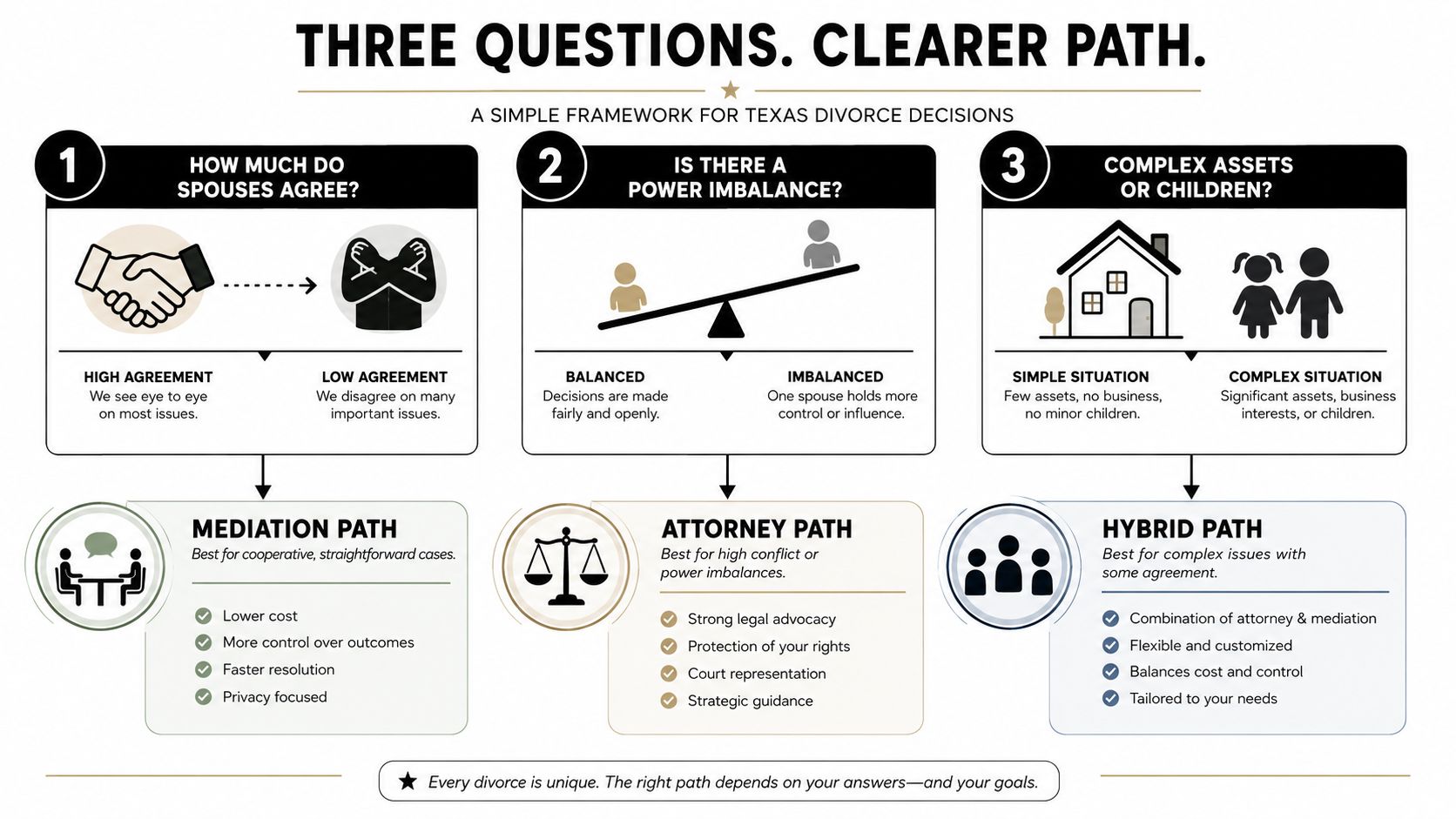
A simple rule usually works best. If agreement is high and conflict is low, mediation is the first call. If conflict is high or safety is in doubt, call a lawyer. If the case is mostly workable but legally messy, use both.
Texas families in Houston, Dallas-Fort Worth, Austin, San Antonio, and surrounding communities can use that framework to avoid wasting money on the wrong process. When the facts are still unclear, a free consultation can tell you whether the smarter move is mediation, attorney representation, or a hybrid path.
Frequently Asked Questions About Mediation and Divorce Attorneys
Is a mediated settlement agreement enforceable in Texas if one spouse changes their mind
Usually, yes, if the agreement meets the legal requirements under Texas Family Code Chapter 6. That is why people should treat mediation seriously before signing, not after.
Can we mediate without lawyers at all
Yes, but that does not mean you should. If there are children, retirement accounts, a home, or any question about fairness, at least a short attorney review is a smart safeguard. A mediator does not give legal advice.
What happens if one parent wants to relocate out of state
That issue often needs attorney involvement, especially if the move affects possession, access, or the child's day-to-day stability. Mediation may still help narrow the dispute, but relocation cases can move beyond a neutral-only process quickly.
How long does it take to decide between mediation and a lawyer
Not long. If you can answer the three questions above, you can usually make the call in one evening. The time issue is not the decision itself, it is choosing a process that won't force you to redo the work later.
If you need help navigating divorce, custody, or estate planning in Texas, contact The Law Office of Bryan Fagan today for a free consultation. The team can help you compare mediation, attorney representation, and hybrid options with your actual property, parenting, and timing concerns in mind. Visit Law Office of Bryan Fagan, PLLC to get guidance before you commit to the wrong path.


