
Annulment Attorneys in Conroe Texas: A Practical Guide to Marriage Nullification
Sometimes, clarity comes unexpectedly. A marriage that once felt right may quickly reveal underlying issues—whether due to hidden facts, pressure, or circumstances that were not fully understood at the time of the ceremony. In these situations, many individuals begin searching for annulment attorneys in Conroe Texas to understand their legal options.
At The Law Office of Bryan Fagan, PLLC, we guide individuals through the process of determining whether annulment is appropriate under Texas law or whether divorce may provide a more practical solution. Annulment is not simply a faster version of divorce—it is a distinct legal process that applies only when specific conditions are met.
Under Texas Family Code Chapter 6, courts may declare a marriage void or voidable if certain legal defects existed at the time of the marriage. Understanding these requirements is essential before moving forward.

What Is an Annulment in Texas?
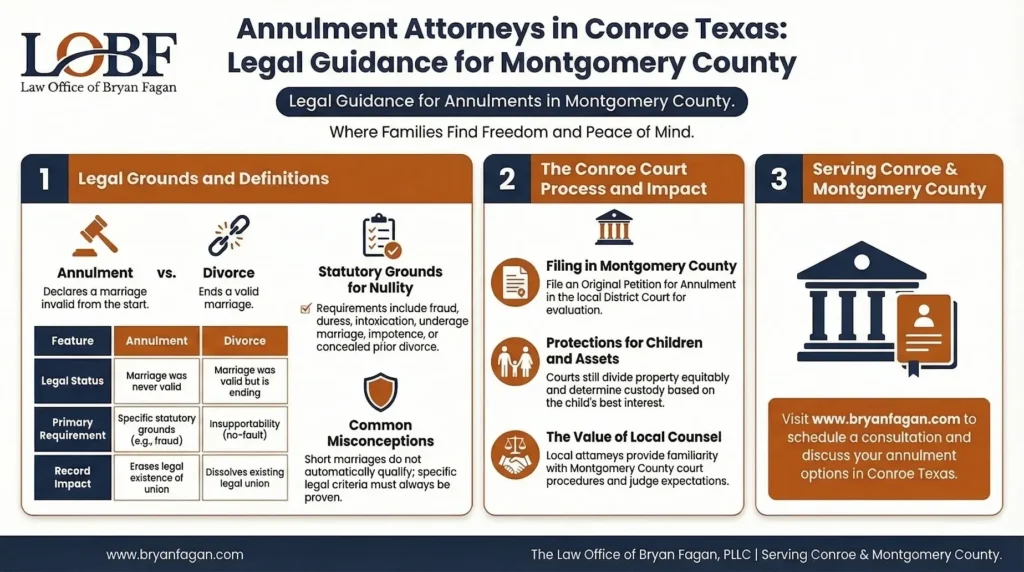
An annulment is a legal determination that a marriage was never valid from the beginning. Unlike divorce, which ends a legally recognized marriage, annulment treats the marriage as though it never legally existed.
Texas recognizes:
- Void marriages (automatically invalid)
- Voidable marriages (valid unless challenged in court)
To obtain an annulment, you must prove that your marriage meets one of the statutory grounds outlined in Texas law.
We offer comprehensive family law and estate planning services, including but not limited to the following:
Trust us to help you with your Family case in Conroe, Texas. Call 281-562-7344 or contact us online today to schedule a free consultation with your Family Law Attorneys in Conroe, Texas.
Legal Grounds for Annulment in Texas
Texas courts require specific legal grounds to grant an annulment. These are defined under Texas Family Code §§6.101–6.111.
Common grounds include:
Fraud
One spouse entered the marriage based on false or misleading information about an essential aspect of the relationship.
Duress or Force
The marriage occurred due to pressure, threats, or coercion, meaning true consent was not present.
Mental Incapacity
A spouse lacked the mental ability to understand the nature of the marriage at the time it occurred.
Intoxication
A party was impaired by drugs or alcohol and unable to give proper consent during the ceremony.
Underage Marriage
One spouse was under 18 without proper legal consent.
Impotence
A spouse was permanently unable to engage in marital relations, and this fact was not disclosed before marriage.
Concealed Divorce
A prior divorce was finalized within 30 days before the new marriage and was not disclosed.
Each ground requires clear and convincing evidence, and courts carefully evaluate whether the issue existed at the time of the marriage.
How the Annulment Process Works in Conroe
Annulments in Montgomery County follow a structured legal process similar to divorce, but with greater emphasis on evidence.
Filing the Petition
The process begins by filing an Original Petition for Annulment in a Montgomery County district court.
Service of Process
The other spouse must be formally notified of the case.
Evidence and Discovery
In contested cases, both parties may exchange documents, testimony, and other evidence.
Court Hearing
A judge reviews the evidence and determines whether legal grounds for annulment exist.
Final Order
If proven, the court issues a decree declaring the marriage invalid.
Residency Requirements for Filing in Conroe
To file for annulment in Conroe, you must meet residency requirements under Texas Family Code §6.301:
- At least 6 months in Texas, and
- At least 90 days in Montgomery County
Meeting these requirements ensures the court has jurisdiction over your case.
What Happens to Property and Children?
Annulment affects property and family matters differently than divorce.
Property
Because the marriage is considered invalid:
- Community property laws may not fully apply
- Ownership may revert to original parties
- Disputes may require additional legal action
Children
Children are fully protected under Texas law.
Courts will determine:
- Custody based on the best interest of the child (§153.002)
- Child support under Texas Family Code Chapter 154
Parental responsibilities remain unchanged regardless of annulment.
Timeline for an Annulment in Conroe
The length of an annulment case depends on whether it is contested.
- Uncontested cases: approximately 60–90 days
- Contested cases: 4–12 months or longer
Cases involving disputes or complex evidence may take additional time.
When Divorce May Be a Better Option
Not all marriages qualify for annulment. If your situation does not meet the legal requirements, divorce may be the appropriate path.
Texas allows no-fault divorce under §6.001, which:
- Does not require proving misconduct
- Provides structured property division
- Offers a more predictable process
An experienced attorney can help you determine the best option for your circumstances.
Why Hiring an Annulment Attorney in Conroe Matters
Annulment cases often involve strict legal standards and detailed evidence requirements.
Working with an attorney can help you:
- Determine eligibility for annulment
- Gather and present necessary evidence
- Avoid procedural errors
- Protect financial and parental rights
Local attorneys familiar with Montgomery County courts can also improve efficiency and outcomes.
Listen to Our Texas Family Law Podcast
Prefer listening? In this episode, we discuss annulment in Conroe, Texas, including when a marriage may be legally voided and the key requirements under Texas law.
Moving Forward with Clarity
Whether you are considering annulment or divorce, the most important step is understanding your options. Legal clarity can help reduce uncertainty and provide a clear path forward.
At The Law Office of Bryan Fagan, PLLC, we are committed to helping individuals and families in Conroe make informed decisions and move forward with confidence.