
Protective Orders vs. No-Contact Orders may not sound exciting, but when it comes to personal safety and legal protection, they are powerful tools. While they don’t wear capes, these orders act as shields, defending individuals in difficult or dangerous situations. They provide real security and peace of mind by setting clear boundaries and enforcing consequences when those boundaries are crossed. In this article, we’ll explore the details of Protective Orders vs. No-Contact Orders, showing you how they work, why they matter, and how they serve as crucial defenders of safety and personal freedom.

What Is a Protective Order?
Also known as restraining orders, protective orders are legal documents are crucial in ensuring the safety and well-being of individuals who feel threatened or harassed by another person.
Picture it as a shield, a legal shield, if you will, that can be wielded when someone perceives a threat to their safety or peace of mind. The main goal of a protective order is to establish a clear boundary, ensuring that the person named in the order (the respondent) maintains a safe distance and refrains from any form of contact with the individual who sought the order (the petitioner).
Protective orders can be sought in various situations, with domestic violence being one of the most common. In cases like these, they provide a vital layer of protection for the victim, helping them regain control over their lives.
Mechanics of a Protective Order
Now, let’s talk about the mechanics of a protective order. Typically, it’s a legal document issued by a court. The petitioner must present their case to the court, explaining why they need this protection. If the court finds their case valid and that they are indeed in danger, a protective order is issued.
These orders are not one-size-fits-all; they can come in different forms, depending on the specific circumstances. Some may prohibit the respondent from approaching a certain distance from the petitioner’s home, workplace, or even their children’s school. Others might include a “no contact” provision, meaning the respondent can’t call, text, email, or communicate in any way with the petitioner.
Now, it’s important to note that violating a protective order can lead to serious legal consequences, which might include fines, probation, or even jail time. These orders are not to be taken lightly, as they are designed to provide a secure space for those who genuinely fear for their safety.
So, in essence, a protective order is a powerful tool within the legal system. It acts as a safeguard for those who find themselves in vulnerable situations, ensuring that they can live their lives without the constant threat of harm or harassment. In a world where personal safety is paramount, these orders play a vital role in protecting individuals and promoting a sense of security.
What Is a No-Contact Order?
Think of a no-contact order as a legal tool designed to ensure the safety and well-being of individuals involved in various legal situations, primarily when one person feels threatened or harassed by another.

Here’s how it works:
1. Request: It starts with a request. If someone feels threatened or harassed, they can petition the court for a no-contact order, explaining their reasons in a legal filing.
2. Court Review: The court reviews the request and evaluates the circumstances. They take into account the evidence and the arguments presented by the person seeking the order.
3. Types of No-Contact Orders: There are different types of no-contact orders, each with varying levels of restrictions. These can include no contact whatsoever, no physical presence near the protected person, and sometimes limitations on communicating through third parties.
4. Duration: No-contact orders can be temporary, lasting until a court hearing, or long-term, extending for months or even years, depending on the situation and the judge’s decision.
5. Consequences of Violation: Violating a no-contact order is a serious offense and can lead to legal consequences, such as fines, probation, or even imprisonment. The severity of consequences depends on the nature of the violation.
6. Communication Restrictions: In practical terms, this means no calls, no texts, no emails, and no social media contact. It also extends to physical proximity, meaning the restrained person can’t show up at the protected person’s home, workplace, or any other designated places.
7. Protection and Peace of Mind: The primary purpose of a no-contact order is to provide protection and peace of mind to the person who sought it. It creates a legally enforceable boundary between them and the person they fear.
The court issues a no-contact order only when necessary to protect someone’s safety. It acts like a legal “time-out,” allowing one person to live without fear or interference from the other.
Key Differences Between Protective Orders and No-Contact Orders
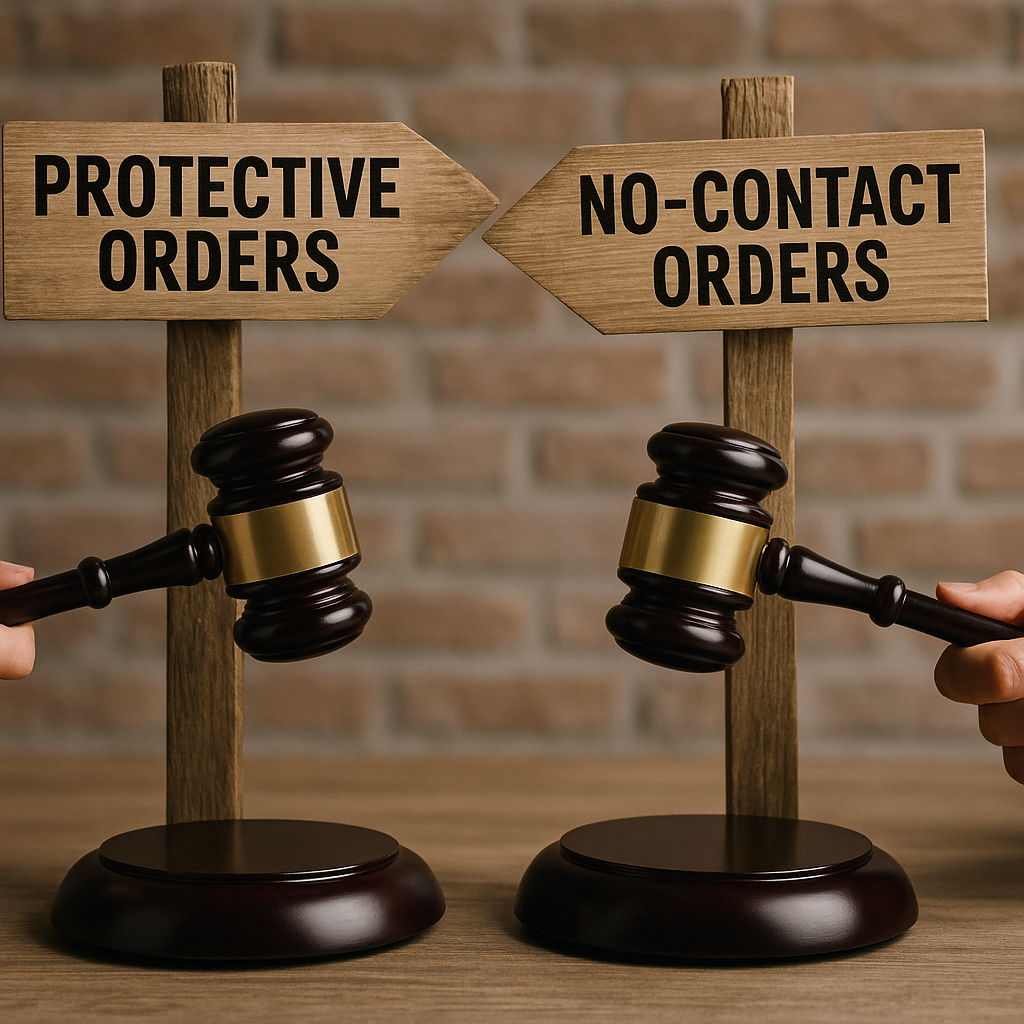
Context:
Protective orders and no-contact orders exist in two distinct legal contexts:
– Protective Orders: These are primarily associated with civil cases. They are sought by individuals who believe they are at risk, often due to domestic violence, harassment, or stalking. They are a proactive measure taken by those who feel threatened and need legal protection.
– No-Contact Orders: In contrast, no-contact orders are firmly rooted in the criminal justice system. They are imposed by the court and are reactive measures used to maintain the integrity of criminal proceedings. These orders are often issued as a condition of bail, probation, or parole. They restrict the accused from contacting certain people in the case. This includes the alleged victim, witnesses, or co-defendants.
Purpose:
Understanding the purpose of these orders is essential:
– Protective Orders: These are designed to provide a legal shield to individuals who seek them. They often require the subject to keep a certain distance from the protected person. They may also order the subject to stop all forms of contact. In some cases, the subject must even vacate a shared residence. The primary goal is to safeguard the person who perceives a threat.
– No-Contact Orders: Their main objective is to preserve the fairness and integrity of criminal proceedings. These orders stop the accused from contacting people connected to the case. They protect witnesses and the alleged victim. They also ensure they can participate without fear of intimidation or influence.
Initiation:
Who initiates these orders is another key difference:
– Protective Orders: Individuals who feel threatened initiate protective orders by applying for them. They take the proactive step of seeking legal protection when they believe their safety is at risk.
– No-Contact Orders: To begin with, these orders are initiated by the court as part of the criminal justice process. Furthermore, the court imposes them to uphold the legal process and prevent interference with ongoing criminal cases.
Legal Consequences:
Breaking these orders can result in different legal consequences:
– Violating a Protective Order: This may result in legal consequences such as fines, extensions of the protective order, or other civil remedies.
– Violating a No-Contact Order: Violating a no-contact order carries more severe criminal penalties, including fines, probation violations, or even imprisonment, as it is directly tied to a criminal case.
In conclusion, understanding the distinctions between Protective Orders vs. No-Contact Orders is vital for anyone facing issues of personal safety or navigating the criminal justice system. Knowing how each order works empowers individuals to make informed choices, seek the right legal remedies, and take the necessary steps to protect themselves. This knowledge not only strengthens legal outcomes but also provides peace of mind by ensuring safety and security remain the top priority.

 If you want to know more about what you can do, CLICK the button below to get your FREE E-book: “16 Steps to Help You Plan & Prepare for Your Texas Divorce”
 If you want to know more about how to prepare, CLICK the button below to get your FREE E-book: “13 Dirty Tricks to Watch Out For in Your Texas Divorce, and How to Counter Them” Today!”
Other Related Articles
- How to Access Protections Provided by Emergency Protective Orders in Texas for Immediate Safety
- How Long Do Domestic Violence Protective Orders Last?
- What Is Included in an Emergency Protective Order in Texas?
- What is the Difference Between a Protective Order and A Restraining Order?
- How to prepare for a Temporary Protective Order Hearing
- How to fight a protective order in Texas
- Protective Orders in Texas
- How Do I Apply for a Protective Order in Texas?
- Preparing for a hearing in which a protective order has been requested in Texas
- Protective Orders in Texas Family Law Cases
- The Complete Beginner’s Guide to Texas Protective Orders
- Preparing for a hearing in which a protective order has been requested in Texas
FAQs
Violating a no-contact order is a serious offense and can lead to legal consequences, such as fines, probation violations, or imprisonment. The severity of consequences depends on the nature of the violation.
No-contact orders are usually issued within the context of criminal cases. They are a way for the court to ensure the safety and well-being of individuals involved in legal situations, particularly when one person feels threatened by another.
Yes, in some cases, both types of orders can be issued to provide comprehensive protection for an individual who perceives a threat from another person.
Yes, the specific laws and regulations surrounding protective and no-contact orders can vary by state or jurisdiction. It’s essential to consult with legal experts who are knowledgeable about the laws in your area.
Yes, many legal aid organizations and domestic violence shelters offer assistance in understanding the process of obtaining protective orders. Additionally, legal professionals can provide guidance and representation.