

Ever had one of those mornings where you’re trying to pour cereal, answer emails, and keep your cool while your ex texts you 17 times in a row? Now imagine doing that while navigating a custody order… with domestic violence allegations in the mix. It’s more than stressful—it’s overwhelming. That’s exactly why we’re talking about Texas Child Custody and Domestic Violence today—because when safety, parenting, and the law collide, families need clarity fast.
Here’s the hard truth: in Texas, if there’s a history of domestic violence, it can (and often does) completely reshape who gets custody, what kind of visitation is allowed, and how closely the court watches every interaction going forward. And if you don’t know your rights—or how to use them—you could end up in a legal setup that’s more about compromise than protection.
But don’t panic. In this post, we’ll break down what Texas law really says about custody and abuse, how courts protect children and parents, and what options you actually have. We’ll share fictionalized stories from real cases, actionable tips you can apply today, and legal strategies that most people never hear until it’s too late.
At The Law Office of Bryan Fagan, PLLC, we’ve helped thousands of Texans take back control of their lives and protect what matters most. If you’re facing the double storm of a custody battle and a violent past, you’re not alone—and we’re here to guide you every step of the way. Let’s get started.
Key Takeaways
- Texas family courts prioritize child safety in custody cases involving domestic violence, using measures like protective orders to limit abusive parents’ access.
- A parent with a history of domestic violence may face significant limitations on conservatorship rights, with courts more likely to award sole custody to the non-abusive parent.
- Presenting substantial evidence of domestic violence—including police reports and witness testimonies—is critical for influencing custody decisions and protecting children’s safety.

Your Family’s Future Starts Here
Don’t navigate your legal journey alone. Schedule a consultation now and get the clarity and support you deserve.
How Texas Family Courts Handle Custody Cases Involving Domestic Violence
When addressing Texas Child Custody and Domestic Violence, courts operate with one guiding principle: protect the child at all costs. Under the Texas Family Code § 153.004, if a parent has a history or pattern of family violence, the court presumes that appointing that parent as a conservator—whether sole or joint—is not in the child’s best interest. As we’ve seen in our work with Texas families, these cases often result in swift protective measures to shield children from further harm and emotional trauma.
Protective orders, governed by Chapter 85 of the Texas Family Code, are commonly issued in these situations. These court orders can limit or entirely prevent contact between the abusive parent and the child, depending on the severity of the allegations. As our family law team frequently explains, these protections often lead to supervised visitation, or in extreme cases, termination of visitation rights altogether. Courts may also appoint licensed professionals like child psychologists or guardians ad litem to evaluate the child’s mental and emotional state, further informing custody decisions.
When a judge does award custody to a parent with a history of domestic violence, Texas Family Code § 153.004(d) requires that the court provide specific, written findings explaining why the order is still in the child’s best interest. These legal safeguards reflect the state’s strong stance on prioritizing the child’s safety over parental rights when abuse is a factor. Our legal professionals have helped many parents navigate these emotionally difficult cases with confidence, backed by the most recent updates to Texas family law.
For families currently facing custody disputes involving violence, we encourage you to explore our in-depth guide on how domestic violence impacts custody. At The Law Office of Bryan Fagan, PLLC, we’re here to educate, protect, and stand with you—because when the stakes are this high, clarity and trusted legal support make all the difference.

Impact of Domestic Violence on Conservatorship Rights
In Texas Child Custody and Domestic Violence cases, a parent’s history of abuse plays a decisive role in determining conservatorship. Under Texas Family Code § 153.004, courts are required to consider whether there is credible evidence of family violence, even if a conviction hasn’t occurred. If abuse has been established, the court must presume that appointing the offending parent as sole or joint managing conservator is not in the best interest of the child. As our attorneys frequently advise, this legal safeguard is one of the most powerful tools Texas families have to ensure that a child is not placed in a harmful or unstable environment.
This presumption often results in the non-abusive parent being granted sole managing conservatorship, allowing them to make critical decisions regarding the child’s health, education, and welfare. Meanwhile, the abusive parent may face strict limitations or even the loss of possession rights. If any visitation is permitted, it is commonly supervised, with arrangements carefully designed to protect the child’s physical and emotional well-being. According to our family law team, this approach is consistent with recent updates to the Texas Family Code, which increasingly emphasize trauma-informed decision-making in family violence cases.
In rare but serious situations, especially when the abusive parent poses an ongoing threat, the court may deny visitation altogether. These decisions are not made lightly, but they do reflect the Texas judiciary’s evolving commitment to protecting children from the lasting effects of domestic violence. Our legal professionals have helped many clients understand when the court might impose no-contact orders, and how to document evidence that supports such an outcome.
For a closer look at how domestic violence impacts family court outcomes in Texas—including case evaluations, supervised visitation, and protective orders—read our firm’s resource on how domestic violence cases are handled in Texas. You can also visit our detailed guide to child custody and conservatorship rights to better understand your legal options. At The Law Office of Bryan Fagan, PLLC, we remain dedicated to helping families create safer, more stable futures—one informed decision at a time.

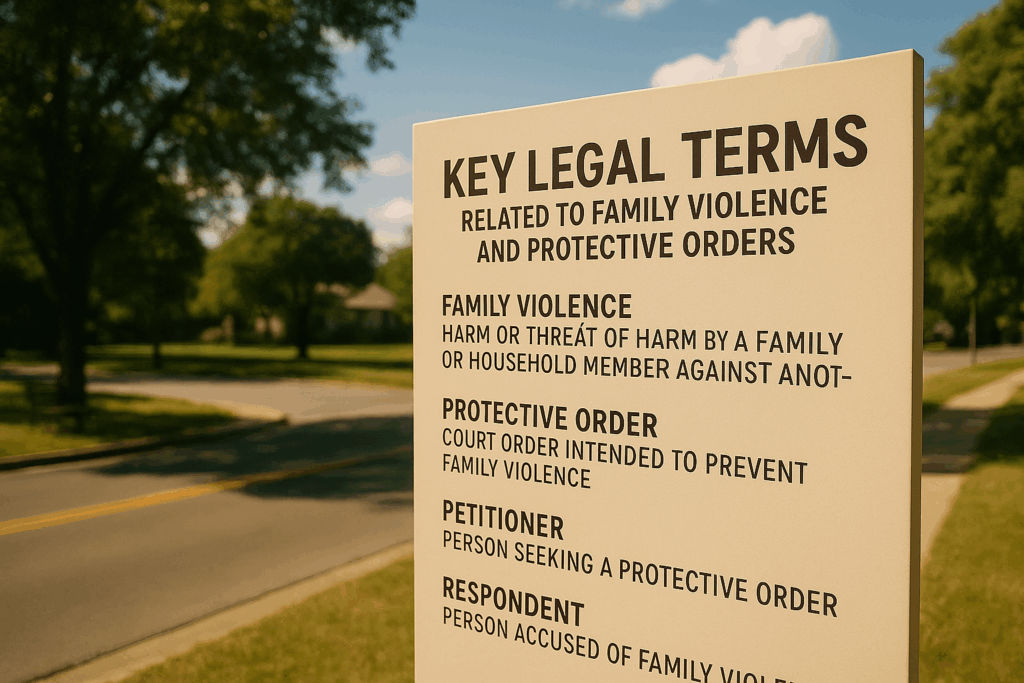
Key Legal Terms: Family Violence, Protective Orders, and Supervised Visitation
Understanding the legal language surrounding Texas Child Custody and Domestic Violence is essential for parents navigating these emotionally charged and high-stakes cases. As defined in Texas Family Code § 71.004, domestic violence includes not only physical harm or threats of harm to a family member or partner, but also encompasses emotional, financial, and psychological abuse. In today’s world, this also extends to digital abuse—harassment or threats via text, email, or social media—which can complicate custody matters and heighten the urgency for legal protection.
Protective orders are one of the most powerful tools available in Texas family courts to address and prevent continued abuse. Issued under Texas Family Code Chapter 85, these orders can prohibit the abusive parent from contacting or approaching the victim and their children. According to our family law team, protective orders often shape the outcome of custody cases by creating immediate safeguards for the child’s physical and emotional welfare. When granted, they may heavily influence conservatorship determinations and limit access rights to the abusive parent.
Another critical concept in these cases is supervised visitation, a court-ordered arrangement in which a parent’s access to the child occurs only under the watch of an approved supervisor. This provision is often used when there’s evidence of past abuse, substance misuse, or emotional instability, ensuring that any visitation takes place in a safe, structured environment. As our attorneys frequently advise, Texas law is clear in promoting fairness in the custody process—Texas Family Code § 153.003 ensures that gender alone cannot be used as a deciding factor, granting equal consideration to both mothers and fathers.
For families in Central Texas, our legal professionals have helped many clients understand their rights and protections under the law, particularly in areas like Great Hills. To explore how domestic violence is handled locally and what legal remedies are available, visit our resource on domestic violence in Great Hills. You can also learn more about protective orders and child custody strategies directly from our team at The Law Office of Bryan Fagan, PLLC. We’re here to help you protect your children, reclaim your peace, and move toward a safer future.
Seeking Emergency Relief and Protective Measures
In urgent situations where a child’s safety is in immediate danger, Texas law provides for emergency custody orders. These orders allow a parent to secure temporary custody to protect the child from imminent harm. Emergency custody can include temporary restraining orders and injunctions, providing immediate legal intervention in critical situations. Texas laws allow for such measures to ensure the safety of children.
To initiate an emergency child custody case, essential documents such as a sworn affidavit and a petition for a temporary restraining order must be prepared. The Texas Family Code specifies criteria for granting emergency custody, always prioritizing the child’s safety and welfare. In such cases, having legal representation is crucial. A family law attorney can expedite the legal protections needed for both the parent and the children, navigating the complexities of the process.
Protective orders are another essential tool in cases involving domestic violence. They are designed to prevent future acts of abuse or harassment, providing a legal shield for the victim and their children. These orders can be instrumental in maintaining the child’s emotional well-being and physical safety.
Presenting Evidence of Domestic Violence in Court
Presenting strong, well-documented evidence is essential in Texas Child Custody and Domestic Violence cases. Under Texas Family Code § 153.004, courts must carefully assess whether a parent’s history of violence poses a risk to the child. As our attorneys frequently advise, substantiating claims with credible, consistent proof is one of the most effective ways to influence the outcome of a custody proceeding in your favor.
Key forms of evidence include police reports, medical records, and emergency room documentation, which provide a factual, third-party account of the abuse. Witness statements—particularly from neighbors, teachers, relatives, or medical professionals—can reinforce the credibility of your claims. Our legal professionals have helped many clients understand the value of keeping a detailed incident log. This log should include dates, times, descriptions of abusive events, and any witnesses present. When organized and presented properly, it becomes a powerful tool in court.
In today’s digital age, electronic evidence has become increasingly relevant. Threatening emails, text messages, social media harassment, and voicemails can all be submitted to show patterns of abusive behavior. Texas courts accept digital communications as valid evidence, provided they’re authenticated, and they can be instrumental in demonstrating the severity, repetition, and psychological impact of the abuse.
To better understand what qualifies as domestic violence and how it applies under Texas law, we encourage you to read our comprehensive article on what constitutes domestic violence in Texas. You can also explore more practical insights on child custody and evidence preparation through our firm’s online resources. At The Law Office of Bryan Fagan, PLLC, we remain committed to equipping families with the legal tools and compassionate guidance needed to navigate even the most difficult custody battles.

The Role of a Skilled Family Law Attorney
Navigating Texas Child Custody and Domestic Violence cases requires more than just legal paperwork—it requires strategic, compassionate guidance from an attorney who understands the full scope of family law and the emotional weight these cases carry. As our attorneys frequently advise, working with a skilled Texas family law attorney is one of the most important steps a parent can take when safety and parenting rights are on the line. The right legal support ensures you not only understand your rights under Texas Family Code § 153.004, but also how recent legislative updates may affect your ability to protect your child and yourself.
A knowledgeable attorney will help you prepare for custody hearings by gathering and organizing evidence, identifying key legal arguments, and setting realistic expectations rooted in the latest interpretation of Texas law. As we’ve seen in our work with Texas families, these preparations are essential when allegations of domestic violence are involved, because courts weigh this evidence heavily when deciding conservatorship and visitation rights. Preparation can also mean the difference between supervised visitation and a more restrictive no-contact order, depending on what best serves the child’s interests.
Our legal professionals have helped many clients understand how to anticipate and counter the other parent’s legal strategies—especially in contentious cases involving protective orders, supervised visitation, or a request for sole managing conservatorship. This type of strategic, proactive legal work is critical in persuading the court that your child’s long-term safety and stability must come first. With Texas courts placing increasing emphasis on trauma-informed decision-making, your attorney becomes your most valuable advocate in presenting a clear, evidence-backed case.
To better understand how Texas law applies to custody decisions, we encourage you to explore our in-depth guide on Texas child custody laws and what parents need to know. You can also find additional resources about how domestic violence affects parenting rights on our site. At The Law Office of Bryan Fagan, PLLC, we remain committed to educating families, protecting children, and guiding parents through every legal challenge with skill, clarity, and care.
Judges’ Consideration of Abuse Allegations
In Texas Child Custody and Domestic Violence cases, courts are legally bound to prioritize the safety and emotional well-being of the child above all else. According to Texas Family Code § 153.004, if a parent has a documented history or conviction of family violence, the court must presume that appointing both parents as joint managing conservators is not in the child’s best interest. As we’ve seen in our work with Texas families, these statutes are not just guidelines—they are mandatory considerations that judges must apply in every custody case involving abuse allegations.
In these circumstances, the court will often name the non-abusive parent as the sole managing conservator, granting them the exclusive right to make decisions about the child’s upbringing, healthcare, education, and more. The abusive parent may still be granted possessory conservatorship, but visitation is typically restricted or ordered under supervision to ensure the child remains in a safe, stable environment. These court decisions reflect the judiciary’s deep responsibility to protect children from both physical harm and ongoing emotional trauma.
Our legal professionals have helped many clients understand that judges rely not only on criminal convictions, but also on credible testimony, documented evidence, and prior protective orders when evaluating risk. In fact, the Texas Family Code has been updated to more clearly define family violence, encompassing physical harm, threats, and even certain patterns of emotional abuse. These legal updates provide broader protections for children and survivors alike.
To gain a clearer understanding of how Texas defines family violence and how it applies in custody disputes, visit our article on what constitutes family violence in Texas. You can also explore additional information about sole conservatorship and your legal rights as a parent. At The Law Office of Bryan Fagan, PLLC, our mission remains focused on empowering families with knowledge, protecting vulnerable children, and helping parents navigate even the most difficult legal terrain with clarity and confidence.

Implementation of Supervised Visitation or No-Contact Orders
In Texas Child Custody and Domestic Violence cases, courts are obligated to place the child’s safety at the center of every custody and visitation decision. When credible evidence of abuse exists, Texas Family Code § 153.004 authorizes judges to restrict or supervise a parent’s access to their child. As our legal professionals have helped many clients understand, supervised visitation is not meant to punish the abusive parent—it’s a protective measure designed to ensure that interactions occur in a safe, controlled, and neutral environment.
Supervised visitation typically requires the presence of a trained third party or neutral family member during parenting time. The court may also dictate specific days, times, and even locations for these visits, depending on what best supports the child’s emotional and physical well-being. In some cases, the court may go a step further by issuing no-contact orders, which prevent the abusive parent from initiating any communication—verbal, digital, or physical—with either the child or the other parent. These orders are especially critical in high-conflict or ongoing danger situations, and they serve as enforceable boundaries to minimize trauma.
According to our family law team, judges may also require the abusive parent to complete court-approved programs such as anger management classes, parenting education, or domestic violence intervention. These efforts aim not only to protect the child in the present but also to encourage behavioral changes that can reduce long-term risks. The most recent updates to the Texas Family Code reflect an increased focus on trauma-informed custody decisions, emphasizing long-term safety and healing for families impacted by violence.
To better understand how Texas courts structure visitation in cases involving domestic abuse, we encourage you to explore our detailed article on Texas family law visitation guidelines for parents. You can also visit our main child custody resource page for additional information. At The Law Office of Bryan Fagan, PLLC, we remain committed to guiding families with compassion, knowledge, and the legal strength needed to protect what matters most.
Practical Tips for Parents
For parents navigating the turbulent waters of child custody cases involving domestic violence, practical steps can make a significant difference. Creating a detailed safety plan that includes safe places to go and trusted contacts can enhance a child’s safety and personal security. Involving children in these discussions can help them understand how to react in emergencies.
Utilizing local resources such as shelters or hotlines can provide critical support during crises.
The Law Office of Bryan Fagan is committed to helping clients manage the emotional and legal challenges of custody disputes and paternity in family law cases, ensuring that families receive the support they need during difficult transitions.
Compassionate Legal Support from the Law Office of Bryan Fagan PLLC
At The Law Office of Bryan Fagan, PLLC, our mission is rooted in providing families with the clarity, protection, and advocacy they need—especially in matters involving Texas Child Custody and Domestic Violence. As our attorneys frequently advise, navigating these emotionally charged cases requires more than legal experience; it demands empathy, transparency, and a deep understanding of how trauma affects both parents and children. That’s why our firm takes a client-centered approach, developing personalized strategies and maintaining open, consistent communication throughout every stage of the legal process.
In custody cases involving domestic violence, the stakes are incredibly high. Under Texas Family Code § 153.004, courts are required to consider any credible evidence of abuse and, when necessary, limit or deny joint conservatorship to ensure the child’s safety. Our legal professionals have helped many clients understand how this statute, along with recent legislative updates, is applied in real-world scenarios—often resulting in protective orders, supervised visitation, or the appointment of one parent as sole managing conservator. These outcomes can dramatically reshape parenting responsibilities, which is why having experienced legal guidance is so essential.
Beyond the courtroom, we recognize the emotional toll these cases take. As we’ve seen in our work with Texas families, managing the impact of domestic violence and custody battles requires more than legal solutions. We encourage our clients to explore counseling, support groups, and intentional self-care—not as a luxury, but as a vital part of the healing process. These emotional resources, combined with a strong legal foundation, are key to rebuilding a safe and stable future for both parents and children.
To learn more about how our team supports clients in custody matters involving abuse, visit our firm’s page on Texas child custody representation. You can also explore related topics, including protective orders and visitation rights, for deeper insight. At every step, The Law Office of Bryan Fagan, PLLC is here to protect what matters most—your family, your peace of mind, and your future.
Conclusion:
Custody battles are tough. When domestic violence enters the picture, they’re not just tough—they’re life-altering. But here’s the thing: you’re not expected to face it all alone, and you don’t have to have every answer right now. What matters most is taking that first step toward safety, stability, and a better future—for you and your kids.
Whether you’re wondering how abuse allegations could affect your custody order, or you’re trying to build a plan that puts your child’s wellbeing first, the key takeaway is this: Texas courts care about protecting children, and so do we. And with the right legal guidance, there are real, workable solutions out there—even when it feels like the odds are stacked against you.
So if this blog hit close to home, don’t let that be where it ends. Reach out. Ask the questions. Get answers that are clear, honest, and backed by experience. At The Law Office of Bryan Fagan, PLLC, we help Texas families like yours every single day—and we take pride in making the legal process feel just a little more human.
And hey, if you’re feeling overwhelmed, just remember: even if today felt like chaos, tomorrow can be the start of something safer, stronger, and more peaceful. That’s what we’re here for. Let’s talk.
Texas Child Custody and Domestic Violence: Frequently Asked Questions
How does domestic violence affect child custody in Texas?
Domestic violence has a major impact on custody decisions in Texas. If a parent has a history of abuse, courts may limit or deny their custody rights entirely. Judges prioritize the child’s safety and emotional wellbeing and may grant sole managing conservatorship to the non-abusive parent.
What looks bad in a custody case?
Behaviors like missing court dates, violating court orders, badmouthing the other parent, substance abuse, or not being involved in your child’s life can hurt your case. Judges are also concerned with instability at home, poor communication, or failure to cooperate with co-parenting arrangements.
What makes a parent unfit for custody in Texas?
A parent may be deemed unfit in Texas if they have a history of abuse, neglect, substance addiction, mental illness that impacts parenting, or if they pose a danger to the child. Courts also consider consistent lack of involvement or failure to meet the child’s needs.
Does CPS get involved in domestic violence cases in Texas?
Yes, Child Protective Services (CPS) may become involved if a child witnesses or is exposed to domestic violence. CPS investigates to determine whether the child’s safety is at risk and may recommend temporary custody changes or court interventions to protect the child.
Will CPS take kids for domestic violence?
CPS may remove a child from a home if domestic violence puts them in immediate danger. This doesn’t always mean permanent removal—CPS may work with the non-abusive parent on a safety plan. However, ongoing exposure to violence can result in more serious custody consequences.
What would cause a mother to lose custody in Texas?
A mother can lose custody in Texas for reasons like abuse, neglect, substance abuse, exposing the child to unsafe environments, violating court orders, or interfering with the child’s relationship with the other parent. Courts focus on the child’s best interests, not gender.
What is the biggest mistake in custody battle?
The biggest mistake is putting personal grievances above the child’s best interests. This includes attacking the other parent in court or in front of the child, ignoring legal advice, or refusing to cooperate with shared parenting responsibilities.
How to prove the mother is not better suited for custody?
To prove the mother is not better suited for custody, gather evidence like police reports, medical records, witness statements, or documentation showing neglect or poor parenting. The focus should be on demonstrating that the current arrangement does not serve the child’s best interests.
What not to say during a custody battle?
Avoid saying anything that shows hostility, disrespect for the court, or unwillingness to co-parent. Never threaten the other parent, lie under oath, or speak negatively about the other parent in front of your child or in court. Stay calm, respectful, and child-focused.