Skip to content

It started with a simple question at the dinner table: “Mom, can we still go to Astros games now that Dad moved out?” That’s when it hit her—not just the sting of divorce, but the realization that money, more than anything, would shape what “normal” looked like from here on out. For thousands of Texas parents, that moment is when the concept of how income affects Texas child support payments stops being legal jargon and becomes deeply personal.
Here’s the truth: your income—and your co-parent’s—plays a major role in determining how your family moves forward after separation. It affects everything from keeping the lights on and groceries stocked to whether your child can still play soccer or attend summer camp. Texas courts use a detailed formula to make sure both parents contribute fairly, but life doesn’t always fit neatly into a formula. Promotions, job losses, or fluctuating gig work can change things fast.
In this guide, you’ll learn exactly how income impacts child support under Texas law, what to do when your financial situation shifts, and how the right legal steps can protect your child’s comfort and your peace of mind. We’ll share relatable stories from real Texas families, break down court processes in plain English, and give you practical strategies you can use today—whether that means filing a modification or learning how to communicate better with your co-parent about money.
At The Law Office of Bryan Fagan, PLLC, we’ve helped countless parents through these same crossroads. Our mission is to educate families, protect futures, and make sure that no matter what changes, your child still feels at home—wherever “home” may be.
Key Takeaways
- Texas child support obligations are calculated based on the obligor’s net income, which includes various income sources and permissible deductions as defined by the Texas Family Code.
- Income changes, such as job loss or pay raises, significantly impact child support obligations, and parents must formally request modifications instead of assuming automatic adjustments occur.
- Legal assistance is crucial in ensuring accurate reporting and compliance with child support laws, as failing to disclose income can result in penalties and legal repercussions.

Your Family’s Future Starts Here
Don’t navigate your legal journey alone. Schedule a consultation now and get the clarity and support you deserve.
Understanding Texas Child Support Calculations
In Texas, understanding how income affects Texas child support payments starts with the state’s definition of net resources under Texas Family Code §154.062. This section defines what counts toward a parent’s income—such as wages, commissions, bonuses, self-employment earnings, and rental income—and what can be deducted, including taxes and health insurance premiums for the child. Courts use these net resources to calculate child support fairly and accurately, ensuring the child’s financial needs remain the priority. For a deeper look at how Texas defines and calculates these resources, visit Net Resources in Texas.
Under Texas Family Code §154.125, guideline support percentages are applied to a parent’s net income—20% for one child, 25% for two, 30% for three, and so on—up to a state-mandated cap. Beginning September 1, 2025, that cap increases from $9,200 to $11,700 in net monthly resources, reflecting the rising cost of living across Texas. This update ensures that child support calculations remain fair and aligned with modern economic realities, particularly for families with higher earnings or complex financial situations.
Because income rarely stays the same, Texas law allows for child support modification when circumstances change—like a raise, job loss, or shift to self-employment. However, modifications must be made through the court, not informally. Filing properly helps avoid disputes, penalties, or enforcement actions and ensures both parents stay compliant under Texas Family Code §156.401.
At The Law Office of Bryan Fagan, PLLC, we’ve helped thousands of Texas families navigate these exact challenges. Our attorneys combine legal knowledge with compassion, ensuring parents understand how child support impacts their child’s stability and future. Whether you need help calculating support, modifying an existing order, or enforcing compliance, our team is here to educate families and protect futures. Learn more through our Texas Child Support Resource Center.

Net Income vs. Gross Income
The key differences between gross income and net income are:
- Gross income refers to the total income earned before any deductions.
- Net income is the amount remaining after deductions such as taxes and benefits are subtracted.
- Gross income represents total earnings without deductions.
- Net income reflects actual take-home pay.
Texas courts use net income—not gross—to determine child support payments, aligning the support amount with the obligor’s actual financial capacity.
Sources of Income Considered
Income sources recognized for child support include wages, salary, commissions, self-employment earnings, bonuses, overtime, tips, rental income, investments, retirement benefits, unemployment compensation, and Social Security benefits. Excluded from income calculations are the return of capital or principal, accounts receivable, and means-tested public assistance.
Recognizing both included and excluded income sources is key to accurately determining child support obligations.
Deductions from Net Income
Common permissible deductions from net income include:
- Federal taxes
- Social Security contributions
- Medicare
- Health insurance premiums
These deductions reduce net income, which is then used for calculating child support payments in Texas.
Union dues and health insurance premiums for the child are also deductible, ensuring the net monthly income accurately reflects the obligor’s income and financial capacity.
Impact of Income Levels on Child Support Payments
Understanding how income affects Texas child support payments begins with recognizing that the state bases support primarily on the noncustodial parent’s income, known as the obligor’s net resources. Under Texas Family Code §154.062, net resources include wages, commissions, bonuses, self-employment income, and other forms of compensation—minus allowable deductions like taxes, Social Security, and health insurance premiums for the child. These calculations ensure that child support reflects both the parent’s financial capacity and the child’s ongoing needs. For a closer look at what Texas parents typically pay, see What Is the Average Child Support for One Child in Texas?.
The Texas Family Code outlines clear percentage guidelines in §154.125, with 20% of the obligor’s net income for one child, 25% for two, 30% for three, and incremental increases for additional children. Beginning September 1, 2025, the maximum net resource cap for applying these guidelines will rise from $9,200 to $11,700, marking a historic increase designed to account for inflation and higher living costs across Texas. This update ensures that child support calculations remain fair for both families with modest means and high-income earners whose financial resources exceed prior limits.
For parents with substantial or fluctuating incomes, Texas courts may consider deviations from guideline support when appropriate under Texas Family Code §154.123. Judges can adjust support based on special circumstances, such as a child’s medical or educational needs, or shared custody arrangements. These considerations are crucial to balancing fairness while ensuring the child’s financial and emotional stability after divorce or separation.
At The Law Office of Bryan Fagan, PLLC, our attorneys help Texas parents understand and navigate these child support calculations with clarity and compassion. Whether you’re adjusting to income changes, reviewing a support order, or facing complex financial circumstances, our team is here to protect your child’s best interests and secure a fair outcome. To explore related insights and resources, visit our Texas Child Support Resource page.

Guideline Percentages Based on Number of Children
The percentage allocated for child support increases with the number of children, reflecting their additional children financial needs. For one child, the child support guidelines percentage is 20%; for two children, it is 25%; and for three children, it is 30%.
This incremental approach aligns the support amount with the number of children, clarifying financial expectations set by the Texas Family Code.
Maximum Cap on Net Monthly Resources
As of 2023, the maximum amount cap on net monthly resources for child support calculations in Texas child support guidelines is set at $9,200. This cap limits the amount of income that courts can consider when calculating child support obligations.
This cap is set to increase to $11,700 on September 1, 2025, marking the largest increase in state history. This adjustment reflects economic trends and aims to keep child support payments fair and sufficient.
High-Income Earners
High-income earners may have modified support obligations, reflecting their increased financial capacity. Texas courts assess self-employment income by evaluating past earnings and the individual’s ability to generate revenue. Special considerations for high-income earners can lead to deviations from standard guidelines, ensuring the support amount is fair and commensurate with the obligor’s income.
Employment Changes and Child Support Obligations
Changes in employment or income are among the most common reasons Texas parents seek to adjust their child support orders—and understanding how income affects Texas child support payments is key to staying compliant and protecting your family’s financial stability. Under Texas Family Code §156.401, a parent may request a modification when a “material and substantial change” occurs, such as job loss, a promotion, new self-employment income, or a disability that affects earning capacity. Texas courts closely examine these circumstances to ensure child support remains fair while prioritizing the child’s best interests. For a step-by-step explanation of how these calculations are made, visit How to Calculate Net Resources for Child Support.
Courts expect transparency and documentation when income changes. Pay stubs, recent tax returns, and termination or hiring letters often serve as essential evidence in a modification case. Judges are particularly cautious with parents who voluntarily reduce their income or quit jobs to avoid paying support—such actions may lead the court to calculate support based on imputed income, meaning what the parent could earn if employed at their full potential. This approach, outlined in Texas Family Code §154.066, ensures that children are not financially penalized for a parent’s employment choices.
Since income directly determines support obligations, keeping accurate and current financial records is critical. Whether the change involves a raise, a new business venture, or a temporary setback, understanding how your net resources are calculated can help you anticipate adjustments and avoid enforcement issues. The new 2025 update to the Texas Family Code §154.125(a-1)—raising the net resource cap from $9,200 to $11,700—further underscores the importance of revisiting orders when financial circumstances shift.
At The Law Office of Bryan Fagan, PLLC, our attorneys work closely with Texas parents to navigate these complex transitions with clarity and compassion. We help you file the right documentation, calculate accurate support under current law, and advocate for modifications that protect both your rights and your child’s well-being. To explore more about Texas child support laws and your modification options, visit our Texas Child Support Resource.

Job Loss and Unemployment Benefits
Common reasons for income changes affecting child support include:
- Job loss
- Better salary from a new job
- Injury
- Disability
- Retirement
Income changes can make child support payments unreasonable or impact a parent’s financial hardship and stability. Texas courts may reduce child support payments to reflect a substantial decrease in an obligor’s income.
The goal remains to ensure children continue receiving necessary support, even if the obligor seeks a modification of the support obligation due to reduced income.
Pay Raises and Promotions
A significant pay raise or promotion can affect an obligor’s child support obligations. The custodial parent may request a child support modification to reflect the obligor’s new income level and ensure that they can pay child support accordingly while also considering paying support obligations.
To request a modification based on increased income, the custodial parent and noncustodial parent should follow the legal process, including documentation and court filings.
Self-Employment Earnings
Self-employment income is crucial in determining child support obligations in Texas, as it directly influences net monthly income calculations. Changes in self-employment income can lead to upward or downward adjustments in child support payments, depending on income fluctuations.
Accurately representing self-employment income is essential for fair child support calculations and obligations.
Requesting Child Support Modifications
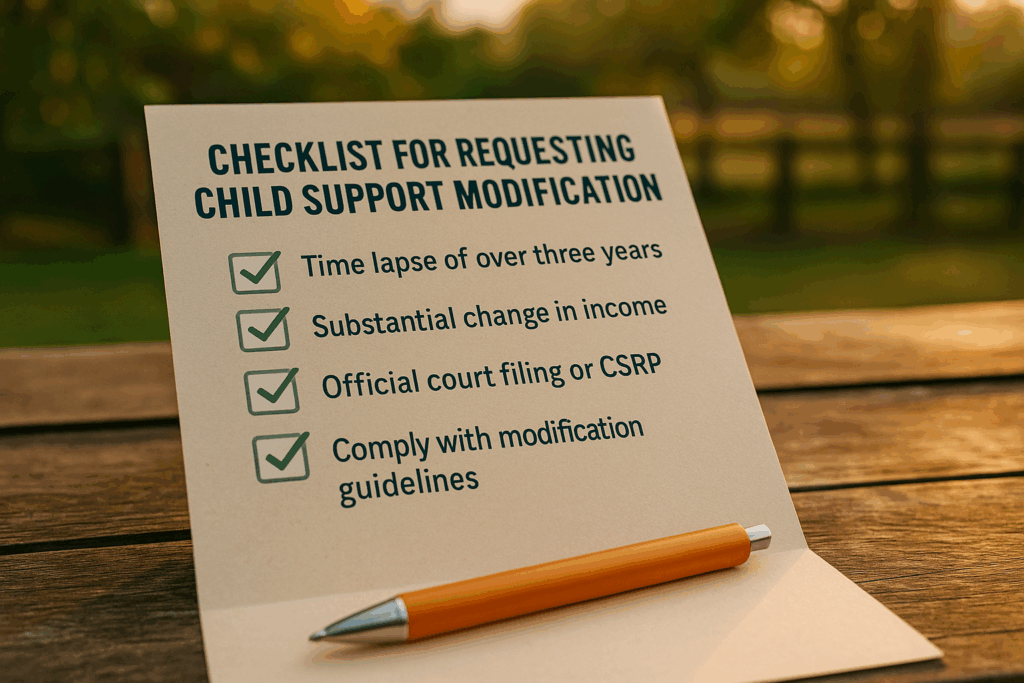
Many parents believe that child support automatically changes when their income does, but that’s not true under Texas law. Understanding how income affects Texas child support payments is crucial for staying compliant and ensuring your child’s financial needs are met. According to Texas Family Code §156.401, a modification is only allowed when there’s been a material and substantial change—like a job loss, promotion, or new source of income—or when at least three years have passed since the last order, resulting in a difference of either 20% or $100 per month under the current guidelines. For a step-by-step guide to calculating updated payments, visit Know How to Calculate Child Support When Preparing for a Modification.
All changes to child support must be made through the court or the Child Support Review Process (CSRP) managed by the Texas Attorney General’s Office. Informal agreements between parents, even if well-intentioned, are not legally enforceable and can lead to serious complications, including wage garnishment or arrears. By filing an official modification, both parents protect themselves while ensuring that the child’s financial stability remains uninterrupted.
Recent updates to Texas Family Code §154.125(a-1) have raised the net resource cap for child support calculations from $9,200 to $11,700 effective September 1, 2025—making it more important than ever to review older orders for accuracy. At The Law Office of Bryan Fagan, PLLC, our attorneys help Texas parents navigate child support modifications with clarity and compassion. For additional guidance, visit our Texas Child Support Resource to learn how we can help protect your rights and your child’s future.
Material and Substantial Change in Circumstances
A substantial change in circumstances includes an increase or decrease in the noncustodial parent’s income. Significant income changes can trigger a modification of child support payments. Parents should actively request child support payment modifications as income has significantly changed, rather than expecting automatic adjustments.
A significant raise may prompt the custodial parent to seek an increased child support order.
Documentation Needed for Modifications
To support a modification request, parents must provide evidence such as pay stubs and tax returns. A child support attorney can help clients prepare necessary documentation for hearings. Courts require proof to verify income changes before adjusting support amounts.
Parents should gather pay stubs, tax returns, and employment records, document bonuses, and contact an attorney if their income changes significantly.
Filing a Petition for Modification
To request a child support modification, file a petition with the court that issued the original order. After filing a request to modify child support, the court will review it to determine if an adjustment is warranted.
Child support orders can only be changed through a court order hearing or the Child Support Review Process (CSRP). The court’s involvement ensures that all child support order modifications are legally verified and documented.
Common Mistakes and How to Avoid Them
Inaccurate child support reporting can lead to legal repercussions, including wage garnishment and property liens. Both overpayment and underpayment of child support may trigger state enforcement actions. Many parents incorrectly assume child support payments will automatically adjust with income changes. Disclosing all income sources to the court is crucial for accurate child support calculations.
Understanding these common mistakes and how to avoid them is crucial for complying with child support obligations and avoiding legal issues.
Assuming Automatic Adjustments
Parents often mistakenly believe their child support obligations will automatically adjust with income fluctuations. This misconception can lead to misunderstandings about how parents understand child support legal obligations and responsibilities.
Parents must formally request modification requests for child support adjustments when income changes, instead of relying on automatic modifications.
Failing to Disclose All Income Sources
If a parent is found hiding income, the court can increase support. The court can also order penalties and impose sanctions. Disclosing all income sources is crucial for accurate child support calculations in Texas, ensuring the child’s financial needs are properly assessed.
Transparent disclosure of income sources fosters fairness and avoids future legal repercussions, ensuring the well-being of the child.
Legal Assistance and Accurate Reporting
Accurately reporting income and deductions is one of the most important parts of understanding how income affects Texas child support payments. Under Texas Family Code §154.062, child support is based on a parent’s net resources, which means the amount left after allowable deductions—such as federal income taxes, Social Security contributions, and the child’s health insurance premiums—are subtracted from gross income. Misreporting or failing to disclose all forms of income can lead to miscalculations, enforcement actions, or even court penalties. For a detailed explanation of how deductions and taxes factor into your payment amount, visit How Taxes and Deductions Affect Child Support Payments in Texas.
The recent update to Texas Family Code §154.125(a-1)—raising the cap on net monthly resources from $9,200 to $11,700 effective September 1, 2025—means these calculations now apply to a broader range of incomes. This adjustment ensures that support orders reflect real-world financial conditions and that children continue to benefit from both parents’ financial capabilities. However, because income sources can vary—especially for self-employed parents or those with investments—professional legal guidance is essential to ensure full compliance and accuracy under Texas law.
At The Law Office of Bryan Fagan, PLLC, our attorneys take pride in helping parents navigate these complex financial details with compassion and precision. We know that no two families’ financial situations are the same, and we work to ensure every client’s child support order reflects both fairness and the child’s best interest. For more educational resources and legal insights, visit our Texas Child Support Resource to learn how we help families protect their futures through accurate, law-compliant support arrangements.

Role of a Texas Child Support Attorney
Navigating how income affects Texas child support payments can be complex, especially when life circumstances—and finances—are constantly changing. Under Texas Family Code §154.062, courts calculate child support using a parent’s net resources, which include wages, commissions, self-employment income, and certain benefits after allowable deductions like taxes and insurance premiums are subtracted. When incomes fluctuate or disputes arise over what counts as income, having an experienced Texas child support attorney can make all the difference. You can learn more about the process and your rights by visiting Texas Child Support Resource.
A skilled attorney ensures that every detail—from income verification to deductions—is properly reviewed so that child support is both fair and compliant with state law. Legal representation is especially important when requesting a modification under Texas Family Code §156.401, which requires proof of a substantial change in circumstances or a three-year lapse since the last order. An attorney can also advocate for you in mediation or court, protecting your financial stability while prioritizing your child’s best interests.
At The Law Office of Bryan Fagan, PLLC, our attorneys combine legal expertise with compassion to guide parents through every phase of the child support process. Whether you’re establishing support, requesting a modification, or addressing enforcement issues, we make sure your case aligns with the latest updates—such as the 2025 increase in the net resource cap to $11,700 under Texas Family Code §154.125(a-1). Our mission is simple: to educate families, protect futures, and help Texas parents achieve fair, law-compliant outcomes that support their children’s well-being. For more information, explore our Texas Family Law Services.
Consequences of Inaccurate Reporting
Accurate income reporting is crucial to avoid overpayment, underpayment, and legal enforcement actions. Inaccurate income reporting can lead to significant financial consequences for both parents involved in child support.
Legal enforcement actions may be initiated if discrepancies between reported income and actual payments arise, affecting child support stability.
Internal and External Resources
The Texas Attorney General’s website offers a Child Support Calculator to help estimate potential changes in child support payments, including a new calculation for various scenarios. Providing access to resources, such as internal links to child support modification, enforcement, and family law services pages, can significantly help parents navigate Texas child support complexities.
External links to Texas Attorney General’s child support resources and Texas Family Code guidelines offer additional support and information regarding texas law. Use these resources to better understand your obligations and rights and take appropriate actions when needed.
Case Results and Testimonials
One client noted the legal team effectively handled a complex custody case, resulting in a favorable outcome that included sole custody. Several testimonials reflect positive experiences with quick resolutions, emphasizing timely court appearances facilitated by the attorneys.
These case results and testimonials highlight the efficacy and dedication of the legal team in achieving successful outcomes for their clients, providing reassurance and confidence to those seeking legal assistance, for example.
Conclusion:
Money, parenting, and emotions don’t always mix easily—but they do shape what life looks like after divorce. And understanding how income impacts child support is one of the smartest ways to bring a little calm to the chaos. Because at the end of the day, child support isn’t about winning or losing—it’s about making sure your child’s world keeps turning, even when everything else feels like it’s shifting.
If you’ve found yourself wondering whether your support order is fair, outdated, or even enforceable, you don’t have to figure it out alone. The family law attorneys at The Law Office of Bryan Fagan, PLLC have guided thousands of Texas parents through this exact process, helping them protect what matters most—stability, dignity, and peace of mind for their family.
So take a deep breath, maybe pour a cup of coffee, and remember—you’ve got options. Whether you need a fresh look at your child support order, help with enforcement, or simply want to understand your rights, our team is here to educate, empower, and protect your family’s future every step of the way.
Because while love may have started the family, it’s understanding—and the right legal guidance—that keeps it strong, even after everything changes.
Frequently Asked Questions
Usually, no. Texas child support is based primarily on the noncustodial parent’s income. However, a judge can consider the custodial parent’s income when deciding whether to deviate from the guideline amounts—for example, if the child has special educational or medical needs. The goal is always to meet the child’s best interests fairly.
Not automatically. A parent must request a modification through the court or the Texas Attorney General’s office. If your income increases substantially—or it’s been at least three years and the guideline amount differs by 20% or $100 per month—you can ask the court to review and update your support order.
As of September 1, 2025, Texas applies guideline percentages to an obligor’s net monthly income up to $11,700. That’s the maximum amount considered for guideline calculations, though courts may award additional support if a child has proven needs beyond that amount.
No. A new spouse’s income is not part of child support calculations under Texas law. The court focuses solely on the legal parent’s income and the child’s financial needs. However, if a new spouse’s income indirectly benefits the obligor (for example, by covering most household expenses), a court may take that into account in rare cases.
Generally, no. Your new spouse’s earnings are not factored into your child support calculation. Courts only review your own net resources. That said, trying to hide income or shift financial responsibility to your spouse can hurt your credibility with the court.
Focusing on the other parent instead of the child. The biggest mistake is making the case about conflict rather than the child’s best interests. Judges value cooperation, stability, and a genuine focus on your child’s well-being. Violating court orders, badmouthing the other parent, or refusing communication are all common—and costly—errors.
Beginning September 1, 2025, the Texas Family Code increases the net resource cap for calculating child support to $11,700 per month. This change reflects inflation and the rising cost of living, ensuring support amounts remain fair and adequate for Texas families.
It depends on income and number of children. Under guideline support, payments are typically:
20% of net income for one child
25% for two children
30% for three
35% for four
40% for five or more
For example, with $4,000 in net income, one child would receive about $800 monthly in guideline support before adjustments.
There are two “six-month” rules often discussed. For divorce, at least one spouse must have lived in Texas for six months and in the filing county for 90 days before filing. For custody cases, under the Uniform Child Custody Jurisdiction and Enforcement Act (UCCJEA), Texas typically has jurisdiction if the child has lived in the state for at least six months before the case begins.