

If you are considering the process for establishing guardianship in Texas, you likely want clarity on how to protect someone who cannot make decisions for themselves. Whether the person is an adult with diminished capacity or a child whose family situation requires legal assistance, you will need to understand the legal framework, practical steps, and responsibilities involved.
We’ll walk you through the essential details of guardianship in Texas, including less-commonly addressed topics to help you prepare thoroughly. So, let’s dive into the key aspects of how the process for establishing guardianship in Texas works, what to expect, and how you can proceed with confidence.
Recognizing When Guardianship May Be Appropriate
Before diving into the formal steps for establishing guardianship Texas, it helps to identify when guardianship is a viable option and what alternatives exist.
- Guardianship is a court-approved legal relationship in which a guardian is appointed to make decisions for another person (the “ward”) who is found to be incapacitated or unable to care for themselves or manage their affairs.
- In Texas, a guardian can be appointed for an incapacitated adult or for a minor when circumstances require.
- The statute requires that the proposed ward’s rights be limited only to the extent necessary, and the court must consider less-restrictive alternatives (such as powers of attorney, supported decision-making arrangements, or joint bank accounts).
Understanding this helps you assess whether you are ready to pursue the process for establishing guardianship of Texas and whether it is truly needed.
Legal Framework and Key Considerations
A firm grasp of the legal foundation is critical when you move forward with the process for establishing guardianship in Texas.
- The governing law is found primarily in the Texas Estates Code (especially Chapters 1101–1106) and related rules.
- Two main types of guardianship:
- Guardian of the Person: authority over personal matters such as health care, housing, daily care.
- Guardian of the Estate: responsibility for managing the ward’s assets, finances, property.
- The court must consider the proposed ward’s preferences, the least-restrictive method of assistance, and the best interests of the ward.
When you understand these legal basics, you can better prepare for what the court will examine during the process for establishing guardianship in Texas.
Step-by-Step Guide to the Process for Establishing Guardianship Texas
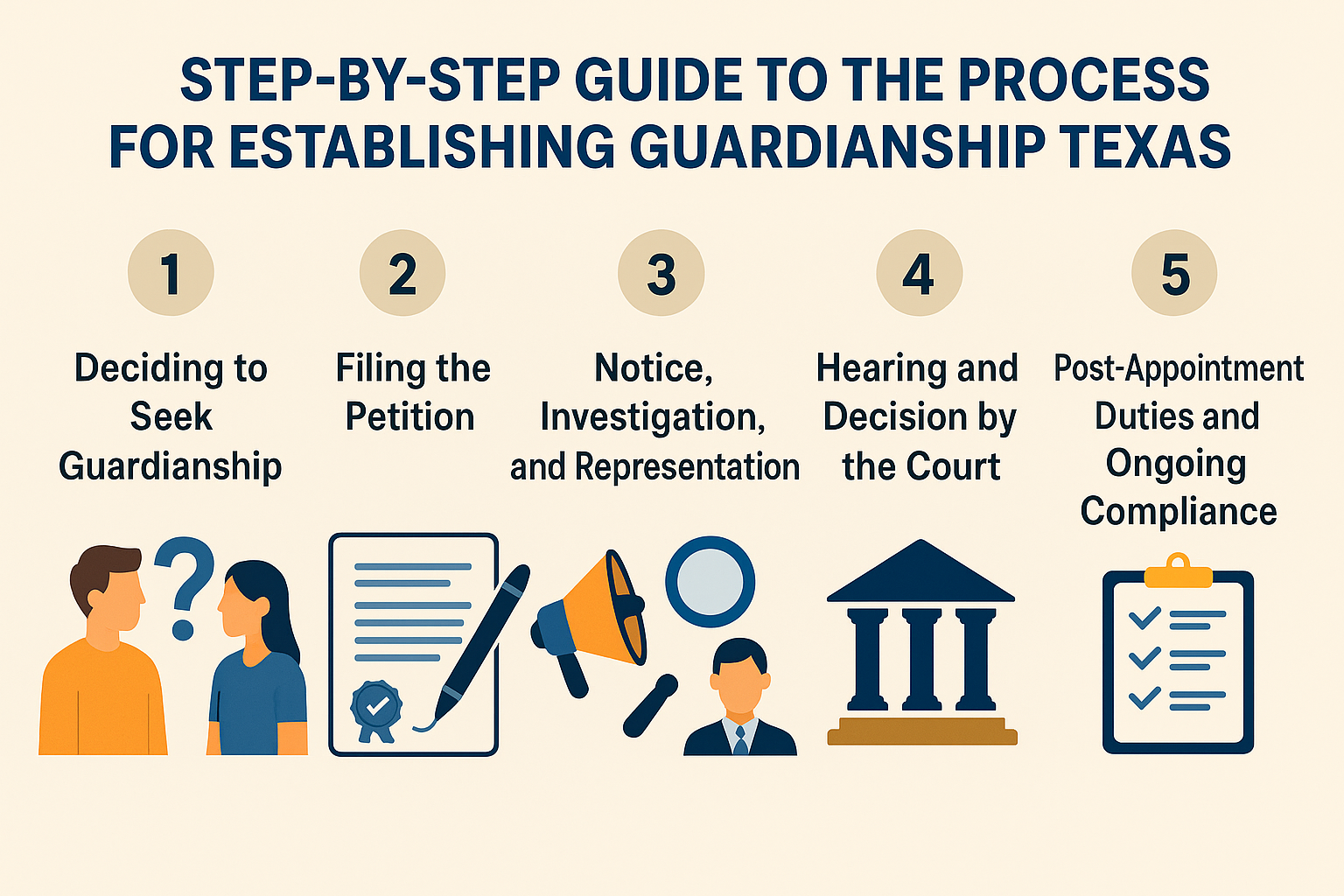
Here are the major phases you will encounter when moving forward with guardianship in Texas.
1. Deciding to Seek Guardianship
- Review whether less-restrictive alternatives might meet the person’s needs (e.g., durable power of attorney, supported decision-making).
- Learn who may petition for guardianship: generally a family member, friend, or other interested person.
- Understand that filing for guardianship has legal and personal implications: it limits some of the ward’s decision-making rights.
2. Filing the Petition
- You (or your attorney) must file an Application for Guardianship in the probate court of the county where the proposed ward resides.
- The application must include information about the proposed ward (name, residence, condition), the proposed guardian (name, address, relationship), the proposed ward’s assets and liabilities (if estate guardianship sought).
- A medical certificate is required: a doctor must evaluate the proposed ward and certify the inability to make decisions (i.e., incapacity).
3. Notice, Investigation, and Representation
- After the petition is filed:
- The proposed ward must be served with notice and given the opportunity to object.
- Other interested persons (relatives, caregivers) may also need to be notified.
- The court will appoint an attorney ad litem to represent the ward’s interests.
- The court may appoint a court investigator or guardian ad litem who visits the ward and reports back to the court.
These steps protect the rights of the proposed ward and ensure that the process for establishing guardianship Texas is conducted fairly.
4. Hearing and Decision by the Court
- A hearing will be scheduled where evidence is presented including medical reports, testimony about the ward’s condition, the proposed guardian’s qualifications, alternatives considered, and more.
- At the hearing the judge considers whether guardianship is necessary, what type of guardianship (person, estate, or both), and who should be the guardian.
- If approved, the court issues an order appointing guardian, specifying the scope of authority and any required bond.
5. Post-Appointment Duties and Ongoing Compliance
- Once appointed, the guardian must take an oath, post a bond (when required), and obtain letters of guardianship.
- The guardian must manage the ward’s personal and/or financial affairs in accordance with the law, keeping records and submitting annual or periodic reports to the court.
- The guardianship must be registered with the Judicial Branch Certification Commission (JBCC) as required by Texas law.
- If circumstances change (the ward improves, or other supports now work), the guardian or other party may petition the court to modify or terminate guardianship.
Common Roadblocks and Practical Considerations
When you proceed with the process for establishing guardianship Texas, you should be aware of potential difficulties and plan accordingly.
- Timing: The medical certificate must usually be recent (some counties require it within 120 days before hearing). Incomplete documentation can delay the hearing.
- Costs: Fees for filing, court-appointed attorneys (such as attorney ad litem), bonds, and legal representation can add up.
- Scope of Authority: The guardian’s power is not unlimited. Selling major assets, making major medical decisions, or moving the ward may still require court approval.
- Alternative Options: The court often expects you to explore less-restrictive means first; failing to do so may reduce the likelihood of appointment.
- County-Specific Procedures: Although state law governs general principles, individual counties can have different rules, forms, or virtual hearing options. For example, one large county requires the guardianship application hearing request to meet specific technical and fee requirements.
By preparing with these considerations in mind, you improve your chances of a smoother process.
Additional Considerations in the Guardianship Process
Successor Guardians
If the originally appointed guardian becomes unable or unwilling to serve, Texas law allows for the appointment of a successor guardian. You should anticipate how the transition may occur and whether the ward’s preferences should be documented.
Guardianship for Young Adults with Disabilities
When an adult child with disabilities is involved, guardianship may be sought around the 18-year mark previously managed by parents. It is important to consider how guardianship will affect eligibility for federal benefits, and whether more limited or supported decision-making might suffice.
Registration and Training of Guardians
In Texas, professional guardians and guardianship programs must register and meet certain training and background check requirements via the JBCC.
Even individual family-member guardians should understand the registration requirement and any local training obligations.
Annual Review and Changing Circumstances
The ward’s condition may change over time (improvement or further decline). The guardian should be aware of the process for modification or termination of guardianship if the ward regains capacity or alternative supports become effective.
Interplay with Other Legal Tools
Guardianship works alongside or instead of other tools like powers of attorney, advance healthcare directives, and trusts. In some cases, these tools may avoid the need for full guardianship or allow a narrower scope of decision-making oversight.
Making the Final Decision and Taking Action
Now that you know the process for establishing guardianship Texas in detail, consider how to move from consideration to a decision.
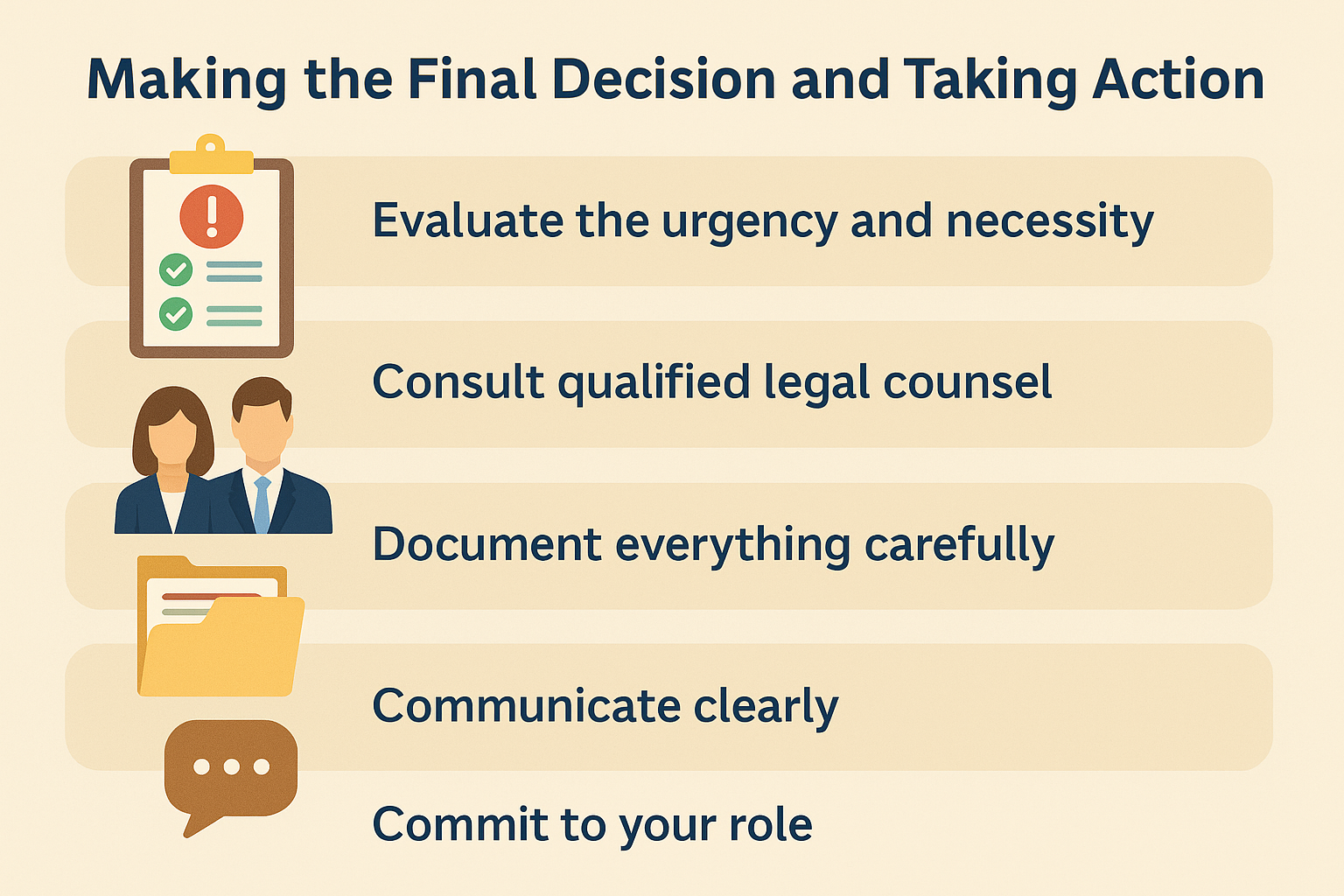
- Evaluate the urgency and necessity: Is someone at risk because they cannot manage their own affairs? Are there immediate needs that guardianship addresses?
- Consult qualified legal counsel: Because guardianship practice involves court filings, representation of the proposed ward, and ongoing compliance, working with a knowledgeable attorney is strongly advisable.
- Document everything carefully: Make sure all medical evaluations, notices, filings, and reports are accurate, complete, and timely.
- Communicate clearly with family and interested parties: Since notification and hearings involve relatives and other interested persons, open dialogue helps avoid surprises and objections.
- Commit to your role: If you are appointed, you will be responsible for the ward’s welfare and must act in the ward’s best interests, keep records, and comply with court reporting requirements.
By taking these steps, you position yourself to act responsibly and effectively if and when you move ahead with the process for establishing guardianship in Texas.
Conclusion
Understanding the process for establishing guardianship Texas is essential for anyone considering stepping into the role of guardian or helping a loved one obtain protection. From deciding whether guardianship is needed, through filing the petition and undergoing hearings, to carrying out the duties of guardianship and fulfilling reporting obligations, you have a comprehensive view of what lies ahead. While the path can be demanding, being prepared and informed ensures you act thoughtfully and in the best interest of the person who needs your support.
Other Related Posts
- Why You Need an Attorney for Living Will Decisions and Planning
- Finding the Right Texas Special Needs Trust Lawyer for Your Family’s Future
- Is a Living Will Legally Binding and How It Works in Real Situations
- Key Benefits of Minor Guardianship in Texas: Legal Protection and Parental Support
- Creating a Living Will: A Clear Legal Framework for Your Future Care
- How to File for Temporary Guardianship the Right Way: What You Need to Know
- Understanding the Cost of Special Needs Trust for Long-Term Planning
- How to Set Up a Living Will: Step-by-Step Legal Planning Guide
- Texas Guardianship Attorney Services: Essential Legal Support for Families
- Special Needs Trust Medicaid Guide: Protecting Benefits Without Sacrificing Support
- Advance Directives vs Living Will: A Practical Comparison for Medical Planning
- Texas Court Guardianship Evaluation Process: How It Works and What to Expect
Frequently Asked Questions
In Texas, you may have a Guardian of the Person (for personal, health, living decisions) and/or a Guardian of the Estate (for financial management). The court may appoint one or both depending on need.
It varies by county and case complexity. A key factor is obtaining the medical certificate and scheduling the hearing, which may take weeks or several months in some situations.
Yes. If the guardian fails to perform their duties, misuses the ward’s assets, or other circumstances justify it, the court may remove the guardian and appoint a successor.
Yes. Texas law and court practice expect that less-restrictive alternatives are considered (such as durable power of attorney, supported decision-making, joint accounts) before seeking full guardianship.
After appointment you will typically need to take an oath, post a bond when required, obtain letters of guardianship, register with the JBCC as necessary, manage the ward’s affairs responsibly, and file periodic or annual reports with the court detailing the ward’s condition and management of their estate if applicable.