

Ever try helping your kid with homework in the middle of a messy divorce? Imagine spelling words like “cooperation” and “stability” while juggling custody schedules, attorney emails, and math worksheets. It’s no surprise that grades can slip when home life feels like a courtroom drama. Mediation vs Litigation for Divorce isn’t just a legal fork in the road—it can shape how well your child concentrates in school, handles stress, and adjusts to their “new normal.”
Here’s the short version: mediation often supports your child’s academic stability better than litigation. Why? Because it’s built around cooperation, consistency, and keeping the adults focused on solutions—not arguments. But every family is different, and sometimes court involvement is necessary to protect a child’s educational needs.
In this blog, you’ll learn how Texas courts weigh academic performance in custody decisions, the real-world impact of divorce style on kids’ school success, and how parenting plans can make or break a child’s semester. We’ll share practical tips you can use right now—like how to work with your child’s school, what to include in a custody agreement, and when to call in tutoring or therapy. You’ll also hear fictionalized case stories pulled straight from real legal scenarios, guided by trusted family law attorneys at The Law Office of Bryan Fagan, PLLC.
Whether you’re early in the process or knee-deep in negotiations, keep reading to discover how the legal path you choose today can support your child’s academic future tomorrow.
Key Takeaways
- Divorce mediation is a non-adversarial process that allows couples to maintain control over their decisions, resulting in quicker resolutions and lower costs compared to litigation.
- Litigation is a formal and adversarial process that is often necessary for high-conflict or complex cases, providing legally binding decisions but potentially leading to lengthy and costly proceedings.
- Choosing between mediation and litigation should be based on the couple’s willingness to cooperate, the complexity of the case, and the emotional impacts of each process.

Your Family’s Future Starts Here
Don’t navigate your legal journey alone. Schedule a consultation now and get the clarity and support you deserve.
Understanding Divorce Mediation
Mediation vs Litigation for Divorce is more than a legal distinction—it’s a choice that can shape your family’s emotional well-being, financial future, and ability to move forward peacefully. At The Law Office of Bryan Fagan, PLLC, our legal professionals have helped countless Texas families navigate both paths, and for many, mediation offers a more collaborative, cost-effective, and empowering alternative to courtroom battles. Mediation allows couples to make their own decisions about property, custody, and support—rather than placing those outcomes in a judge’s hands.
In divorce mediation, a neutral third-party facilitator helps spouses communicate constructively, identify priorities, and reach legally sound agreements. The mediator doesn’t impose solutions but guides each party toward consensus. This method aligns closely with Texas Family Code §§ 6.602 and 153.0071, which recognize and enforce mediated settlement agreements (MSAs) when both parties follow proper legal procedures. Mediation is especially effective in cases with low conflict or where parents want to protect children from the adversarial nature of litigation.
One of the biggest advantages of mediation is its flexibility and speed. Sessions are scheduled at your convenience—not the court’s—and many couples resolve issues in just weeks. Once agreements are reached, they’re written into a memorandum of understanding and formalized into enforceable court orders. Recent updates to the Texas Family Code further strengthen the enforceability of these agreements, allowing families to avoid the time, expense, and unpredictability of litigation.
If you’re deciding between these two approaches, our guide Top Texas Divorce Mediation Options: What You Need to Know can help you weigh the pros and cons. You can also explore how customized parenting plans are handled in mediation by visiting our page on Texas parenting plans. As our attorneys frequently advise, mediation isn’t just a legal strategy—it’s a chance to protect your peace, your children’s stability, and your future.

The Litigation Process in Divorce
Divorce litigation is a more formal and adversarial process where a court resolves issues such as property division and child custody, including asset division. The litigation process includes:
- One spouse formally files a divorce petition, initiating the legal proceedings.
- Each spouse typically hires an experienced divorce attorney.
- Attorneys advocate for their clients’ interests and navigate the complexities of the court system, unlike traditional divorce litigation or a fully litigated divorce.
Court hearings are scheduled, and a structured process is used to gather evidence. This process is characterized by its public nature and strict adherence to court rules and legal procedures. The final decisions made in litigation are legally binding and enforceable by the court, providing a clear resolution to contested issues. Judges, however, often find that this structured and formal approach leads to lengthy and expensive proceedings, sometimes taking a year or more to finalize.
The adversarial nature of litigation can significantly increase the emotional and financial strain on both parties, often leading to party fights. Scheduled courtroom sessions contribute to the duration and cost of a litigated divorce, making it a less desirable option for some. Despite these drawbacks, litigation is sometimes necessary, particularly in high-conflict cases or when judicial intervention is required to ensure a fair outcome.
Legal Tip:
Every divorce case is different—and having the right legal support makes all the difference. If you’re navigating property division, child custody, or support concerns, strong Texas Divorce Attorney Services can help you protect what matters most and move forward with confidence.
At The Law Office of Bryan Fagan, PLLC, our experienced legal team provides personalized representation rooted in compassion and strategy. Whether your divorce is contested or amicable, we guide you through each step with clarity and care. For deeper insight into how we support Texas families, visit: Key Aspects of Texas Divorce Attorney Services for Clients .
Key Differences Between Mediation and Litigation
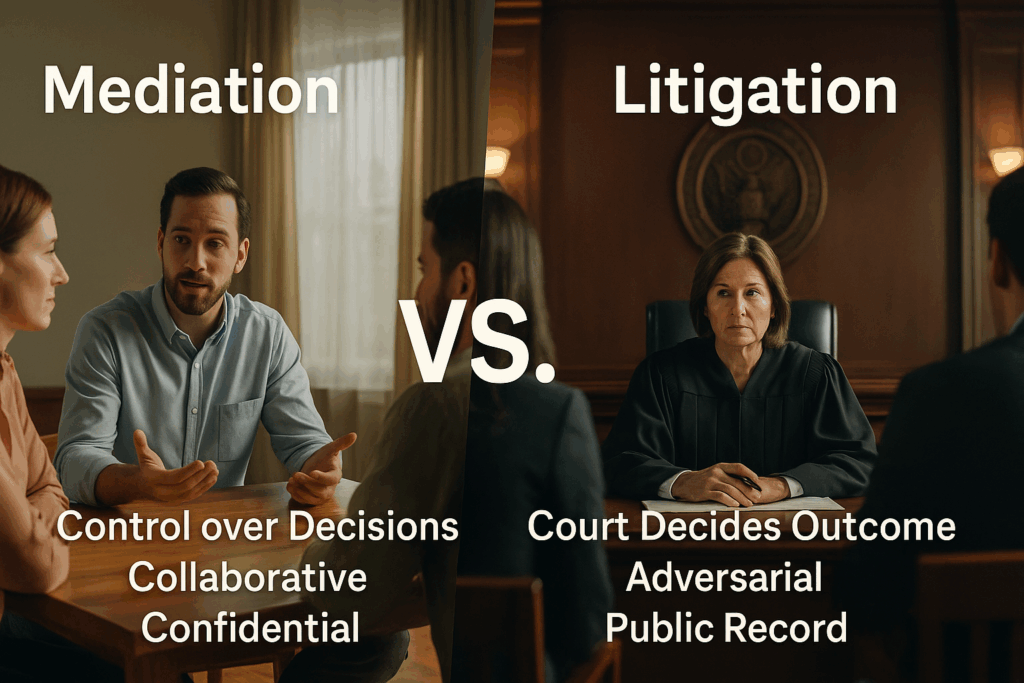
WhWhen weighing Mediation vs Litigation for Divorce, the differences go far beyond legal procedure—they influence the tone of the entire process and how families emerge on the other side. According to our family law team, one of the most defining contrasts lies in control. Mediation allows spouses to retain decision-making authority over matters like custody, finances, and property division. In contrast, litigation places those deeply personal decisions in the hands of a judge, whose rulings are final and legally binding under Texas Family Code § 6.602 and related provisions in Chapters 153 and 154.
Mediation fosters a cooperative, confidential environment where both parties are encouraged to communicate openly and work toward solutions that reflect their family’s unique needs. This approach not only improves the likelihood of mutually beneficial outcomes but also reduces the emotional strain so often associated with traditional litigation. Litigation, by nature, is adversarial—often increasing conflict, prolonging the timeline, and amplifying stress for both spouses and their children. This dynamic can create or reinforce power imbalances that negatively affect the outcome, especially in high-conflict or emotionally charged divorces.
Another key difference is privacy. Mediation sessions remain confidential, with discussions and drafts protected from public access. Litigation, however, occurs in open court, meaning personal financial disclosures, parenting concerns, and other sensitive issues become part of the public record. As we’ve seen in our work with Texas families, this loss of privacy can be a deciding factor for many clients—especially those looking to shield children or business interests from public exposure.
For a deeper dive into whether mediation is right for you, our attorneys recommend reviewing Understanding Divorce Mediation Options for Texas Couples. You’ll also find additional guidance on our divorce mediation services page, where we explain how our legal team can support you in choosing the most constructive path forward. Every family deserves a future shaped by intention, not contention—and we’re here to help you build it.
Legal Tip:
Considering divorce in Texas? High-conflict or uncontested, the right Texas Divorce Mediation Services can save you time, reduce stress, and protect your finances—especially when children or property are involved. Mediation empowers both parties to find common ground outside the courtroom.
At The Law Office of Bryan Fagan, PLLC, we provide client-focused, affordable mediation solutions tailored to your unique needs. From parenting plans to asset division, our experienced legal team is here to guide you through every phase of the process. Discover how we support families through strategic mediation by visiting: Understanding Divorce Mediation Options for Texas Couples .
When to Choose Mediation
Mediation is often the most constructive path forward when both spouses are willing to approach their divorce with cooperation and mutual respect. In the conversation surrounding Mediation vs Litigation for Divorce, mediation tends to be the better option for couples who value preserving family relationships, minimizing conflict, and maintaining control over decisions. As our attorneys frequently advise, mediation supports a more efficient and cost-conscious process—giving families the freedom to direct financial resources toward their children’s future, shared parenting goals, or long-term planning instead of courtroom battles.
Under Texas Family Code § 6.602, mediated settlement agreements (MSAs) are legally binding when executed properly, offering couples both flexibility and legal certainty. This is especially helpful for parents who want to remain actively involved in raising their children post-divorce. Mediation promotes co-parenting by giving both parties a voice, encouraging compromise, and focusing on long-term solutions. We’ve seen Texas families successfully resolve disputes around property, parenting time, and business ownership through mediation—sometimes with the support of divorce coaches or child specialists to guide the emotional side of the process.
For couples with relatively low-conflict disagreements or who simply need help structuring fair terms, mediation offers a peaceful and practical route. Open financial disclosure and a commitment to working through essential concerns—like child custody, support, and home stability—greatly increase the chances of a successful agreement. This process not only helps minimize post-divorce disputes but also allows couples to craft outcomes tailored to their unique situation, rather than relying on a judge to decide for them.
To better understand where mediation fits within the broader legal journey, we recommend reading Insight into the Steps in the Texas Divorce Process. You can also visit our divorce overview page to explore how our team supports families at every stage—from initial consultations to final agreements. As we’ve seen time and again, mediation can be a powerful tool for creating smoother transitions and stronger outcomes for everyone involved.
Legal Tip:
Feeling overwhelmed by divorce paperwork and court deadlines? Understanding the key Steps in the Texas Divorce Process can ease the stress and help you prepare for what’s ahead—from filing the petition to finalizing your decree.
At The Law Office of Bryan Fagan, PLLC, we walk clients through each stage of the divorce with clarity and confidence. Whether you’re navigating temporary orders, mediation, or final hearings, knowing what to expect makes all the difference. Learn more by visiting: Insight Into the Steps in the Texas Divorce Process .

When Litigation is Necessary
While mediation has many benefits, litigation becomes necessary in certain situations. High-conflict divorces where cooperation is impossible often require the intervention of the court system. Legal complexities that necessitate judicial intervention, such as significant financial disputes or complex custody arrangements, also indicate the need for litigation.
Cases involving domestic violence or safety concerns typically require litigation to ensure protection and a fair outcome. When mediation fails to resolve outstanding issues, litigation becomes the viable alternative. Judicial decisions are crucial in complex cases where parties cannot reach agreements due to significant disputes, making litigation necessary. Domestic abuse is a critical issue that often intersects with these legal processes.
The adversarial nature of litigation provides the structure and legal clarity needed to resolve contested issues fairly in high-conflict situations. Although more time-consuming and expensive, litigation ensures that all legal complexities are addressed and that the final divorce decree is enforceable by the court.
Cost Comparison: Mediation vs Litigation
One of the most defining aspects of Mediation vs Litigation for Divorce is cost—and the difference can be substantial. As our legal professionals have helped many clients understand, mediation typically involves fewer court filings, shorter timelines, and reduced attorney involvement, making it a far more affordable option for many Texas families. Under Texas Family Code § 6.709, courts have discretion to allocate attorney’s fees and costs equitably, which means that in a litigated divorce, one party may ultimately be ordered to pay the other’s legal expenses. This unpredictability can add financial strain to an already stressful situation.
Mediation, by contrast, is streamlined and collaborative, helping parties avoid the prolonged discovery processes and multiple hearings that drive up litigation costs. According to our family law team, we’ve worked with clients who saved tens of thousands of dollars by choosing mediation—funds they were able to redirect toward housing, children’s education, or rebuilding their financial foundation post-divorce. While professional services like child specialists or property appraisers may still be needed during mediation, these costs are typically far lower than drawn-out courtroom battles.
Recent updates to the Texas Family Code continue to support mediated settlement agreements (MSAs) as valid and enforceable when executed properly, further enhancing the value of mediation for families seeking quicker, less costly resolutions. These updates strengthen the legal framework that protects agreements made outside the courtroom, ensuring they’re not just practical but also binding.
For a closer look at how divorce-related costs are handled and who may bear those expenses, our attorneys recommend reading What to Expect and Who Bears the Cost for Divorce Expenses in Texas. You can also explore our divorce cost resource center for practical insights. As we’ve seen in our work with Texas families, choosing mediation doesn’t just reduce expenses—it gives clients greater control and peace of mind during one of life’s most challenging transitions.
Legal Tip:
Wondering about the actual cost of divorce in Texas? From court filing fees to attorney services and mediation, expenses can vary widely depending on the complexity of your case and whether it’s contested or uncontested.
At The Law Office of Bryan Fagan, PLLC, we believe in financial transparency. Our team helps clients understand what to expect—and how to plan—so there are no surprises along the way. To get a clear breakdown of potential divorce costs and who typically pays for what, visit: What to Expect and Who Bears the Cost for Divorce Expenses in Texas .

Timeframes for Resolution
The timeframes for resolving divorce disputes vary significantly between mediation and litigation:
- Mediation generally results in quicker resolutions, often resolving issues in weeks or months due to fewer procedural requirements and flexible scheduling of sessions.
- This quicker resolution process helps lessen prolonged emotional distress.
- Litigation is often a lengthy process compared to mediation.
In contrast, the litigation process can extend beyond one year, particularly if the case involves complex issues or high-conflict situations. The structured nature of court proceedings and the need for scheduled hearings contribute to these extended timelines. For those seeking a faster resolution, mediation offers a more efficient and less time-consuming alternative.
Emotional and Psychological Impact
The emotional and psychological impact of divorce processes cannot be overlooked. Divorce litigation often leads to increased resentment, stress, and an emotional toll on both spouses and children. The adversarial nature of litigation exacerbates emotional strain, making it a challenging and stressful experience.
In contrast, mediation promotes cooperation between spouses, significantly reducing the emotional toll and promoting healthier post-divorce relationships. Divorce mediation vs traditional litigation helps avoid hidden costs related to emotional stress and extended proceedings, leading to less stress and reduced animosity.
Mediation promotes a more amicable post-divorce relationship, offering emotional benefits that litigation often lacks.
Legal Requirements and Formalities
When navigating Mediation vs Litigation for Divorce, it’s important to understand that both processes come with specific legal requirements and formalities under Texas law. As our attorneys frequently advise, whether you resolve your divorce in the courtroom or through negotiation, key issues such as custody, child support, spousal maintenance, and property division must be thoroughly addressed. The Texas Family Code, particularly Chapters 153 and 154, outlines these obligations in detail and has been recently updated to reinforce the enforceability of mediated agreements and the need for accurate financial disclosure.
In mediation, both spouses are expected to provide full and honest documentation—such as income statements, debt disclosures, and parenting history—to support their positions. This transparency is essential to helping the mediator guide both parties toward a fair, workable agreement. While mediators do not impose decisions, they facilitate compromise and clarity. The result is often a mutually crafted resolution that reflects each party’s priorities—one that is documented in a written agreement and later filed with the court.
That agreement, once finalized, becomes enforceable under Texas Family Code § 6.602, provided it meets the statutory requirements. As we’ve seen in our work with Texas families, mediated settlement agreements (MSAs) are not just practical—they are powerful legal tools. Recent legislative updates have further clarified the court’s obligation to uphold properly executed MSAs, reducing the risk of post-divorce disputes and delays.
To better understand how custody decisions and parenting agreements are formalized in either mediation or litigation, we recommend reading Key Insights into Texas Family Law Custody Guidelines. You can also explore our child custody resource center for helpful tools and legal guidance. Whether you’re pursuing a collaborative divorce or preparing for litigation, our team is here to ensure your agreements are comprehensive, enforceable, and aligned with your family’s future.

Client Success Stories
Client success stories illustrate the positive outcomes of mediation and litigation. For instance, one couple managed to co-own their home amicably after divorce, allowing them to focus on their children’s well-being without court involvement. During mediation sessions, another couple negotiated a framework for their shared assets, enabling them to make future decisions based on market conditions.
These stories highlight how mediation can help avoid contentious courtroom battles, ensuring that couples reach mutually agreeable solutions that prioritize their family’s needs. Such examples demonstrate the practical benefits of mediation in resolving divorce disputes amicably and efficiently.
Consulting an Experienced Divorce Attorney
Consulting with a knowledgeable divorce attorney is one of the most important steps you can take when evaluating Mediation vs Litigation for Divorce. As our legal professionals have helped many clients understand, every divorce is different—and your goals, family dynamics, and financial considerations should shape the strategy that’s right for you. An experienced Texas divorce lawyer can walk you through the requirements outlined in the Texas Family Code, including recent updates to §§ 6.602, 153.134, and 154.001, which govern mediated agreements, custody determinations, and child support obligations. Having the right legal advisor means gaining clarity on timelines, costs, and legal rights from the very beginning.
According to our family law team, clients often come to us unsure whether to pursue mediation, litigation, or a combination of both. We help you make that decision with confidence. Whether you’re leaning toward peaceful negotiation or preparing for a high-conflict custody case, our attorneys have the experience to support either path. The flexibility of having both skilled litigators and trained mediators in-house ensures you receive representation that evolves with your case and adapts to your needs. We can also help you determine when hybrid approaches or court-ordered mediation might apply under Texas law.
If you’re just starting the divorce process or want to explore your options more deeply, we encourage you to visit our resource center on Texas divorce representation. This page offers helpful guidance on how our team approaches both litigation and mediation, including links to timelines, FAQs, and client success stories that reflect our dedication to educating families and protecting futures.
No matter where you are in the process, you don’t have to face it alone. Contact our team at The Law Office of Bryan Fagan, PLLC for a free consultation. We’ll help you understand the big picture and map out the best next step for your family with honesty, compassion, and confidence.
Legal Tip from a Trusted Texas Divorce Attorney:
Curious about the real cost of divorce in Texas? Whether your case involves mediation, attorney fees, court filings, or expert consultations, total expenses can vary significantly based on complexity and whether the divorce is contested.
As a leading Texas Divorce Attorney, The Law Office of Bryan Fagan, PLLC is committed to financial transparency and helping families plan wisely. For a detailed guide on what you might expect to pay—and who’s typically responsible for those costs—visit: What to Expect and Who Bears the Cost for Divorce Expenses in Texas .

Conclusion:
Choosing between mediation and litigation for divorce isn’t just about legal strategy—it’s about how you show up for your kids when life feels upside down. Every parenting decision during this time sends a message, and deciding how to resolve conflict can either add to your child’s stress or ease the burden they’re quietly carrying. You don’t have to be perfect—you just have to be present, consistent, and willing to build a better path forward.
If you’ve made it this far, chances are you care deeply about doing right by your children. That matters. Whether you’re leaning toward mediation, preparing for court, or still figuring things out, know that the choices you make today can help protect your child’s sense of stability, especially in the classroom.
If you’re ready to talk options or want a second set of eyes on your parenting plan, we’re here. The team at The Law Office of Bryan Fagan, PLLC brings compassionate legal guidance grounded in Texas law, with your family’s future at the heart of everything we do. You don’t have to navigate this alone—and you don’t have to wait for things to get worse before getting help.
And hey—if you managed to read this while helping with a science fair project or packing lunches, you’re already doing great. Let us help with the legal side, so you can keep showing up where your kids need you most. Give us a call or book a free consultation today—we’re ready when you are.
What is the difference between mediation and litigation in divorce?
Mediation is a collaborative process where a neutral mediator helps divorcing spouses reach agreements outside of court. Litigation is a formal legal process that takes place in court, with a judge making final decisions if the parties cannot agree.
What is the downside to divorce mediation?
The downside to divorce mediation is that it may not be effective if one spouse is unwilling to cooperate, is hiding assets, or if there’s a significant power imbalance. In such cases, agreements may be unfair or incomplete without court oversight.
Is mediation better than litigation?
Mediation is often better than litigation for couples who can communicate and cooperate, as it tends to be faster, more cost-effective, and less stressful. However, in high-conflict cases, litigation may be necessary to ensure fairness and legal protection.
What is a key advantage of mediation over litigation?
A key advantage of mediation over litigation is that it allows the spouses to retain control over the outcome, rather than having a judge make decisions for them. It also preserves privacy and fosters cooperation.
When should you not use mediation?
Mediation should not be used when there is a history of domestic violence, abuse, or coercive control. It’s also not ideal when one party is dishonest, unwilling to negotiate in good faith, or hides financial information.
Is mediation less expensive than litigation?
Yes, mediation is generally much less expensive than litigation. It involves fewer legal fees, avoids court costs, and typically resolves disputes faster, which significantly reduces overall expenses.
What not to say in divorce mediation?
In divorce mediation, avoid making threats, blaming the other party, or using emotionally charged language. Statements that show unwillingness to compromise or are dismissive of the other person’s perspective can derail progress.
Do most lawsuits settle in mediation?
Yes, the majority of lawsuits—including divorce cases—settle in mediation or through negotiation before reaching trial. Mediation offers a more efficient and amicable way to resolve disputes without prolonged litigation.
What is the success rate of divorce mediation?
Divorce mediation has a high success rate, with studies showing that approximately 70–80% of cases reach a full or partial agreement through the process, especially when both parties are committed to resolving issues cooperatively.