

You’re running late for pickup, the dog just threw up on the carpet, and your co-parent won’t stop texting about switching weekends—again. Sound familiar? For Texas parents in the middle of a custody dispute, chaos isn’t the exception; it’s the daily routine. If that’s hitting a little too close to home, you’re not alone—and you’ve probably wondered where to even start to find a child custody attorney in Texas who can help you bring order to the madness.
This blog is your go-to guide for doing just that. Whether you’re newly separated or knee-deep in court documents, we’re here to walk you through how to find the right attorney—and why that choice can make all the difference in how your family moves forward. We’ll unpack what Texas courts really look at in custody cases, how to avoid the most common co-parenting pitfalls, and what a smart custody agreement actually looks like behind the legal jargon.
Along the way, you’ll get easy-to-follow tips, insights most parents never hear until it’s too late, and real-world scenarios pulled straight from the lives of Texas families we’ve helped. Because here at The Law Office of Bryan Fagan, PLLC, we don’t just deal in legal strategy—we deal in people, peace of mind, and building futures that work. So go ahead, take a deep breath. We’ve got you covered. Let’s get into it.
Key Takeaways
- Hiring a child custody attorney is essential for navigating Texas custody laws and protecting parental rights, ensuring both compliance with legal standards and support during emotionally charged situations.
- Key qualities of an effective family law attorney include experience with child custody cases, strong communication skills, empathy, and a personal approach to client relationships.
- Mediation is a valuable tool in resolving custody disputes, promoting collaboration between parents, and focusing on the child’s best interests, thereby reducing emotional and financial burdens associated with litigation.

Your Family’s Future Starts Here
Don’t navigate your legal journey alone. Schedule a consultation now and get the clarity and support you deserve.
Why You Need a Child Custody Attorney in Texas
Child custody disputes in Texas often involve a mix of emotional difficulty and legal complexity. As we’ve seen in our work with Texas families, these cases are rarely black-and-white. To protect your rights and your child’s well-being, it’s critical to work with a lawyer who is well-versed in the Texas Family Code, especially § 153.002, which requires courts to prioritize “the best interest of the child” in all conservatorship decisions. If you’re beginning this process, one of the most empowering steps you can take is to speak with an experienced custody attorney who understands the legal system and cares about protecting your family’s future.
Judges evaluating custody cases consider several factors—each parent’s ability to provide a safe and stable home, the child’s emotional and physical needs, and any history of family violence or substance abuse. These standards are detailed in §§ 153.005–153.131 of the Texas Family Code. Our legal professionals have helped many clients understand how to prepare for these evaluations, present credible evidence, and secure arrangements that truly reflect the child’s best interests. If you’re trying to Find a Child Custody Attorney in Texas, be sure to choose someone who can build a strategy that addresses both legal and emotional concerns.
As our attorneys frequently advise, child custody lawyers do more than argue in court. They play a pivotal role in drafting and enforcing custody agreements, handling modification requests, and ensuring compliance with court-issued orders. By working proactively with your attorney, you can also reduce the risk of future conflicts and create a stable long-term environment for your child. Whether you’re negotiating Joint Managing Conservatorship or seeking Sole Managing Conservatorship, the right legal advocate makes the process smoother and far more manageable.
Custody battles are hard, but you don’t have to go through them alone. Our team is committed to supporting families through every step of the journey. To better understand what lies ahead, we encourage you to read our detailed guide on Texas custody cases. Taking that first step to speak with a qualified attorney can bring clarity, control, and peace of mind when it matters most.
Legal Tip:
Feeling uncertain about your child custody situation in Texas? You’re not alone—and you’re not without solutions. A trusted Texas Child Custody Attorney can help you approach the process with confidence, clarity, and care for your child’s well-being.
At The Law Office of Bryan Fagan, PLLC, our experienced legal team walks parents through every stage of the custody process—from filing and mediation to court hearings and final orders. Whether you’re pursuing a cooperative parenting plan or preparing for a contested case, our attorneys provide personalized guidance tailored to your family’s needs. Learn how we help families stay informed and empowered in our article: What Does the Court Consider in a Custody Case?

Qualities of a Great Family Law Attorney
When searching for a family law attorney, certain qualities can make a significant difference in the outcome of your case:
- Experience in handling child custody cases is paramount.
- Attorneys with a strong background in family law matters are more adept at navigating the complexities of these disputes.
- Such attorneys can offer strategic advice tailored to your situation.
Effective communication skills are also crucial. A great family law attorney will clarify complex legal terms and keep you informed throughout the process, fostering transparency and trust in collaborative law, while also providing essential legal counsel and managing important legal documents.
Empathy is another essential quality. Family law matters often involve sensitive and emotionally charged situations. An empathetic attorney can better understand your challenges and provide the necessary support during difficult times. Clients have repeatedly praised their attorneys for being attentive, caring, and genuinely invested in their cases. For instance, one client highlighted their attorney’s thoroughness and kindness during a custody hearing, which significantly impacted the outcome.
Furthermore, the personal touch of an attorney can make you feel more than just a case number. A client described how their attorney made them feel like family, demonstrating the importance of a supportive legal team.
These qualities—experience, effective communication, empathy, and a personal touch—combine to create a formidable advocate in your corner.
How to Find a Child Custody Attorney in Texas
Finding the right legal representation can feel overwhelming, especially when you’re facing the emotional weight of a child custody case. As our attorneys frequently advise, starting with clear, informed steps can simplify your search and lead you to the right advocate. A good place to begin is by searching “Find a Child Custody Attorney in Texas”—a phrase that can yield more focused and relevant results. Look for attorneys with deep experience in Texas family law, especially those who handle conservatorship, visitation, and support matters governed by Texas Family Code §§ 153.001–153.317, which outline the legal standards for custody arrangements in Texas.
Online legal directories, law firm websites, and client reviews on platforms like Avvo and Google can offer helpful insight into an attorney’s reputation and success in handling custody disputes. Our legal professionals have helped many clients understand what to look for: a proven track record, compassionate communication, and a thorough understanding of the latest updates to Texas law. You might also consider reaching out to friends or family who have gone through similar custody proceedings. Referrals from people you trust can connect you with attorneys who’ve already made a difference for other families in situations like yours.
Once you’ve created a shortlist, take time to verify each attorney’s credentials through the State Bar of Texas. Check for any disciplinary actions and ensure they are in good standing. From there, schedule consultations to get a feel for each attorney’s approach. At The Law Office of Bryan Fagan, PLLC, we offer free initial consultations so parents can sit down with one of our attorneys, ask questions, and determine whether we’re the right fit. These meetings are a valuable opportunity to discuss your goals, concerns, and legal options before moving forward.
Choosing the right attorney is one of the most important steps you’ll take when navigating the complexities of child custody. For more guidance on what to expect throughout this process, we recommend reading our article Texas Child Custody Laws: What Parents Need to Know. It offers a comprehensive overview of custody types, court procedures, and parental rights—all designed to help you feel empowered and informed as you make decisions for your family’s future.
Legal Tip:
Navigating a custody case in Texas can feel overwhelming—but having the right support makes all the difference. Choosing strong Texas Child Custody Legal Representation ensures that you’re prepared at every step, with your child’s best interests front and center.
At The Law Office of Bryan Fagan, PLLC, we help parents tackle the complexities of custody filings, mediation, court hearings, and final orders. Whether your case is amicable or contested, our legal team offers compassionate, strategic guidance tailored to your family’s needs. Learn more about how Texas courts approach custody decisions in our detailed breakdown: What Does the Court Consider in a Custody Case?

The Child Custody Process in Texas
Initiating a child custody case in Texas requires filing a Suit Affecting the Parent-Child Relationship (SAPCR). This legal action sets the stage for the court to intervene and make decisions regarding custody arrangements. Texas family courts always prioritize the best interests of the child when making custody determinations. This means that any custody arrangement can be altered if there are significant changes in circumstances that affect the child’s well-being.
Following court-issued temporary orders is crucial during ongoing custody cases. These orders provide guidelines that both parents must adhere to until a final decision is reached. Legal representation is invaluable at this stage, as an experienced child custody lawyer can help you navigate the complexities of filing and modifying custody agreements. This increases the likelihood of a favorable outcome and ensures that your child’s needs are met.
The child custody process can be daunting, but understanding the steps involved and having the right legal support can make a significant difference. From filing the initial SAPCR to adhering to temporary orders and presenting your case in court, each phase of the legal process requires careful attention and strategic planning, especially when dealing with child protective services, family and protective services, guideline child support, child support matters, and custody issues.
With the help of an experienced family law attorney, you can navigate these challenges and work towards a custody arrangement that supports your child’s stability and success.
Types of Child Custody in Texas
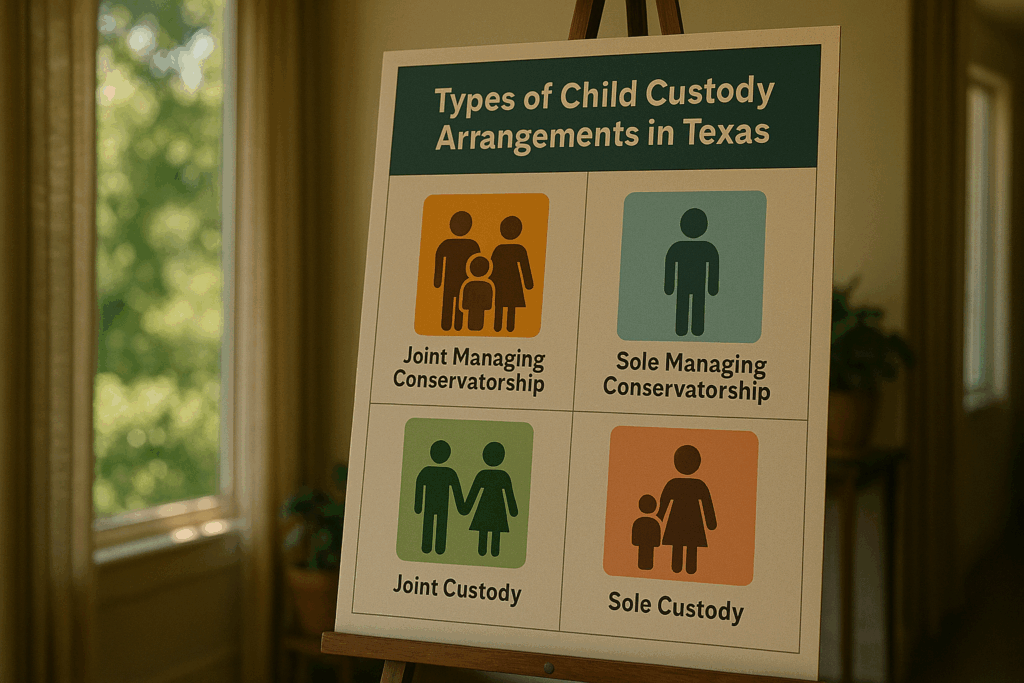
In Texas, “child custody” is legally referred to as conservatorship, and understanding the differences among its types is critical for parents navigating divorce. As our attorneys frequently advise, there are three primary forms: Joint Managing Conservatorship (JMC), Sole Managing Conservatorship (SMC), and Possessory Conservatorship (PC). According to Texas Family Code § 153.131, courts generally presume that a joint managing conservatorship is in the best interest of the child—unless specific facts demonstrate that such an arrangement would not be appropriate. This structure allows both parents to share in the rights and duties of raising their child and encourages a collaborative approach to parenting.
In a JMC arrangement, both parents may be involved in making decisions about the child’s education, medical care, and moral upbringing. However, courts may assign exclusive rights to one parent in specific areas depending on the family’s unique circumstances. In contrast, a sole managing conservatorship—governed by Texas Family Code § 153.132—grants one parent the exclusive right to make key decisions, often used in situations involving neglect, abuse, or absence. In these cases, the other parent is typically designated as a possessory conservator, meaning they may have visitation rights but do not share in major decision-making responsibilities.
Possessory conservatorship, detailed in Texas Family Code § 153.192 and the Standard Possession Order under § 153.3101, governs how and when the non-custodial parent can spend time with the child. These orders are designed to create stability while accommodating the logistics of both parents’ schedules. Our legal professionals have helped many clients understand how these legal structures function in real life, ensuring that parenting plans meet both legal requirements and the emotional needs of children during and after a divorce.
If you’re going through a divorce or separation and unsure which type of conservatorship applies to your case, it’s crucial to consult with a qualified legal professional. We invite you to explore our in-depth guide on Texas child custody laws for divorcing parents to learn more about your options. And when you’re ready to take the next step and Find a Child Custody Attorney in Texas, make sure you’re working with someone who understands the law—and the lives it impacts.
Protecting Your Visitation Rights
Visitation rights are a critical aspect of child custody arrangements, particularly for non-custodial parents. These rights are established through court orders that specify the times and conditions under which a parent can see their child. Judges in Texas consider the history of the parent-child relationship and the child’s best interests when determining visitation rights. If you believe the current arrangement is not serving your child’s best interests, you can petition the court for modifications.
A family law attorney can be instrumental in negotiating visitation arrangements that prioritize the child’s well-being and the family’s well being in a family law matter. A family lawyer can help address issues like parental alienation, where one parent undermines the child’s relationship with the other parent. Maintaining a calm demeanor during custody disputes can positively affect court perceptions and outcomes. Family lawyers can provide valuable support throughout this process.
Mediation is another effective tool for resolving visitation disputes. This process allows parents to remain in control of decisions regarding their children’s welfare, rather than leaving these decisions to a judge. Mediation fosters long-term benefits, including:
- Improved co-parenting
- A stable environment for children Creating a parenting plan during mediation allows parents to:
- Clarify their roles and responsibilities
- Enhance future co-parenting efforts.
Overcoming Challenges in Child Custody Cases
As we’ve seen in our work with Texas families, child custody disputes often escalate into emotionally charged and legally complex battles—especially when false accusations enter the picture. Allegations of neglect, abuse, or parental unfitness can severely impact custody outcomes. That’s why it’s essential to Find a Child Custody Attorney in Texas who understands how to protect your rights and your child’s well-being under the law. According to Texas Family Code § 153.131, courts presume that appointing both parents as joint managing conservators is in the child’s best interest—unless there is credible evidence to the contrary. In cases involving contested allegations, the court requires clear and convincing evidence, making qualified legal representation absolutely critical.
False accusations can derail even the most straightforward custody case. Our legal professionals have helped many clients understand the importance of gathering factual, verifiable evidence early in the process. From subpoenaing records to coordinating witness testimony, an experienced attorney plays a vital role in guiding clients through the fact-finding and litigation phases of a custody case. Without strategic counsel, parents may experience prolonged litigation, financial strain, and emotional distress—all while their relationship with their child hangs in the balance. Under Texas Family Code § 153.004, the court takes allegations of abuse and violence seriously—but also considers the credibility and motive behind such claims.
High-conflict custody cases require a careful balance of legal precision and emotional intelligence. According to our family law team, the key to navigating these challenges lies in clear communication, strategic planning, and timely legal action. Whether you’re defending against false claims or initiating custody proceedings, an experienced legal team can help you assert your parental rights, protect your child’s emotional health, and ensure that your case aligns with the most recent updates to the Texas Family Code. Representation also becomes especially critical when property division and spousal claims intertwine with the custody battle—requiring coordinated legal strategy.
If you’re facing a heated custody dispute or defending against harmful accusations, we encourage you to read our insights on Texas custody guidelines to better understand what lies ahead. And when you’re ready to take action, remember that the right legal team can make all the difference. To Find a Child Custody Attorney in Texas who will fight for your future and your family, start by scheduling a consultation with a firm that knows how to turn knowledge into protection.
Legal Tip:
Not sure what to expect from a custody case in Texas? You’re not alone. Understanding your rights and responsibilities as a parent starts with having Texas Child Custody Laws Explained in plain language.
At The Law Office of Bryan Fagan, PLLC, we break down complex custody rules into clear, actionable guidance. From legal terminology to the realities of joint and sole conservatorship, we help parents approach every step—filing, mediation, court—with confidence. Discover how custody decisions are made in Texas and how to protect your child’s future: What Does the Court Consider in a Custody Case?

The Role of Mediation in Child Custody Disputes
Mediation is a valuable tool for resolving child custody disputes, offering a structured and supportive environment for parents to communicate effectively. This process focuses on the best interests of the child, encouraging parents to collaborate and find mutually agreeable solutions. Mediation can significantly reduce the emotional and financial burdens typically associated with legal proceedings.
The mediator’s role is to guide discussions, promoting collaboration and ensuring that both parties involved’ viewpoints are considered. Addressing the emotional dynamics thoughtfully in mediation can lead to more constructive outcomes and better relationships between parents. If mediation does not result in an agreement, options such as litigation or arbitration may be pursued to resolve disputes.
Successful mediation fosters long-term benefits, including improved co-parenting and a stable environment for children. Creating a parenting plan during mediation allows parents to clarify their roles and responsibilities, enhancing future co-parenting efforts. Mediation allows parents to remain in control of decisions regarding their children’s welfare, providing a more amicable and collaborative approach to resolving custody disputes.
Why Choose The Law Office of Bryan Fagan, PLLC?
At The Law Office of Bryan Fagan, PLLC, supporting families through complex child custody matters isn’t just a legal service—it’s a mission rooted in compassion, strategy, and results. With decades of combined experience handling custody disputes across Texas, our legal professionals have helped many clients understand and assert their rights under Texas Family Code § 153.002, which emphasizes that all conservatorship decisions must reflect the best interest of the child. This guiding principle informs every legal strategy we build, from negotiating parenting plans to advocating in contested hearings.
As our attorneys frequently advise, securing the right legal team early in your case can make all the difference. We proudly offer free initial consultations so parents can explore their legal options without financial pressure. Our offices across Greater Houston are designed to make high-quality legal support accessible, no matter where you live. Whether you’re pursuing Joint Managing Conservatorship or navigating a Sole Managing Conservatorship case due to complex family dynamics, our team brings a balanced approach of empathy and legal precision to every client interaction.
When you’re ready to take the next step and Find a Child Custody Attorney in Texas, it’s important to work with a firm that understands the emotional and legal challenges you face. Partnering with our team connects you to attorneys who not only know the law but who will stand by you through one of the most personal legal journeys of your life. Our attorneys stay current with the latest updates to the Texas Family Code, ensuring that your case strategy reflects the most up-to-date protections and procedures available under state law.
To learn more about how the right representation can impact your custody case, we invite you to read our in-depth article on choosing the best child custody lawyer in Texas. At The Law Office of Bryan Fagan, PLLC, we’re here to educate, advocate, and help you build a future where your child’s needs come first—and your parental rights are fully protected.

Client Success Stories
Client testimonials serve as powerful social proof, demonstrating the firm’s effectiveness in navigating child custody matters. Many clients have successfully regained custody of their children after hiring skilled attorneys from The Law Office of Bryan Fagan, PLLC. These success stories highlight the firm’s commitment to achieving positive outcomes and fighting for parental rights.
One client shared how the firm’s dedication and strategic approach helped them secure primary custody of their child, despite facing significant legal challenges. Another client praised the firm’s compassionate support and legal expertise, which enabled them to modify existing custody arrangements to better serve their child’s needs. These testimonials underscore the firm’s ability to handle complex family law cases with professionalism and care.
Potential clients are encouraged to consult with The Law Office of Bryan Fagan, PLLC to discuss their custody concerns and explore how they can achieve similar success. Whether you’re dealing with a high-conflict divorce, seeking to modify visitation rights, or navigating false accusations, the firm’s experienced legal team at McClure Law Group is ready to provide the support and representation you need.
Conclusion:
Custody battles are rarely just about legal rights—they’re about routines, relationships, and real-life moments that shape your child’s future. If you’ve made it this far, chances are you’re doing what every good parent does: looking for answers, stability, and a way forward that protects what matters most. That’s not easy—but you don’t have to figure it all out alone.
At The Law Office of Bryan Fagan, PLLC, we believe that clarity, compassion, and smart legal guidance go a long way. Whether you’re facing your first custody negotiation or trying to untangle a situation that’s gotten out of hand, the right attorney can help you move from chaos to confidence—with a plan that actually works for your family.
So if today’s been another day of hard decisions, big emotions, and unanswered questions, here’s one thing you can check off your list: finding someone who gets it. We’re here, we’re listening, and we’re ready to help you take the next step—at your pace, and on your terms.
Whenever you’re ready, reach out. Let’s talk about your goals, your concerns, and how we can help protect your child’s future—and give you back some peace of mind in the process. And hey, if all you’ve managed today is reading this blog between carpool and reheating coffee for the third time, you’re doing just fine. Let’s take it from here.
Texas Child Custody FAQs
How much does a child custody case cost in Texas?
Child custody cases in Texas can cost anywhere from $3,500 to $30,000 or more, depending on the complexity of the case, attorney fees, whether it is contested or uncontested, and whether expert witnesses or psychological evaluations are needed.
What is rule 11 in child custody in Texas?
Rule 11 refers to an agreement between parties that is filed with the court in writing and signed by both parties or their attorneys. In child custody cases, it allows parents to formalize temporary or ongoing agreements, but it must be approved by the judge to become enforceable.
How hard is it for a father to get 50/50 custody in Texas?
It is possible for fathers to get 50/50 custody in Texas, especially if they demonstrate active involvement, stable housing, and cooperative co-parenting. Courts do not favor one gender over the other; they focus on the child’s best interest, per Texas Family Code § 153.002.
Can I get a court-appointed attorney for child custody in Texas?
Court-appointed attorneys are typically reserved for cases involving Child Protective Services (CPS) or if your parental rights are at risk of being terminated. In private custody disputes, you are generally responsible for hiring your own attorney.
Are custody lawyers worth it?
Yes, custody lawyers can be invaluable. They provide legal expertise, protect your parental rights, help draft enforceable agreements, and increase your chances of achieving a favorable outcome—especially in complex or contested custody matters.
How long does a child custody case take in Texas?
Child custody cases can take anywhere from a few months to over a year in Texas, depending on whether the case is contested, if mediation is successful, court availability, and how quickly both parties respond to legal processes.
What makes a parent unfit for custody in Texas?
A parent may be deemed unfit if they have a history of abuse, neglect, substance abuse, criminal activity, mental illness that affects parenting ability, or if they cannot provide a safe and stable environment for the child.
What do judges look for in custody cases in Texas?
Judges evaluate the child’s best interest using factors like each parent’s ability to provide a stable home, history of caregiving, emotional and physical needs of the child, co-parenting cooperation, and any history of family violence or neglect.
What is the most common child custody arrangement in Texas?
The most common arrangement in Texas is joint managing conservatorship (JMC), where both parents share decision-making responsibilities, although one parent may have the exclusive right to determine the child’s primary residence.