
Arson In America
Arson in the U.S. continues to be a pressing issue with devastating consequences for communities nationwide. This deliberate act of setting fire to property not only causes immense property damage but also endangers lives and strains emergency resources. The motivations behind arson in the U.S. range from financial gain and revenge to mental health struggles and thrill-seeking behavior, making it a multifaceted crime that demands equally complex responses. Understanding the patterns, causes, and preventive strategies is essential for law enforcement, policymakers, and citizens alike. Through awareness, stronger enforcement, and community vigilance, the U.S. can work toward reducing the impact of arson and protecting lives and property.

Reasons For Arson
One of the primary motives for arson is insurance fraud. Individuals or groups may set fire to their property to claim insurance money. This not only results in significant financial losses for insurance companies but also drives up premiums for honest policyholders. Some developers commit arson to clear land or demolish old buildings, making room for new construction projects.
Apart from financial motives, arson can also be driven by the desire to cover up another crime. Criminals may use fire to destroy evidence of burglary, homicide, or other illegal activities. This aspect makes arson investigations crucial in solving other crimes.
Revenge or spite is another common motive. Individuals may target the property of someone they hold a grudge against, whether due to personal conflicts, business disputes, or perceived injustices. This type of arson is particularly dangerous as it can be unpredictable and emotionally charged.
Some arsonists act out of psychological compulsion, driven by an intense fascination with fire and its destructive power. These individuals may commit arson for thrill-seeking, attention-seeking, or out of a compulsion. This category of arson is particularly challenging to prevent and prosecute, as it often lacks a clear rational motive.
Arson can also be a tool of political protest or civil unrest. In these cases, individuals or groups set fires as a form of protest or to draw attention to a cause. Hence, such acts can escalate tensions and lead to broader social and political consequences.
Who Investigates The Fires
The investigation of arson is a complex and specialized field. Fire investigators, often part of fire departments or law enforcement agencies like the Bureau of Alcohol, Tobacco, Firearms and Explosives (ATF), are trained to determine the cause of fires. They analyze burn patterns, the presence of accelerants, and other forensic evidence. In short, the challenge in arson investigations is that the fire often destroys key evidence, making it difficult to establish the fire’s origin and cause.
The Consequences Of Arson
The legal consequences of arson are severe. Arson is a felony in all U.S. states, with penalties including long prison sentences, fines, and restitution. The severity of the punishment often depends on factors such as whether the fire resulted in death or injury, the value of the property destroyed, and the perpetrator’s intent.
The impact of arson goes beyond legal and financial consequences. It poses a significant risk to public safety, with firefighters and civilians often endangered by arson fires. The psychological impact on victims, who may lose their homes, businesses, or possessions, can be devastating. Communities affected by arson may also experience a sense of vulnerability and a decrease in property values.
Efforts to combat arson include stricter law enforcement, public education campaigns, and community outreach programs. Improved investigative techniques, such as the use of accelerant-detecting canines and advanced forensic methods, have enhanced the ability to solve arson cases. Additionally, collaboration between fire departments, law enforcement, and the community is crucial in both preventing and investigating arson.
In conclusion, arson in the United States is a multifaceted problem with serious consequences. It requires a coordinated approach involving law enforcement, fire services, the legal system, and the community to effectively address and reduce its occurrence.
The I-10 Arson
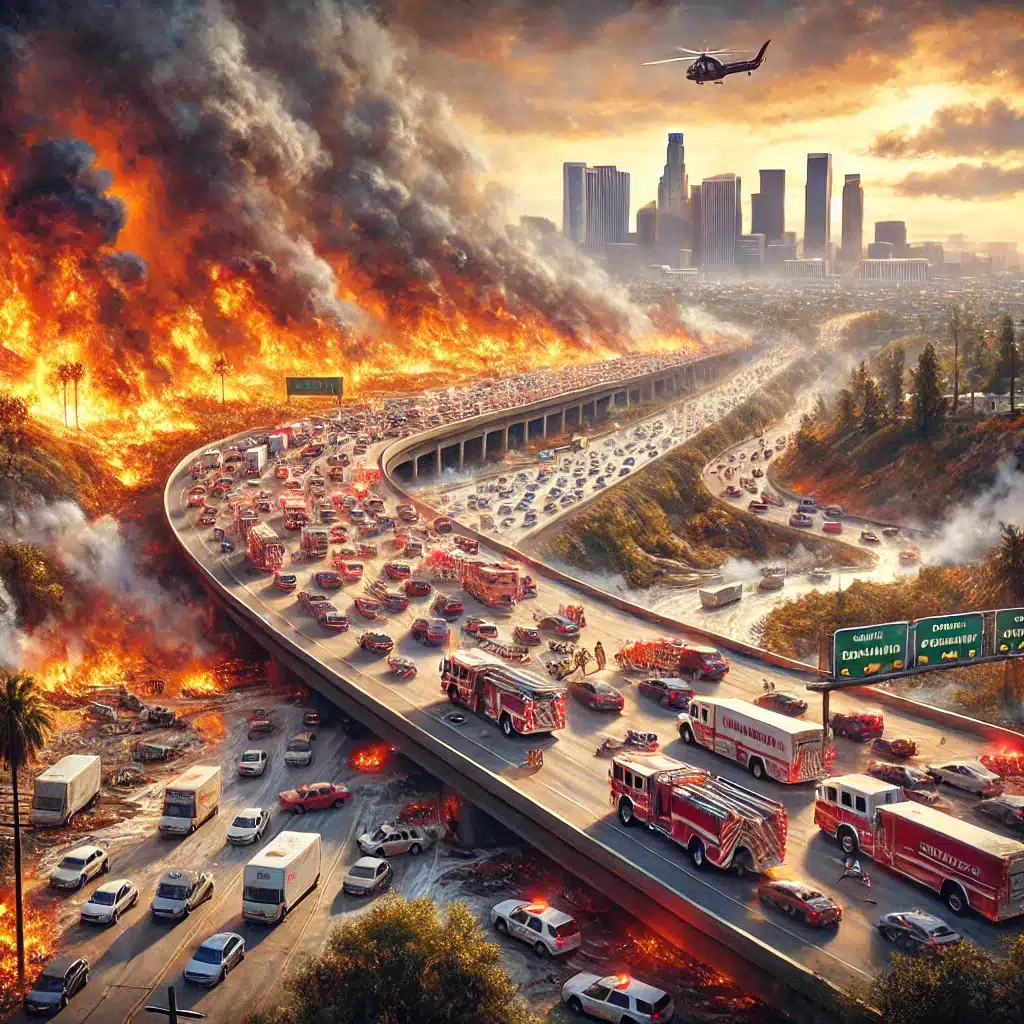
The I-10 Arson Fire in Los Angeles, California, caused significant damage to a vital section of the Interstate 10 freeway, leading to its indefinite closure and creating major traffic disruptions. The fire, which authorities have determined to be arson, occurred over a weekend and charred an area under the freeway, affecting about 100 columns and spreading over 8 acres. The materials involved in the fire included wood pallets, cars, and other construction materials stored under the freeway.
California Governor Gavin Newsom announced that it would take at least three to five weeks to repair the damaged freeway. Engineers determined that the elevated section of Interstate 10 does not need demolition after analyzing core samples from the freeway. This finding is good news since rebuilding would have required much more time.
No one suffered injuries in the fire, but authorities moved at least 16 homeless individuals from the area to nearby shelters. Police have not made any arrests, and investigators are actively working to determine if multiple suspects took part in the arson.
Investigation and Response
The closure of this section of the freeway has significant implications for Los Angeles traffic, as approximately 300,000 vehicles use this stretch daily. The city has been urging people to avoid the area, take public transportation, or work from home to reduce traffic volume. The closure will likely impact areas beyond the city, disrupting the transportation of goods from the twin ports of Los Angeles and Long Beach.
The fire damage mirrors the destruction caused by the 1994 Northridge earthquake, which also impacted elevated sections of I-10 and nearby freeways. Security Paving Co. Inc., the firm contracted for the repair project, brings valuable experience from that era. The company previously worked on restoring freeways damaged by the Northridge quake and is now applying the same around-the-clock repair expertise to expedite the I-10 restoration.
Investigators have identified the fire’s origin and cause by sorting through the rubble for evidence. However, they have not disclosed specific details about their findings. They are currently talking to witnesses, including homeless people and nearby business owners, to gather more information.
Furthermore, this incident highlights the vulnerability of critical infrastructure to arson and the far-reaching effects such incidents can have on a city’s transportation system and economy. The swift response and repair efforts are crucial in mitigating the impact on the city and its residents.
The Perpetrator: Hand Sanitizer
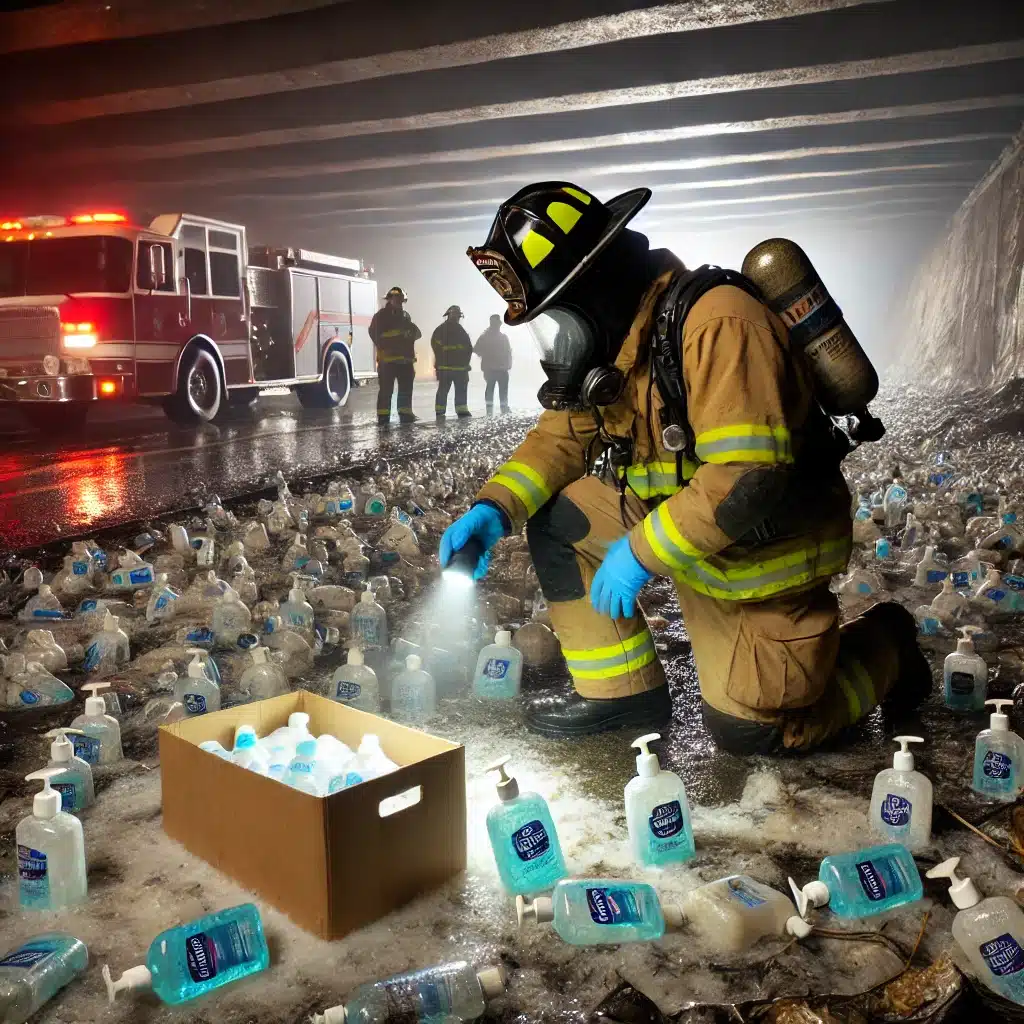
The I-10 freeway fire in Los Angeles, which caused significant damage to a vital section of the freeway, has brought to light the unexpected and hazardous consequences of storing surplus pandemic hand sanitizer. Wired reported that investigators are examining the fire as a possible arson case. They also believe the presence of large quantities of hand sanitizer stored under the freeway may have exacerbated the situation.
In addition, the Los Angeles Times reported that sources indicated hand sanitizer, known for its high flammability, stored under the freeway may have worsened the destruction. Rudy Serafin, who was subleasing space under the overpass, admitted to storing half a pallet of unsold hand sanitizer there. This revelation adds to the growing list of fires fueled by surplus sanitizer from the pandemic.
California authorities have revealed that the space beneath the freeway was leased by the state’s transportation department to Apex Development. Governor Gavin Newsom labeled Apex a “bad actor” for allowing numerous materials to be stored under the overpass. Officials have shared limited details due to the ongoing investigation but emphasized that the company’s negligence may have contributed to the conditions leading to the fire. Apex Development’s CEO, Anthony Nowaid, has not responded to inquiries, but the company’s attorney released a statement objecting to the characterization of Apex as a bad actor.
Hand Sanitizer Surplus and Fire Risks
Google Street View imagery of the area shows numerous boxes and wooden pallets under the freeway, leaving little room for large encampments. Serafin, one of the sublessees, noted that he did not observe any homeless people near the site before the fire. He was using his lot to store hand sanitizer that he had been unable to sell after demand dropped post-pandemic. He estimates having between 100 and 125 bottles under the overpass.
This incident in Los Angeles is not isolated. In January, another pallet yard storing sanitizer erupted in flames in downtown Los Angeles. Additionally, a noxious smell plaguing the LA County town of Carson in 2021 was linked to a massive fire at a lot storing thousands of bottles of hand sanitizer.
The U.S. Food and Drug Administration had lifted regulations on hand sanitizer during the height of the COVID-19 crisis, leading to a surplus. This surplus, coupled with poor manufacturing practices, resulted in a large amount of unsellable and potentially toxic hand sanitizer accumulating at sites across the nation. Fires involving large amounts of hand sanitizer have been reported in multiple states, including Texas, Oklahoma, and Illinois.
Safety Concerns and Regulatory Challenges
Hand sanitizer is highly flammable and falls under federal hazardous waste regulations. However, many in the chemical distribution industry avoid proper disposal because of high costs, choosing instead to store or discard it improperly. This reckless behavior increases the likelihood of fires, particularly when large quantities accumulate in poorly supervised areas. The fire beneath the I-10 freeway demonstrates the dangers of mishandling such materials, especially in densely populated urban zones where one spark can cause widespread devastation.
Serafin, who had been renting the space since 2009, mentioned that the Department of Transportation was aware of the crowded conditions under the freeway. He asserts that his hand sanitizers did not start the fire, raising questions about the actual ignition source and the safety protocols followed by those storing materials under the freeway.
This incident underscores the need for stringent safety measures and responsible storage practices, particularly for flammable materials like hand sanitizer. It also highlights the unintended consequences of emergency measures taken during the pandemic and the importance of proper disposal of surplus materials to prevent such hazardous situations.
Conclusion
In conclusion, addressing arson in the U.S. requires a multifaceted approach that combines prevention, education, and strong legal enforcement. By understanding the underlying motivations—from financial gain to psychological factors—communities and law enforcement can develop targeted strategies to curb this destructive crime. Continued investment in public awareness, fire investigation technology, and rehabilitation programs for offenders will be key in reducing arson incidents. Ultimately, combating arson in the U.S. is not just about punishing offenders but about fostering safer, more resilient communities for everyone.
Need Help? Call Us Now!
Do not forget that when you or anyone you know is facing a criminal charge, you have us, the Law Office of Bryan Fagan, by your side to help you build the best defense case for you. We will work diligently in your best interest, ensuring that we obtain the best possible outcome for you. Our team can explain everything you need to know about your trial and how to mount the strongest defense. Count on us to guide you step by step through the criminal process, providing support and expertise every step of the way.
Therefore, do not hesitate to call us if you find yourself or someone you know that is facing criminal charges unsure about the court system. We will work with you to give you the best type of defense that can help you solve your case. It is vital to have someone explain the result of the charge to you and guide you in the best possible way.
Here at the Law Office of Bryan Fagan, our professional and knowledgeable criminal law attorneys specialize in building a defense case tailored to your needs. We aim to achieve the best possible outcome that benefits you. Therefore, you can rely on our experience and expertise to advocate for your rights effectively.
Also, here at the Law Office of Bryan Fagan, you are given a free consultation at your convenience. You may choose to have your appointment via Zoom, google meet, email, or an in-person appointment; and we will provide you with as much advice and information as possible so you can have the best possible result in your case, even when dealing with the complexities of Arson in the U.S.
Call us now at (281) 810-9760.

Other Related Articles
- Subway Murder: A Stranger Immediately Sets A Woman On Fire
- New Orleans Attack: A Joyous New Year Eve Ends In Tragedy
- Domestic Disturbance: A Tremendous Fire In Allentown, PA
- What Is a White-Collar Crime in Texas?
- Criminal Homicide: And All it Entails
- The Criminal Process Guide
- The Different Types of Criminal Trials
- What to Look for in a Criminal Defense Lawyer in Texas
- Criminal Offense or Case Dismissal??
- How Much Does it Cost to Hire a Criminal Defense Attorney?
FAQs on I-10 Freeway Fire
The I-10 freeway fire may have been exacerbated by the presence of surplus hand sanitizer stored under the freeway, which is highly flammable.
Yes, the fire’s intensity might have been increased due to the storage of excess pandemic-related hand sanitizer beneath the freeway.
The storage space under the freeway was leased out by California’s transportation department to Apex Development, which subleased it to other businesses.
Yes, there have been other fires fueled by surplus sanitizer from the pandemic, including incidents in downtown Los Angeles and other locations.
Authorities are investigating the incident and may implement stricter regulations on the storage of flammable materials like hand sanitizer.

