
Child Protective Services Defense Attorneys in Humble, Texas
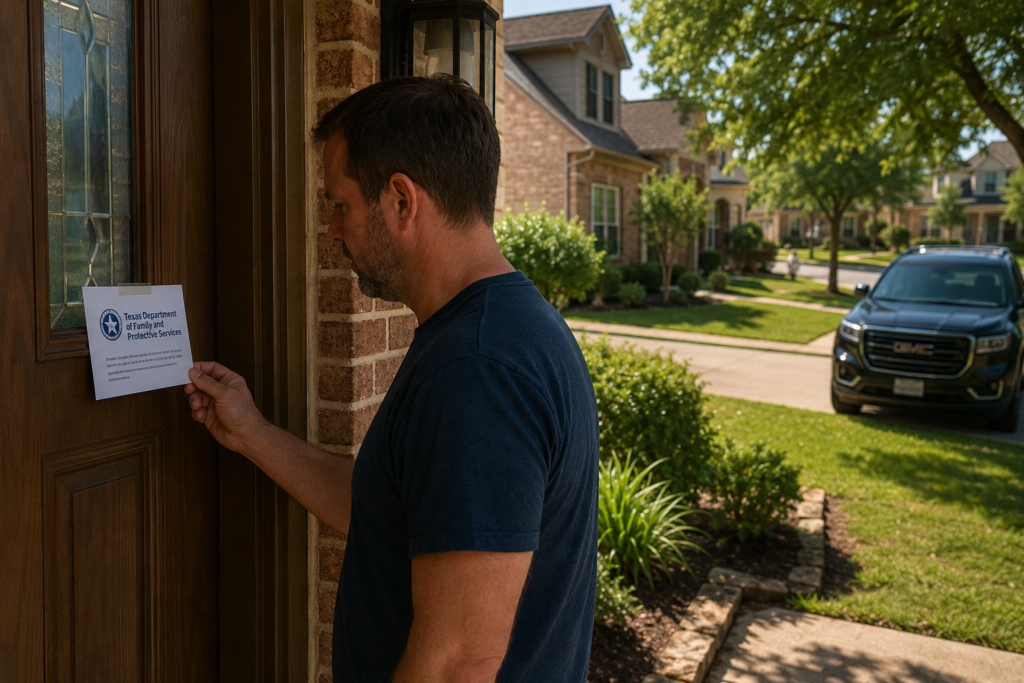
A father from Humble once described it as the longest ten minutes of his life. He had just pulled into his driveway after work when he noticed a business card taped to his front door from Child Protective Services. There was no explanation, no immediate answers, and no clear understanding of what would happen next. By that evening, he was searching for Child Protective Services Defense Attorneys in Humble Texas, trying to understand whether his children could be removed from his home and what rights he actually had. The first thing many parents learn in that situation is that fear fills the gaps where information should be. The sooner you understand the process, the better positioned you are to protect both your family and your future.
Under Texas law, a CPS investigation can involve allegations ranging from neglect and unsafe living conditions to concerns about abuse or family stability. Not every report leads to court intervention, but every investigation should be taken seriously. Texas courts and CPS investigators are primarily focused on child safety, and the decisions made during the early stages of a case can have lasting consequences for parents and children alike. Understanding your legal rights, your responsibilities, and the procedures governing CPS investigations can make a meaningful difference in how a case develops.
At The Law Office of Bryan Fagan, PLLC, we understand that CPS cases are about more than legal filings and court dates. They involve families facing some of the most stressful and emotionally charged moments of their lives. Bryan Joseph Fagan, a South Texas College of Law graduate and recognized authority on Texas family and custody law, built the firm on the belief that informed families make stronger decisions. Families throughout Humble, Kingwood, Atascocita, and the greater Houston area seek guidance because they want clarity, practical answers, and a strategy designed to protect what matters most.
Whether your situation involves an initial CPS investigation, a safety plan, temporary conservatorship proceedings, allegations of neglect or abuse, or a contested court case, understanding the process early can help you avoid costly mistakes. In some situations, concerns can be addressed through documentation, cooperation, and proactive action. In more complex cases involving child removal, contested allegations, prior CPS history, or disputes regarding parental fitness, experienced legal representation often becomes critical. This article will explain how Texas CPS cases work, what courts and investigators evaluate, and what steps parents can take to protect their rights and their relationship with their children.
The Bottom Line
In Texas, CPS can investigate any report of abuse or neglect, interview your child, and ask to enter your home — but it generally cannot force entry, remove your child, or compel a drug test without your consent or a court order, except in a genuine emergency. You have the right to decline, to record, and to have a CPS defense attorney respond on your behalf before you answer anything.
Key Takeaways
- You can say no to entry without a court order. Absent a warrant, a court order, or a true emergency, a CPS caseworker has no automatic right to come inside your Humble home or interview your child alone.
- The first conversation is evidence. Texas Family Code §261.301 requires CPS to investigate, but nothing requires you to give an unrepresented interview on the spot. What you say is documented and used.
- Removal requires a court — except in emergencies. Under Chapter 262, CPS usually needs a judge’s order to remove a child, and an adversary hearing must follow within 14 days.
- The case has a clock. Once a child is removed, §263.401 gives the State roughly one year to resolve the case before automatic dismissal pressure kicks in.
- Drug testing is usually consent-based. CPS often asks for a hair-follicle or urine test; in most non-emergency situations you can decline without a court order, though declining carries strategic consequences.
- Service plans are negotiable. The plan CPS hands you is a draft position, not a sentence. How you respond changes the outcome.
- Silence plus counsel beats cooperation alone. The parents who do best are not the ones who fight everything — they are the ones who route every CPS contact through a lawyer.

Your Family’s Future Starts Here
Don’t navigate your legal journey alone. Schedule a consultation now and get the clarity and support you deserve.
Humble Texas family lawyers and attorneys for wills advise our clients of the immediate aftermath as well as the long-term effects of divorce-related issues, such as the following:
Trust us to help you with your Family Law Attorneys in Humble, Texas. Call 281-817-1827 or contact us online today to schedule a free consultation with your Family Law Attorney in Humble, Texas.
What CPS Can and Cannot Do in Texas
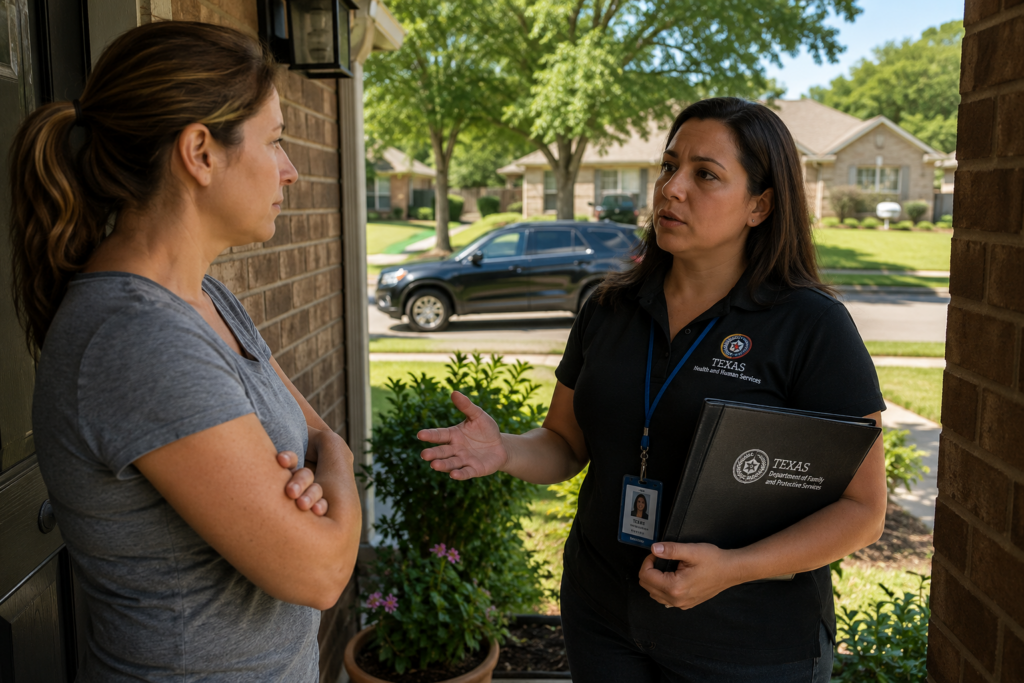
Parents searching for Child Protective Services Defense Attorneys in Humble Texas are often surprised to learn that CPS does not have unlimited authority during an investigation. While the Texas Department of Family and Protective Services (DFPS) can investigate reports of abuse or neglect, interview children, request home visits, and ask for drug testing, it generally cannot force entry into your home, remove your child, or compel testing without your consent or a court order unless there is a genuine emergency.
Under Texas Family Code Chapter 261, CPS is required to investigate reports it receives through the statewide hotline. However, being required to investigate does not mean investigators can do whatever they want. A caseworker may request cooperation, but parents still have important legal rights throughout a CPS investigation in Texas.
In straightforward situations, CPS may simply be gathering information. In more complex cases involving a CPS safety plan, drug testing requests, repeat investigations, or potential child removal proceedings, every decision can affect the outcome of the case. Statements made during interviews, school contacts, or home visits may later appear in court filings or investigative reports.
Texas courts reviewing a CPS case in Harris County focus on child safety, parental fitness, home stability, and the child’s best interests. For families in Humble, Kingwood, Atascocita, Summerwood, Fall Creek, Porter, New Caney, and Huffman, understanding those factors early can help avoid costly mistakes and protect parental rights.
When CPS involvement begins to escalate beyond an initial inquiry, guidance from Child Protective Services Defense Attorneys in Humble Texas can help parents understand what is voluntary, what may be legally required, and how to respond strategically. Parents seeking broader guidance on protecting their future and long-term family stability may also benefit from learning more about retirement planning legal services in Humble, Texas.
Strategy insight
Most CPS investigations in Harris County depend on what the parent volunteers in the first contact, not on the original report. Reports are often anonymous and thin. The case gets built from your answers. Control the answers and you control the case.
The CPS Investigation Process, Step by Step
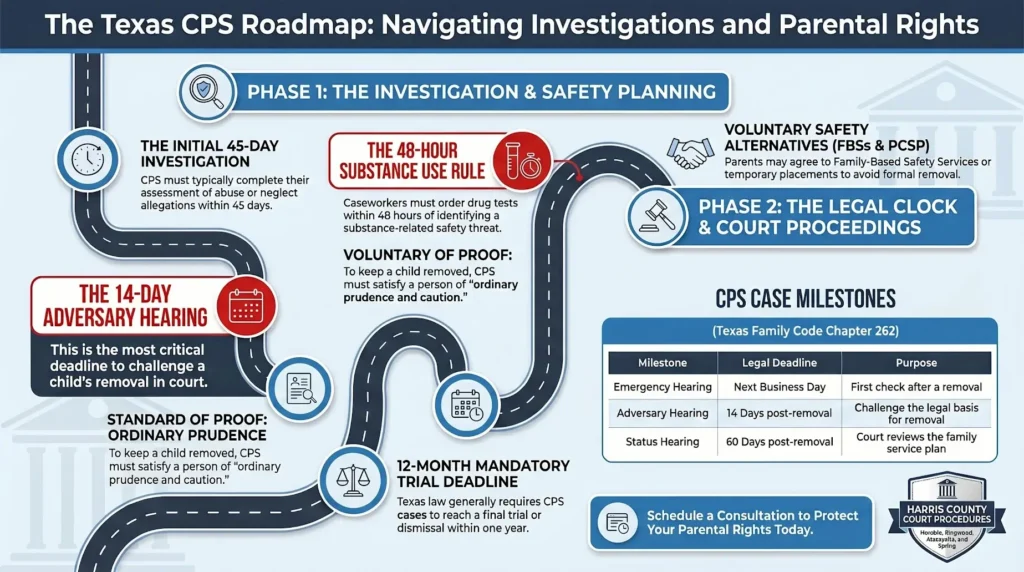
Families searching for Child Protective Services Defense Attorneys in Humble Texas are often trying to understand what happens after CPS first makes contact. While every case is different, most investigations follow a similar process: a report is made, CPS assigns a priority level, interviews are conducted, evidence is gathered, and the Department ultimately reaches a finding.
Under Texas Family Code §§261.301–261.302, CPS must investigate reports of suspected abuse or neglect. Depending on the allegations, investigators may interview children at school, speak with parents and relatives, request medical records, conduct home visits, or ask for drug testing. What many parents do not realize is that information collected during the early stages of a CPS investigation in Texas can significantly influence what happens later.
At the conclusion of the investigation, CPS generally issues one of three findings: “Ruled Out,” “Unable to Determine,” or “Reason to Believe.” Those findings often determine whether the case closes, moves into a CPS safety plan, involves Family-Based Safety Services (FBSS), or progresses toward court involvement.
In straightforward situations, the investigation may end without further action. In more complex cases involving injuries, repeat allegations, substance abuse concerns, or potential child removal proceedings, early legal guidance can help parents protect their rights, present important evidence, and avoid mistakes that may affect the outcome.
Whether your case is in Humble, Kingwood, Atascocita, Summerwood, Fall Creek, Porter, New Caney, Huffman, or elsewhere in Harris County, understanding the investigation process is often the first step toward protecting your family and your future. Families facing both CPS concerns and significant financial issues may also benefit from understanding how custody, property, and long-term planning considerations can overlap in complex family law matters through guidance from a Humble high-net-worth divorce lawyer.
| Scenario | Likely Outcome | What to Do |
|---|---|---|
| Anonymous report, no injury, parent declines interview and routes to counsel | Often “ruled out” or “unable to determine” | Decline on-the-spot interview; have attorney respond within 24 hrs |
| Medical or school report with documentation gaps | Hinges on records you provide early | Gather records before talking; let counsel submit them |
| Positive drug test or admitted substance use | Service plan likely; removal possible | Engage counsel immediately; do not sign the plan unreviewed |
| Alleged immediate danger, child present | Emergency removal under Ch. 262 possible | Call a CPS defense attorney now; prepare for 14-day hearing |
Listen to Our Texas Family Law Podcast
Prefer listening? In this episode, we discuss CPS defense in Humble, Texas, including how Child Protective Services investigations work, your legal rights as a parent, and steps you can take to protect your family throughout the process.
Your Rights When CPS Shows Up at Your Door
Parents searching for Child Protective Services Defense Attorneys in Humble Texas are often surprised to learn that they still have important legal rights when a CPS investigator arrives at their home. A visit from CPS can feel intimidating, but a caseworker’s presence does not automatically give the Department unlimited authority.
Under Texas Family Code §261.307, parents have the right to be informed about the nature of the investigation and their right to obtain legal counsel. In many situations, you may decline entry into your home without a court order, refuse an on-the-spot interview, and ask that future communications go through your attorney. Exercising these rights is not obstruction—it is part of the legal process.
In straightforward situations involving an initial DFPS investigation, a respectful conversation may be enough to clarify concerns. In more complex cases involving a CPS safety plan, drug testing requests, school interviews, allegations of neglect, or potential child removal proceedings, what you say and do during the first contact can significantly impact the case.
A practical approach is often the most effective: remain calm, be polite, take the investigator’s contact information, avoid making detailed statements without understanding the allegations, and seek legal guidance promptly. Families in Humble, Kingwood, Atascocita, Summerwood, Fall Creek, Porter, New Caney, and Huffman frequently discover that early decisions shape the direction of a CPS case in Harris County long before any court hearing occurs.
When CPS involvement escalates beyond a simple inquiry, understanding your rights becomes even more important. Parents who want to protect both their immediate legal interests and their family’s long-term future may also benefit from learning about broader planning tools such as incapacity planning in Humble, Texas, which can help families prepare for unexpected life events and periods of uncertainty.
Costly mistake
Letting a caseworker interview your child alone or walk through your home “just to clear things up” is the single most common way a thin report becomes a real case. Once they are inside and the child has been interviewed, you cannot un-ring that bell.
The parents who keep their kids are rarely the ones who had nothing to explain. They are the ones who explained it through a lawyer, in writing, on their own timeline.
Interactive · Case Strength Checker
How exposed is your CPS case right now?
Has a CPS caseworker already interviewed your child?
At school, at home, or anywhere else.
Is there a positive drug test or admitted substance use in the file?
Yours or the other parent’s.
Was there an injury, ER visit, or medical report involved?
Even a minor or accidental one.
Has the Department mentioned removal, a safety plan, or “placing” your child?
Including asking a relative to take the child temporarily.
Have you signed anything CPS gave you?
A safety plan, service plan, or consent form.
Are you currently represented by a CPS defense attorney?
Someone actively handling this case for you.
Your Position
You’re in a defensible spot — keep it that way
You already have counsel, which is the single biggest predictor of a good outcome. The job now is execution: every CPS contact routed through your attorney, every document reviewed before signing, every deadline tracked. Bring your current attorney the answers you just gave, or get a second read from our team if you want one.
Most clients hear back within 5 minutes during business hours (8 AM–10 PM CT, 7 days a week).
Your Position
Manageable, but you’re exposed without counsel
Your answers point to a case that can still be steered, but you are handling it alone — and CPS is not. That is the gap that turns recoverable situations into removals and service plans. The move is to get a defense attorney responding for you before your next contact with the Department, not after.
Most clients hear back within 5 minutes during business hours (8 AM–10 PM CT, 7 days a week).
Your Position
Too many unknowns to leave to chance
Several of your answers were “not sure,” and in CPS cases uncertainty is its own risk — it usually means contact has happened that you have not fully tracked. We can map exactly where your case stands in one conversation and tell you the next concrete step. That clarity alone changes how the next CPS contact goes.
Most clients hear back within 5 minutes during business hours (8 AM–10 PM CT, 7 days a week).
Your Position
Early stage — protect your footing now
It looks like CPS contact is early or limited. That is the best time to set boundaries: decline informal interviews, gather your own documentation, and have counsel on call. Acting now is far cheaper than reacting after a disposition.
Most clients hear back within 5 minutes during business hours (8 AM–10 PM CT, 7 days a week).
Want a real read on your case, not a quiz result?
A Legal Strategy Session gives you a county-specific plan for the next CPS contact — what to say, what to decline, and what to file.
Schedule a Strategy SessionWhen CPS Can Actually Remove a Child in Texas
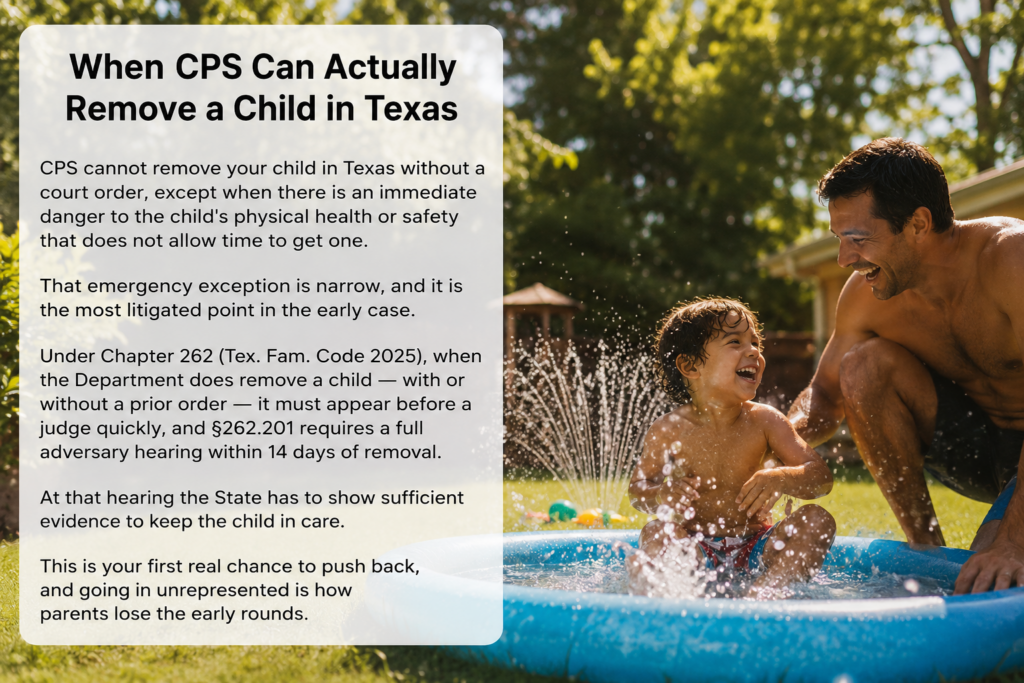
Parents searching for Child Protective Services Defense Attorneys in Humble Texas are often most concerned about one question: Can CPS take my child? Under Texas law, the answer is generally no unless CPS obtains a court order or can demonstrate that an immediate threat to the child’s physical safety requires emergency action.
Texas Family Code Chapter 262 governs child removal proceedings and sets strict requirements for when the Department may intervene. While emergency removals can occur, they are far less common than many parents believe and are frequently challenged in court. When CPS involvement escalates to the point where removal becomes a possibility, the stakes increase dramatically, and immediate legal guidance often becomes critical.
If CPS removes a child, the Department must quickly appear before a judge and justify its actions. Under Texas Family Code §262.201, an adversary hearing is typically required within 14 days. At that hearing, the court evaluates child safety, parental fitness, home stability, and whether continued state intervention is truly necessary. This is often the first meaningful opportunity for parents to challenge the allegations and present evidence supporting reunification.
In straightforward investigations, removal may never become an issue. In more complex cases involving serious allegations, repeat investigations, substance abuse concerns, or emergency orders, the outcome of these early hearings can significantly influence the direction of the entire case. Families in Humble, Kingwood, Atascocita, Summerwood, Fall Creek, Porter, New Caney, Huffman, and throughout Harris County often discover that decisions made during the first days of a CPS case in Harris County can have long-lasting consequences.
Parents facing CPS litigation should understand that early preparation matters. Similar to other family law matters where timing and enforcement can affect outcomes, understanding the legal process and acting quickly can make a significant difference. Learn more about how Texas courts address compliance and enforcement issues through this guide on enforcing a delinquent Texas child support order.
When parental rights are at risk, obtaining experienced legal guidance early can help parents understand their options, protect their rights, and work toward the best possible outcome for their family.
What this means for you
The 14-day adversary hearing is not a formality — it is leverage. A prepared defense attorney can challenge the basis for removal, present a safety plan that returns the child home, and narrow the case before it hardens. Treat it as the most important date on your calendar.
| Category | What Texas Law Says | Practical Impact |
|---|---|---|
| Investigation authority | §261.301 requires CPS to investigate reports | They can knock and ask; you can decline to answer |
| Entry into home | No statutory right to force entry without a court order | You may refuse entry absent a warrant or emergency |
| Emergency removal | Ch. 262 permits removal on immediate-danger grounds | Adversary hearing must follow within 14 days (§262.201) |
| Case duration | §263.401 sets a one-year dismissal deadline after removal | The State is on a clock; delay can favor the parent |
CPS Drug Testing Law in Texas
CPS in Texas generally cannot force you to take a drug test without your consent or a court order. In most investigations the caseworker asks, and many parents agree on the spot without realizing they could have declined or routed the request through counsel first.
CPS commonly requests hair-follicle testing, which can detect substance use over roughly a 90-day window, alongside urinalysis. Declining a voluntary test is legally permissible, but it is a strategic decision with consequences — a refusal can be cited as a reason to seek a court order or to question cooperation. That trade-off is precisely the kind of call to make with a lawyer, not alone at your kitchen table. Compared to Florida, where dependency courts lean heavily on early testing, Texas leaves more discretion in the consent phase, which is why the decision matters so much here.
Strategy insight
If your test would come back clean, testing fast can close a case. If it would not, declining without a plan invites a court order anyway. There is no universal right answer — there is only the right answer for your facts, which is why this question goes to counsel before you respond to the caseworker.
How Long a CPS Case Stays Open in Texas
A CPS investigation in Texas typically resolves within 30 to 45 days, but a case that moves into court after a removal runs on a much longer statutory clock — up to roughly one year before mandatory dismissal pressure applies. Knowing which track you are on tells you how to plan.
Section 263.401 (Tex. Fam. Code 2025) imposes a one-year deadline: the court must commence trial on the merits within about a year of appointing the Department as temporary managing conservator, or the case is subject to dismissal, with a limited extension available. For parents, that deadline is leverage — the State cannot leave a case open indefinitely, and a defense attorney uses the clock to press for resolution or return.
Humble, Harris County, and the Counties Next Door

CPS cases for Humble residents are generally handled through Harris County courts, but procedure shifts the moment you cross a county line — and Humble sits close to several. Where your case is filed changes which court hears the adversary hearing, how dockets move, and which local practices apply.
Harris County’s family courts carry heavy CPS dockets, which can mean faster, more standardized handling but less individual attention at early hearings. Just north and east, Montgomery County (Conroe) and Liberty County run smaller dockets where the same facts can be handled differently. Fort Bend County, to the southwest, is another common venue for families who have recently moved. For a family in Atascocita or Kingwood, the line between Harris and Montgomery County can determine which courthouse you are standing in — and a local attorney who knows both benches is not a luxury here, it is the difference in how prepared you walk in.
Costly mistake
Assuming “CPS is CPS everywhere.” The Department is statewide, but the courts are local. A strategy that works in a high-volume Harris County court can land differently in Montgomery or Liberty County. Match your attorney to your venue.
The Costly Mistakes I See Parents Make
The cases that go badly almost always trace back to a handful of avoidable errors made in the first week, before anyone called a lawyer. Recognizing them is half the defense.
The biggest is treating the caseworker as a neutral helper and talking freely. The second is signing a safety plan or service plan without reading it as the binding document it becomes. The third is missing the 14-day adversary hearing’s significance and showing up unprepared. The fourth is making the drug-test decision impulsively. Each of these is a fork in the road, and each one is far cheaper to handle correctly the first time than to unwind later.
Checklist: What to Do If You’re Dealing With a CPS Case
Stay calm and polite, but say less. Take the caseworker’s card. Do not give a substantive interview on the spot.
Decline entry without a court order. Step outside, close the door, and ask whether they have an order. If not, you may decline.
Do not let your child be interviewed alone if you can prevent it. Ask that any interview happen with counsel aware.
Write down everything immediately. Date, time, names, what was said, what was requested. Memory fades; documentation does not.
Gather your own records. Medical records, school records, photos — anything that explains the allegation on your terms.
Do not sign anything unreviewed. Safety plans and service plans are binding positions. Have counsel read them first.
Make the drug-test decision with a lawyer. It is usually voluntary; the right call depends entirely on your facts.
Treat the 14-day adversary hearing as critical. If a removal happens, this is your first real chance to push back.
Route every future contact through counsel. One point of contact protects you from inconsistent statements.
Act early, not after a disposition. The cheapest, most effective defense happens before the case hardens.
Print this list — then get a plan behind it.
A checklist tells you what to do. A Legal Strategy Session tells you how to do it in your county, with your facts.
Schedule a Strategy SessionWhat I Tell Every Parent Who Calls About a CPS Case
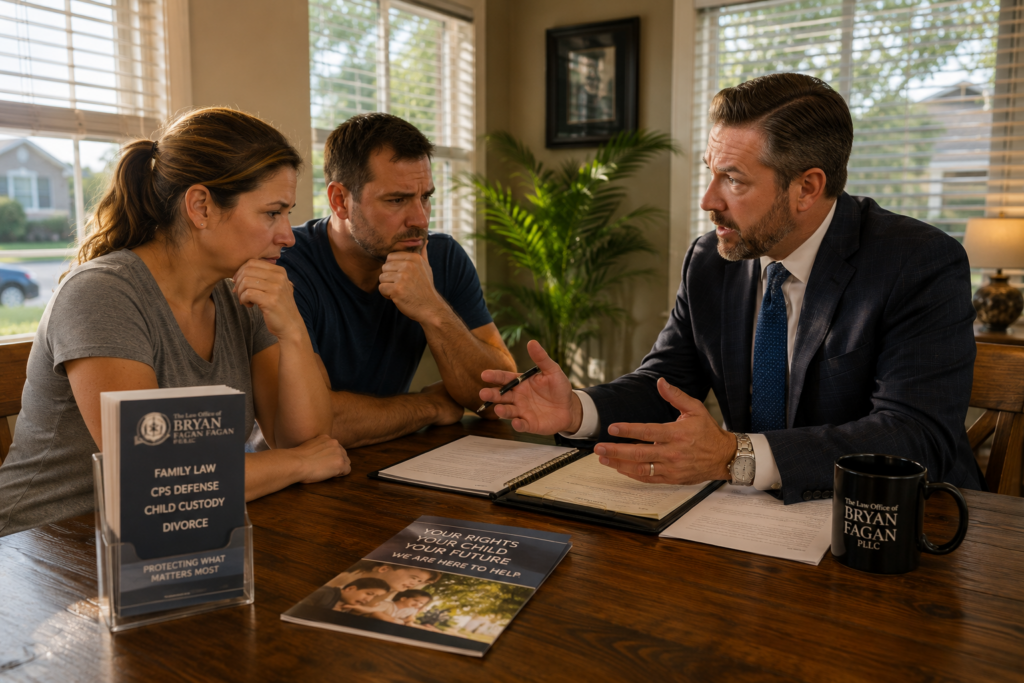
A CPS investigation is not the end of your family, but it is a legal fight, and the families who treat it that way from day one are the ones who keep their kids. The Department is required to investigate; you are not required to make their case for them. That single reframing changes how every conversation goes.
Here is the threshold where this stops being something you handle alone: the moment there is an injury in the file, a removal threat, a drug-test request, a service plan to sign, or a hearing on the calendar, you need a CPS defense attorney in the room — not next week, now. Before any of those, you at least need a plan for the next contact. After any of those, you need representation immediately.
If a caseworker has contacted you in Humble, Kingwood, Atascocita, or anywhere in Harris County and the counties around it, do not wait to see how it develops. Book a Legal Strategy Session today and walk into your next CPS contact knowing exactly what to say, what to decline, and what to file.
Don’t face the Department alone.
The first 72 hours decide the trajectory. Get a CPS defense attorney on your side before your next conversation with CPS.
Schedule a Strategy SessionConclusion:
A CPS investigation can leave parents feeling overwhelmed and uncertain, but understanding the process is often the first step toward protecting your family and regaining a sense of control. Families searching for Child Protective Services Defense Attorneys in Humble Texas are frequently facing difficult questions about their rights, their children, and what may happen next. The good news is that not every CPS investigation in Texas leads to court intervention, child removal, or long-term consequences.
In straightforward situations, concerns may be resolved through documentation, communication, and cooperation. In more complex cases involving a CPS safety plan, repeat investigations, allegations of abuse or neglect, emergency removals, or contested custody issues, the legal stakes can increase quickly. When CPS involvement escalates, early action often provides more options than waiting for the situation to become more difficult to address.
Whether your case involves a DFPS investigation, a pending CPS court hearing, or concerns about your parental rights, understanding Texas child protection laws and making informed decisions can have a meaningful impact on the outcome. Families in Humble, Kingwood, Atascocita, Summerwood, Fall Creek, Porter, New Caney, Huffman, and throughout Harris County benefit from approaching these matters with both preparation and strategy.
At The Law Office of Bryan Fagan, PLLC, our mission is to help families move forward with clarity, confidence, and practical legal guidance. By understanding your rights, responding thoughtfully, and seeking help when necessary, you can better protect your relationship with your children and work toward the stability your family deserves. For families navigating multiple legal challenges at the same time, it can also be helpful to understand related family law issues, including this guide on navigating the legal landscape of divorce in Texas.
Questions My Clients Ask About CPS Cases in Texas
No. Texas law keeps the identity of the person who made the report confidential, even from you. The report is often anonymous, and CPS will not disclose the reporter. What matters is not who called but what the investigation finds — which is why controlling your own answers is more useful than chasing the source.
Yes. Texas accepts anonymous reports through the statewide hotline, and the reporter’s identity is protected. This is part of why thin or retaliatory reports happen — and why your defense focuses on the facts in front of the caseworker, not on the credibility of an anonymous caller you cannot identify.
Generally no. CPS investigation records are confidential under Texas law and are not open public records the way many court filings are. Court proceedings tied to a removal can generate records with restricted access. If you are worried about exposure, that confidentiality usually works in your favor — but do not rely on it as a defense strategy.
An investigation usually closes within 30 to 45 days. If the case goes to court after a removal, Texas Family Code §263.401 sets roughly a one-year clock before the case faces mandatory dismissal, with a limited extension possible. The Department cannot keep a court case open indefinitely, and that deadline is something your attorney can use.
CPS commonly requests hair-follicle testing, which looks back roughly 90 days, and sometimes urinalysis for more recent use. In most non-emergency situations these tests are requested, not compelled, and you can decline without a court order — though declining is a strategic decision best made with counsel, because it can prompt CPS to seek an order.
Only in a genuine emergency where there is immediate danger and no time to get an order. Otherwise, removal in Texas requires a court order under Chapter 262, followed by an adversary hearing within 14 days. If CPS removes your child, that hearing is your first and most important opportunity to push back.
No, not without a court order or a true emergency. You can decline entry, step outside to speak, and ask that any further contact go through your attorney. Declining entry is not evidence of wrongdoing — it is the lawful exercise of your rights, and it is often the smartest first move.
Yes, if the investigation involves an injury, a removal threat, a drug-test request, or anything you are unsure how to handle. The investigation stage is where cases are won or lost, before court is ever involved. Getting counsel early is far less costly than reacting after a disposition is entered against you.
A service plan is the Department’s proposed set of steps, and how you respond shapes the case. You are not required to sign it unreviewed, and the terms can often be negotiated. Refusing outright without a strategy can escalate matters, which is why the plan should go to your attorney before you sign or reject it.
Yes, in the most serious cases the Department can petition to terminate parental rights, but termination is the end of a long legal process with high evidentiary standards, not something that happens from an investigation alone. The earlier you have a defense attorney, the more off-ramps exist before a case ever reaches that point.
Still have a question that wasn’t answered here?
Bring it to a Legal Strategy Session. You’ll get a direct answer about your specific case, not a general one.
Schedule a Strategy Session