
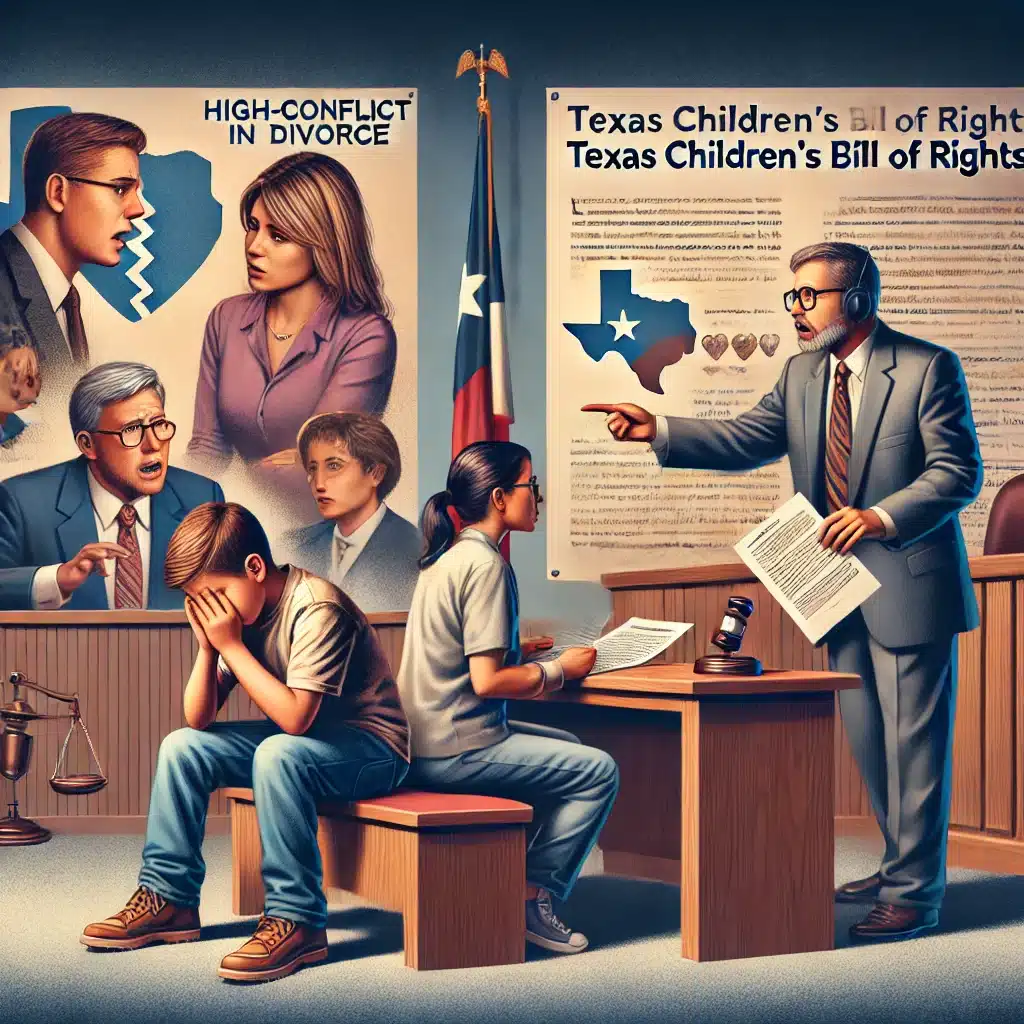
The Role of the Texas Children’s Bill of Rights in High-Conflict Divorces becomes especially important when parents are locked in intense emotional and legal battles. High-conflict divorces in Texas can place enormous strain on children, who often feel caught between both sides. The Texas Children’s Bill of Rights helps safeguard their well-being by outlining clear protections and expectations for parental behavior. It ensures that children maintain their dignity, emotional security, and meaningful relationships during these turbulent times. Understanding and applying these rights encourages parents to prioritize their child’s needs, even when conflicts escalate.
Understanding the Role of the Texas Children’s Bill of Rights in High-Conflict Divorces
The Texas Children’s Bill of Rights outlines specific protections for children. It aims to safeguard their well-being in high-conflict divorces. The bill focuses on maintaining the child’s emotional and psychological health. It emphasizes the child’s right to have a stable and nurturing environment.
Key Provisions of the Texas Children’s Bill of Rights
The Texas Children’s Bill of Rights includes several critical provisions. These provisions aim to minimize the impact of parental conflict on children.
| Provision | Description |
| Right to Love and Be Loved by Both Parents | Children should not be forced to choose sides. They deserve a healthy relationship with both parents. |
| Right to Be Safe and Feel Safe | Ensures children’s physical safety and emotional security. Parents should create a secure environment. |
| Right to Not Be Involved in Parental Conflicts | Children should not be used as messengers or spies and should not hear negative comments about either parent. |
| Right to Stability and Continuity | Emphasizes maintaining routines and consistency to help children feel secure during tumultuous times. |
Right to Love and Be Loved by Both Parents
Children have the right to love and be loved by both parents. This provision emphasizes that parents should not force children to choose sides.They deserve to maintain a healthy relationship with both parents, free from manipulation.
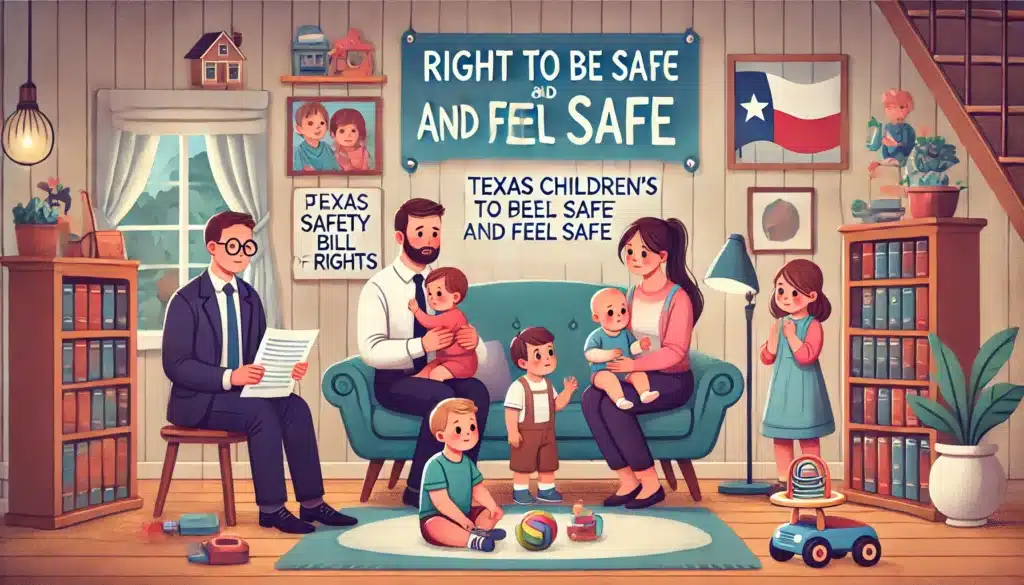
Right to Be Safe and Feel Safe
The bill ensures children have the right to be safe and feel safe. This includes physical safety and emotional security. The bill encourages parents to create a secure environment for their children and minimize exposure to conflict.
Right to Not Be Involved in Parental Conflicts
Parents should not involve children in their conflicts. The bill states that parents should not use children as messengers or spies. Parents should not expose children to negative comments about either parent.
Right to Stability and Continuity
Stability and continuity are vital for a child’s well-being. The bill emphasizes the importance of maintaining routines and consistency. As a result, this helps children feel secure and supported during tumultuous times.
Impact on High-Conflict Divorces
The Texas Children’s Bill of Rights plays a crucial role in high-conflict divorces. It provides a framework to protect children’s rights and well-being. Consequently, this can significantly reduce the negative impact of parental disputes. It is crucial to familiarise yourself with the role of the Texas Children’s Bill of Rights in high-conflict divorces.
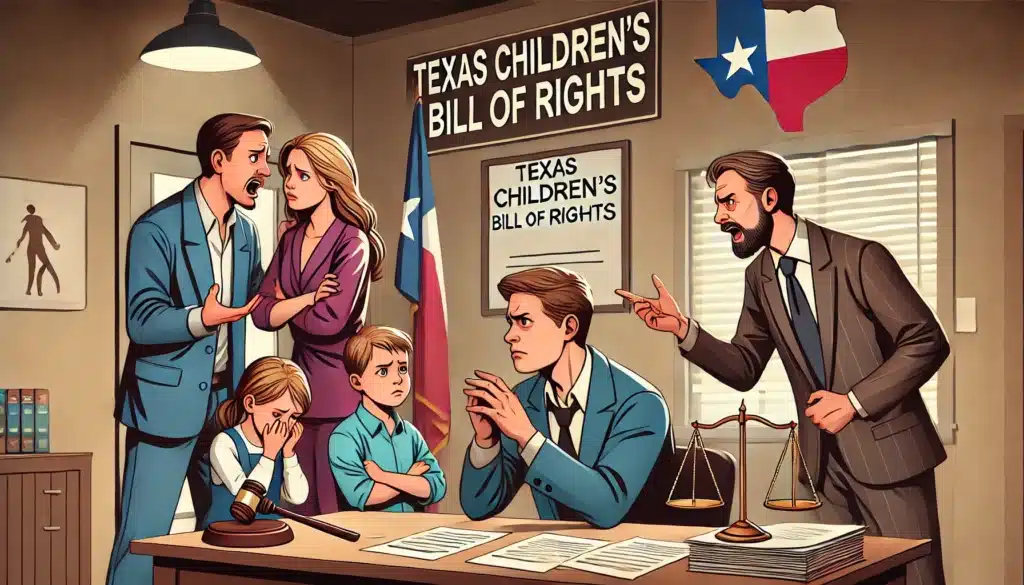
Promoting Co-Parenting
The bill encourages co-parenting, even in high-conflict situations. Co-parenting focuses on putting the child’s needs first. It involves cooperation and communication between parents. This approach helps reduce conflict and provides a stable environment for the child.
Legal Implications of the role of the Texas Children’s Bill of Rights in high-conflict divorces
The Texas Children’s Bill of Rights has significant legal implications. Courts consider these rights when making custody and visitation decisions. Violating these rights can impact a parent’s custody case. It underscores the importance of prioritizing the child’s best interests.
Support for Parents
Supporting parents in high-conflict divorces is essential. Providing resources and guidance can help them navigate the challenges. This support can reduce conflict and promote a healthier environment for the child.
Educational Programs
Educational programs for parents can be beneficial. These programs can teach effective communication and conflict resolution skills. They can help parents understand the impact of their behavior on their children.
Therapeutic Interventions
Therapeutic interventions can also be helpful. Therapy can provide a safe space for children to express their feelings. It can help parents address their issues constructively. This can lead to a more harmonious co-parenting relationship.
Community Resources
Community resources play a crucial role in supporting families. Organizations can provide counseling, support groups, and legal assistance. These resources can help families navigate high-conflict divorces more effectively.

The role of the Texas Children’s Bill of Rights in high-conflict divorces and The Role of Legal Professionals
Legal professionals play a vital role in upholding the Texas Children’s Bill of Rights. Attorneys must educate their clients about these rights. They should advocate for the child’s best interests in court. Judges must consider these rights when making decisions.
Enforcement and Compliance
Enforcing the Texas Children’s Bill of Rights requires vigilance. Parents must understand and respect these rights. Courts play a crucial role in ensuring compliance. Violations can lead to legal consequences, reinforcing the importance of adhering to the bill.
Parenting Plans
Parenting plans are essential in high-conflict divorces. They outline each parent’s responsibilities and rights. These plans should integrate the Texas Children’s Bill of Rights. This ensures that the plans prioritize children’s rights.
Mediation and Conflict Resolution
Mediation can be an effective tool in high-conflict divorces. Mediators help parents reach agreements that benefit the child. The Texas Children’s Bill of Rights serves as a guideline during mediation. It ensures that the child’s best interests are considered.
Custody Evaluations
Custody evaluations assess the family situation and recommend custody arrangements. Evaluators consider the Texas Children’s Bill of Rights during these assessments. This helps ensure that the child’s rights and well-being are prioritized.
Visitation Rights
Visitation rights are crucial in maintaining parent-child relationships. The Texas Children’s Bill of Rights supports the child’s right to spend time with both parents. This can be challenging in high-conflict divorces, but the bill provides a framework to navigate these issues.
Addressing Parental Alienation
Parental alienation occurs when one parent manipulates the child against the other. The Texas Children’s Bill of Rights seeks to prevent this. It emphasizes the child’s right to a relationship with both parents, free from manipulation.

Impact on Child Support
Child support is another critical aspect of high-conflict divorces. The Texas Children’s Bill of Rights ensures that children’s financial needs are met. Courts consider these rights when determining child support arrangements.
Role of Mental Health Professionals
Mental health professionals play a crucial role in high-conflict divorces. They provide therapy and support for children and parents. They also help ensure that the Texas Children’s Bill of Rights is upheld, focusing on the child’s well-being.
Educational Stability and the role of the Texas Children’s Bill of Rights in high-conflict divorces
Educational stability is vital for children’s development. The Texas Children’s Bill of Rights emphasizes the importance of maintaining consistent schooling. This helps provide a sense of normalcy and continuity for children during divorce.
Emotional Support
Emotional support is essential for children in high-conflict divorces. The Texas Children’s Bill of Rights highlights the need for a supportive environment. Parents and caregivers must ensure that children’s emotional needs are met.
Long-Term Impact
The long-term impact of high-conflict divorces on children can be significant. The Texas Children’s Bill of Rights aims to mitigate these effects. By prioritizing children’s rights, it helps promote healthier development and well-being.
Parental Education Programs
Parental education programs can help reduce conflict. These programs teach parents effective communication and conflict resolution skills. They also emphasize the importance of the Texas Children’s Bill of Rights in maintaining a child’s well-being.
Custody Arrangements
Custody arrangements should prioritize the child’s best interests. The Texas Children’s Bill of Rights provides a framework for making these decisions. Courts use this bill to ensure that children’s rights are upheld in custody arrangements.

Family Therapy
Family therapy can be beneficial in high-conflict divorces. It helps families address issues constructively. The Texas Children’s Bill of Rights guides therapists in ensuring that children’s rights are respected during therapy.
Role of Schools
Schools play a crucial role in supporting children during high-conflict divorces. Educators can provide stability and support. They should be aware of the Texas Children’s Bill of Rights and its implications for students.
Legal Guidance
Legal guidance is essential for parents navigating high-conflict divorces. Attorneys should educate their clients about the Texas Children’s Bill of Rights. This helps ensure that children’s rights are prioritized throughout the legal process.
Financial Considerations
Financial considerations are critical in high-conflict divorces. The Texas Children’s Bill of Rights emphasizes the importance of meeting children’s financial needs. This includes child support and other financial arrangements.
Court Orders and the role of the Texas Children’s Bill of Rights in high-conflict divorces
Court orders play a vital role in high-conflict divorces. They enforce custody, visitation, and child support arrangements. The Texas Children’s Bill of Rights guides these orders to ensure that children’s rights are upheld.
Parental Responsibilities
Parental responsibilities are crucial in high-conflict divorces. The Texas Children’s Bill of Rights outlines these responsibilities. Parents must understand and adhere to these guidelines to protect their children’s well-being.
Child Advocacy
Child advocacy is essential in high-conflict divorces. Advocates work to ensure that children’s rights are respected. The Texas Children’s Bill of Rights provides a framework for these efforts.
Communication Strategies
Effective communication strategies can reduce conflict. The Texas Children’s Bill of Rights emphasizes the importance of positive communication. Parents should strive to communicate constructively for the sake of their children.
Legal Repercussions
Legal repercussions can arise from violating the Texas Children’s Bill of Rights. Courts take these violations seriously. Parents must adhere to these rights to avoid legal consequences.
Therapeutic Support for Parents
Therapeutic support for parents can be beneficial. Therapy helps parents address their issues and reduce conflict. This creates a healthier environment for children, aligning with the Texas Children’s Bill of Rights.
Impact on Siblings
High-conflict divorces can affect siblings differently. The Texas Children’s Bill of Rights ensures that all children’s rights are protected. Parents and courts must consider the needs of each child individually.
Post-Divorce Adjustments
Post-divorce adjustments are challenging for children. The Texas Children’s Bill of Rights provides guidelines to support these transitions. Stability and continuity are crucial during this period.
Role of Extended Family
Extended family can provide additional support. The Texas Children’s Bill of Rights emphasizes the importance of maintaining these relationships. This helps provide a broader support network for children.
In Summary
The Role of the Texas Children’s Bill of Rights in High-Conflict Divorces is essential in protecting children caught in the middle of heated parental disputes. This bill places a strong emphasis on the child’s well-being by ensuring their rights remain respected throughout the divorce process. It promotes stability by encouraging parents to cooperate, communicate, and focus on what benefits their child most. By supporting healthier co-parenting and providing a framework for legal protections, the bill helps reduce the harmful effects of ongoing conflict. It also guides courts in making decisions that prioritize the child’s needs above parental disagreements. For the bill to work effectively, parents must understand its purpose and commit to following its guidelines, using clear communication and informed decision-making to support their child’s emotional and physical well-being.
Legal professionals play a key role in enforcing these rights. Through education, support, and enforcement, we can ensure that children’s rights are upheld, even in the most challenging situations. Additionally, the bill provides clear guidelines for parents and courts, which helps reduce the emotional strain on children. Moreover, community resources can also support families during these times. Consequently, this bill provides a valuable framework for protecting children in difficult times, making it an essential aspect of Texas family law. By following the Texas Children’s Bill of Rights, we can thus create a safer, more stable environment for children.
Other Related Articles
- Navigating High-Conflict Family Matters: Legal Insights for Challenging Times
- How to Tell if Yours Will Be a High Conflict Divorce and How to Best Negotiate With Your Spouse
- Legal Strategies for High Conflict Divorce Cases in Texas
- Children’s Passports and International Travel after Texas Divorce
- Recording Rights Unveiled: Navigating CPS Interviews in Texas
- Texas Child Support Review Process
- The Ultimate Guide to Child Support in Texas: What Every Parent Needs to Know
- Understanding Child Support Guidelines in Fort Worth Texas
- A Comprehensive Guide to Family Law in Houston
- Understanding “Change in Circumstances” in Texas Family Law
Frequently Asked Questions
The Children’s Bill of Rights in Texas outlines specific protections to safeguard children’s well-being in high-conflict divorces.
Fathers in Texas have the right to seek custody, visitation, and a fair division of parental responsibilities in a divorce.
High-conflict divorces can lead to emotional stress, anxiety, and behavioral issues in children, impacting their overall well-being.
In Texas, you are not responsible for your husband’s child support obligations from a previous relationship.