

Divorce is a life-changing decision and the method you choose can greatly affect the outcome. Many people now wonder, is filing for divorce online in Texas the best option for you? The idea of handling everything from the comfort of home is attractive. Technology has simplified many tasks from banking to shopping and now even legal processes are moving online. But when it comes to ending a marriage, convenience is not the only factor. To make the right choice you must consider legal requirements, financial impacts and personal circumstances.
Understanding Divorce Requirements in Texas
Every divorce in Texas begins with specific eligibility rules. At least one spouse must have lived in the state for a minimum of six months. In addition, one spouse must have lived in the county where the divorce is filed for at least 90 days. These residency requirements apply no matter how you file.
Texas allows both no-fault and fault-based divorces. A no-fault divorce is the most common and states that the marriage has become insupportable. Fault-based divorces are more complex and may involve claims of adultery, cruelty, abandonment or conviction of a felony. These grounds can influence how property is divided and whether spousal support is awarded.
Texas also follows community property law. This means that property, income and debts acquired during the marriage are usually divided equally. However, separate property, such as assets owned before marriage or received as gifts or inheritance is excluded. Understanding these rules is essential before deciding how to file.
What Filing Online Really Means
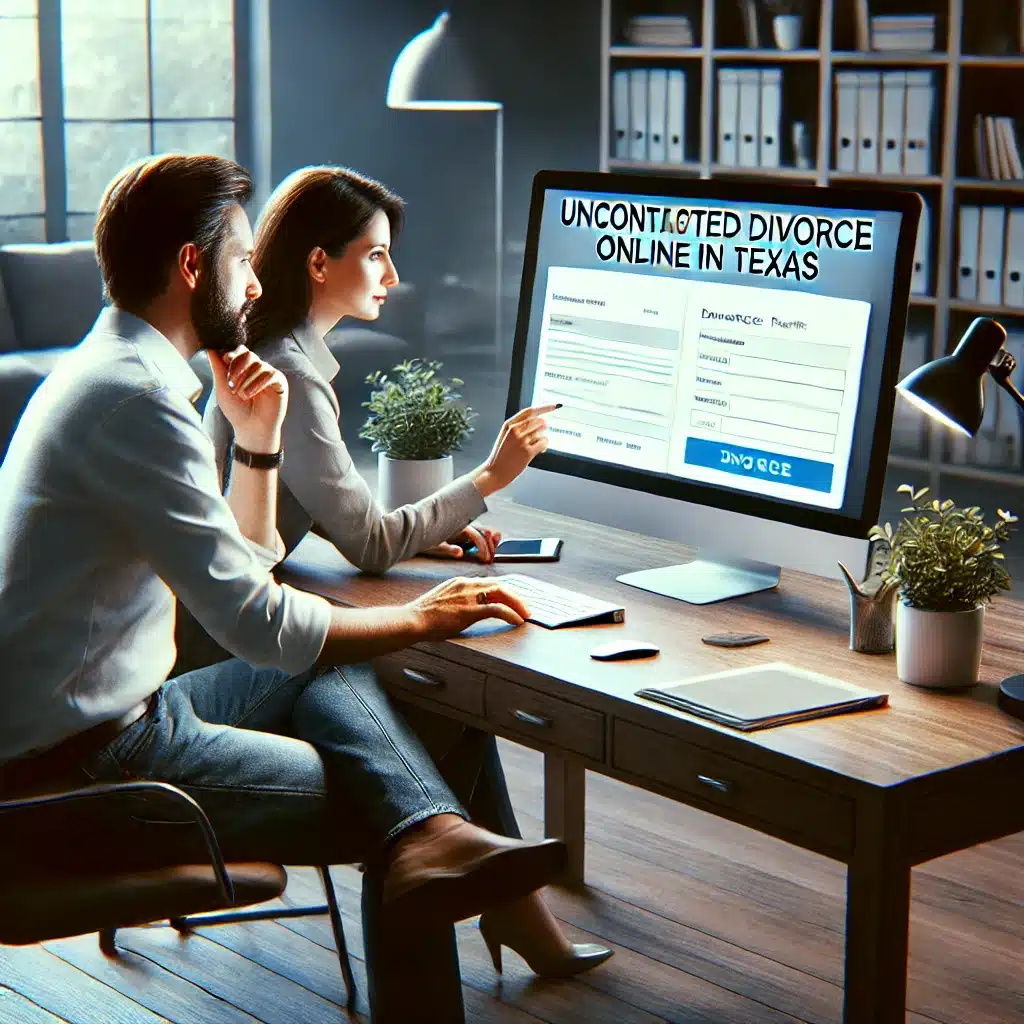
Online divorce does not mean skipping the legal system. It means using a digital platform to prepare paperwork that must still be filed with the court. These platforms guide you through questionnaires covering property, finances and custody. The completed forms are then submitted either electronically, by mail or in person to the proper court.
Online divorce services are designed for uncontested divorces. This means both spouses agree on how to divide assets, handle debts and address custody or support. If even one issue is unresolved an online service may not be enough. These platforms are efficient but they cannot provide customized legal advice. They work best when both parties have reached agreement before starting the process.
Advantages of Online Divorce
Online divorce services continue to grow in popularity because they offer several appealing benefits.
Lower Costs
The most obvious advantage is cost savings. Traditional divorces often involve attorneys charging hourly rates. Even simple cases can cost thousands of dollars. By contrast, most online services charge a flat fee that is significantly lower. For couples with straightforward cases this can be an affordable solution.
Convenience and Accessibility
Another key advantage is convenience. Completing forms at home on your own schedule saves time and stress. You do not have to rearrange your life to attend multiple office visits or long court sessions. This accessibility makes online divorce a practical option for many.
Faster Processing
When both parties agree the process is much quicker. Online services help you prepare forms in a matter of days. Courts still impose waiting periods but the paperwork side can move far faster than with traditional representation.
Privacy and Control
Many couples prefer to keep the divorce process as private as possible. Handling forms online allows you to manage much of the process without repeated public appearances in court. It also gives you more control over the pace of the process. These benefits explain why more couples turn to online filing. Still, they only tell part of the story.
| Advantage | Description |
| Lower Costs | Online services charge a flat fee that is significantly less than traditional attorney fees. |
| Convenience and Accessibility | Couples can complete forms at home without repeated courthouse visits, saving time and effort. |
| Faster Processing | When spouses agree, paperwork can be prepared in days, making the process quicker overall. |
| Privacy and Control | Filing online provides more privacy and allows couples to manage much of the process themselves. |

Risks of Filing Online
While online divorce services are convenient, they also carry risks.
Lack of Legal Guidance
Online platforms provide general instructions but cannot replace an attorney. They cannot explain how community property law applies to your exact circumstances. Without legal advice you may overlook rights or obligations that affect your future.
Potential for Mistakes
Courts require precise paperwork. Even small mistakes can result in rejection, delays or the need to refile. Errors can also create long-term problems if agreements are unclear or incomplete. Online services cannot review your situation in detail to prevent these issues.
Hidden Costs Later
The upfront price may seem low but unexpected disputes can change that. If disagreements arise after filing you may need to hire an attorney anyway. At that point, costs can exceed what you would have paid for representation from the beginning.
Inability to Handle Complexity
Online divorce services are not built for complicated situations. Cases involving children, multiple properties, investments or family businesses are beyond their scope. Attempting to use them in these cases may result in unfair or incomplete settlements.
For these reasons, online divorce is not right for every couple.
When Online Divorce Works Well
Online divorce is most effective in simple, uncontested cases. It works best when:
- Both spouses agree on property and debt division.
- There are no disputes over child custody or support.
- Neither party requests spousal maintenance.
- The couple does not own complex or high-value assets.
- Both individuals are willing to cooperate and complete forms honestly.
Under these conditions, online divorce provides a fast and affordable way to dissolve a marriage. It is particularly useful when couples want a clean break with minimal conflict.
When to Avoid Online Divorce
Not every situation fits the online model. You should avoid it if:
- Custody or visitation arrangements are disputed.
- Property division is contested or assets are hidden.
- Domestic violence or abuse is present.
- Either spouse owns a business or significant investments.
- There is an imbalance of knowledge or power between spouses.
In these situations online divorce may not protect your interests. Asking yourself is filing for divorce online in Texas the best option for you becomes critical, as the risks of handling complex issues without legal help are too high.
Alternatives to Online Filing
When online divorce does not fit, other options are available.
Mediation
Mediation uses a neutral third party to help spouses reach agreements. It reduces conflict and keeps costs lower than litigation. Courts often approve mediated settlements quickly.
Collaborative Divorce
Collaborative divorce encourages cooperation with attorneys trained in this approach. Both spouses agree to resolve matters outside of court. This option provides legal guidance while maintaining a less adversarial atmosphere.
Traditional Litigation
When disputes cannot be resolved, litigation may be necessary. This path is more expensive and stressful but it ensures that a judge makes final decisions. Litigation is often the only choice in high-conflict or high-value cases.
Each alternative has advantages depending on the circumstances. The right path depends on how much cooperation is possible between the spouses.
Steps for Filing Online
If you choose to file online, follow these steps to avoid mistakes:
- Research online services carefully and choose a reliable provider.
- Confirm residency requirements and eligibility for an uncontested divorce.
- Collect documents such as bank statements, property records and debt information.
- Complete questionnaires provided by the service with full accuracy.
- Review all forms carefully before filing.
- File documents with the correct county court.
- Pay required court fees promptly.
- Attend hearings if scheduled by the judge.
Taking each step seriously increases your chances of success. Accuracy and thorough preparation are key.
Key Considerations for Property and Custody
Even when couples agree property and custody require careful attention. Texas courts divide community property equally unless an alternative arrangement is approved. Online services can generate agreements but they cannot ensure fairness.
Custody and support are even more sensitive. Texas law focuses on the child’s best interest, which includes stability, parental involvement and financial support. Online forms provide basic structures but they do not cover every detail of parenting plans. Professional guidance is often helpful to avoid future disputes.
Emotional and Practical Factors
Beyond legal issues, divorce involves emotional and practical considerations. Completing forms online may seem efficient, but it does not ease the stress of ending a marriage. Couples should consider their emotional readiness before relying solely on technology.
Practical factors also matter. Not everyone is comfortable with technology. Reliable internet access, patience and attention to detail are necessary. For some, in-person assistance is simply easier and less stressful. These factors are often overlooked but can influence whether online filing succeeds.
Evaluating Your Own Situation
The choice between online divorce and traditional methods depends on your circumstances. If your case is straightforward and uncontested, online services may serve you well. If disputes or complexities exist, traditional legal help may be necessary.
When considering is filing for divorce online in Texas the best option for you, the answer depends on a careful review of your goals and challenges. Cost and speed matter but so do fairness and long-term protection. Taking the time to evaluate your situation ensures you choose wisely.

In Summary
Online divorce services are reshaping the way many Texans navigate separation. They promise accessibility, cost savings and faster processing which appeals to those seeking a smoother path through an often stressful process. These services offer a sense of control by allowing couples to handle much of the paperwork independently. For individuals who value efficiency and privacy, the option to manage legal steps from home can feel empowering.
Limitations of Online Platforms
Yet despite these benefits, online platforms have significant limitations. They cannot account for the emotional weight of divorce, nor can they replace professional legal advice in complex situations. Issues such as child custody, long-term financial planning or division of substantial assets require more than standardized forms. Overlooking these areas may lead to unfair outcomes or future disputes that could have been avoided with legal guidance.
Couples with straightforward, uncontested cases may find online filing to be a practical and cost-effective solution. It reduces expenses, shortens timelines and simplifies the overall process. However, when children are involved or when disagreements arise over property or support, relying solely on online services can be risky. In these cases an attorney’s involvement ensures protection of rights and a clearer path to resolution.
Ultimately, the decision comes down to your individual circumstances
So, is filing for divorce online in Texas the best option for you? The answer depends on how simple or complex your case may be, the level of agreement between spouses, and the importance you place on safeguarding your future. By carefully weighing the advantages alongside the potential drawbacks, you can select the approach that provides not only efficiency but also security. Choosing wisely will help you close one chapter of life while stepping into the next with confidence and peace of mind.
Other Related Articles:
- What Everyone Gets Wrong About Filing for Divorce Online in Texas
- When Is Filing for Divorce Online in Texas for Free the Right Choice?
- Is Online Divorce Right for You? Pros and Cons of Filing in Texas
- How Online Divorce Filing Works for Uncontested Divorces in Texas
- Technical Requirements for Filing Divorce Online in Texas
- Eligibility Requirements for Filing for Divorce Online in Texas
- The Benefits and Drawbacks of Filing for Divorce Online in Texas
- Top 10 Myths About Filing for Divorce Online in Texas
- Key Considerations Before Filing for Divorce in a Texas Courthouse
- How to File for Divorce Online in Texas: A Guide with Real-Life Examples