
Child Protective Services in Richmond Texas: A Complete Guide for Parents Facing CPS Investigations

What happens when your child’s grades start slipping at the same time your family life is unraveling? Maybe the teacher calls about missing assignments. Maybe your child, once confident and engaged, now seems distant or overwhelmed. For many parents, these warning signs don’t appear out of nowhere—they show up during some of life’s most difficult transitions, including divorce or an unexpected visit from Child Protective Services in Richmond Texas.
In Texas, these situations are more connected than most families realize. Courts don’t just decide where a child will live—they look closely at how that child is functioning in school, emotionally and academically. Under Texas Family Code §153.002, every custody decision must serve the best interest of the child, and educational stability is often a key part of that analysis. A sudden drop in grades or attendance can raise concerns not only for teachers, but also for CPS and the court.
At The Law Office of Bryan Fagan, PLLC, we have guided families across Houston and Fort Bend County through these exact moments. Led by Bryan Joseph Fagan, a South Texas College of Law graduate and a recognized authority in Texas divorce and custody law, our firm understands that behind every legal issue is a child trying to find stability in the middle of change. We focus on helping parents move forward with clarity while protecting their child’s future.
In this article, you will learn how CPS involvement and divorce can impact your child’s academic performance, how Texas courts evaluate educational stability in custody cases, and what practical steps you can take to support your child through uncertainty. Because even in the most challenging seasons, the right guidance can help your family regain balance, confidence, and peace of mind.
Key Takeaways
- Child Protective Services in Richmond Texas investigates reports of child abuse or neglect to ensure a child’s safety.
- Parents have important legal rights during a CPS investigation, including the right to know the allegations and seek legal counsel.
- CPS cases in Fort Bend County follow a structured legal process with strict statutory deadlines—missing them can have serious consequences.
- Most cases focus on reunifying families, but outcomes depend heavily on parental cooperation and compliance with service plans.
- Early legal representation can protect your rights and help you navigate complex court procedures in Fort Bend County courts.

Your Family’s Future Starts Here
Don’t navigate your legal journey alone. Schedule a consultation now and get the clarity and support you deserve.
Listen to Our Texas Family Law Podcast
Prefer listening? In this episode, we discuss CPS defense in Richmond, Texas, including how Child Protective Services cases work, your legal rights, and how to protect your family throughout the investigation and court process.
As a family law firm, we recognize that clients entrust us with a deeply personal aspect of their lives. Respecting this responsibility, our firm operates with professionalism, diligence, and efficiency, while maintaining open lines of communication with our clients. Not only do we provide access to their attorney, but also a dedicated client support team capable of addressing any inquiries regarding the case, status updates, billing concerns, or any other matters that arise throughout the process. Please don’t hesitate to discover how we can be of service to you.
Contact the Law Office of Bryan Fagan, PLLC at 281-245-1907 or online.
Child Protective Services in Richmond Texas: The Short Answer
Child Protective Services in Richmond Texas is a division of the Texas Department of Family and Protective Services (DFPS) that investigates reports of child abuse or neglect and takes action to protect children’s safety while balancing the rights of parents.
CPS operates throughout Fort Bend County, responding to reports from the Texas abuse hotline, mandatory reporters, and community members concerned about a child’s welfare. When a report is made, investigators assess whether a child is at risk and determine what level of intervention—if any—is necessary. For families navigating these situations, understanding local support systems can be just as important as understanding the law. Resources available through the community, including those highlighted in the Richmond, Texas relocation and community resource guide, can help parents maintain stability during an investigation, especially when housing, schooling, or daily routines are affected.
The agency’s decisions are guided by the “best interest of the child” standard under Texas Family Code §153.002. This means that in every stage—from initial investigation to court proceedings—the child’s safety and well-being take priority. At the same time, parents retain important legal rights, and the outcome of a CPS case often depends on how effectively those rights are exercised. In more serious cases involving potential removal or court intervention under Texas Family Code Chapter 262, working with experienced legal counsel can play a critical role in protecting both parental rights and a child’s long-term stability.

Why CPS May Investigate a Family in Texas
For families facing Child Protective Services in Richmond Texas, understanding why an investigation begins can help reduce uncertainty and allow you to respond more effectively. CPS does not randomly select families for investigation—cases are typically initiated after a report is made alleging abuse or neglect.
Under Texas Family Code Chapter 261, certain professionals—such as teachers, doctors, nurses, and law enforcement—are classified as mandatory reporters. These individuals are legally required to report suspected abuse or neglect, often based on observations of a child’s physical condition, behavior, or changes in academic performance. Community members, neighbors, or even extended family members may also submit reports if they believe a child’s safety is at risk.
Common reasons CPS may investigate include allegations of physical abuse involving injuries beyond reasonable discipline, neglect related to inadequate food, shelter, supervision, or medical care, and sexual abuse involving any inappropriate conduct with a child. Investigations may also arise from claims of abandonment or unsafe living conditions, such as exposure to substance abuse, domestic violence, or hazardous environments. In many cases, concerns tied to a child’s school performance—such as frequent absences, poor hygiene, or behavioral changes—can trigger reports from educators.
It is important to understand that not every report leads to a full investigation. CPS conducts an initial screening process to determine whether the allegations meet the legal threshold under Chapter 261. Some cases may be diverted into what is known as an alternative response, where the focus is on providing services and support rather than making a formal finding of abuse or neglect. These cases typically involve lower-risk situations where CPS believes the family can benefit from guidance without court intervention.
After an investigation, CPS will classify the allegations as either founded or unfounded. A founded finding means there is sufficient evidence to support the claim of abuse or neglect, while an unfounded finding indicates that the evidence does not support the allegations. These determinations can have significant implications, especially in cases that intersect with custody decisions or future CPS involvement.
Understanding why CPS becomes involved—and how these decisions are made—can help you approach the process with greater clarity. In many situations, early awareness and a thoughtful response can influence how the case develops and whether it escalates into court involvement under Texas Family Code Chapters 262 and 263.ed allegations: After investigation, CPS determines whether abuse or neglect is “founded” (substantiated by evidence) or “unfounded.” If allegations are unfounded, parents may request removal of the report from CPS records under Texas Family Code §261.315. False or malicious reports carry penalties under Texas law.
What Happens During a CPS Investigation
CPS investigations follow a structured process designed to assess whether a child is safe and whether intervention is necessary.
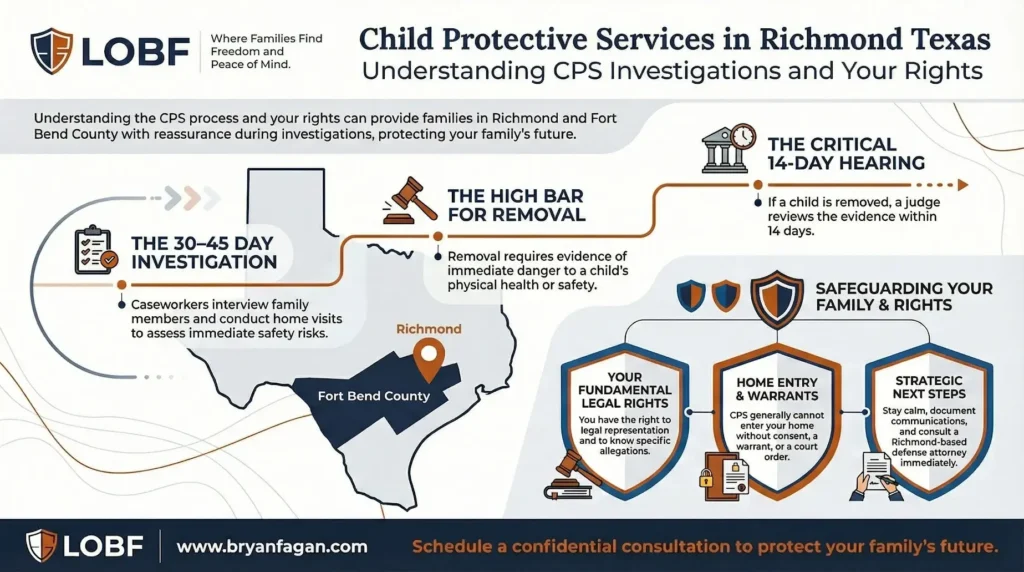
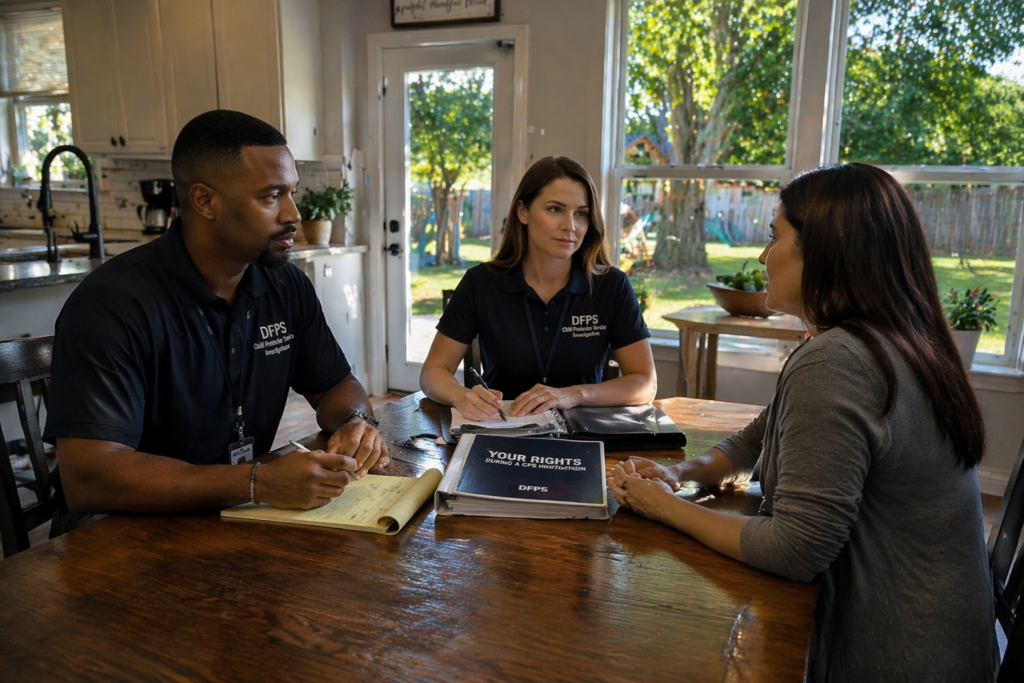
Initial contact and home visit. A caseworker will visit your home, often without advance notice. They will observe living conditions, speak with family members, and assess immediate safety concerns.
Interviews with parents and children. CPS will interview parents separately about the allegations, family circumstances, and the child’s care. Children may also be interviewed—sometimes at school or other locations without parents present.
Evidence gathering and documentation. Investigators may request medical records, school records, and statements from third parties such as teachers, neighbors, or relatives. They document their observations and findings throughout the process.
Safety assessments and risk evaluations. Caseworkers evaluate whether the child faces immediate danger and whether the home environment presents ongoing risks. They assess parental capacity, supervision, emotional nurturing, and the stability of the household.
Timeline expectations. Under Texas law, most CPS investigations must be completed within 45 days of intake, though extensions may be granted for good cause. For Richmond families, this means the investigation phase typically concludes within six weeks, though more complex cases may take longer.
What CPS Caseworkers Are Evaluating in Your Home
When a CPS caseworker visits your home, they are assessing specific factors related to your child’s safety and well-being:
- Physical safety: Is the home free from hazards? Are there working utilities, adequate food, and safe sleeping arrangements?
- Supervision and parenting ability: Is the child adequately supervised? Do caregivers demonstrate appropriate parenting skills?
- Emotional well-being: Does the child appear emotionally healthy? Are there signs of fear, anxiety, or distress?
- Household stability: Is the living environment stable? Are there concerning dynamics such as domestic violence or substance abuse?
- Parental cooperation: Are parents responsive, cooperative, and willing to engage with services if offered?
CPS must also explore whether less restrictive measures—such as in-home safety plans or removal of the alleged perpetrator—can protect the child without removing them from the home. Under Texas Family Code Chapter 262, the agency must make “reasonable efforts” to prevent removal when the child’s safety can be maintained.
Parents’ Rights During a CPS Case
Your Legal Rights During a CPS Investigation
When facing Child Protective Services in Richmond Texas, understanding your legal rights is one of the most important steps you can take to protect your family. CPS investigations can feel overwhelming, but Texas law provides parents with clear protections throughout the process.
Under Texas Family Code §153.002, all decisions involving children must be based on the best interest of the child. At the same time, parents are entitled to meaningful participation in the process and the opportunity to defend themselves against allegations. These rights are especially important in Fort Bend County cases, where early decisions can shape the direction of the entire investigation.
Parents have the right to know the allegations being made against them and to understand what CPS is investigating. You also have the right to legal representation at any stage of the case. If your case proceeds to court and you cannot afford an attorney, you may be entitled to appointed counsel under Texas law. Having experienced legal guidance early—especially in cases that may involve court intervention under Texas Family Code Chapter 262—can significantly affect the outcome.
You also have the right to participate in case planning if services are offered, helping shape the steps required to address CPS concerns. If CPS makes a finding against you, you have the right to challenge that determination through administrative review or court proceedings. Additionally, if English is not your primary language, you are entitled to interpreter services during CPS interactions to ensure you fully understand your rights and responsibilities.
These protections apply throughout the CPS process, but they are only effective if you actively exercise them. Many families benefit from working with attorneys who regularly handle CPS and custody matters in Fort Bend County, particularly when decisions made early in the case can impact custody, visitation, and long-term parental rights.
Mistakes That Can Hurt Your CPS Case
Even when parents have strong legal rights, certain missteps can create serious challenges during a CPS investigation. Understanding what to avoid can be just as important as understanding the law.
One of the most common mistakes is talking too much or making inconsistent statements. CPS caseworkers document everything, and inconsistencies can raise concerns about credibility. It is important to remain calm, thoughtful, and consistent in your communication.
Another critical mistake is signing documents without fully understanding them. Safety plans, service agreements, and releases can have long-term consequences, especially if they affect custody or your ability to challenge CPS findings later. Reviewing these documents with experienced legal counsel can help you avoid unintended outcomes.
Missing court dates or CPS meetings is another serious issue. Failure to appear may be interpreted as non-cooperation and can lead to adverse rulings, including restrictions on your parental rights. Courts in Fort Bend County expect parents to take these proceedings seriously and to remain actively engaged.
Delays in completing service plan requirements can also negatively affect your case. Courts closely monitor compliance under Texas Family Code Chapter 263, and failure to meet deadlines may lead to escalation, extended CPS involvement, or even termination proceedings in more serious cases.
Finally, failing to document your interactions with CPS can weaken your position. Keeping detailed records of visits, communications, and completed requirements can provide critical evidence if your case progresses to court.
If you are unsure how to navigate these challenges or feel that your rights may not be fully protected, speaking with a local legal team can provide clarity and direction. You can learn more about your options and next steps by connecting with the Richmond office of the Law Office of Bryan Fagan, PLLC, where families facing CPS cases receive guidance tailored to Fort Bend County courts and procedures.
Can CPS Enter Your Home Without Permission in Texas?
When dealing with Child Protective Services in Richmond Texas, one of the most common—and stressful—questions parents have is whether CPS can legally enter their home without permission. Understanding the law in this moment can help you respond calmly and protect your rights.
Under Texas Family Code Chapter 262, CPS generally cannot enter your home without your consent or a court order. In most situations, caseworkers must either ask for permission or obtain judicial authorization before conducting a full inspection. This legal protection exists to balance child safety with parental rights.
However, there are important exceptions. Under Texas Family Code §262.104, CPS may take emergency possession of a child without a court order if there is immediate danger to the child’s physical health or safety. In these urgent circumstances, CPS can act first and seek court approval shortly afterward. These situations are taken seriously by courts and often involve allegations that require immediate intervention.
From a practical standpoint, you do have the right to refuse entry. But that decision should be made carefully. Refusing access may escalate the situation, leading CPS to seek an emergency court order, and your refusal could be documented as a lack of cooperation. In cases where there is uncertainty about how to respond, families often benefit from speaking with attorneys who regularly handle CPS and custody matters in Fort Bend County, especially when early decisions can influence how the case develops under Texas Family Code Chapter 262.
Can CPS Interview My Child Without Me Present?
Parents are often surprised to learn that CPS can interview their child without them present. In Texas, this is legally permitted, particularly in school settings or during emergency investigations, to allow the child to speak openly without outside influence.
While the law does not always require parental notification before these interviews occur, parents still have important rights. You are entitled to know the nature of the allegations and to receive updates about the investigation. If your child is interviewed without your knowledge, it is important to document when and where it occurred and discuss the situation with legal counsel.
These interviews can become part of the evidence considered in court proceedings, particularly in cases involving custody or removal under Texas Family Code Chapter 262. How you respond afterward—remaining calm, documenting details, and seeking guidance—can make a meaningful difference in protecting your parental rights and maintaining stability for your child.
If you are unsure how to handle a CPS request or believe your rights may be at risk, connecting with a local legal team can provide clarity. You can learn more about working with attorneys familiar with Fort Bend County CPS cases by visiting the Richmond office of the Law Office of Bryan Fagan, PLLC, where families receive guidance tailored to these high-stakes situations.

Stages of a CPS Case in Texas
CPS cases progress through distinct stages, each with specific procedures and parental responsibilities. Understanding this progression helps you prepare for what lies ahead.
| Stage | What Happens | What Parents Should Expect |
|---|---|---|
| Report Intake | CPS receives a report of suspected abuse or neglect and screens it for investigation | You may not know a report has been filed until CPS contacts you |
| Investigation | Caseworker visits home, interviews family members, gathers evidence | Home visits, interviews, document requests; typically completed within 45 days |
| Decision | CPS determines if allegations are founded, unfounded, or handled through alternative response | You will receive written notification of the finding |
| Safety Plan | If concerns exist but removal is not necessary, CPS may implement in-home safety services | You must comply with plan requirements while your child remains home |
| Removal | If immediate danger exists, CPS may remove the child and file for emergency custody | Emergency hearing within 1-3 business days; adversary hearing within 14 days |
| Court Involvement | Ongoing court oversight through status hearings and permanency hearings | Regular court appearances every 90 days; compliance with service plans required |
| Resolution | Case concludes through reunification, relative placement, conservatorship, or termination | Outcome depends on compliance, safety improvements, and best interest of the child |
Under Texas Family Code Chapters 261, 262, and 263, each stage follows specific legal requirements. Fort Bend County courts oversee cases involving child removal, ensuring parents have opportunities to challenge CPS actions and work toward reunification.
What Happens If CPS Removes a Child?
For families facing Child Protective Services in Richmond Texas, the possibility of a child being removed from the home is one of the most overwhelming and emotional parts of the process. While removal is serious, understanding what happens next can help you take the right steps quickly and protect your parental rights.
Under Texas Family Code Chapter 262, CPS may remove a child if there is immediate danger to the child’s physical health or safety. This authority is not unlimited—courts require CPS to justify its actions and follow strict procedural timelines. Under §262.104, CPS can take possession of a child without a court order only in emergency situations, and even then, the agency must file a lawsuit without unnecessary delay to allow judicial oversight.
If a child is removed without a prior court order, an emergency hearing must be held no later than the first business day after removal—and no later than the third business day under §262.106. This hearing ensures that a judge reviews CPS’s actions promptly. If CPS fails to meet this deadline and cannot show continued danger, the child may be returned home. These early hearings are critical, as they often set the tone for how the case will proceed in Fort Bend County courts.
Within 14 days of removal, the court must hold a full adversary hearing. This is your first opportunity to formally challenge both the removal and the allegations. At this stage, the court evaluates whether CPS has made reasonable efforts to avoid removal and whether the child can safely return home. These determinations are made in light of the “best interest of the child” standard under Texas Family Code §153.002, while also considering the legal requirements imposed on CPS under Chapter 262.
When removal does occur, CPS must first consider placing the child with relatives or kinship caregivers before resorting to foster care. Under §262.1015, the agency is also required to evaluate whether removing the alleged perpetrator from the home—rather than the child—is a safer and less disruptive option. Courts recognize that maintaining stability, including continuity in school and daily routines, can be important for a child’s well-being during this process.
In these situations, timing and strategy matter. Parents should act immediately by contacting an attorney experienced in CPS and custody matters, attending all hearings, and documenting every detail related to the case. Beginning compliance with any service plan requirements and maintaining consistent contact with your child through authorized visitation can also demonstrate your commitment to reunification.
Because these cases move quickly and involve strict legal deadlines, many families benefit from working with attorneys who understand how CPS cases are handled locally. If your child has been removed or you believe removal may occur, you can learn more about your options by connecting with the Richmond office of the Law Office of Bryan Fagan, PLLC, where families receive guidance tailored to Fort Bend County courts and CPS procedures.
CPS Court Process Timeline in Richmond Texas
CPS cases in Fort Bend County follow a structured court process with statutory deadlines. Understanding this timeline helps you prepare for each stage and meet critical requirements.
| Step | What Happens | Typical Timeline |
|---|---|---|
| Emergency/Ex Parte Hearing | Court reviews emergency removal; temporary orders issued | Within 1-3 business days of removal |
| Adversary Hearing | Parents’ first opportunity to contest removal and allegations | Within 14 days of removal |
| Status Hearing | Court reviews case progress, service plan compliance, and child’s placement | Every 90 days |
| Permanency Hearing | Court evaluates progress toward permanent resolution | Within 12 months of removal (statutory goal) |
| Final Trial | Court determines final outcome: reunification, conservatorship, or termination | Varies; goal is resolution within 12-18 months |
Statutory goal: Texas law aims for resolution within approximately 12 months from removal, though extensions may occur in complex cases. Missing deadlines or hearings can result in adverse rulings, including termination of parental rights.
Fort Bend County courts appoint attorneys ad litem to represent children’s interests and may also appoint guardians ad litem. Understanding these roles and working cooperatively with all parties can support positive outcomes.
Family Service Plans and Requirements
When dealing with Child Protective Services in Richmond Texas, one of the most important parts of your case will be completing a family service plan. This written agreement outlines the specific steps you must take to address CPS concerns and demonstrate your ability to provide a safe and stable environment for your child.
Family service plans are governed in part by Texas Family Code Chapter 263, which focuses on the court’s ongoing review of a child’s placement and a parent’s progress toward reunification. Judges in Fort Bend County closely monitor whether parents are making consistent, measurable progress. In many cases, compliance with this plan becomes the deciding factor in whether a child is returned home.
Common requirements often include parenting classes focused on age-appropriate discipline and child development, counseling to address underlying family or emotional issues, and drug or alcohol testing when substance use is a concern. Some parents may also be required to complete psychological evaluations, improve home safety conditions, or demonstrate stability through consistent housing and employment. Each requirement is designed to address specific concerns raised during the CPS investigation.
Completing these requirements is not just a formality—it is one of the most important ways to show the court that you are committed to your child’s well-being. Courts evaluate not only whether tasks are completed, but also whether they are completed on time and taken seriously. Delays, missed appointments, or incomplete services can raise concerns under Texas Family Code §263.307, which outlines factors courts consider when determining whether a parent can provide a safe environment.
On the other hand, failure to comply with a service plan can have serious consequences. Missing deadlines, failing drug tests, or refusing to participate in required services may signal to the court that safety concerns have not been resolved. This can lead to extended CPS involvement, loss of custody, or in more severe cases, termination of parental rights.
For many families, access to local resources can make a significant difference in successfully completing these requirements. Support services related to housing, employment, counseling, and education—such as those highlighted in the Richmond, Texas relocation and community resource guide—can help parents maintain stability during this process. Taking advantage of these resources, while working closely with legal counsel, can strengthen your position and improve your chances of reunification.

How CPS Cases Are Resolved
CPS cases can conclude in several ways, depending on the circumstances and parental compliance.
Reunification: This remains the primary goal under Texas law. If parents successfully complete service plan requirements and demonstrate that the child can safely remain in the home, the court will reunify the family and close the case.
Placement with relatives: When reunification is not immediately possible, Texas law prefers placing children with relatives or kinship caregivers rather than foster care placement. This keeps children connected to their family while safety concerns are addressed.
Permanent managing conservatorship: The court may award managing conservatorship to DFPS or another party, restricting parental rights without fully terminating them. Parents may retain some rights, such as visitation, while another party holds primary custody.
Termination of parental rights: As a last resort, when parents cannot or will not meet the child’s safety and emotional needs, the court may permanently terminate parental rights. Under Texas Family Code §153.002, this decision is based on the best interest of the child. Termination ends all legal rights and responsibilities—and is extremely difficult to reverse.
“Texas courts make decisions in CPS cases based on the best interest of the child.
How Long Does a CPS Case Take in Richmond Texas?
The duration of a CPS case depends on multiple factors, but Texas law establishes general timeframes.
Typical timelines:
- Investigation phase: Usually completed within 45 days of intake
- Court involvement after removal: Adversary hearing within 14 days; status hearings every 90 days
- Resolution goal: Texas aims for permanency within 12 months of removal
Factors affecting duration:
- Parental compliance: Completing service plans promptly can shorten case duration
- Complexity of allegations: Serious or contested allegations may extend timelines
- Court schedules: Fort Bend County court availability affects hearing dates
- Child’s needs: If children require specialized placements or services, cases may take longer
For Richmond families, understanding these timelines helps set realistic expectations. Working closely with an attorney and staying proactive with service plan compliance are the most effective ways to move your case toward resolution.
Common Challenges in CPS Cases (and How to Overcome Them)
CPS cases present significant obstacles for families. Recognizing common challenges—and how to address them—can improve your chances of a favorable outcome.
| Challenge | How to Overcome It |
|---|---|
| Miscommunication with CPS | Keep detailed records of all interactions; request written confirmation of requirements |
| Overwhelming service plan requirements | Break tasks into weekly steps; prioritize deadlines; ask for extensions if needed |
| Missed deadlines | Use calendar reminders; work with your attorney to track critical dates |
| Emotional stress | Seek support from family, friends, or counselors; focus on actions within your control |
| Confusion about expectations | Ask questions at every meeting; request clarification in writing |
| Limited resources | Ask your caseworker about financial assistance programs and community resources |
Many parents feel isolated during CPS involvement. Remember that seeking help—from attorneys, counselors, and community programs—demonstrates strength, not weakness.
Why Legal Representation Matters in CPS Cases
When facing Child Protective Services in Richmond Texas, having experienced legal representation is not just helpful—it can be critical to protecting your parental rights and your child’s future. CPS cases move quickly, involve strict deadlines, and often carry long-term consequences that can permanently affect your relationship with your child.
Under Texas Family Code Chapters 262 and 263, CPS cases follow a structured legal process that includes emergency hearings, adversary hearings, and ongoing court reviews. Each stage presents opportunities—and risks. An experienced attorney helps you understand what is happening at each step, what the court is evaluating, and how your actions may influence the outcome.
One of the most important roles of an attorney is protecting your rights from the very beginning. This includes helping you understand the allegations, advising you before speaking with CPS, and reviewing any documents or agreements before you sign them. In many cases, early decisions—such as agreeing to a safety plan or responding to an investigation—can significantly impact how the case unfolds.
Legal representation also plays a key role in navigating complex procedures. From presenting evidence at an adversary hearing to ensuring compliance with service plan requirements under Texas Family Code Chapter 263, experienced attorneys understand how to position your case effectively in Fort Bend County courts. This level of guidance can help you avoid common mistakes that may otherwise lead to extended CPS involvement or more serious outcomes.
In addition, attorneys help improve communication between you and CPS. Misunderstandings or inconsistent information can quickly escalate a case. Having a legal advocate ensures that your voice is clearly represented and that your efforts to comply with CPS requirements are properly documented and presented to the court.
Perhaps most importantly, skilled legal guidance helps you avoid permanent consequences. Without proper direction, parents may unintentionally make statements, miss critical deadlines, or fail to complete required services in ways that can lead to termination of parental rights. Courts ultimately evaluate these cases under the best interest standard in Texas Family Code §153.002, and having strong legal representation can make a meaningful difference in how your situation is viewed.
Families navigating CPS cases often benefit from working with attorneys who regularly handle high-stakes custody and CPS matters in Fort Bend County. These cases are not just about legal procedures—they are about restoring stability, protecting your child’s future, and helping your family move forward with clarity and confidence.
Actionable Checklist: Child Protective Services in Richmond Texas
If you are dealing with Child Protective Services in Richmond Texas, staying organized and intentional in your actions can make a meaningful difference in how your case progresses. CPS cases often move quickly, and small decisions early on can have long-term consequences under Texas Family Code Chapters 262 and 263.
Use this checklist to stay focused and protect your family throughout the process:
Stay calm and cooperative during all CPS interactions, even when the situation feels overwhelming. Your demeanor and communication are often documented and may be referenced later in court.
Understand the specific allegations being made against you before responding. Taking time to fully understand the situation can help you avoid statements that may be misinterpreted.
Document every interaction with caseworkers, including dates, times, and what was discussed. Detailed records can become valuable evidence if your case proceeds to court.
Know your legal rights and exercise them appropriately. Parents retain important protections throughout the process, especially when decisions are being evaluated under the best interest standard in Texas Family Code §153.002.
Avoid making detailed statements without first consulting an attorney, particularly in situations where your words may be used in legal proceedings.
Attend all hearings, meetings, and required appointments without exception. Courts in Fort Bend County expect consistent participation and accountability.
Follow your service plan carefully and meet all deadlines. Compliance is one of the most important factors courts consider under Texas Family Code Chapter 263 when determining whether a child can safely return home.
Maintain a safe and stable home environment throughout your case. Stability—including consistent routines, safe living conditions, and school continuity—can positively influence how your case is evaluated.
Communicate regularly with your attorney about any developments in your case so that you can respond appropriately and stay on track.
Focus on your child’s best interests in every decision you make. Courts prioritize the child’s well-being above all else, and your actions should reflect that same priority.
Real-Life Scenario: A CPS Case in Fort Bend County
Consider a Richmond mother who received an unexpected visit from CPS after a teacher reported concerns about her child’s hygiene and frequent absences. Like many parents, she was doing her best under difficult circumstances—working two jobs after a recent divorce while trying to keep her household running.
During the investigation, CPS found no evidence of abuse but identified concerns related to supervision and home conditions. Instead of removing the child, CPS implemented family-based safety services and created a service plan that included parenting classes, improvements to the home environment, and regular check-ins.
With guidance from an experienced family law attorney, the mother took a structured and proactive approach. She documented her progress, complied with every requirement, and worked to create a more stable routine for her child. Over time, her efforts demonstrated to CPS and the court that the concerns had been addressed.
Within six months, CPS closed the case with no finding of abuse or neglect, and the family remained intact.
This type of outcome reflects an important reality: CPS involvement does not automatically lead to losing your children. When parents respond with cooperation, consistency, and the right legal guidance, many cases can move toward reunification and resolution—allowing families to move forward with greater stability and confidence.
Conclusion
When your family is going through change—especially when CPS and divorce intersect—it can feel like everything is uncertain, including your child’s future. But families facing Child Protective Services in Richmond Texas should know this: stability can be rebuilt. With the right support, structure, and guidance, your child’s academic success and emotional well-being can become the foundation that helps your family move forward with confidence.
The key is being proactive. Staying involved in your child’s education, creating consistency between households, and understanding how Texas courts evaluate these situations puts you in a position of strength. And when legal complexities arise—as they often do in CPS and custody cases—having experienced legal guidance can make a meaningful difference. Not just in navigating the process, but in protecting your rights and preserving your child’s future.
At The Law Office of Bryan Fagan, PLLC, our team is committed to helping families find clarity during some of life’s most difficult moments. We focus on practical solutions, compassionate guidance, and legal strategies that support long-term stability. If you are dealing with a CPS investigation or custody concerns in Fort Bend County, taking the next step toward understanding your options can make all the difference.
If you’re ready to move forward, you can begin by scheduling a consultation through our Richmond office visit planning page, where you can connect with a team that understands both the legal process and the real-life impact these cases have on families.
Because at the end of the day, this isn’t just about a legal case—it’s about your child feeling safe, supported, and ready to succeed, both at home and in school.
Frequently Asked Questions
CPS responds to reports of suspected child abuse or neglect filed through the Texas abuse hotline or by mandatory reporters such as teachers and doctors. A visit does not mean you have done anything wrong—it means CPS must investigate the allegations to ensure your child’s safety.
Under Texas Family Code §262.104, CPS can remove a child without a court order only when there is immediate danger to the child’s physical health or safety. In most cases, CPS must obtain a court order before removing a child from the home.
Parents have the right to know the allegations, the right to legal representation, the right to participate in service planning, and the right to challenge CPS findings. These rights apply throughout the investigation and any subsequent court proceedings.
Investigation phases typically conclude within 45 days. If court involvement occurs, Texas law aims for case resolution within approximately 12 months, though complex cases may take longer.
While not legally required during the investigation phase, having an attorney is strongly recommended. CPS cases involve complex procedures and strict deadlines, and mistakes can lead to permanent consequences including termination of parental rights.
Court hearings review the status of your case, evaluate your compliance with service plans, and determine next steps. The adversary hearing (held within 14 days of removal) is your first opportunity to contest CPS actions before a judge.
Yes—reunification is the primary goal of Texas CPS cases. If you complete your service plan requirements and demonstrate that your child can safely remain in your care, the court will work toward returning your child home.
You can request your CPS records through the Texas Department of Family and Protective Services. An attorney can help you navigate this process and understand what information is available.
You can refuse, but refusal may be documented as non-cooperation and used against you in court proceedings. Discuss the implications with your attorney before making a decision.
Failure to comply with service plan requirements can result in extended CPS involvement, loss of custody, or termination of parental rights. Courts closely monitor compliance and expect parents to demonstrate commitment to their child’s safety.