
Educational Resources in Dallas Texas: A Complete Guide for Families

Have you ever found yourself staring at school options late at night, wondering how everything changed so quickly? One moment you’re helping with homework or planning the next school year, and the next, you’re trying to figure out how divorce will affect your child’s grades, routine, and sense of stability. Educational Resources in Dallas Texas often become a lifeline for families in this position, offering structure, support, and guidance at a time when everything else may feel uncertain. What many parents don’t realize is this: a child’s academic stability isn’t just important at home—it can play a meaningful role in how Texas courts make custody decisions.
Under Texas Family Code §153.002, courts are required to prioritize the best interest of the child, and that frequently includes maintaining consistency in schooling, routines, and educational support systems. At The Law Office of Bryan Fagan, PLLC, we’ve worked with families across Texas who are navigating this exact intersection of legal pressure and everyday parenting. Led by Bryan Joseph Fagan, a South Texas College of Law graduate and a recognized authority in Texas divorce and custody law, our firm is committed to helping parents move forward with clarity, confidence, and a strategy that protects their child’s future.
In this article, you’ll learn how education and custody decisions are closely connected, how Texas courts evaluate a child’s academic needs, and what practical steps you can take right now to support your child through change. Because when you understand both the legal framework and the real-life impact, you’re in a much stronger position to create stability where it matters most.
Key Takeaways
- Dallas ISD serves over 139,000 students and offers more than 70 “Transformation and Innovation” schools, including Magnet Schools and Collegiate Academies for specialized interests
- Dallas County residents can access free High School Equivalency (GED) and ESL classes through programs like WorkReadyU offered by Dallas College
- Higher education options range from research universities like UT Dallas to affordable community college programs at Dallas College, one of the largest community college systems in Texas
- The Dallas Regional Chamber plays a key role in supporting educational resources, workforce development, and fostering partnerships between schools and local businesses to strengthen opportunities for students and families
- Dallas offers robust adult education programs, including GED, ESL, and workforce training, to help adults advance their skills and career opportunities.
- Community organizations throughout greater Dallas provide dual generation educational programs that support both children and their parents simultaneously
- Private schools in Dallas range from approximately $20,000 to $40,000 annually, with financial aid often available for qualifying families
- Dallas offers a wide range of assistance programs for families, including financial aid, tutoring, housing support, and community resources to help improve well-being and stability
- Educational resources in Dallas are designed to help students and families grow academically, socially, and personally through capacity-building programs and supportive services

Your Family’s Future Starts Here
Don’t navigate your legal journey alone. Schedule a consultation now and get the clarity and support you deserve.
Educational Resources in Dallas Texas: The Short Answer
Educational Resources in Dallas Texas include public school systems, private institutions, higher education programs, and community-based academic support designed to serve students at every stage of development. For families, these resources offer opportunity—but in a family law context, they also play a critical role in how courts evaluate stability, consistency, and long-term outcomes for children.
Under Texas Family Code §153.002, courts are required to prioritize the best interest of the child. In practical terms, that often includes looking closely at a child’s educational environment—where they attend school, how consistent that placement has been, and which parent is actively supporting their academic growth. In straightforward situations, where both parents agree on school choice and educational direction, these decisions may remain cooperative and relatively simple. However, in more complex cases—especially where parents disagree on school location, performance concerns, or specialized programs—education can quickly become a central issue in custody proceedings.
Dallas provides a wide range of educational options, from diverse public school districts to specialized private programs and higher education opportunities. That flexibility can be a strength for families, but it also introduces decisions that carry legal weight. Judges often evaluate which parent is maintaining consistency in the child’s routine, who is involved in academic planning, and whether any proposed changes—such as switching schools or relocating—support or disrupt the child’s stability. For additional context on how these factors are evaluated, many parents benefit from reviewing guidance on child custody in Texas and how courts approach these decisions.
In more complex situations—such as relocation, special education needs, or disputes over academic direction—education becomes more than a parenting decision; it becomes part of the legal strategy. For example, a move to a different city or school district can significantly impact how a court views stability under Texas Family Code §153.134. If you are considering a transition that could affect your child’s schooling, resources like moving to Dallas in Texas can help provide practical insight into how relocation intersects with both daily life and legal expectations.
Ultimately, educational decisions are closely tied to how a court evaluates parenting, consistency, and long-term planning. In straightforward situations, families may be able to make these choices collaboratively. Where parents disagree—or where the stakes are higher—having a clear, thoughtful approach can help avoid delays, reduce conflict, and ensure decisions are aligned with your child’s best interests.
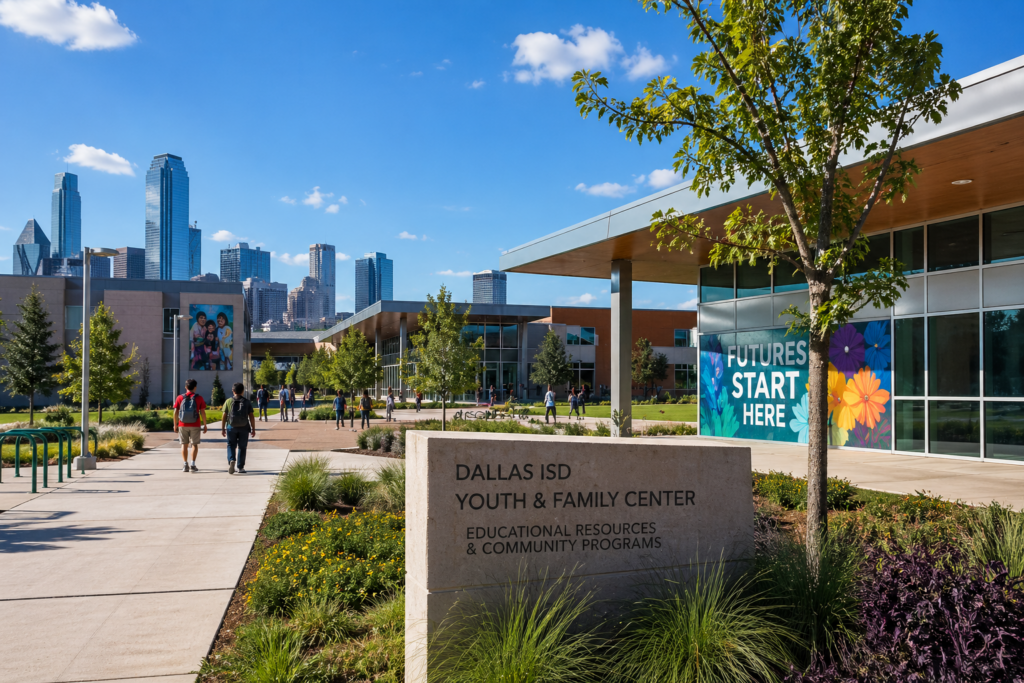
Listen to Our Texas Family Law Podcast
Prefer listening? In this episode, we discuss educational resources in Dallas, Texas, including how school choices can impact custody decisions and other family law matters affecting parents and children.
Public School Systems in Dallas
Public schools in Dallas provide comprehensive education options for families, with Dallas ISD serving as the primary district and several surrounding districts offering additional choices based on where you live.
Dallas ISD features a wide range of magnet schools, early college high schools, and career-focused academies. Programs like P-TECH (Pathways in Technology Early College High School) allow students to earn college credit and industry certifications while still in high school, helping them get started on their college or career paths. These initiatives are designed to give students a strong foundation and a head start as they transition into higher education or the workforce.
Dallas ISD Overview and Statistics
Dallas Independent School District educates approximately 139,000 students across the city. The district employs teachers with an average experience of about 9.9 years and has achieved an overall accountability rating of B from the Texas Education Agency. Nearly half of Dallas ISD students participate in bilingual or English-language learning programs, reflecting the diverse community the district serves.
Dallas ISD offers over 70 “Transformation and Innovation” schools, including Magnet Schools for specialized interests like the arts or STEM, and Collegiate Academies for students aiming to be first-generation college graduates. Programs like Pathways in Technology Early College High School (P-TECH) allow students to earn an Associate degree tuition-free while still in high school, giving young people a significant head start on their careers.
Surrounding Districts
Families moving to Dallas often consider school quality when choosing neighborhoods. Beyond Dallas ISD, several surrounding districts in Dallas County and the greater Dallas area offer excellent educational options:
- Plano ISD – Consistently ranks among the highest-performing suburban districts in Texas
- Garland ISD – Serves a diverse student population with strong academic programs
- Irving ISD – Offers comprehensive programs and serves students from varied backgrounds
- Arlington ISD – Provides extensive extracurricular opportunities alongside academics
Each district has its own strengths, demographics, and community culture. When choosing between districts, consider factors like academic performance ratings, program offerings, class sizes, and commute times from potential neighborhoods.
Private and Charter Schools
When exploring Educational Resources in Dallas Texas, private and charter schools often come into focus for families looking for more personalized learning environments, smaller class sizes, or specialized programs. These options can be incredibly beneficial for a child’s academic growth. However, for parents navigating divorce or custody matters, school choice is not just an educational decision—it can also become a legal one that impacts long-term stability.
In straightforward situations, parents are able to agree on school choice and focus on what best supports their child’s learning style and daily routine. Charter schools, for example, are tuition-free public schools that operate independently and often specialize in areas like STEM, arts, or innovative instruction. Because many use lottery-based admissions, planning ahead is critical. Private schools offer more control over curriculum and environment, but they also come with tuition and additional costs that require careful consideration between parents.
In more complex cases, where parents disagree about school selection, cost, or location, these decisions can become central issues in a custody case. Under Texas Family Code §153.002, courts prioritize the best interest of the child, which frequently includes maintaining educational stability. Judges may look at whether a school change disrupts the child’s routine, which parent is more involved in education, and whether the proposed plan supports the child’s long-term success. Texas Family Code §153.134 also allows courts to determine which parent has the authority to make educational decisions when agreement is not possible.
For example, one parent may prefer a private school with strong academic outcomes, while the other may be concerned about affordability or commute time. In these situations, the court evaluates not just the school itself, but how the decision affects the child’s overall well-being. Stability, consistency, and active parental involvement often carry significant weight. Working with an attorney experienced in child custody in Texas can help ensure these factors are presented clearly and effectively.
Dallas is home to several respected private institutions, including St. Mark’s School of Texas, Episcopal School of Dallas, Parish Episcopal School, and Alcuin School. These schools offer strong academic reputations and unique educational approaches, but they also require thoughtful evaluation of cost, logistics, and long-term fit. For families comparing options in other communities, reviewing resources like educational resources in Shenandoah, Texas can provide helpful perspective on how different areas approach school selection.
Ultimately, choosing between private and charter schools is about more than academics—it’s about creating stability and opportunity for your child. Where parents are aligned, these decisions can be made smoothly. Where parents disagree, or where factors like relocation, special education needs, or financial strain come into play, having a clear, structured plan can make all the difference. The goal is to support your child’s success in a way that works not just today, but well into the future.

Early Childhood Education
When families begin exploring Educational Resources in Dallas Texas, early childhood education is often one of the most important—and sometimes overlooked—pieces of the puzzle. Programs like public pre-K, private preschools, Head Start, and specialized early learning services do more than prepare children academically. They create structure, consistency, and emotional security, all of which can become especially important during periods of family transition such as divorce.
From a legal perspective, early education can play a meaningful role in custody decisions. Under Texas Family Code §153.002, courts are required to prioritize the best interest of the child. For younger children, that often includes maintaining consistent routines, familiar caregivers, and stable learning environments. Judges may look at whether a child is thriving in a particular program, how involved each parent is in early education, and whether proposed changes would disrupt developmental progress. Texas Family Code §153.134 further allows courts to assign decision-making authority regarding education, which can become critical when parents do not agree.
In straightforward situations, parents are able to cooperate on early education decisions—selecting a preschool, coordinating schedules, and supporting learning at home without conflict. In more complex cases, however, disagreements can arise over where a child should attend school, who is responsible for transportation, or how specialized services should be handled. Where parents disagree, or where factors like developmental delays, special education needs, or relocation are involved, these decisions can quickly move from routine parenting choices into legal issues that require structured guidance.
Dallas offers a wide range of early childhood programs designed to support both children and families. Public pre-K is available for eligible four-year-olds, and Dallas ISD provides Early Childhood Special Education (ECSE) services at no cost for qualifying children ages 3–5. Head Start and Early Head Start programs also serve families throughout Dallas County, offering not only education but access to health screenings, nutrition support, and parenting resources. These programs are especially valuable for families seeking stability and comprehensive support during times of change.
Private preschools and specialized programs provide additional options for families looking for specific educational philosophies or smaller class sizes. Programs like Bella Gardens, Park Cities Day School, and YMCA Rise School offer unique approaches, from bilingual and nature-based learning to Montessori-inspired environments. Many also incorporate parent involvement, which can be an important factor in demonstrating consistent support for a child’s development—something courts may consider when evaluating parental involvement in a custody case.
In situations where early education becomes part of a larger custody discussion, having a clear plan matters. Courts often evaluate which parent is maintaining consistency, who is actively participating in the child’s learning, and how decisions are being made over time. If delays, indecision, or conflict begin to impact the child’s routine, that can influence how a judge views the case. Working with an attorney experienced in child custody in Texas can help ensure that these factors are addressed thoughtfully and proactively.
For families comparing options across different areas, it can also be helpful to see how early education resources are structured in nearby communities, such as educational resources in The Woodlands, where similar programs emphasize stability, parental involvement, and long-term development.
Ultimately, early childhood education is about more than preparing for kindergarten—it’s about creating a foundation of stability during a time when children need it most. When parents work together, these decisions can be smooth and supportive. When disagreements arise, or when the stakes are higher due to developmental or legal concerns, having a clear strategy in place can help protect your child’s growth, both in the classroom and beyond.

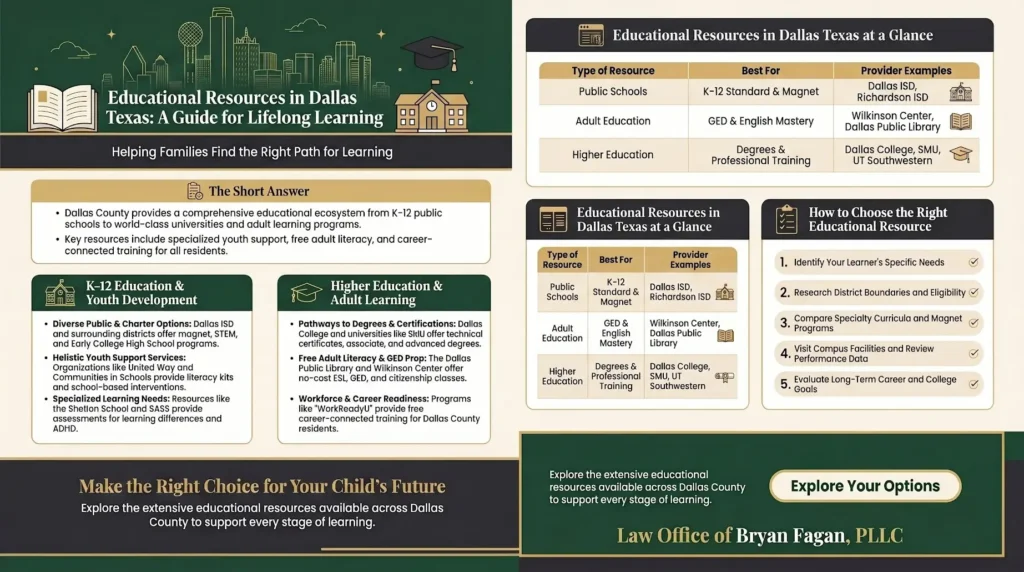
Types of Educational Resources in Dallas – Overview Table
| Resource Type | Description | Examples |
|---|---|---|
| Public Schools | Traditional K-12 education funded by state and local taxes | Dallas ISD, Plano ISD, Garland ISD |
| Private Schools | Tuition-based institutions with specialized curricula | St. Mark’s, Episcopal School of Dallas |
| Charter Schools | Publicly funded but independently operated schools | Various STEM and arts-focused academies |
| Higher Education | Universities and community colleges | UT Dallas, SMU, Dallas College |
| Workforce Training | Career-focused certificate and training programs | Career Institutes, Dallas College training |
| Community Resources | Libraries, tutoring, after-school programs, organizations supporting educational and workforce initiatives | Dallas Public Library, Reading Partners, Dallas Regional Chamber |
| Adult Education | Programs for adults to earn diplomas, learn English, or gain job skills | GED classes, ESL classes, workforce training |
Colleges and Universities in Dallas
As families explore Educational Resources in Dallas Texas, higher education is often part of the long-term vision—but it can also become part of the present conversation during a divorce or custody case. College planning, dual credit opportunities, and academic pathways are not just future goals; they can influence how courts evaluate stability, parental involvement, and decision-making today. For parents, understanding how these opportunities fit into a larger custody framework can help avoid conflict and protect their child’s trajectory.
From a legal standpoint, Texas courts focus on the best interest of the child under Texas Family Code §153.002. While this standard often applies to younger children, it also extends to teenagers preparing for college or workforce training. Judges may consider whether a parent is supporting academic advancement, encouraging long-term planning, and maintaining consistency in educational goals. Texas Family Code §153.134 allows courts to determine which parent has the authority to make key decisions, including those related to education, which can become especially important as children approach graduation and begin making post-secondary plans.
In straightforward situations, parents are able to work together on college preparation—supporting applications, discussing financial options, and encouraging their child’s academic interests. Dallas offers a wide range of opportunities, from major universities to flexible community college programs. The University of Texas at Dallas is known for strong STEM programs, Southern Methodist University offers extensive academic and networking opportunities, and the University of North Texas at Dallas focuses on accessibility for first-generation and working students. Dallas Baptist University provides a smaller, faith-based academic environment. These options allow families to tailor a path that fits their child’s goals and learning style.
In more complex cases, disagreements may arise about which path is best, how education will be funded, or whether a child should stay local or move away for school. Where parents disagree, these decisions can become part of a broader custody discussion, particularly if one parent’s plan disrupts the child’s established routine or academic progress. Courts may look at which parent has been consistently involved in the child’s education, who is supporting college readiness, and how decisions are being made over time. Delays or conflict in planning can impact not only the child’s opportunities but also how the case is viewed in court.
Community college options, such as Dallas College, provide additional flexibility and affordability, serving tens of thousands of students each year with degree and workforce training programs. For many families, these programs offer a practical stepping stone toward long-term goals. They can also reduce financial strain, which may be a factor in custody discussions involving educational expenses or child support considerations.
For parents navigating these decisions, clarity and structure are key. Establishing expectations around college planning, financial contributions, and academic support can help prevent misunderstandings and create a more stable path forward. In situations where disagreements escalate or begin to affect the child’s progress, working with an attorney experienced in child custody in Texas can help ensure that educational goals are aligned with the child’s best interest.
Families comparing educational pathways across different regions may also find it helpful to review how similar planning considerations are approached in other communities, such as educational resources in Pinehurst, Texas, where access to higher education and long-term planning plays a similar role in family stability.
Ultimately, higher education is about more than choosing a college—it’s about preparing your child for independence, opportunity, and success. When parents are aligned, these decisions can strengthen a child’s future. When conflict arises, having a thoughtful plan in place can make all the difference in protecting both your child’s education and their overall well-being.
Continuing Education and Workforce Training
Adult education programs in Dallas help individuals earn credentials, improve skills, and advance their careers through flexible, accessible learning opportunities. These continuing education programs are designed to help adults grow their skills and expand their career prospects, supporting both personal and professional development. The Dallas Regional Chamber plays a key role in connecting educational programs with local employers and supporting workforce development in Dallas, fostering strong partnerships between businesses and education providers.
GED and High School Equivalency Programs
Dallas County residents can access free High School Equivalency (GED) and ESL classes through programs like WorkReadyU offered by Dallas College. These programs help adults complete their education and prepare for career advancement.
The Wilkinson Center provides adult education classes in both English and Spanish, with flexible scheduling options including mornings, afternoons, and virtual classes. This flexibility allows working adults to pursue education while meeting family and job responsibilities.
Wesley Rankin offers ESL and GED classes for adults, aiming to improve literacy and educational opportunities in the Dallas area. AVANCE – Dallas focuses on Hispanic families, offering ESL classes, GED preparation, and parenting skills in a supportive community environment.
Workforce Development
Career Institutes provide training in high-demand trades such as aviation, cybersecurity, and plumbing, often leading to industry certifications. These programs offer shorter paths to employment compared to traditional degree programs.
The Dallas Regional Chamber collaborates with local businesses and educational institutions to align workforce training with industry needs in Dallas, ensuring that educational resources in Dallas Texas are responsive to the evolving job market.
The Commit Partnership aligns school systems and businesses to ensure equitable education and career readiness throughout the Dallas region. This collaboration between educators and employers helps ensure training programs prepare students for actual job opportunities.
Dallas Leadership Foundation provides workforce development for individuals reentering the community, at-risk youth, and others seeking skills training in trades, IT, logistics, and professional development.
Education Options by Age Group – Reference Table
| Age Group | Options Available | Notes |
|---|---|---|
| 0-2 years | Home-based programs, Early Head Start, private daycare | Focus on developmental milestones |
| 3-5 years | Pre-K, Head Start, private preschool, ECSE | Free options available for qualifying families |
| 6-10 years | Elementary public/private schools, after-school programs | Reading Partners provides tutoring support |
| 11-14 years | Middle school, magnet programs, tutoring | Preparation for high school pathways |
| 15-18 years | High school, P-TECH, dual credit, Collegiate Academies | College and career preparation |
| 18+ adults | Universities, community college, workforce training, adult education | Flexible scheduling for working adults |
| All ages | Library programs, community education | Free resources throughout Dallas County |
Community Learning Resources
When families explore Educational Resources in Dallas Texas, it’s important to look beyond traditional schools and consider the broader support system available in the community. Libraries, tutoring programs, and after-school activities often play a critical role in helping children stay academically on track—especially during times of family change. For parents navigating divorce or custody issues, these resources can provide consistency, structure, and additional support that directly impacts a child’s well-being.
From a legal standpoint, these community-based resources can also influence how a court evaluates a child’s environment. Under Texas Family Code §153.002, the best interest of the child includes emotional and educational stability. Judges may look at whether a parent is actively using available resources—like tutoring, reading programs, or after-school care—to support the child’s development. Consistent engagement with these programs can demonstrate involvement, reliability, and a commitment to the child’s long-term success. Texas Family Code §153.134 further allows courts to assess how each parent contributes to decision-making and day-to-day support, including education.
In straightforward situations, parents often agree on using community resources to support their child—whether that means enrolling in a summer program, attending library events, or scheduling tutoring sessions. In more complex cases, however, disagreements can arise over participation, transportation, or consistency between households. Where parents disagree, or where one parent is less engaged in the child’s educational support system, these issues can become part of a larger custody discussion. Over time, courts may evaluate which parent is taking a more active role in supporting academic progress and emotional development.
Dallas offers a wide range of community learning opportunities that can make a meaningful difference. The Dallas Public Library system provides free GED and ESL classes, along with homework help, reading initiatives, and access to technology. Programs like Reading Partners of North Texas offer one-on-one tutoring, while organizations such as Wesley Rankin support both children and adults through literacy and ESL education. These resources are not just helpful—they can be essential for children who need extra support during periods of transition.
After-school and summer programs also provide structure and enrichment outside the classroom. Organizations like Big Thought and the Cardinal Farrell Community Center offer safe, engaging environments where children can build skills, stay active, and maintain routines. For working parents or those managing co-parenting schedules, these programs can reduce stress and provide stability when daily logistics become more complicated.
In cases where educational support becomes inconsistent, delayed, or a point of conflict, it can raise concerns about how decisions are being made over time. Courts may consider whether both parents are contributing to the child’s development or whether one parent is taking a more proactive role. This is where clear communication and planning matter. Establishing expectations around tutoring, extracurriculars, and academic support—often through well-structured parenting plans in Texas—can help prevent misunderstandings and protect the child’s routine.
For families evaluating similar community-based support in other areas, it may also be helpful to review how resources are structured in nearby regions, such as educational resources in Memorial, Texas, where access to libraries, tutoring, and enrichment programs plays a similar role in supporting families.
Ultimately, community learning resources are more than optional extras—they are part of the foundation that supports a child’s success. When parents work together, these tools can strengthen both academic performance and emotional stability. When disagreements arise, or when support becomes inconsistent, these same factors can take on legal significance. The goal is to ensure that your child continues to grow, learn, and feel supported—no matter what changes are happening around them.

What Makes Dallas a Strong Education Hub
When parents begin evaluating Educational Resources in Dallas Texas, one of the first things they notice is the sheer depth and variety of options available. Dallas is not just a large metro area—it’s a dynamic education hub shaped by strong community partnerships, economic growth, and a shared commitment to helping students succeed. For families navigating divorce or custody decisions, this environment can be a major advantage, offering multiple pathways to maintain stability and support a child’s development.
From a legal perspective, access to strong educational resources can directly influence how courts evaluate custody arrangements. Under Texas Family Code §153.002, the best interest of the child includes consistency in education, emotional development, and overall stability. Judges often look at whether a child has access to supportive programs, whether routines are being maintained, and which parent is actively involved in fostering academic success. Texas Family Code §153.134 further allows courts to assess how decision-making authority is structured between parents, including educational choices that impact a child’s long-term growth.
Diversity and Scale: Why Options Matter
Dallas serves a diverse population, with students from a wide range of cultural, linguistic, and socioeconomic backgrounds. This diversity means there are specialized programs for nearly every learning style, whether a child benefits from bilingual education, advanced academic tracks, or targeted support services. In straightforward situations, parents can work together to select programs that align with their child’s needs and interests.
In more complex cases, however, the availability of multiple options can lead to disagreement. Where parents disagree about which school or program is best, the court may evaluate not only the quality of the program but also how the decision affects the child’s routine and sense of stability. Consistency often carries significant weight, especially when a child is already thriving in a particular environment.
Economic Growth and Real-World Opportunities
Dallas’s strong economy plays a key role in supporting education. Partnerships between businesses, schools, and organizations create opportunities for internships, scholarships, and career-focused learning. Programs supported by groups like the Dallas Regional Chamber and The Commit Partnership help connect classroom learning with real-world outcomes, giving students a clearer path from education to employment.
For parents, these opportunities can become part of a larger custody conversation. If one parent is supporting access to programs that enhance the child’s future—such as career pathways or specialized training—that involvement may be viewed as a positive factor in court. In situations where relocation or scheduling conflicts threaten access to these opportunities, the issue may shift from a simple decision to a legal one requiring thoughtful planning.
Community Investment and Family Support
Dallas also stands out for its investment in community-based education and family support programs. Organizations like AVANCE-Dallas and the Wilkinson Center focus on dual-generation learning, helping both parents and children grow together. These programs can be especially valuable during times of transition, providing stability and additional support when families need it most.
In cases where one parent consistently engages with these resources while the other does not, courts may consider that pattern when evaluating parental involvement and credibility. Over time, these small decisions—attending programs, supporting routines, staying engaged—can shape how a case progresses and how a judge views each parent’s role in the child’s life.
For families comparing educational environments across different areas, it can be helpful to review how similar support systems operate in nearby communities, such as educational resources in Midtown, where community investment and access to programs also play a key role in family stability.
Why This Matters in Custody Decisions
In straightforward situations, Dallas’s strong education system gives parents the flexibility to make cooperative decisions that support their child’s success. In more complex cases—especially where relocation, program selection, or parental involvement becomes a point of conflict—these same factors can become central to a custody case.
Courts often look beyond surface-level choices and focus on patterns: who is maintaining stability, who is actively supporting the child’s education, and how decisions are being made over time. When delays, disagreements, or inconsistent support begin to affect the child’s development, it may signal the need for a more structured legal approach. Working with an attorney experienced in child custody in Texas can help ensure that educational factors are clearly presented and aligned with the child’s best interest.
Ultimately, Dallas’s strength as an education hub offers families opportunity—but also responsibility. The goal is not just to choose the best program, but to create a stable, supportive environment where your child can continue to grow, learn, and succeed, no matter what changes may be happening at home.

Tips for Choosing the Right Educational Path
Selecting the right educational resources requires careful research and consideration of your family’s unique needs.
Research thoroughly – Visit district and school websites, review TEA accountability ratings, and read parent reviews. Understand what programs each school offers and how they align with your child’s interests.
Visit in person – Schedule tours of schools you’re considering. Observe classroom environments, meet teachers, and get a feel for the school culture. Many schools offer shadow days where prospective students can attend classes.
Consider practical factors – Evaluate commute times, before and after-school care options, and extracurricular schedules. The best school academically may not work if logistics create daily stress for your family.
Talk to other families – Connect with parents whose children attend schools you’re considering. They can share insights about day-to-day experiences that websites and tours don’t reveal.
Evaluate special programs – If your child has specific interests or needs, investigate specialized programs like magnet schools, gifted education, special education services, or bilingual programs.
Actionable Checklist: Educational Resources in Dallas Texas
- [ ] Research school districts in neighborhoods you’re considering
- [ ] Check zoning requirements for specific schools
- [ ] Review TEA accountability ratings for districts and individual campuses
- [ ] Schedule visits to your top school choices
- [ ] Compare academic programs and extracurricular offerings
- [ ] Calculate commute times from potential homes to schools
- [ ] Investigate before and after-school care options if needed
- [ ] Explore higher education and dual credit opportunities for older students
- [ ] Connect with community resources like libraries and tutoring programs
- [ ] Talk to families currently using schools you’re considering
- [ ] Explore adult education programs such as GED, ESL, and workforce training for adult learners in your family.
Conclusion
Navigating a divorce while trying to protect your child’s education is not easy—but it is possible to create stability with the right guidance and support. Educational Resources in Dallas Texas are more than just schools and programs; they are part of the foundation that helps your child stay grounded during change. When you understand how Texas courts view academic consistency and take intentional steps to support your child’s routine, you begin to shift from reacting to uncertainty to building a clear, steady path forward.
In straightforward situations, parents may be able to work together to maintain school stability and create routines that support academic success. In more complex cases—especially when disagreements arise about school choice, relocation, or educational decision-making—the stakes become higher. If your case involves concerns about your child’s academic performance, special education needs, or conflicting parenting plans, having the right legal strategy in place can make a meaningful difference in both the courtroom and your child’s day-to-day life.
At The Law Office of Bryan Fagan, PLLC, the focus is always on helping families move forward with clarity, confidence, and a plan that protects what matters most. Whether you are just starting to ask questions or facing a more challenging situation, the right information—and the right legal partner—can help you regain control and create the stability your child deserves.
Frequently Asked Questions
Dallas ISD, Plano ISD, and surrounding districts each offer strong programs. The best district for your family depends on your location, your child’s needs, and your educational priorities. Review TEA accountability ratings and visit schools to find the best fit.
Dallas has numerous excellent private schools, including St. Mark’s School of Texas, Episcopal School of Dallas, Parish Episcopal School, and Alcuin School. Many offer financial aid programs to help families access private education regardless of income.
Major institutions include University of Texas at Dallas, Southern Methodist University, University of North Texas at Dallas, and Dallas Baptist University. Dallas College serves as the primary community college system with seven campuses throughout Dallas County.
Dallas offers exceptional resources for families, including diverse school options, numerous after-school programs, library resources, and community organizations focused on family education and support.
Adults can access free GED and ESL classes through Dallas College and community organizations like the Wilkinson Center. Workforce training programs offer certificates in high-demand fields, and universities provide flexible degree programs for working adults.
Research district and school accountability ratings, visit campuses, talk to current families, and consider practical factors like commute times and program offerings. Match school culture and programs with your child’s learning style and interests.
Options include public pre-K through Dallas ISD, Head Start programs, private preschools, and specialized early childhood education for children with developmental needs. Many programs offer sliding scale tuition or income-based eligibility.
Yes, Dallas Public Library offers free GED and ESL classes, community organizations provide tutoring and homework help, and Dallas College offers free workforce training programs for qualifying Dallas County residents.
Assistance is available for families and individuals in Dallas through programs that offer support such as financial aid for school supplies, tutoring, after-school care, and access to technology. Many organizations also provide help with related needs like food, housing, and healthcare to support educational success. You can access these services by contacting local schools, nonprofits, or city agencies.
Volunteering opportunities are available with schools, libraries, and community organizations that support student success. You can contribute your time by tutoring, mentoring, or assisting with after-school programs. To sign up, visit the organization’s website or contact them directly to learn about current volunteer needs.
Most organizations provide contact information, including an email address, on their websites. You can email them directly with questions about available programs, assistance, or volunteering opportunities, and they will guide you on how to get involved or access support.
The Dallas Regional Chamber plays a key role in supporting educational resources and workforce development in Dallas. The Chamber connects schools, businesses, and families to strengthen education and expand career opportunities, helping to build a skilled workforce and support student success throughout the region.