
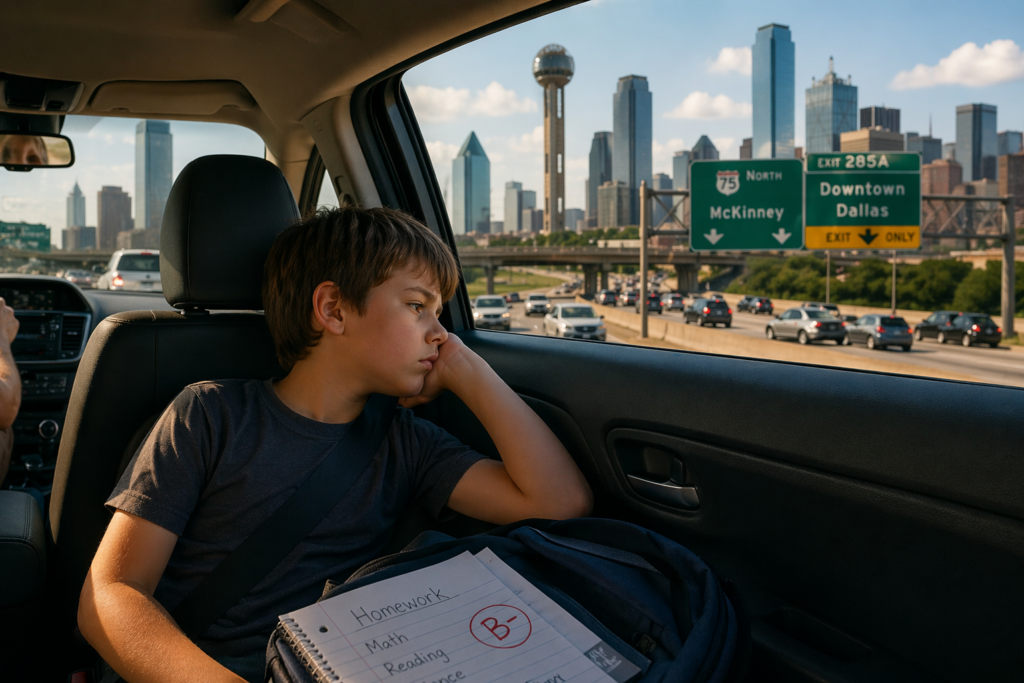
Transportation in Dallas Texas becomes more than just a commute the moment your child starts showing up late to school, missing assignments, or feeling overwhelmed by the back-and-forth between two homes. It often starts subtly. A missed homework assignment here. A rushed morning there. Then one day, a teacher reaches out—and suddenly, you realize something bigger is happening beneath the surface.
In a metroplex where long drives, toll roads, and unpredictable traffic shape daily life, even small changes in living arrangements can ripple into your child’s academic performance and emotional well-being. At the Law Office of Bryan Fagan, PLLC, we have seen firsthand how these logistical challenges affect families—and more importantly, how the right legal strategy can restore structure, consistency, and peace of mind.
Texas courts recognize that stability matters. Under Texas Family Code §153.002, every custody decision must serve the best interest of the child, and that includes maintaining consistency in school, routines, and daily life. Judges are not just looking at who loves the child more—they are evaluating which parent can best support the child’s education, schedule, and long-term success. That is where thoughtful planning—and experienced legal guidance—makes a meaningful difference.
Bryan Joseph Fagan, a South Texas College of Law graduate and a recognized authority in Texas divorce and custody law, built this firm around one core belief: families deserve clarity during chaos. Through compassionate counsel, education, and practical solutions, our mission is to help you make decisions today that protect your child’s future tomorrow.
In this article, you will learn how custody arrangements, daily logistics, and school stability are deeply connected—and what you can do right now to support your child’s success during one of life’s most challenging transitions.
Key Takeaways
- Dallas is a car-dependent city—plan to own a vehicle for daily convenience in most neighborhoods.
- Commute times vary widely—where you live matters as much as where you work.
- Dallas Area Rapid Transit provides buses, light rail, and commuter rail, but coverage does not replace driving for most residents.
- Public transportation in the Dallas-Fort Worth area is a cost-effective and eco-friendly alternative to driving, making it easier for visitors and locals to navigate the region without a car.
- Transportation costs (gas, tolls, parking) add up quickly and should be budgeted early.
- Planning your commute in advance can reduce stress, save time, and improve daily life.

Your Family’s Future Starts Here
Don’t navigate your legal journey alone. Schedule a consultation now and get the clarity and support you deserve.
Transportation in Dallas Texas: The Short Answer
Transportation in Dallas Texas is largely built around driving, with an extensive highway system supported by a growing—but still limited—public transit network. For most families, daily life revolves around getting behind the wheel for school drop-offs, work commutes, and everyday responsibilities. While Dallas Area Rapid Transit (DART) provides light rail, buses, and commuter options across multiple cities, it typically serves as a supplement rather than a full replacement for driving, especially outside central corridors.
From a family law perspective, this reality carries real weight. Under Texas Family Code §153.002, courts must prioritize the best interest of the child, and that includes evaluating how transportation affects educational stability, daily routines, and overall consistency. Judges often look closely at how far each parent lives from the child’s school, how reliable transportation is, and whether the proposed schedule supports a stable academic environment. In practical terms, where you live—and how long it takes to get to school—can influence custody outcomes just as much as parenting intentions.
In straightforward situations, where both parents live near the same school zone and maintain flexible schedules, transportation challenges can often be managed with clear communication and consistent routines. In more complex cases, especially if your situation involves long commutes, high-traffic corridors, or conflicting work schedules, transportation can quickly become a source of stress. Missed school time, late arrivals, and inconsistent routines may raise concerns about whether the arrangement truly supports the child’s best interest.
Understanding how Transportation in Dallas Texas affects your custody arrangement is essential when building a parenting plan that works in real life—not just on paper. Parents living in suburbs like Frisco or Prosper often face very different commute realities compared to those closer to downtown or along DART rail lines. In these situations, courts may favor arrangements that reduce travel time and promote school consistency, even if that requires adjusting possession schedules or primary residence designations.
If your situation involves long-distance parenting, school zoning disputes, or ongoing disagreements about transportation responsibilities, it may be time to take a more structured approach. Custody plans that fail to account for real-world commute conditions often break down over time, creating stress for both parents and children. For additional insight into how transportation affects families in other Texas communities, you can explore transportation in Richmond TX. You may also find it helpful to review how courts approach child custody in Texas when evaluating stability, structure, and long-term success.
At its core, transportation is not just about getting from point A to point B—it is about creating a routine your child can rely on. When that routine starts to break down, whether due to distance, traffic, or scheduling conflicts, it often signals a deeper issue that deserves attention. Recognizing those signs early allows you to make informed decisions that protect your child’s education, reduce conflict, and move forward with greater clarity and confidence.
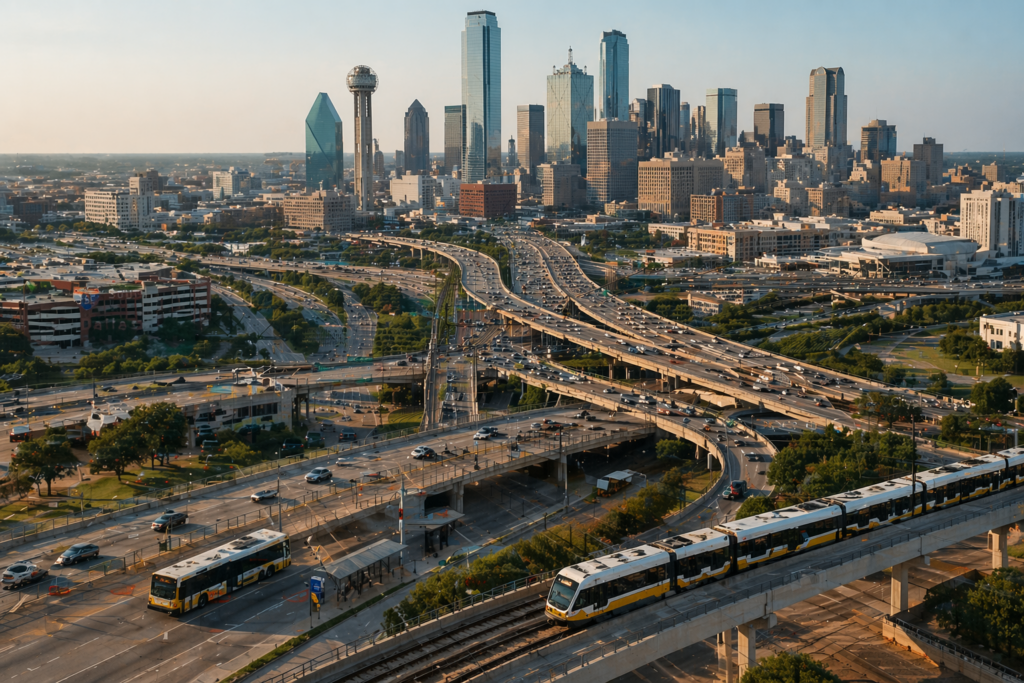
Listen to Our Texas Family Law Podcast
Prefer listening? In this episode, we discuss transportation in Dallas, Texas, including how travel distance, commuting, and logistics can impact custody arrangements, visitation schedules, and other family law matters.
Major Roads and Highways in Dallas
Dallas relies heavily on its highway system to move people across the sprawling metropolitan area. The city is crisscrossed by interstates, loops, and tollways that connect neighborhoods, suburbs, and regional destinations like Fort Worth, Plano, Irving, and Arlington. Both the extensive highway network and public transit options like DART are designed to connect residents to more destinations across Dallas and the surrounding area, making it easier for commuters, families, and visitors to access work, entertainment, and community resources throughout the region.
Table 1 – Major Roads and Highways in Dallas
| Road/Highway | Direction | Key Destinations |
|---|---|---|
| Interstate 35E (I-35E) | North-South | Downtown Dallas, Denton, southern Dallas suburbs |
| Interstate 30 (I-30) | East-West | Fort Worth, downtown Dallas, eastern suburbs |
| Interstate 635 (LBJ Freeway) | East-West Loop | Northern Dallas loop, connects I-35E, US-75, President George Bush Turnpike |
| US Route 75 (Central Expressway) | North-South | Downtown Dallas, Plano, Collin County |
| Dallas North Tollway (DNT) | North-South | University Park, Addison, Plano, Frisco, Prosper |
| State Highway 183 (SH-183) | East-West | Irving, DFW Airport connections |
| Loop 12 | Loop | Encircles much of Dallas proper |
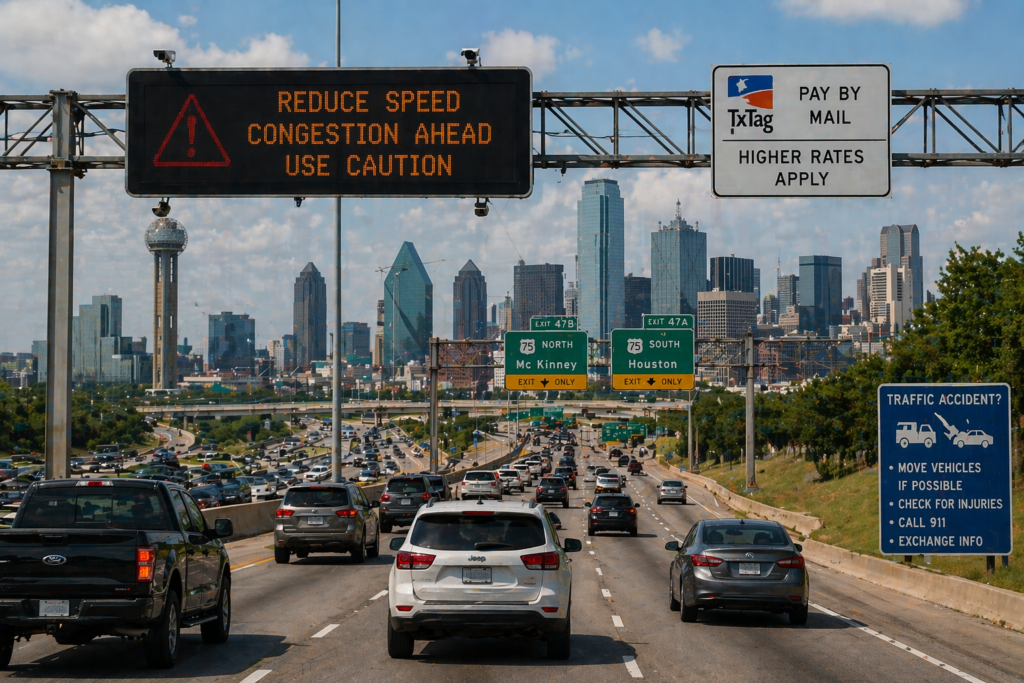
Traffic congestion is most intense on I-635 between Stemmons Freeway and US-75, along US-75 heading north toward Plano, and on I-30 through downtown. Drivers in the DFW area lost approximately 69 hours per year to traffic delays in 2024, making route planning essential.
Commuting in Dallas
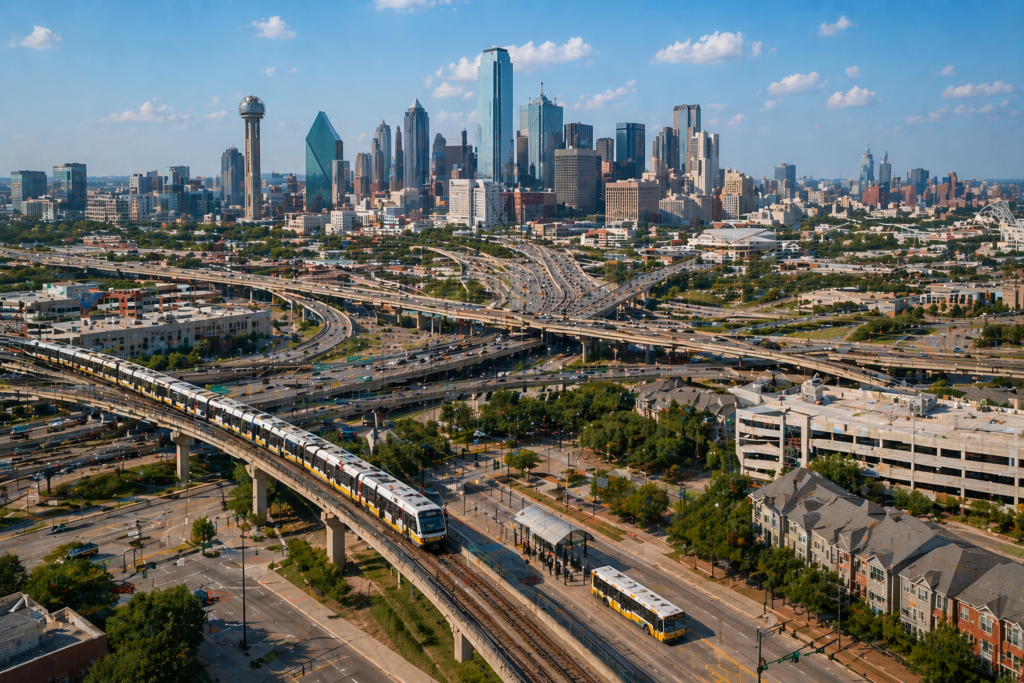
Commute times in Dallas vary significantly based on distance, route, and timing. The average one-way commute in Dallas County is approximately 25 to 28 minutes, but suburban-to-downtown trips can easily stretch to 45 to 60 minutes during rush hour.
Peak traffic hours are 7:00 to 9:00 AM and 4:30 to 7:00 PM. During these windows, major highways like US-75, I-635, and I-30 experience significant slowdowns. Accidents, weather, and construction can multiply delays unpredictably.
Realistic commute examples:
- Plano to downtown Dallas (approximately 18–20 miles): 30–45 minutes by car via US-75 or Dallas North Tollway, depending on traffic.
- Arlington to Dallas (approximately 30–35 miles): 50–70 minutes during rush hour, often longer due to I-30 congestion.
Two routes covering similar distances can have very different travel times depending on the highways involved and current traffic conditions. Planning ahead and leaving during off-peak hours can make a significant difference.
What Does Transportation Cost in Dallas?
Transportation costs in Dallas are moderate compared to some major cities, but they add up quickly—especially for daily commuters.
Key cost factors:
- Gas: Texas gas prices tend to hover near the national average, but stop-and-go traffic increases fuel consumption by 20–40%.
- Toll roads: Dallas North Tollway, President George Bush Turnpike, and Sam Rayburn Tollway are widely used. A trip from downtown to Plano on the DNT costs approximately $3.96 with a TollTag versus $7.92 with ZipCash (pay-by-mail).
- Parking: Downtown parking ranges from $15–$30 per day, with monthly rates from $200–$400. Suburban parking is often free or much cheaper.
- DART fares: As of March 2025, a Local 3-Hour Pass costs $3 for adults, and a Day Pass costs $6. Monthly Local Passes are $126 for adults.
Budgeting advice: For a suburban commuter driving daily, expect monthly costs including car payments, insurance ($120–$200), gas ($150–$300), tolls, parking, and maintenance. For a transit user, a monthly DART pass ($126) plus occasional rideshare or parking costs may offer savings.
Public Transportation in Dallas
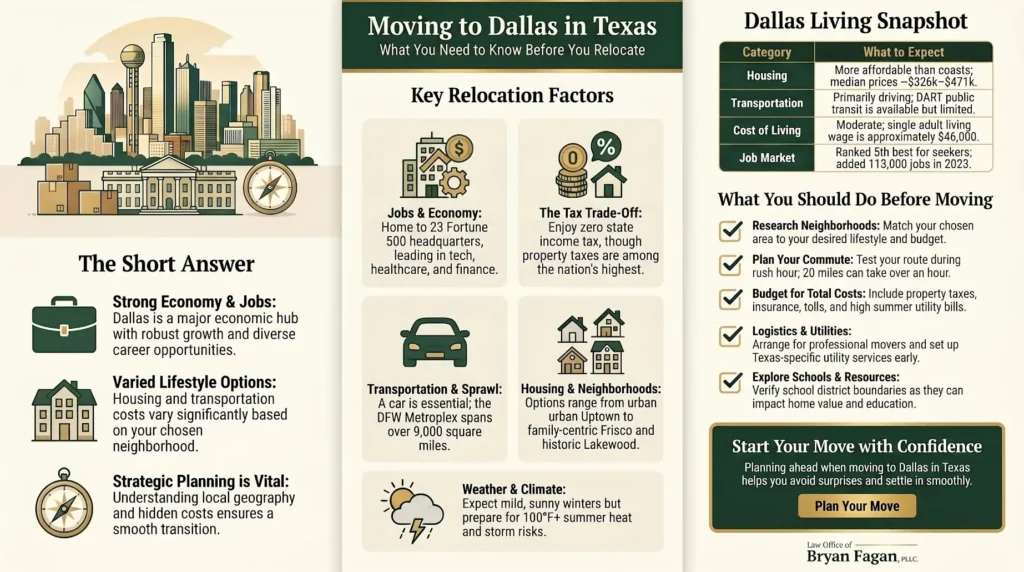
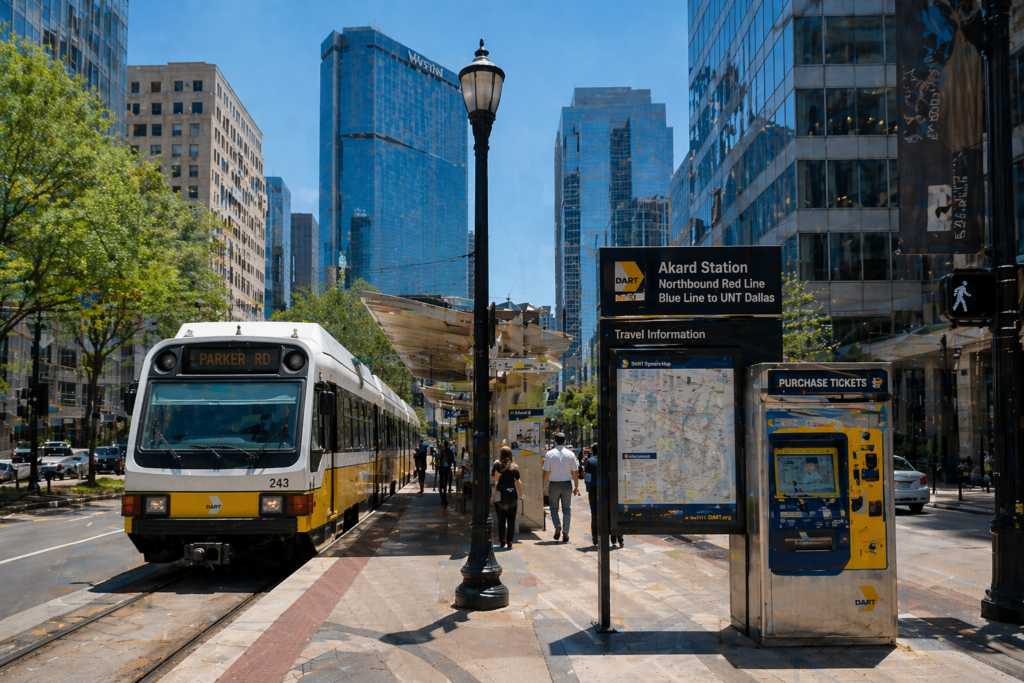
Transportation in Dallas Texas includes a growing public transit system through Dallas Area Rapid Transit (DART), offering buses, light rail, commuter rail, and on-demand microtransit services. DART connects 13 cities across North Texas, linking major destinations like DFW International Airport and the Dallas Arts District. For many residents—especially those living near central corridors—these options provide a valuable alternative to driving and can play a role in maintaining consistent daily routines.
DART’s light rail system includes four color-coded lines spanning more than 90 miles, supported by bus routes throughout Dallas County and the Trinity Railway Express connecting Dallas to Fort Worth. Services like GoLink help bridge first- and last-mile gaps, while tools like the GoPass app make trip planning and fare payment more accessible. These features can be helpful for families navigating work schedules, school transportation, and shared custody arrangements, particularly when both parents live near reliable transit routes.
From a legal standpoint, transportation reliability matters. Under Texas Family Code §153.002, courts focus on the best interest of the child, which includes stability in education, consistency in routines, and the practicality of daily logistics. Judges often evaluate whether a parent’s transportation plan—whether by car or public transit—supports punctual school attendance, predictable schedules, and minimal disruption. In joint custody cases under §153.134, the ability to coordinate transportation effectively can influence how possession schedules are structured.
In straightforward situations, where both parents live near DART-accessible areas and the child’s school is easily reachable, public transportation can support a workable and consistent routine. However, in more complex cases—especially if your situation involves multiple transfers, long commute times, or limited transit access in suburban areas—reliance on public transportation may introduce challenges. Delays, missed connections, or extended travel times can begin to affect school performance and create stress for the child.
If your custody arrangement depends heavily on transportation logistics, it is important to evaluate whether it works in real life—not just in theory. When schedules start to break down, or when commuting begins to interfere with your child’s academic consistency, it may be time to revisit the structure of your parenting plan. Understanding how courts approach child custody in Texas can provide helpful context when considering adjustments that better support your child’s needs.
In situations where transportation challenges intersect with broader family law concerns—such as establishing legal parentage or clarifying rights and responsibilities—you may also benefit from understanding related legal processes like adding a father to a birth certificate in Texas. While different from custody logistics, these issues often arise in cases where clarity and structure are essential for long-term stability.
Ultimately, public transit can be a helpful tool for some families, but it is not a one-size-fits-all solution. If your situation involves long commutes, inconsistent schedules, or ongoing disagreements about transportation, a more structured legal approach may be necessary. The goal is not just to create a plan that works today—but one that supports your child’s education, stability, and peace of mind over time.
Transportation Options Comparison
Table 2 – Transportation Options Comparison
| Transportation Type | Availability | Best For |
|---|---|---|
| Personal Vehicle | Citywide | Suburban residents, families, irregular schedules |
| DART Light Rail | Central Dallas, select suburbs | Commuters near rail stations, airport travel |
| DART Bus | Extensive routes | Supplementing rail, local trips |
| Rideshare (Uber/Lyft) | Citywide | Short trips, first/last mile, special events |
| Carpooling | Flexible | Cost savings, HOV lane access |
| Biking/Scooters | Select urban areas | Recreation, short urban trips |
Driving offers the most flexibility and fastest door-to-door travel in most situations, but carries high costs. Public transit is more affordable for regular users and avoids parking and toll expenses, but may involve longer travel times and transfers. Ridesharing apps like Uber and Lyft are widely available throughout Dallas, providing convenient alternatives for local travel. Bike rentals and dockless electric scooters are available in designated urban areas.
Traffic and Driving Conditions
Dallas traffic can be heavy, especially during peak hours on major highways. Evening rush hour average speeds drop to approximately 19–20 mph on congested corridors. Morning commutes tend to move slightly faster, averaging around 23–25 mph.
Construction and detours: Highway widening projects, tollway extensions, and interchange reconstructions add lane closures and merging delays. The Dallas North Tollway extension through Prosper is scheduled for completion around 2027, and US-75 is receiving technology lane upgrades.
Weather impacts: Heavy rain causes flooding in low-lying areas, and severe storms can temporarily close highways. Large events like the State Fair or concerts generate traffic spikes, especially downtown.
Practical tips:
- Use navigation apps like Waze or Google Maps for real-time traffic updates.
- Learn alternate routes to avoid known congestion points like the High Five interchange at I-635 and US-75.
- Monitor construction updates from NTTA and TxDOT.
Walkability and Biking in Dallas
Dallas is not broadly walkable, but some neighborhoods offer excellent pedestrian access. Downtown Dallas has a Walk Score of 95 and can typically be traversed on foot in about 30 minutes.
Walkable areas: Downtown, Uptown, Bishop Arts District, Deep Ellum, and Oak Cliff feature denser street grids, sidewalks, and mixed-use development.
Bike infrastructure: Trails like Katy Trail and the White Rock Lake trail system provide recreational and commuting paths. Dallas has a growing hiking and biking trail system that integrates with public transit services. However, many suburban roads lack bike lanes, and summer heat limits cycling popularity.
The free M-Line Trolley connects Uptown and downtown Dallas daily, providing convenient access to major attractions. Bike rentals and dockless electric scooters are available for rent in designated areas.
Best Areas in Dallas Based on How You Get Around
Transportation in Dallas Texas plays a direct role in where families choose to live—especially when custody, school routines, and daily logistics are part of the equation. The Metroplex offers a wide range of living environments, but not all areas support the same level of convenience when it comes to commuting, school access, and maintaining consistency for children. Choosing the right location is not just about preference—it can impact how well a custody arrangement functions in real life.
For families who rely on driving, suburbs like Plano, Frisco, Prosper, and Celina offer newer developments with strong access to tollways and major highways. In straightforward situations, where both parents live within a reasonable distance of the child’s school and daily activities, these areas can support predictable routines. However, even in these communities, commute times can vary significantly depending on traffic, making it important to test routes and plan schedules carefully.
For those who prefer public transit or want to reduce driving time, areas like Downtown Dallas, Uptown, Irving, and Carrollton offer stronger access to DART rail lines. Living near these corridors can provide more flexibility, particularly for older children or families with structured routines. That said, courts will still evaluate whether these options support consistent school attendance and reliable daily transitions. Under Texas Family Code §153.002, the focus remains on the child’s best interest, including stability in education and routine, while §153.134 emphasizes the importance of workable possession schedules that parents can realistically follow.
Walkable neighborhoods such as Bishop Arts, Deep Ellum, Lower Greenville, and Oak Lawn offer another layer of convenience. Access to nearby schools, parks, and amenities can reduce travel time and simplify daily life. In some cases, this type of environment can help minimize transportation-related stress, particularly when children are adjusting to new routines after a divorce.
In more complex cases—especially if your situation involves long-distance parenting, school zoning disagreements, or high-conflict scheduling—location becomes even more critical. When one parent lives far from the child’s school or daily activities, transportation challenges can quickly affect punctuality, academic performance, and overall stability. If your situation involves long commutes or school disruptions, it may be time to take a closer look at whether your current arrangement truly supports your child’s needs.
Understanding how Transportation in Dallas Texas compares to surrounding areas can also provide helpful perspective. For example, families navigating similar issues in nearby communities may benefit from reviewing how transportation in Fort Worth TX affects commute patterns and daily routines. You may also find it helpful to explore how courts approach child custody in Texas when evaluating stability, proximity, and long-term outcomes for children.
Ultimately, the best area for your family is the one that supports consistency, reduces stress, and aligns with your child’s daily life. When transportation starts to interfere with school performance or create ongoing scheduling conflicts, it may signal the need for a more structured plan. Recognizing that early can help you make informed decisions that protect your child’s future and bring greater clarity to your next steps.

Airports and Regional Travel
Dallas offers strong regional and national travel access through two major airports.
DFW International Airport: A major global hub served by multiple transit options. DART’s Orange Line connects to Terminal A, and the Silver Line connects to Terminal B. TEXRail provides service from Fort Worth to Terminal B. The TRE connects to CentrePort/DFW station with shuttle links to terminals.
Dallas Love Field: Primarily serves domestic travel and is accessible via DART Green and Orange lines.
Regional rail: Trinity Railway Express connects Dallas and Fort Worth, providing cross-city commuting options. Trinity Metro serves the Fort Worth side of the Metroplex.
DFW Airport is planning Terminal F, a 31-gate facility dedicated to American Airlines, with phased openings beginning in 2027 and full operation by 2030.
Transportation for Families and Daily Life
Families in Dallas rely heavily on driving for daily routines. School commutes, extracurricular activities, grocery runs, and medical appointments often require multiple stops spread across the metro area.
School runs: Morning traffic requires timing school drop-offs carefully alongside work commutes. Transit is rarely practical for school travel unless you live in central Dallas.
Errands and shopping: Big-box retailers are typically located off highways, making driving the most efficient option.
Carpooling: For parents with staggered schedules, carpooling saves time and costs. Rideshare services fill gaps but can add up.
Impact on family time: Long commutes reduce time available for family activities. Choosing housing closer to work or school can significantly improve quality of life.
Legal and Safety Considerations When Driving in Dallas
Transportation in Dallas Texas is not just about convenience—it also carries legal and safety implications that can directly affect your family’s daily routine, especially during or after a divorce. With major highways like US-75, I-35E, and I-30 experiencing heavy congestion, accidents and delays are a regular part of life in the Metroplex. For parents managing custody schedules, even a single traffic incident can disrupt school drop-offs, exchanges, and carefully planned routines.
From a legal standpoint, consistency and reliability matter. Under Texas Family Code §153.002, courts prioritize the best interest of the child, which includes maintaining stable school attendance and predictable daily schedules. Judges often consider whether a parent’s transportation plan is realistic given traffic conditions, commute distances, and potential risks. In joint custody arrangements under §153.134, the ability to safely and consistently manage transportation responsibilities can influence how possession schedules are structured and whether modifications may be necessary.
In straightforward situations, where commutes are short and traffic patterns are manageable, parents can often coordinate transportation without significant issues. However, in more complex cases—especially if your situation involves long commutes, high-traffic corridors, or frequent delays—transportation challenges can begin to affect your child’s school performance and overall stability. If a child is consistently late, missing activities, or experiencing stress from rushed transitions, those issues may carry weight in court.
Beyond traffic, legal risks such as toll violations and accidents can also impact custody dynamics. Unpaid tolls can lead to fines and added financial strain, while accidents may create delays or even raise concerns about safety and judgment. Texas law requires drivers to move vehicles after an accident if possible, and understanding insurance and liability requirements is essential—particularly in high-speed freeway environments where collisions are more severe.
Public transit presents its own considerations. While DART offers valuable options, late-night travel or routes with limited ridership may raise safety concerns for some families. Courts may evaluate whether these options provide a dependable and secure means of transportation for children, especially when consistency is critical for school attendance and extracurricular involvement.
If your custody arrangement depends heavily on navigating Dallas traffic, it is important to assess whether your plan holds up under real-world conditions. When delays, safety concerns, or unpredictable commutes begin to interfere with your child’s routine, it may be time to reevaluate. For a deeper look at how extended travel times can affect family dynamics, you can explore what a long commute means for your marriage. You may also find it helpful to review how courts approach child custody in Texas when evaluating stability, safety, and long-term outcomes.
Ultimately, safe and reliable transportation is not just a logistical concern—it is a key part of creating a stable environment for your child. If your situation involves ongoing delays, safety risks, or transportation-related conflicts, it may signal the need for a more structured legal approach. Addressing these issues early can help protect your child’s well-being and provide a clearer path forward.
Tips for Getting Around Dallas
Planning ahead makes Dallas transportation significantly easier.
- Use navigation apps: Waze and Google Maps provide real-time traffic updates and route suggestions.
- Learn alternate routes: Avoid known congestion points like the Woodall Rodgers Freeway and High Five interchange.
- Plan around traffic windows: Leaving outside peak hours can cut commute times substantially.
- Choose housing based on commute: One of the most life-impacting decisions in moving to Dallas.
- Budget for transportation costs: Include gas, tolls, parking, and maintenance in your monthly planning.
- Monitor construction projects: NTTA and TxDOT websites provide updates on road closures and detours.
Actionable Checklist: Transportation in Dallas Texas
Transportation in Dallas Texas is something most families think about in terms of convenience—but during a divorce or custody case, it becomes a critical part of your child’s daily stability. Planning ahead can make the difference between a routine that supports your child’s academic success and one that creates ongoing stress, missed school time, and conflict between parents.
Before you move or accept a new job, it is important to look at transportation through a legal and practical lens. Mapping out commute routes from potential homes to your child’s school and testing those routes during peak traffic hours gives you a more realistic picture of daily life. Courts applying Texas Family Code §153.002 focus heavily on the best interest of the child, which includes consistent attendance, reliable routines, and proximity to school. If your proposed living arrangement creates long or unpredictable commutes, that may become a factor in how custody decisions are evaluated.
In straightforward situations, where both parents live within a reasonable distance of the school and can coordinate schedules, these issues can often be managed with careful planning. However, in more complex cases—especially if your situation involves long-distance parenting, school zoning concerns, or high-traffic corridors—transportation planning becomes essential. Budgeting for toll roads, gas, parking, and vehicle maintenance is not just a financial decision; it directly impacts your ability to maintain consistency for your child.
Once you are settled, building a reliable system is key. Using navigation tools like Waze or Google Maps, exploring DART routes, and identifying alternate paths for your daily commute can help reduce disruptions. Small adjustments—such as leaving earlier or choosing less congested routes—can have a meaningful impact on your child’s punctuality and overall routine. Under Texas Family Code §153.134, courts also consider how parents manage shared responsibilities, including transportation, when determining whether a custody arrangement is workable long term.
If your situation involves long commutes or school disruptions, it is important to recognize when a plan that looks good on paper begins to break down in real life. Missed drop-offs, inconsistent schedules, or rising stress levels for your child are often early signs that adjustments may be needed. In these cases, a more structured legal approach can help create a plan that reflects the realities of living in a large metro area like Dallas.
Looking beyond Dallas can also provide helpful perspective. Families facing similar challenges in nearby communities may benefit from understanding how transportation in Montgomery Texas affects daily routines and commute expectations. You may also find it useful to review how courts approach child custody in Texas when evaluating stability, consistency, and long-term outcomes for children.
Over time, transportation planning should remain flexible. Traffic patterns change, construction projects evolve, and your child’s needs may shift as they grow. Regularly reviewing your commute, monitoring expenses, and adjusting schedules when possible can help maintain a stable environment. When those adjustments are no longer enough, and transportation challenges begin affecting your child’s school performance or well-being, it may be time to consider whether your current arrangement truly supports their best interest.
The goal is not perfection—it is consistency. With thoughtful planning and a clear understanding of how transportation affects custody and daily life, you can create a structure that supports your child’s success and gives your family a stronger path forward.
Conclusion
Transportation in Dallas Texas is not just about getting from one place to another—it is about creating a daily rhythm your child can depend on. During a divorce, that rhythm can either support your child’s academic success or quietly disrupt it. The difference often comes down to planning, communication, and making decisions that prioritize stability over convenience. When you understand how these moving pieces fit together, you are in a stronger position to protect your child’s education and overall well-being.
In straightforward situations, where both parents live close to the school and communicate well, maintaining consistency may be relatively simple. In more complex cases—especially if your case involves long commutes, high-conflict co-parenting, or disagreements about school placement—the right legal strategy becomes essential. That is where having the right level of guidance matters. At the Law Office of Bryan Fagan, PLLC, our role is to help you think through these challenges, build a plan that works in real life, and give you the clarity needed to move forward with confidence.
Every family’s situation is different, but the goal remains the same: to create a stable, supportive environment where your child can succeed. With the right approach, even difficult transitions can lead to stronger outcomes—for your child, and for your future.
Frequently Asked Questions
Yes, Dallas is a car-dependent city. Most residents rely on personal vehicles for daily commuting, errands, and family logistics. Public transit is available but does not replace driving for most people, especially in suburban areas.
Traffic congestion is common during peak hours, particularly on highways like I-635, US-75, and I-30. Commuters lost approximately 69 hours per year to traffic delays in 2024. Planning routes and timing travel outside rush hour helps reduce delays.
Dallas Area Rapid Transit provides light rail, buses, commuter rail, and on-demand GoLink service. DART serves 13 cities across North Texas and connects to DFW International Airport. The GoPass app makes trip planning and fare payment convenient.
Average one-way commute times in Dallas County are approximately 25–28 minutes. Suburban-to-downtown commutes can extend to 45–60 minutes during peak traffic.
Downtown Dallas has a Walk Score of 95 and can be traversed on foot in about 30 minutes. Neighborhoods like Uptown, Deep Ellum, and Bishop Arts are also walkable. However, most suburban areas require a car.
Major highways include I-35E, I-30, I-635 (LBJ Freeway), US-75 (Central Expressway), Dallas North Tollway, and SH-183. These connect Dallas to Fort Worth, Plano, Irving, and other suburbs.
For most residents, a car is necessary for daily convenience. However, those living in downtown, Uptown, or along DART rail corridors may rely primarily on public transit and rideshare.
Downtown Dallas, Uptown, Irving, and Carrollton have strong DART coverage along the light rail lines. Areas near DART stations offer the most reliable transit access.