
Medical Resources in Dallas Texas: Your Complete Guide to Healthcare Access

It usually doesn’t start with something dramatic. Maybe it’s your child waking up in the middle of the night more often. Maybe they complain about headaches before going to the other parent’s house, or they seem quieter, more withdrawn, not quite themselves. In those moments, knowing how to access the right support matters—and Medical Resources in Dallas Texas can become an important part of helping your child regain stability during a difficult transition.
Parents going through divorce often focus on schedules, finances, and legal decisions, but children experience these changes differently. Their stress shows up in subtle ways—sleep disruption, anxiety, physical symptoms, or emotional withdrawal. Under Texas law, courts are required to prioritize the best interest of the child (Texas Family Code §153.002), which includes not only emotional well-being but also the ability of each parent to provide consistent care and support during times of stress.
At The Law Office of Bryan Fagan, PLLC, we’ve guided families through these moments for years. Led by Bryan Joseph Fagan, a South Texas College of Law graduate and recognized authority in Texas family law, our firm understands that behind every custody case is a child trying to adjust to a new reality. Our role is to bring clarity to that process—helping parents make informed decisions that protect their child’s health, stability, and long-term well-being.
In this article, you’ll discover how access to medical and mental health resources in Dallas connects to the decisions you make during divorce, how Texas courts evaluate those realities, and what practical steps you can take to support your child through the transition with confidence and care.
Key Takeaways: What You Need to Know About Healthcare in Dallas
- Dallas offers comprehensive care and high quality care at every level, from emergency rooms to community clinics, ensuring patients receive all-encompassing medical services and specialized treatment options.
- Providing excellent care and patient safety is a top priority for Dallas healthcare providers, who are committed to the well-being of every patient.
- Virtual care options, including telehealth services, offer convenient access to high quality care for a wide range of medical needs, allowing patients to connect with healthcare providers remotely.
- You can access emergency, urgent care, and primary care quickly when you understand which option fits your situation.
- Costs and wait times vary significantly—choosing the wrong level of care can cost thousands of dollars.
- Strong options exist for uninsured and underinsured patients, including sliding-scale clinics and public hospital systems.
- Knowing where to go before you need care saves time, money, and stress during health emergencies.
- Certain medical situations involve legal decision-making considerations, especially for children and incapacitated adults.

Your Family’s Future Starts Here
Don’t navigate your legal journey alone. Schedule a consultation now and get the clarity and support you deserve.
Medical Resources in Dallas Texas: The Short Answer
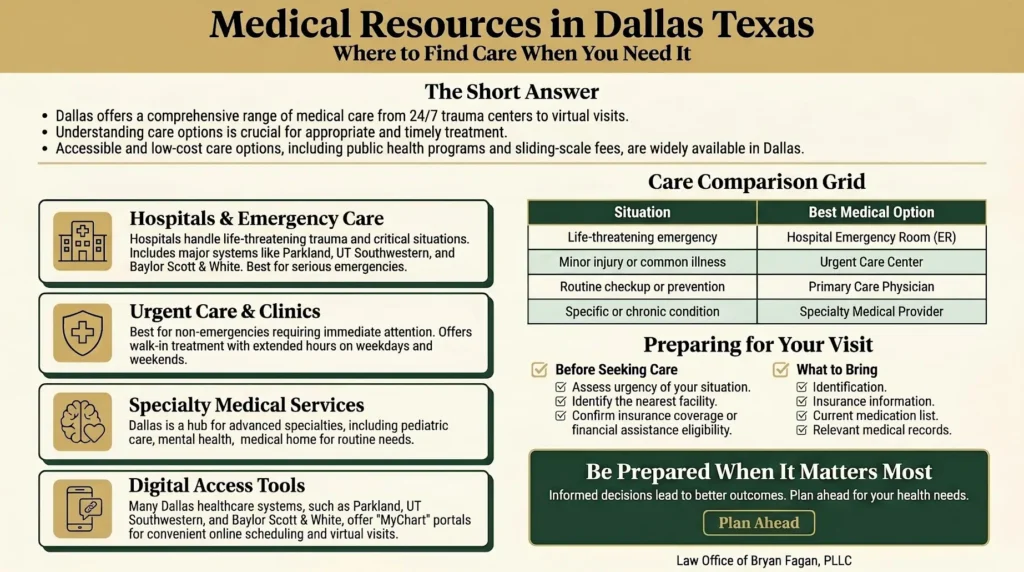
Medical Resources in Dallas Texas include a wide range of hospitals, clinics, urgent care centers, and specialized providers serving families across Dallas County and the greater Dallas–Fort Worth area. From major hospital systems like UT Southwestern, Parkland Health, and Baylor Scott & White to neighborhood clinics and pediatric specialists, families have access to comprehensive care designed to meet both routine and urgent medical needs.
For parents navigating divorce or custody issues, understanding how these resources fit into your child’s daily life matters more than you might expect. Texas courts are required to prioritize the best interest of the child under Texas Family Code §153.002, and that often includes evaluating whether a child has consistent access to medical care, stable routines, and parents who can make informed healthcare decisions. In practice, judges may look at which parent ensures regular checkups, follows through on treatment plans, and maintains communication with providers—factors that can directly impact custody outcomes.
Dallas offers strong healthcare access at every level. Primary care providers support preventive health and chronic condition management, while urgent care and walk-in clinics provide flexible options for same-day needs. Pediatric and specialty care—such as services offered through Children’s Medical Center Dallas—ensure that more complex conditions are properly managed. Many providers also offer extended hours, telehealth visits, and digital tools that allow parents to manage appointments and medical records efficiently, which can be especially important when coordinating care across two households.
In straightforward situations, parents are able to coordinate these resources with minimal conflict, creating consistent routines that support a child’s health and stability. In more complex cases—especially where there are disagreements over treatment decisions, ongoing medical needs, or gaps in communication—access to Medical Resources in Dallas Texas can become a central issue in custody discussions. If your case involves ongoing care, mental health support, or differing opinions about a child’s treatment, having a structured plan in place becomes critical to avoid disruption and ensure continuity.
For families looking for guidance beyond Dallas, understanding how care systems compare can also be helpful. For example, exploring medical resources in Huffman can provide additional perspective on how access varies by location and why consistency matters in custody planning. You can also learn more about how these factors influence child custody in Texas and the decisions courts make when evaluating a child’s well-being.
Ultimately, choosing the right level of care—whether emergency, urgent, or routine—is not just a medical decision. It can become a legal one when it affects a child’s stability, consistency, and overall well-being. Understanding your options now helps you make better decisions later, especially when those decisions may carry long-term implications for your family.

Listen to Our Texas Family Law Podcast
Prefer listening? In this episode, we discuss medical resources in Dallas, Texas, including how healthcare decisions can impact custody, support, and other family law matters affecting you and your family.
Hospitals and Emergency Care in Dallas
Medical Resources in Dallas Texas include some of the most advanced hospital systems and trauma centers in the state, providing critical care when families need it most. For parents navigating divorce or custody issues, understanding how to access emergency care is not just a medical concern—it can directly impact your child’s safety, stability, and how a court views your role as a parent.
Dallas is home to leading hospital systems such as UT Southwestern Medical Center, Parkland Health, Baylor University Medical Center, and Texas Health Presbyterian Hospital Dallas. These facilities provide emergency services for life-threatening conditions like chest pain, difficulty breathing, severe injuries, and stroke symptoms. When a child needs urgent care, the ability to act quickly and appropriately is essential—not only for health outcomes, but also in demonstrating consistent, responsible parenting.
Under Texas Family Code §153.002, courts must prioritize the best interest of the child, and that includes evaluating a parent’s ability to meet medical needs. Section 153.134 further allows courts to consider how well parents communicate and cooperate in making decisions that affect their child’s well-being. In straightforward situations, parents are aligned on when to seek emergency care and how to follow through with treatment. In more complex cases—especially where there are delays, disagreements, or inconsistent responses—these issues can become central to custody decisions.
Major Hospital Systems
Dallas offers a strong network of hospitals that support both emergency and ongoing care. UT Southwestern is nationally recognized for its specialty programs and advanced medical treatment. Parkland Memorial Hospital serves as a public hospital and Level I trauma center, providing care regardless of a family’s ability to pay. Baylor Scott & White and Texas Health Presbyterian deliver extensive acute care services, including specialized treatment for cardiac and neurological conditions.
These institutions form the backbone of Medical Resources in Dallas Texas, giving families access to high-quality care across a wide range of medical needs. In custody-related situations, consistent use of these systems—along with proper follow-up care—can reflect a parent’s commitment to maintaining their child’s health and stability.
When to Use Emergency Services
Emergency rooms are designed for life-threatening conditions and operate with triage systems that prioritize the most critical cases. If you are unsure whether a situation qualifies as an emergency, calling 911 allows trained professionals to guide your decision. Acting quickly in serious situations is not only medically important—it can also demonstrate attentiveness and sound judgment as a parent.
Wait times in Dallas emergency rooms can average over an hour for non-critical cases, while true emergencies are treated immediately. Cost is another important consideration. For uninsured families, ER visits can range from $1,500 to over $20,000 depending on the level of care required. Choosing the appropriate level of care—whether emergency, urgent, or routine—helps protect both your finances and your child’s well-being.
In more complex cases—such as when parents disagree about when emergency care is necessary, or when a child has ongoing medical or mental health needs—documentation becomes critical. Medical records, discharge summaries, and provider recommendations can play an important role in resolving disputes and supporting your position if legal issues arise.
How Emergency Care Connects to Custody Decisions
If your case involves repeated emergency visits, differing opinions on treatment, or concerns about follow-through, it may require a more structured legal approach. Courts often look at patterns over time—who schedules appointments, who responds in emergencies, and who ensures continuity of care. These factors can influence how conservatorship and decision-making rights are allocated.
For families comparing care access across different regions, reviewing resources like medical services in Shenandoah can help illustrate how location impacts healthcare availability. You can also explore how these considerations affect child custody in Texas and the way courts evaluate a parent’s ability to provide consistent care.
Ultimately, understanding Medical Resources in Dallas Texas is about more than knowing where to go in an emergency. It’s about making informed decisions, maintaining consistency, and ensuring your child has the support they need—especially during times of transition.

Urgent Care and Walk-In Clinics: Fast, Affordable Options
Urgent care centers are best for non-life-threatening conditions requiring same-day attention—think sprains, fevers, minor lacerations, ear infections, and flu symptoms.
Comparing Your Options
| Factor | Urgent Care | Emergency Room | Primary Care |
|---|---|---|---|
| Wait time | ~47 minutes | ~115 minutes | By appointment |
| Cost | $150-$500 | $1,500-$3,000+ | $100-$300 |
| Hours | Evenings/weekends | 24/7 | Business hours |
| Best for | Moderate issues | Emergencies | Routine/preventive |
Wait Times and Availability
Legacy ER & Urgent Care reports average urgent care visits at approximately 47 minutes door-to-door, with door-to-triage times of 6-8 minutes. Breeze Urgent Care locations throughout the Dallas Fort Worth area often achieve triage within 10 minutes.
Many urgent care chains in Dallas operate evenings and weekends—exactly when primary care offices close. Virtual urgent care options allow video consultations for minor concerns, adding another layer of convenience.
Cost Savings
Urgent care visits typically cost 5 to 10 times less than emergency room visits for similar moderate conditions. For a sprained ankle or suspected strep throat, choosing urgent care over the ER keeps money in your pocket while getting appropriate care.
Primary Care and Family Doctors
Primary care is essential for long-term health and preventive care—the foundation of well being that helps you avoid emergency visits in the first place.
Why Primary Care Matters
A primary care physician manages routine checkups, immunizations, chronic condition monitoring, and referrals to specialists. Having an established relationship means your doctor knows your medical history, medications, and health concerns—enabling truly personalized care.
Finding Primary Care in Dallas
Dallas County offers extensive primary care access through hospital-affiliated clinics, independent practices, and community health centers. Metrocare operates neighborhood clinics including Lancaster Kiest Clinic and Westmoreland Adult Clinic, providing primary care services alongside mental health support.
Federally Qualified Health Centers
Federally Qualified Health Centers (FQHCs) provide comprehensive primary care regardless of ability to pay. These federally-funded community clinics offer sliding-scale fees based on income, preventive services, mental health care, and dental services.
Dallas FQHCs include North Texas Area Community Health Centers, Foremost Family Health Centers, and Guadalupe Medical Center. These serve underserved populations throughout Dallas County with compassion and commitment.
Pediatric and Specialty Care in Dallas
Medical Resources in Dallas Texas include nationally recognized pediatric hospitals and specialty care networks that play a critical role in supporting children’s health—especially during times of family transition. For parents navigating divorce or custody arrangements, access to consistent, high-quality medical care is more than a convenience. It can directly impact a child’s emotional stability, long-term well-being, and how courts evaluate each parent’s ability to meet the child’s needs.
Dallas offers a collaborative, team-based approach to pediatric and specialty care. Physicians, specialists, and support staff work together to deliver personalized treatment plans, whether a child needs routine care or more advanced medical attention. In straightforward situations, parents are able to coordinate these appointments, follow through on care plans, and maintain consistent communication with providers. In more complex cases—especially where there are disagreements about treatment decisions, mental health concerns, or ongoing medical needs—these issues can become central to custody discussions.
Under Texas Family Code §153.002, the best interest of the child remains the court’s guiding principle. Judges often consider which parent ensures continuity of care, attends appointments, and follows medical recommendations. Section 153.134 further emphasizes the importance of cooperation between parents when making decisions that affect the child’s welfare. When access to specialists becomes inconsistent or contested, it can raise concerns about stability and decision-making—factors that may influence conservatorship and possession outcomes.
Children’s Health System
Children’s Medical Center Dallas stands as one of the leading pediatric hospitals in the region, offering comprehensive services including emergency pediatric care, NICU support, oncology, cardiology, and a full range of specialty programs. For families facing serious health concerns, having access to a trusted pediatric system ensures that care remains coordinated and consistent—two factors that courts often view as essential in maintaining a child’s stability.
If your case involves ongoing medical conditions, specialized treatment, or long-term care planning, ensuring that both parents understand and support the child’s healthcare needs becomes critical. In these situations, documentation of appointments, treatment plans, and provider recommendations can play an important role in avoiding disputes and demonstrating responsible parenting.
Specialty Networks
Dallas is also home to extensive specialty networks through institutions like UT Southwestern and Baylor Scott & White. These systems provide advanced care in areas such as neurology, cardiology, oncology, orthopedics, and transplant medicine. Access to these resources allows families to address complex medical conditions with confidence, but it also requires coordination—especially when parents share decision-making responsibilities.
In more complex cases—particularly those involving disagreements over specialist referrals, second opinions, or treatment plans—structured legal guidance may be necessary to ensure that decisions are made in the child’s best interest. Courts often look at patterns of involvement, communication, and follow-through when determining which parent is better positioned to manage these responsibilities.
Women’s Health Services
Women’s health services in Dallas include maternal-fetal medicine, obstetrics, and gynecology care through major hospital systems and independent providers. These services are especially important in cases involving pregnancy, postpartum care, or medical considerations affecting both parent and child. When these factors intersect with custody or parental rights, clarity around medical decision-making becomes essential.
Accessing Specialists
Most specialty care begins with a referral from a primary care provider, making it important to establish consistent medical relationships early. This step not only streamlines access to care but also creates a documented history of involvement—something that can become important if questions arise about a child’s medical needs during a custody case.
If your situation involves coordinating care across different locations, reviewing resources like medical resources in Spring can provide helpful insight into how access varies by community. You can also explore how these considerations influence child custody in Texas and the way courts evaluate a parent’s ability to provide consistent, reliable care.
Ultimately, understanding Medical Resources in Dallas Texas is about more than knowing which specialist to call. It’s about ensuring your child has uninterrupted access to the care they need, while also creating a clear, consistent framework that supports both their health and your role as a parent.

Mental Health and Counseling Services
Dallas provides broad access to mental health support through public programs, community clinics, and private providers.
Community Mental Health Services
Metrocare is Dallas County’s major mental health service provider, offering outpatient therapy, case management, crisis intervention, and specialized clinics for veterans and geriatric psychiatry patients. Metrocare serves patients regardless of ability to pay.
The North Texas Behavioral Health Authority (NTBHA) provides mental health and substance use services for individuals ages 3 and older, offering reduced fees or free care based on financial need.
Therapy and Counseling Options
Private therapists, counseling centers, and hospital-affiliated behavioral health programs serve those with insurance or ability to pay market rates. Many accept Medicare, Medicaid, and major commercial insurance plans.
Mental Health America of Greater Dallas provides free screenings, support groups, educational materials, and navigation assistance for finding lower-cost or free mental health clinics.
Crisis Services
For immediate mental health crises, resources include the 988 Suicide and Crisis Lifeline, local crisis intervention teams through Metrocare, and emergency psychiatric evaluation at Parkland Behavioral Health Center.
Telehealth Therapy
Many Dallas mental health providers now offer telehealth appointments, making therapy accessible from home and eliminating transportation barriers.
Senior Care and Long-Term Care Options
Dallas offers comprehensive senior care solutions ranging from independent living to skilled nursing facilities.
Types of Senior Care
- Independent living: Approximately $2,050 per month on average
- Assisted living: Approximately $3,389 per month in Dallas
- Memory care: Approximately $3,675 per month for specialized dementia support
- Nursing homes: Higher costs for skilled nursing care
- Home healthcare: Nursing and therapy services delivered at home
Availability in Dallas
Dallas city has approximately 121 assisted living facilities. Dallas County overall has around 229 assisted living facilities, providing families with numerous options for their loved ones.
Quality Considerations
Texas Health and Human Services regulates assisted living facilities statewide. Families should review inspection reports before choosing a facility—approximately 37% of Texas assisted living facilities have had violations at some point. Average violations per facility run about 1.2, but reviewing specific facility records ensures informed decision-making.
Medicare and Long-Term Care Planning
Understanding Medicare coverage limitations for long-term care matters significantly. Medicare covers short-term skilled nursing after hospitalizations but does not cover custodial care in assisted living. Long-term care insurance and Medicaid planning become important considerations for many families.
What Does Healthcare Cost in Dallas?
Healthcare costs vary dramatically based on where you seek care and your insurance status.
Cost Comparison
| Service | Uninsured Cost | With Insurance |
|---|---|---|
| ER visit (minor) | $1,600-$3,200 | Copay + deductible |
| ER visit (severe) | $7,000-$20,000+ | Significant cost-sharing |
| Urgent care | $150-$500 | $50-$150 copay |
| Primary care | $100-$300 | $20-$50 copay |
Options for Uninsured Patients
Parkland Health offers sliding-scale fees based on income. FQHCs accept Medicaid, Medicare, and provide services regardless of insurance status. Community mental health centers also offer reduced or waived fees for financial hardship.
Texas has one of the nation’s highest uninsured rates at approximately 18%. Because Texas did not expand Medicaid, many low-income adults remain ineligible despite needing care—making sliding-scale clinics and public hospital systems critical safety nets.
Avoiding Costly Mistakes
Choosing the emergency room for conditions urgent care can handle costs thousands of unnecessary dollars. Understanding the appropriate level of care protects both your health and your finances.
Healthcare by Area: Where to Go in Dallas
Medical Resources in Dallas Texas vary significantly depending on where you live, and that geographic difference can play an important role in both your child’s access to care and how custody arrangements function in real life. In Dallas proper, families benefit from a dense network of hospitals, urgent care centers, specialty providers, and community clinics. Access to services like mental health support, pediatric care, and public assistance programs is more readily available, including options such as free clinics and the 2-1-1 Texas hotline, which connects residents to healthcare, counseling, and essential services.
For parents navigating custody, this level of access can directly affect how courts evaluate stability. Under Texas Family Code §153.002, the child’s best interest remains the primary consideration, and that often includes whether a child can consistently attend appointments, receive timely care, and maintain continuity with providers. Section 153.134 also allows courts to consider how geographic proximity between parents impacts decision-making and daily routines. In straightforward situations, parents live close enough to coordinate care easily, ensuring appointments, treatments, and follow-ups happen without disruption. In more complex cases—especially when parents live farther apart or disagree about providers—access to care can become a source of conflict that affects both the child’s well-being and the structure of the custody arrangement.
Access Differences Across Surrounding Areas
Outside of central Dallas, healthcare access can look very different. In areas like Farmers Branch or other surrounding communities, fewer hospitals and limited specialty services may require families to travel for care. That travel time, along with scheduling challenges, can create inconsistencies—especially if parents are not aligned on how to manage appointments or emergencies. In cases involving ongoing medical needs, mental health care, or specialized treatment, these logistical challenges can quickly become legal issues if they impact the child’s ability to receive consistent care.
If your case involves ongoing medical needs or coordination between different cities, these geographic realities matter. Courts often look at which parent is better positioned to maintain continuity of care, attend appointments, and ensure follow-through. Delays in treatment, missed appointments, or lack of coordination can raise concerns about a child’s stability—particularly in higher-conflict cases or those involving special needs, CPS involvement, or ongoing health conditions.
Community Resources and Support Systems
Dallas also offers a range of community-based healthcare support, including mobile clinics, health screenings, and outreach programs designed to serve underserved populations. These resources can be especially valuable for families facing financial challenges or transitioning between households. Access to consistent care—whether through public programs, nonprofit clinics, or major hospital systems—helps create a foundation of stability that benefits both the child and the overall custody arrangement.
For families comparing how healthcare access differs across regions, reviewing resources like medical resources in Kingwood can provide helpful context on how location impacts care availability. You can also explore how these factors influence child custody in Texas and the way courts evaluate a parent’s ability to provide consistent, reliable support.
Ultimately, understanding Medical Resources in Dallas Texas by area is about more than convenience—it’s about making informed decisions that support your child’s health, reduce conflict, and create a custody structure that works in everyday life.

North Dallas, Plano, and Frisco
Northern suburbs feature Baylor Scott & White satellite clinics, Texas Health Resources hospitals, and UT Southwestern regional locations. Urgent care chains and walk-in clinics are common in newer suburban developments.
Downtown Dallas and Medical District
The Medical District concentrates major resources: UT Southwestern Medical Center campus, Parkland Memorial Hospital, and Children’s Medical Center Dallas. High density of specialty clinics serves patients from across the region.
Oak Cliff and South Dallas
Lower density of major hospital systems, but community clinics, Parkland satellite facilities, Metrocare mental health centers, and FQHCs serve these neighborhoods. Residents may travel for specialized care but have local access to primary care and mental health services.
Surrounding Cities
Plano, Irving, Garland, and Arlington all have hospital branches, urgent care chains, and clinic networks. Residents across county lines often access multiple systems depending on their needs and preferences.
Table 1: Types of Medical Resources in Dallas
| Resource Type | Purpose | Examples | Typical Cost | Wait Time |
|---|---|---|---|---|
| Emergency Room | Life-threatening emergencies | Parkland, UT Southwestern, Baylor | $1,500-$20,000+ | ~115 minutes |
| Urgent Care | Non-life-threatening same-day care | Legacy ER & Urgent Care, Breeze | $150-$500 | ~47 minutes |
| Primary Care | Preventive care, chronic conditions | Metrocare clinics, FQHCs | $100-$300 | By appointment |
| Specialty Care | Specific conditions requiring expertise | UT Southwestern specialists | Varies widely | Referral-based |
| Mental Health | Therapy, counseling, crisis support | Metrocare, NTBHA | Sliding scale available | Varies |
| Senior Care | Assisted living, nursing, memory care | 229 Dallas County facilities | $2,050-$7,000+/month | Admission process |
Table 2: When to Use Each Medical Service
| Situation | Where to Go | Why | Cost Level | Wait Time |
|---|---|---|---|---|
| Chest pain, difficulty breathing | Emergency Room | Life-threatening—needs immediate intervention | High | Immediate triage |
| Suspected broken bone | Urgent Care or ER | X-ray needed; ER if severe | Moderate-High | 45-120 minutes |
| Flu symptoms, fever | Urgent Care | Non-emergency but needs attention | Low-Moderate | ~47 minutes |
| Minor cut or sprain | Urgent Care | Quick treatment, lower cost | Low | ~47 minutes |
| Routine checkup | Primary Care | Preventive, relationship-building | Low | Scheduled |
| Chronic condition management | Primary Care | Ongoing relationship needed | Low | Scheduled |
| Mental health concern | Mental Health Clinic | Specialized support | Varies | Scheduled |
Accessing Healthcare in Dallas: How to Get Care Quickly
Medical Resources in Dallas Texas are only helpful if you know how to access them efficiently, especially when your child’s health—and potentially your custody case—depends on timely decisions. For parents navigating divorce, delays in care, missed appointments, or confusion about providers can create unnecessary stress and, in some cases, raise concerns about consistency and follow-through. Taking a proactive approach to healthcare access not only supports your child’s well-being but can also demonstrate stability and responsible parenting if legal questions arise.
Dallas healthcare providers increasingly offer digital tools, mobile apps, and online portals that allow parents to schedule appointments, review medical records, and coordinate care across households. In straightforward situations, these tools make it easier for parents to stay aligned, ensuring that both households are informed and involved. In more complex cases—particularly where communication breaks down or disagreements arise over treatment—these records can become important documentation, showing who is actively managing the child’s care and how consistently that care is being maintained.
Insurance Networks and Coverage
Understanding insurance coverage is a critical part of accessing Medical Resources in Dallas Texas. Major insurers such as Blue Cross Blue Shield of Texas, Aetna, United Healthcare, and Cigna operate throughout the region, but not all providers are in-network. It is important to verify both the facility and the individual physician, as emergency room doctors may be out-of-network even when the hospital is not. Federal protections under the No Surprises Act help reduce unexpected billing for emergency care, but proactive verification can prevent costly issues.
In custody-related situations, courts may look at whether a parent is taking reasonable steps to ensure a child has access to affordable and consistent care. Under Texas Family Code §153.002, the child’s best interest includes stability and access to necessary services, while §153.134 considers how well parents can cooperate in making decisions that affect the child’s welfare. In more complex cases—especially where one parent fails to maintain coverage or delays care due to cost concerns—these issues can become part of a larger legal discussion.
Appointment Strategies and Timely Care
When non-emergency care is needed, timing matters. Calling early in the morning often increases the chance of securing same-day appointments, and many clinics offer walk-in availability or release last-minute openings. Urgent care centers and Federally Qualified Health Centers (FQHCs) provide additional access points for immediate needs without the cost of emergency care.
If your case involves ongoing medical needs, missed appointments or inconsistent follow-up can quickly become a concern. Courts often evaluate patterns over time—who schedules care, who attends appointments, and whether treatment plans are followed. In straightforward situations, parents share these responsibilities without conflict. In more complex cases, where coordination breaks down or one parent is not engaged, structured planning may be necessary to ensure continuity of care.
Telehealth and Communication Tools
Telehealth has become an important part of Medical Resources in Dallas Texas, offering flexibility for follow-up visits, minor concerns, and mental health services. For parents balancing two households, work schedules, and custody arrangements, virtual care can reduce barriers and improve consistency.
These tools also create a digital record of involvement, which can be helpful if questions arise about parental participation in healthcare decisions. If your case involves disagreements about treatment or access to providers, having clear documentation can help reduce conflict and support your position.
Language Services and Accessibility
Access to healthcare also includes the ability to communicate effectively with providers. Public hospital systems like Parkland and many large providers are required to offer interpreter services and multilingual support. Requesting these services in advance ensures that important medical information is clearly understood and reduces the risk of miscommunication.
In more complex situations—such as cases involving special needs, mental health concerns, or CPS involvement—clear communication becomes even more critical. Delays or misunderstandings can impact both the child’s care and how the situation is viewed legally.
Options for Uninsured Patients
For families without insurance, Medical Resources in Dallas Texas still offer pathways to care. FQHCs provide services regardless of insurance status, and Parkland offers sliding-scale financial assistance programs. Knowing these options ahead of time can prevent delays in treatment and ensure that children receive care when they need it.
If your situation involves financial challenges or inconsistent access to care, addressing those issues early can help avoid complications later. Courts often look at whether a parent is making reasonable efforts to secure care, even in difficult circumstances. Delays in treatment, especially when resources are available, can raise concerns about a child’s stability and well-being.
For families comparing access across different regions, reviewing resources like medical resources in The Woodlands can provide additional perspective on how availability and proximity affect care decisions. You can also explore how these factors influence child custody in Texas and the way courts evaluate a parent’s ability to provide consistent support.
Ultimately, accessing healthcare efficiently is about preparation, communication, and follow-through. Whether your situation is relatively straightforward or involves more complex medical and legal considerations, understanding how to navigate Medical Resources in Dallas Texas helps you make informed decisions that protect your child’s health and maintain stability when it matters most.

Legal Considerations When Accessing Medical Care in Texas
Certain medical situations involve important legal decision-making considerations.
Medical Decision-Making Authority
For children, parents or legal guardians hold medical decision-making authority. In custody disputes, which parent can consent to medical care may become contested—court orders typically specify healthcare decision rights.
For incapacitated adults, medical power of attorney documents designate who makes healthcare decisions. Without advance directives, Texas law provides a hierarchy of family members who may consent.
HIPAA and Medical Records Access
Patients have rights to access their own medical records under HIPAA. In family law or estate cases, obtaining records may require formal release authorization or legal subpoena.
Emergency Decision Authority
In genuine emergencies, healthcare providers can treat patients without consent when delay would endanger life. However, routine care decisions require proper authorization from those with legal authority.
When Legal Guidance Matters
Families navigating divorce, custody disputes, elder care planning, or guardianship situations often encounter medical decision-making questions. Understanding these intersections helps families protect their loved ones’ access to care.
Tips for Finding the Right Medical Provider
Finding the right provider involves research, verification, and personal fit.
Research Providers
Check credentials through the Texas Medical Board. Review hospital affiliations and specialty certifications. U.S. News & World Report rankings and Joint Commission accreditations provide quality indicators.
Verify Insurance Coverage
Call your insurance company and the provider’s office to confirm network status. Verify coverage for both the facility and the individual physician.
Read Reviews Strategically
Online reviews offer insights but require context. Look for patterns rather than individual complaints. Patient satisfaction with communication, wait times, and outcomes matters.
Ask Questions
During initial consultations, ask about the provider’s experience with your specific concerns, their communication preferences, and after-hours accessibility. The right fit involves both expertise and personal connection.
Consider Accessibility
Location, parking, office hours, and telehealth availability all impact ongoing care relationships. Choose providers you can realistically access consistently.
Actionable Checklist: Medical Resources in Dallas Texas
Save or print this checklist for future use:
- [ ] Identify nearest hospital and emergency room to your home
- [ ] Choose a primary care doctor and schedule an initial appointment
- [ ] Locate 2-3 urgent care centers near your home and workplace
- [ ] Verify your insurance network and understand your coverage
- [ ] Save emergency contacts in your phone (911, poison control, nearest ER)
- [ ] Organize medical records and keep copies accessible
- [ ] Identify specialists you may need based on existing conditions
- [ ] Explore telehealth options with your insurance plan
- [ ] Research pediatric clinic options if you have children
- [ ] Know your options if you become uninsured (FQHCs, Parkland)
Conclusion: You’re Not Alone in Navigating Healthcare in Dallas
Navigating divorce is rarely just about legal documents—it’s about making decisions that shape your child’s day-to-day life, health, and sense of stability. When you understand how Medical Resources in Dallas Texas connect to your child’s well-being, you’re in a stronger position to create a plan that actually works in real life. In straightforward situations, that may mean building a consistent routine and keeping communication open between households. In more complex cases—especially if your case involves ongoing medical needs, emotional challenges, or disagreements about care—those decisions require a more thoughtful, strategic approach to protect your child’s best interests.
The right legal guidance helps bring clarity to those decisions. At The Law Office of Bryan Fagan, PLLC, we focus on helping families understand their options, reduce uncertainty, and move forward with confidence. Whether you’re working through a relatively smooth transition or facing more complicated custody and decision-making issues, having the right level of support can make all the difference. When you’re ready to take the next step, our team is here to help you protect what matters most and build a path forward that gives your family stability and peace of mind.
Frequently Asked Questions
Dallas has numerous major hospitals including UT Southwestern Medical Center, Parkland Memorial Hospital, Baylor University Medical Center, Texas Health Presbyterian Hospital Dallas, and Children’s Medical Center Dallas. These facilities provide comprehensive emergency, specialty, and routine medical services across Dallas County.
Start by checking your insurance provider’s network directory. You can also search hospital system websites like UT Southwestern or Baylor Scott & White, ask for referrals from friends, or contact FQHCs if you need low-cost options. Schedule an initial appointment to assess fit before committing.
Choose urgent care for non-life-threatening conditions like fevers, minor injuries, and flu symptoms—wait times are shorter and costs are much lower. Go to the ER for emergencies including chest pain, severe bleeding, stroke symptoms, or difficulty breathing.
Yes. Parkland Memorial Hospital is Dallas County’s public hospital and provides care regardless of insurance status. They offer sliding-scale fees based on income. Contact their financial assistance office to understand your options.
For uninsured patients, minor ER visits typically cost $1,600 to $3,200. More severe cases involving procedures or surgeries can exceed $20,000. With insurance, costs depend on your deductible and copay structure. Urgent care visits cost significantly less for non-emergency conditions.
Call 911 immediately for life-threatening emergencies. If you can safely transport yourself, go directly to the nearest emergency room. Parkland, UT Southwestern, Baylor, and Texas Health Presbyterian all operate Level I trauma centers in Dallas.
Dallas County offers comprehensive healthcare including emergency care, primary care, urgent care clinics, specialty care, pediatric services, mental health resources, and senior care facilities. FQHCs provide low-cost options for uninsured residents.
Yes. Most major hospital systems, many private practices, and urgent care networks offer telehealth appointments. Virtual visits work well for follow-up care, minor health concerns, and mental health services. Check with your insurance provider about telehealth coverage.